wayground logo

Free Printable Worksheets

Font size

S
M
L
XL
Worksheets

Physics yr 9

Total questions: 50

Worksheet time: 1hrs 8mins
Name
Class
Date
1.
Why does ice float?
a)
Liquid water is less dense than solid water.
b)
Solid water is less dense than liquid water.
c)
Gaseous water is less dense than solid water.
d)
Liquid water is less dense than gaseous water.
2.
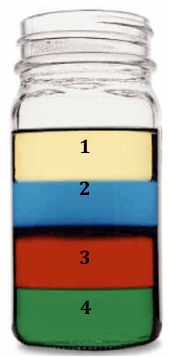
Put the liquids in order from most dense to least dense?
a)
4, 3, 2, 1
b)
1, 2, 3, 4
c)
3, 4, 2, 1, 
d)
4, 3, 1, 2
3.
What is the formula for density?
a)
density = mass x volume
b)
density = mass / volume
c)
density = mass + volume
d)
density = mass - volume
4.
Frank has an eraser. It has a mass of 4g, and a volume of 2cm3. What is its density?
a)
8 g/cm3
b)
2 g/cm3
c)
1/2 g/cm3
d)
24 g/cm3
5.
Jack has a rock. The rock has a mass of 14g and a volume of 2cm3. What is the density of the rock?
a)
7 mL
b)
7 g/cm3
c)
28 g/cm3
d)
1/7 g/cm3
6.
Why do some substances float on water?
a)
they are warmer than water
b)
they are cooler than water
c)
they are more dense than water
d)
they are less dense than water
7.

The pressure inside the balloon will:

a)

Decrease

b)

Increase

c)

Remain the same

d)

Not enough information to formulate an answer

8.

The pressure inside the syringe will decrease if we move the plunger in:

a)

Direction A

b)

Direction B

c)

We don't have to move the plunger as the pressure will change on its own.

d)

None of the above answers.

9.

We can increase the pressure of a gas by:

a)

Adding more gas.

b)

Reduce the volume of the container.

c)

Increase the temperature of the gas.

d)

None of the above answers.

10.

Weather balloons travel to a great height gathering data before the balloon bursts. This is because the atmospheric pressure (layer of gas surrounding the earth):

a)

Increases the higher you travel.

b)

Decreases the higher you travel.

c)

Remains the same.

d)

Not enough information to answer the question.

11.

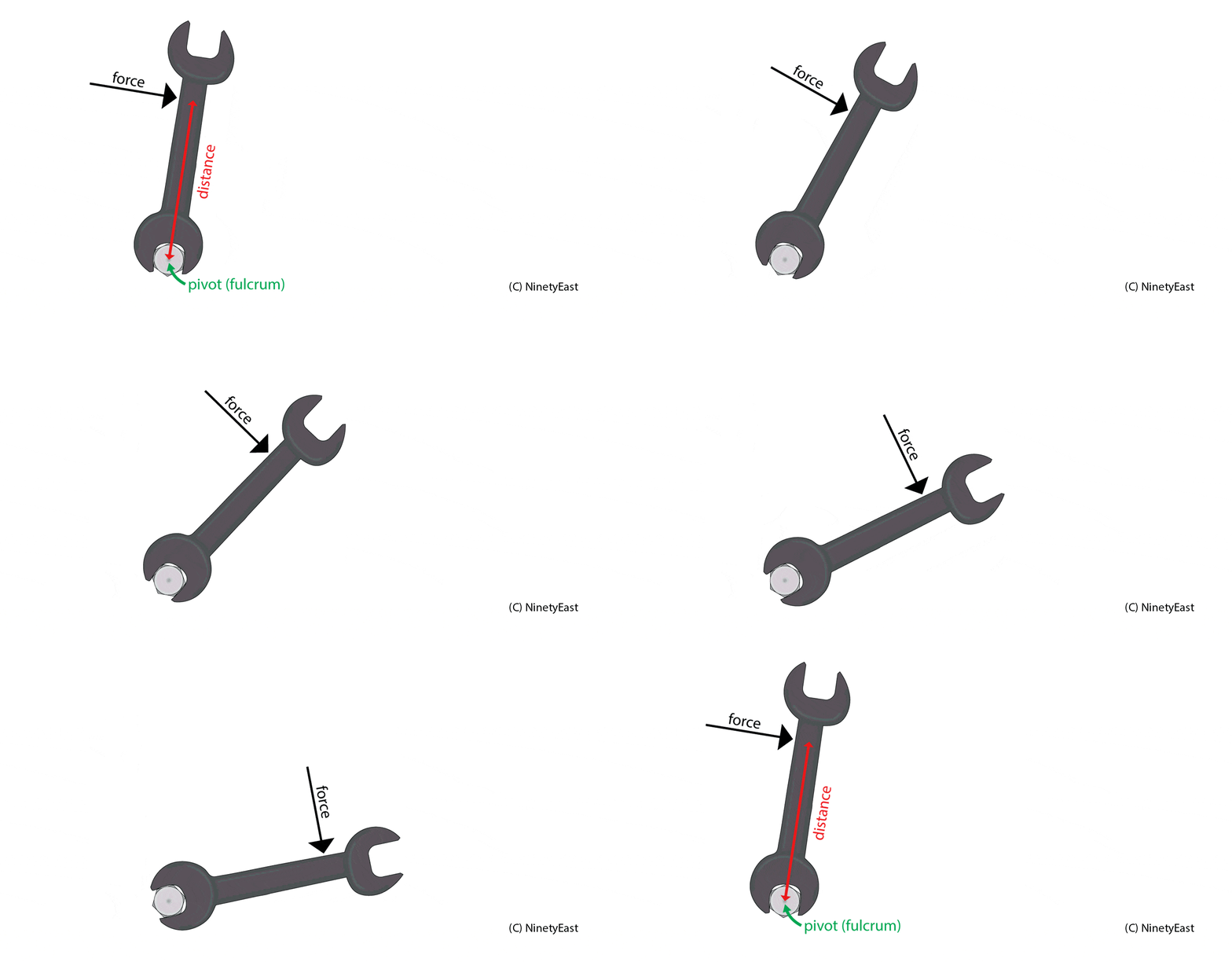
There are two types of moments which are clockwise and anticlockwise moments

a)

True

b)

False

12.

A moment is...

a)

a force measured in Newtons

b)

a turning force measured in newton metres

c)

a distance measured in metres

d)

a time intervals measured in clicks

13.

Moment (Nm) =

a)

Force (N) x distance (m)

b)

Angular Force (N°) x distance (m)

c)

Work done (J)

d)

Force (N) x distance (s)

14.
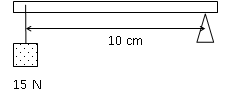
What is the moment produced by the 15 N?
a)
15 Nm (clockwise)
b)
150 Nm (anti - clockwise)
c)
1.5 Nm (anti - clockwise)
d)
0.15 Nm (clockwise)
15.

What to we call forces applied to anything that turns?

a)

Minute

b)

Moment

c)

Minimum

d)

Monument

16.

Ms Pippin rubbed two balloons with a piece of wool. What will happen when the balloons are brought near each other?

a)

The balloons will repel each other.

b)

The balloons will attract each other.

c)

The balloons will become positively (+) charged.

d)

The balloons will pop.

17.
If a substance has a higher number of electrons than protons on its surface, what type of charge does it have?
a)
A positive charge.
b)
A negative charge.
c)
A neutral charge
d)
No charge at all
18.
Electrical charge built up on the surface of an object is called _________________.
a)
static electricity
b)
current electricity
c)
lightning
d)
electrons
19.

the positively charged particle in an atom, never leaves the nucleus, determines the element

a)

proton

b)

neutron

c)

electron

20.

During a lab a balloon was rubbed with a wooly fabric. This is an example of which type of charging?

a)

conduction

b)

friction

c)

induction

21.

What is the major difference between static electricity and current electricity?

a)

Current electricity involves a continuous flow of elecrons; static electricity is a sudden transfer of protons

b)

Current electricity can be deadly; static electricity is almost always safe

c)

In current electricity, there's a single transfer of electrons; in static electricity, there's a steady flow of electrons

d)

Current electricity involves a flow of electrons; static electricity involves a single transfer of electrons

22.
this is the symbol for a _____?
a)
switch
b)
light 
c)
battery
d)
wires
23.
This is the circuit symbol for ...
a)
an AC current source
b)
a DC current source
c)
an ammeter
d)
a voltmeter
24.
This is the circuit symbol for ...
a)
an AC current source
b)
a DC current source
c)
an ammeter
d)
a voltmeter
25.
This is the symbol for 
a)
An Ammeter
b)
A Voltmeter
c)
A Meter
d)
A Motor
26.

What is the following symbol represent?

a)

Wire

b)

Resistor

c)

Battery

d)

Switch

27.
Which circuit is pictured below?
a)
Parallel
b)
Incomplete
c)
Series
28.
The small particles that travel through a circuit are called_____________.
a)
electrons
b)
dust
c)
wires
29.
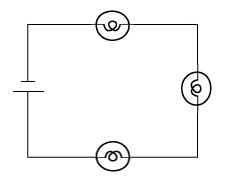
The picture shows an electrical circuit. This circuit is a series circuit because: 
a)
It has 3 light bulbs.
b)
The same current flows through all three light bulbs.
c)
It uses a single battery.
d)
The electrical current is divided between the three light bulbs.
30.

If one of the light bulb in series circuit is taken off, what will happen to the other light bulb?

a)

The other light bulb will be on

b)

The other light bulb will be off

c)

The other light bulb will stay on

d)

Both light bulb will be on

31.

In parallel circuit, there are _________ pathways for charge to flow.

a)

One

b)

Two or more

c)

None

d)

Zero

32.

Which one is the circuit diagram of this picture?

a)
b)
c)
d)
33.
As the resistance of a circuit increases, the current will...
a)
increase
b)
decrease
c)
stay the same
34.
a)
all bulbs are lit equally
b)
the two top bulbs are brighter
c)
the single lower bulb is brighter
d)
the single bulb does not light and the other two are dim
35.
In a parallel circuit if one of the light bulbs burns out the rest _________.
a)
stop the flow of electricity
b)
 can still light up
c)
 will go out
d)
of the light bulbs burn out also
36.
What is one problem with using a series circuit? 
a)
It has a lot of series. 
b)
If one light goes down, they all go down! 
c)
It doesn't work properly.
d)
There are no problems. 
37.

If a bulb is disconnected in a parallel circuit _________

a)

No bulbs will light up

b)

The other bulb will still light up

c)

Each bulb will only light up if there is a high enough voltage

d)

You will get electrocuted

38.

A natural fuel (coal, oil, or gas) formed in the geological past from the remains of living organisms.

a)

FUEL CELL

b)

WIND ENERGY

c)

SOLAR ENERGY

d)

FOSSIL FUEL

39.

Energy stored in the earth in the form of heat.

a)

GEOTHERMAL

b)

SOLAR ENERGY

c)

WIND ENERGY

d)

NUCLEAR ENERGY

40.

The use of flowing water from waterfalls and dams to produce electricity.

a)

HYDRO & TIDAL POWER

b)

SOLAR ENERGY

c)

WIND ENERGY

d)

NUCLEAR ENERGY

41.

Energy stored in the nucleus of an atom.

a)

HYDRO & TIDAL POWER

b)

SOLAR ENERGY

c)

WIND ENERGY

d)

NUCLEAR ENERGY

42.

Energy from the sun.

a)

HYDRO & TIDAL POWER

b)

SOLAR ENERGY

c)

WIND ENERGY

d)

NUCLEAR ENERGY

43.
Why is solar energy considered renewable energy?
a)
It's cheaper than fossil fuels
b)
The sun's energy would not run out for billions of years
c)
Solar energy recharges batteries
d)
All of them
44.
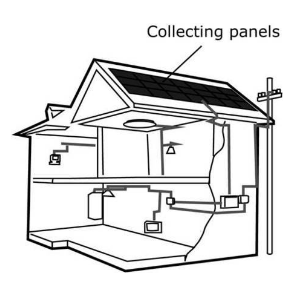
The house illustrated here uses panels on the roof to collect a natural resource and convert it into electricity that can be used.
Which alternative energy source does this house use?
a)
Water
b)
Wind
c)
Solar
d)
Geothermal
45.
Oil is a __________ energy resource.
a)
Renewable
b)
Nonrenewable
46.
The Earth provides humans with an unlimited amount of fossil fuels. They are considered renewable.
a)
True
b)
False
47.
Crude oil is also called what?
a)
biomass
b)
fossils
c)
coal
d)
petroleum
48.
How are fossils created?
a)
Traces of organisms get turned into stone.
b)
Dead organisms are quickly buried for millions of years.
c)
Animals get trapped.
d)
All of the above
49.
Match the vocabulary word with the definition:
Greenhouse gases surround our planet, which prevents heat produced by the sun from escaping the earth’s atmosphere as easily as it once did.

a)
renewable resource
b)
nonrenewable resource
c)
greenhouse effect
50.
What type of renewable resource am I? I power large turbine generators that generate electricity.
a)
solar
b)
geothermal
c)
biofuels
d)
wind