
 Worksheets
CHO AQA Trilogy Chemistry Topic 1 (Mid topic)
Total questions: 53
Worksheet time: 27mins
What is the relative atomic mass of lithium?
7
2
4
14

What is the atomic number of helium?
1
2
3
4
How many protons does an atom of titanium have?
22
48
26
70
How many neutrons does an atom of titanium have?
26
48
22
70
How many electrons does an atom of boron have?
5
11
6
don't know
How many neutrons does an atom of hydrogen have?
0
1
2
What is the relative atomic mass of potassium?
39
19
20
What is the relative charge of a neutron?
0
+1
-1
1/2000
What is the relative charge of a proton
+1
0
-1
1/2000
What is the relative charge of an electron?
-1
+1
0
1/2000
Why are atoms neutral?
They have the same number of protons and electrons
They have the same number of neutrons and electrons
They have the same number of protons and neutrons
What property determines the element that an atom is?
number of protons
number of neutrons
number of electrons
mass number
Which scientist discovered the electron?
Thompson
Rutherford
Bohr
Chadwick (Chadders to his mates)
Which scientist discovered the nucleus?
Thompson
Rutherford
Bohr
Chadwick (Chadders to his mates)
Which scientist discovered the neutrons?
Thompson
Rutherford
Bohr
Chadwick (Chadders to his mates)
Which scientist proposed that electrons orbited the nucleus at fixed distances?
Thompson
Rutherford
Bohr
Chadwick (Chadders to his mates)
Which is the best definition of the plumb pudding model?
Ball of positive charge with negative electrons randomly embedded
Ball of negative charge with positive electrons randomly embedded
Concentrated mass of positive charge surrounded by negative electrons
Concentrated mass of negative charge surrounded by positive electrons
How many electrons are in the second shell of a carbon atom?
4
2
6
12
What is the electron configuration of a calcium atom?
2.8.8.2
2.8.10
20
2.8.8.1
What is the electronic configuration of a lithium atom?
2.1
3
1.2
2.5
What is the electron configuration of a magnesium atom?
2.8.2
2.8.8.2
12
24
How many electrons does an oxygen atom have in its outermost shell?
2
6
8
16
How many electrons does an aluminium atom have in its second shell?
8
10
3
2
What do all elements in group 1 have in common?
They all have 1 electron in their outer shell
They all have the same number of electrons
They all have the same number of neutrons
They all have the same number of filled electron shells
What does the larger number for an element show you on the periodic table
relative atomic mass
mass number
atomic number
The number of electrons in the outer shell is the same as the elements...
group number
atomic number
relative atomic mass
period number


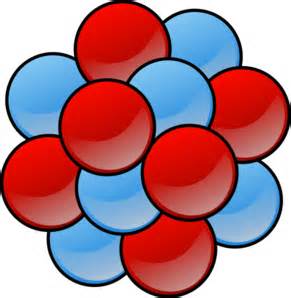
Which letter represents a proton?
A
B
C
D

Group 1 elements are also known as
Noble gas
Halogen
Alkaline earth metals
Alkali metals
Arrange the elements in group 1 from the top to bottom of the group.
Li, Na, K, Fr, Rb, Cs
Li, Na, K, Rb, Fr, Cs
Li, Na, K, Rb, Cs, Fr
Fr, Cs, Rb, K, Na, Li
What gas is given off when group 1 elements reacts with water?
Hydrogen
Oxygen
Carbon dioxide
Helium
When a group 1 element reacts with water, a hydroxide is formed. What colour would Universal Indicator turn in this solution?
Green
Blue
Yellow
Red
How many electrons are in the outer shell of group 1 elements?
0
1
2
3
Why does the reactivity of group 1 elements increases down the group?
It becomes more reactive
It becomes easier to accept an electron
It becomes easier to lose an electron
It becomes less reactive
How many electrons are there on the outer shell of the Halogens?
1
2
7
9
Which Halogen is the most reactive?
Bromine
Fluorine
Iodine
Chlorine
Are the Halogens toxic?
Yes
No
At room temperature, iodine is a....
Gas
Liquid
Solid
At room temperature, chlorine is...
a green gas
a brown gas
a green liquid
a brown liquid
Which is the least reactive?


What do you call the Group 0 elements?
Halogens
Noble Gases
Alkali Metals
How many electrons are in the outer shell of the Group 0 elements?
Full shell of electrons
8 electrons
0 electrons
Why are the Group 0 elements unreactive?
Their outer shell is empty
Their outer shell is half full
Their outer shell is full
Which is NOT a property of Group 0 Elements?
odourless
reactive
colourless

