
 Worksheets
Cell Exam review - Organelles, Membrane & NYS lab
Total questions: 59
Worksheet time: 33mins
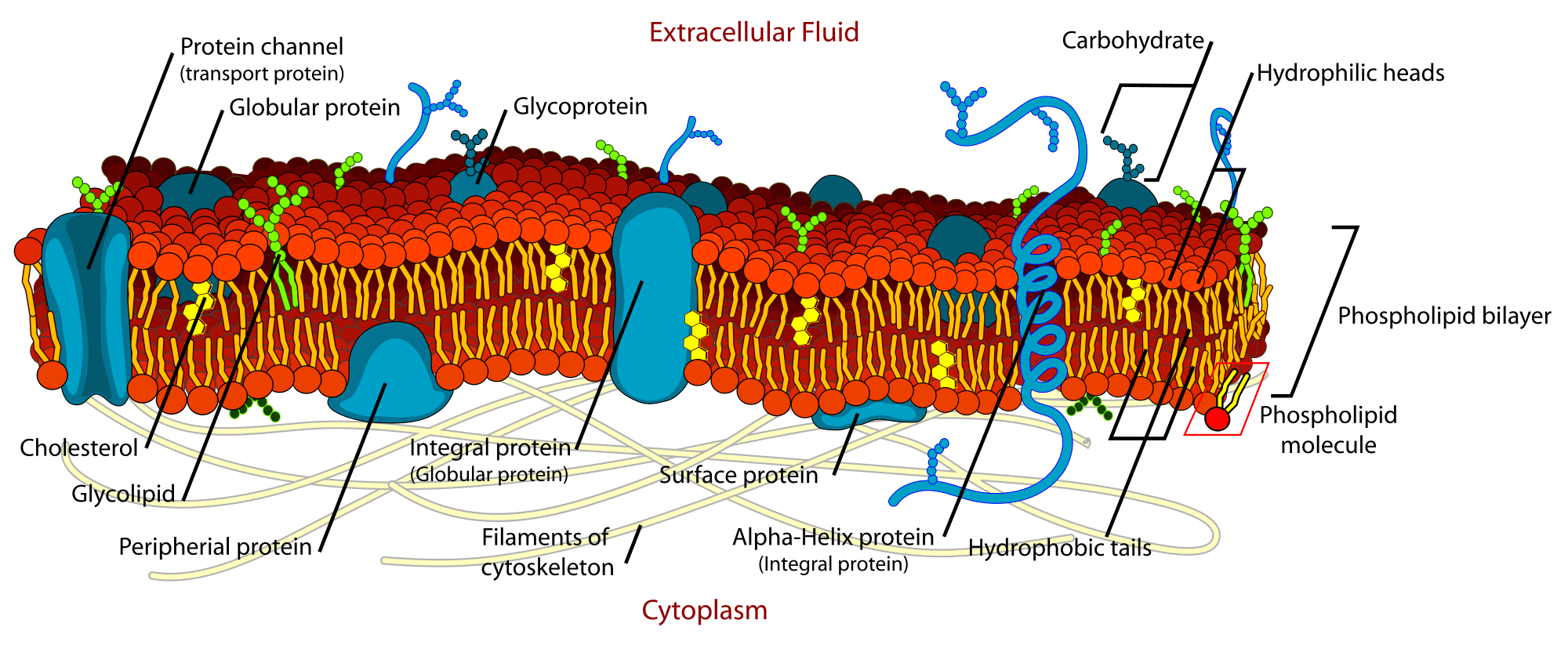
Diffusion & Facilitated Diffusion are both __________ transport.
Passive
Active
Easy
Free
Passive Transport is the movement of particles across the membrane from an area of [ ___ ] to an area of [ ___ ]
high to low
low to high
low to low
high to high
Passive Transport uses ____ energy
no
a lot of
a little bit of
some
_____________ is the free movement of particles across the membrane with the concentration gradient
diffusion
facilitated diffusion
active transport
fusion
What is the movement of particles with the concentration gradient using protein "helpers"?
diffusion
facilitated diffusion
active transport
enzymatic reactions
What is a difference between diffusion and facilitated diffusion?
movement of particles from [high] to [low]
a protein "helper"
movement of particles from [low] to [high]
energy
The general name for movement of substances across cell membranes without need of energy input
passive transport
active transport
Way to display that molecules are moving from an area of high concentration to an area of low concentration.
concentration gradient
concentration
[high] --> [low]
Active transport is the movement of large materials across a cell membrane from ______ to ______ concentration
high to low
low to high
high to high
low to low
Active transport across a cell membrane from low to high concentration, requires
energy (ATP)
no energy
water
oxygen
A general term for the various types of active transport that move particles into a cell by enclosing them in a vesicle made out of plasma membrane.
Endocytosis
Exocytosis
Osmosis
Diffusion
A form of bulk transport in which materials are transported from the inside to the outside of the cell in membrane-bound vesicles that fuse with the plasma membrane.
Endocytosis
Exocytosis
Osmosis
Diffusion
Identify the cellular structure that diffusion occurs across.
ribosome
mitochondria
cytoplasm
cell membrane
chloroplast
Describe diffusion:
the movement of molecules higher concentration to an area of lower concentration
the synthesis of molecules higher concentration to an area of lower concentration
the movement of molecules lower concentration to an area of higher concentration
the synthesis of molecules lower concentration to an area of higher concentration

Identify the substance/molecule that will not diffuse.
Starch
Glucose
Iodine
Identify the substance(s)/molecule(s) that will diffuse.
Starch
Glucose
Iodine

Identify the substance that was added to the outside of the plant cells that caused the change observed.
salt water
fresh water
distilled water
glucose

Identify the substance that was added to the outside of this cell that caused the change observed.
salt water
fresh water
distilled water
glucose

Identify which molecule is diffusing into the cell.
A
B

Molecule A cannot diffuse. What is a possible reason why?
Molecule A is a macromolecule and it is too large to move.
Molecule A is a building block and it is too large to move.
Molecule A is a building block and it is too small to move.
Molecule A is a macromole and it is too small to move.

The following image shows a plant cell in a normal environment. Which picture shows what a plant cell would like if salt was added to the outside?


Which choice accurately describes what happened in steps A and B?
Step A added saltwater so the water diffused out. Step B added freshwater so water diffused in.
Step A added saltwater so the water diffused in. Step B added freshwater so water diffused out.
Step A added freshwater so the water diffused in. Step B added saltwater so water diffused out.
Step A added freshwater so the water diffused out. Step B added saltwater so water diffused in.

What is the starch indicator?
Iodine
Bromothymol Blue
Benedict's Solution
Glucose
What color does the starch indicator turn when it comes in contact with starch?
blue-black
blue
orange-red
yellow
The _____________ stores food, water, wastes, and other materials in both plant and animal cells.
Vacuole
Mitochondria
Cytoplasm
Nucleus
Which cell part is a specialized part of the cell with a specific job?
Lysosome
Organelle
Chloroplast
Cytoplasm

What is the function of the cell membrane?
To control what comes in and out of the cell
To break down food inside the cell
to serve as a barrier
to eat the cells food

Which organelle produces the energy a cell needs to carry out its function
Mitochondria
Golgi Bodies
Cytoplasm
Nucleus

Which organelle receives proteins and materials from the ER, packages them and distributes them
Vacuoles
Golgi Bodies
Nucleus
Chromatin

What is a fun way to remember what the Endoplasmic Reticulum does?
transportER
I am a mighty powerhouse
Im the control center

What is number 1 pointing to?
cell wall
ribosomes
lysosomes
chloroplast

What is number 2 pointing to?
cell wall
chloroplast
cytoplasm
cell membrane

What is number 1 pointing to?
endoplasmic reticulum
golgi
mitochondria
lysosome

What is number 9 pointing to?
cell wall
cell membrane

What is number 10 pointing to? Hint: tiny dots
lysosomes
mitochondria
golgi
ribosomes

What is letter A pointing to?
golgi
endoplasmic reticulum
nucleus
vacuole

What is letter C pointing to?
golgi
endoplasmic reticulum

What is letter G pointing to?
golgi
endoplasmic reticulum

In both the animal and plant cells, what is the letter B pointing to?
chloroplast
ribosomes
nucleus
mitochondria

What is number 6 pointing to?
chloroplast
cytoplasm
nucleus
cell wall

What is number 5 pointing to?
lysosome
mitochondria

Click all 3 things that only plant cells have.
cell membrane
cell wall
chloroplast
large vacuole

