
NEW
Font size
 Worksheets
History of the Atom
Total questions: 46
Worksheet time: 1hrs 1mins
Used the word "atomos" to decsribe the uncuttable (indivisible) atom.
Democritus
Thomson
Bohr
Dalton

Proposed that electrons move around the nucleus in specific layers, or shells.
Bohr
Rutherford
Chadwick
Thomson
What is a particle with one negative charge called?
electron
proton
quark
neutron
Bohr discovered that electrons are located in
the nucleus
inside protons
electron cloud
circular orbits around the nucleus
Which of the following is/are conclusions based on Rutherford’s gold foil experiment?
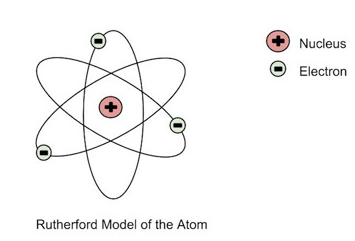
Atom is mostly empty space
The nucleus is positively charged
The atom has a small dense nucleus
All answers are correct


The majority of an atom's mass exists where?
In the nucleus
In the electron cloud
In the space between the nucleus and the electrons
In the neutrons


Who created the plum pudding model?
JJ Thomson
Ernest Rutherford
Niels Bohr
John Dalton
What particles determine the mass number?
Protons and electrons
Electrons and neutrons
Protons and neutrons
Protons, neutrons, and electrons

What is the mass number of bromine?
35
45
80
79.904
The atomic number is equal to _.
the number of protons
the number of neutrons only
the total number of protons and neutrons
the number of protons, neutrons, and electrons

How many neutrons does this bromine atom have?
35
45
80
115

What is the mass number of this Neon atom?
10
11
21
20

How many electrons does this magnesium ion have?
24
12
10
14
What changes when an atom becomes an ion?
The number of electrons
The number of protons
The number of neutrons
Both the number of neutrons and electrons

How many neutrons does this Neon atom have?
21
11
10
12

What happened to this Magnesium atom to make it an ion?
It LOST electrons
It GAINED electrons
It GAINED protons
It LOST protons

What is the atomic number of this element?
12
24
23
35
Adding or subtracting neutrons makes the element change into
an ion
a mixture
an isotope
a neutral atom

What is the charge on a lithium atom that loses 1 electron?
+1
0
-1
-2
What is the representation of an isotope?
N-3
Al+3
Si
P-33
A negatively charged ion that has gained electrons to satisfy the octet rule (metals do this)
Anion
Cation
Neutral Atom
Isotope
A positively charged ion that has lost electrons to satisfy the octet rule (non-metals do this)
Anion
Cation
Neutral Atom
Isotope
If an atom has 9 protons and 10 electrons it has a charge of ____.
0
-1
+1
-2


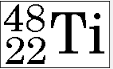
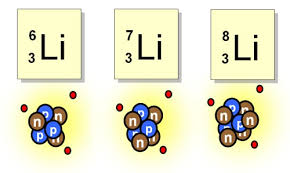

How many protons, neutrons, and electrons?
proton = 16, neutron = 8, electron = 10
proton = 8, neutron = 16, electron = 8
proton = 8, neutron = 8, electron = 10
proton = 6, neutron = 2, electron = 6


