
 Worksheets
Customer Service Practice
Total questions: 75
Worksheet time: 1hrs 13mins
How does solving difficult-customer situations benefit your company?
It will generate repeat business.
The difficult customers won’t bother you again.
You will get a promotion.
All the employees will get promotions.
How does solving difficult-customer situations benefit you personally?
You will encounter difficult customers less frequently.
Your customers will be happier.
You gain valuable communication skills.
Your boss will automatically give you a raise.
Eva works at a hotel registration desk. When a customer was checking in tonight, Eva reminded him that checkout time would be 11:00 a.m. “No, it’s not!” he exclaimed. “It’s always at 11:30!” Eva’s customer is
suspicious.
leave-me-alone.
impatient.
argumentative.
Rich works the cash register at a retail store. The store is unusually busy today, and Rich’s line has grown long. A woman at the back of the line remarks loudly, “This is absolutely ridiculous!” Rich’s customer is
domineering/superior.
impatient.
argumentative.
leave-me-alone.
Stacey works at a fancy gift shop. Many of the items in the shop are expensive collectibles, and Stacey is very knowledgeable about them. Today, a man comes in looking for a gift for his wife. Stacey offers to help, but he just grunts at her and turns his back. Stacey’s customer is
impatient.
insulting.
leave-me-alone.
argumentative
Jonathan works in his small town’s only grocery store. He is on a first-name basis with most of the customers who come in. Cheryl is a difficult customer. Sometimes she’s really friendly, and other times she snaps at Jonathan. She is a(n) __________ customer.
irritable/moody
suspicious
slow/methodical
dishonest
Darcie is a lifeguard at the local beach. Sometimes, she has to blow her whistle to signal to swimmers that they have gone out too far. Today, one of the risky swimmers runs up to her and shouts, “I wasn’t out too far! You must be blind!” This is an example of a(n) __________ customer.
insulting
suspicious
impatient
slow/methodical
Carrie has a summer job cleaning and maintaining backyard pools. Her boss thinks she does a great job. Today, she has a new client. For a while, he was watching her from the porch, and then he came out and stood just a few feet away from her. “Don’t do it that way,” he instructed. “You’re using too much chlorine. Should I just measure it out for you?” Carrie’s customer is
slow/methodical
domineering/superior
suspicious
irritable/moody
Mitch works at the layaway counter in a retail store. The store’s layaway policy is clearly posted on a sign over the counter, but sometimes customers just don’t “get it.” Today, a woman asked about 15 questions to make sure she understood the policy correctly. She was a __________ customer.
dishonest
domineering/superior
complaining
suspicious
Jill works behind the counter at a fast-food restaurant. The restaurant prides itself on great food and quick service. Right now, a man is staring up at the menu trying to decide what he wants to order, and a line is quickly forming behind him. Jill asks, “May I take your order?” but he remains silent. This customer is
complaining
suspicious
dishonest
slow/methodical
Randy works at a batting cage. Today, a customer came to him to complain that the machine did not give as many pitches as she paid for and to demand a refund. Randy checked out the machine and didn’t find anything wrong with it. He had a feeling that the customer was just
trying to practice for free but didn’t have any proof. Randy’s customer is
domineering/superior
dishonest
impatient
leave-me-alone
Which of the following is the best way to handle argumentative customers:
Ask simple, polite questions with options.
Never press for sales or decisions.
Explain and demonstrate good service as many times as you need to.
Mirror their behavior.
Which of the following is the best way to handle dishonest customers:
Explain and demonstrate good service as many times as you need to.
Never press for sales or decisions.
Don’t jump to quick conclusions.
Mirror their behavior.
Which of the following is the best way to handle impatient customers:
Explain and demonstrate good service as many times as you need to.
Agree first on common points.
Never press for sales or decisions.
Serve them non-emotionally.
Which of the following is the best way to handle slow/methodical customers:
Don’t jump to quick conclusions.
Let them have their say.
Serve them non-emotionally.
Help them along by not overwhelming them.
Which of the following is the best way to handle leave-me-alone customers:
Agree first on common points.
Ask simple, polite questions with options.
Don’t jump to quick conclusions.
Never press for sales or decisions.
Which of the following is the best way to handle suspicious customers:
Ask simple, polite questions with options.
Serve them non-emotionally.
Help them along by not overwhelming them.
Explain and demonstrate good service as many times as you need to.
Which of the following is the best way to handle irritable/moody customers:
Let them have their say.
Be consistent in your positive behavior.
Explain and demonstrate good service as many times as you need to.
Ask simple, polite questions with options.
Which of the following is the best way to handle domineering/superior customers:
Never press for sales or decisions.
Don’t jump to quick conclusions.
Let them have their say.
Explain and demonstrate good service as many times as you need to.
Ellen works at a golf course. During the summer, she drives a golf cart around the course, selling cold drinks and snacks to the golfers. It’s a beautiful day, and the course is especially crowded. Ellen offers one golfer a cold drink, and she replies, “Well, I guess I’ll have time, since the play is so slow. It’s not very fun to have to wait so long between holes. Who is running this course? You always set your tee times way too close together!” Ellen’s customer is
suspicious
argumentative
complaining
leave-me-alone
Provide 2 examples of written communication
Sign language
Telephone
Letter
Provide 2 forms of non verbal communication
Sign language
letter
Face time
Facial expressions
How could you communicate with someone who doesn't speak your language?
Speak louder
Talk slower
Use pictures and symbols
Don't try, get someone else to do it
Which legislation helps to protect those with a disability?
Race relations Act
Equal Opportunities Act
Disability Discrimination Act
Disability Act
How can complaints be bad for business? Select 2 answers
The business can improve
The business might lose customers and profits
The business might gain a negative public image
They aren't bad, only good
Which emotions are customers likely to feel when complaining? Select 3
Angry
Upset
Embarrassed
confused
Which of the following is most likely to help in calming an angry customer when face to face?
Crossing your arms
Rapid nodding of the head
Slow nodding of the head
Smiling
Someone who buys goods or services
A- Customer
B- Client
C- Buyer
A and B
Treat others as you’d like to be treated is a good guiding principle behind offering outstanding service or sales through service
True
False
Which statement about customer service is correct?
Excellent customer service results in a more positive business
reputation.
Excellent customer service results in more promises and
therefore more lawsuits.
Excellent customer service results in fewer loyal customers.
Excellent customer service results in lower wages.
WHY CUSTOMER SERVICE IS IMPORTANT
1. The best customer service builds trust
1. Customer service matters more than price
1. It will build brand awareness
All of the above
What can employees do to help provide good service to customers?
change inventory
resolve problems
plan events
change business hours

Good Customer Service helps to:
Build Your Brand
Create Trust With Your Customers
Reduce Customer Complaints & Minimise Problems
All of the Options

Customer interaction refers to any communication between a retailer and its customers and these include.
Select all that are appropriate
Face-to-Face
Emailing
Phone call
At the store

What is a retail channel?
This is simply the means by which a retailer sells to their customer, examples of retail channels include stores, website, apps, etc.
This is simply the means by which a retailer buys their products, examples of retail channels primary, secondary, territory, etc.
This is simply the means by which a retailer supplies their products, examples of retail channels include manufacturing, businesses,shops,etc.

Which of the following is most likely to help in calming an angry customer when face to face?
Crossing your arms
Rapid nodding of the head
Slow nodding of the head
Smiling
Which statement about customer service is correct?
Excellent customer service results in a more positive business
reputation.
Excellent customer service results in more promises and
therefore more lawsuits.
Excellent customer service results in fewer loyal customers.
Excellent customer service results in lower wages.
Good Customer Service helps to:
Build Your Brand
Create Trust With Your Customers
Reduce Customer Complaints & Minimise Problems
All of the Options

What makes your organisation different from similar ones?
Staff & Service are the difference
Our cakes are better
Our coffee is warmer
Our chairs are more comfortable
How does solving difficult-customer situations benefit your company?
It will generate repeat business.
The difficult customers won’t bother you again.
You will get a promotion.
All the employees will get promotions.
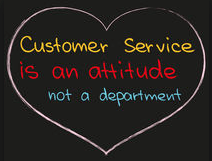
A good _______________ is essential to a business when providing customer service.
speaking voice
attitude
first impression
hair style

When greeting a customer you should always............
smile and shake their hand
tell the customer how you feel today
have open body language
multitask and ask them to repeat

How do you handle a difficult customer who comes into the store for help?
Pass off the customer onto other TSI student
Hear customer out, calm customer and resolve situation
Be disrespectful back to the customer
Avoid interacting with the customer
A key benefit from offering good customer service is ............
Lower costs
Repeat business
Reduced tax
less customers
Which of the following is most likely to help in calming an angry customer when face to face?
Crossing your arms
Rapid nodding of the head
Slow nodding of the head
Smiling
Which statement about customer service is correct?
Excellent customer service results in a more positive business
reputation.
Excellent customer service results in more promises and
therefore more lawsuits.
Excellent customer service results in fewer loyal customers.
Excellent customer service results in lower wages.
Good Customer Service helps to:
Build Your Brand
Create Trust With Your Customers
Reduce Customer Complaints & Minimise Problems
All of the Options
What makes your organisation different from similar ones?
Staff & Service are the difference
Our cakes are better
Our coffee is warmer
Our chairs are more comfortable
How does solving difficult-customer situations benefit your company?
It will generate repeat business.
The difficult customers won’t bother you again.
You will get a promotion.
All the employees will get promotions.
A good _______________ is essential to a business when providing customer service.
speaking voice
attitude
first impression
hair style
When greeting a customer you should always............
smile and shake their hand
tell the customer how you feel today
have open body language
multitask and ask them to repeat
How do you handle a difficult customer who comes into the store for help?
Pass off the customer onto other TSI student
Hear customer out, calm customer and resolve situation
Be disrespectful back to the customer
Avoid interacting with the customer
A key benefit from offering good customer service is ............
Lower costs
Repeat business
Reduced tax
less customers

