wayground logo

Free Printable Worksheets

NEW

Font size

S
M
L
XL
Worksheets

Biogeochemical Cycles, Succession, Biomes, and Interactions

Total questions: 39

Worksheet time: 1hrs 9mins

Name
Class
Date
1.

Which is not a part of the water cycle?

a)

evapor

b)

condensation

c)

precipitation

d)

photosynthesis

2.
The process of plants losing water through their leaves is called ____.
a)
condensation
b)
evaporation
c)
transpiration
d)
exhaling
3.
Why do living things need nitrogen?
a)
To get energy
b)
To make amino acids
c)
To make proteins
d)
To make proteins AND amino acids
4.
Where are nitrogen-fixing bacteria found?
a)
In the soil
b)
Root nodules
c)
In dead things
d)
In the atmosphere
5.
What is the only process that removes carbon from the atmosphere?
a)
combustion
b)
cellular respiration
c)
photosynthesis
d)
decomposition
6.
Where is carbon stored in the environment?
a)
Fossil fuels
b)
Wood of trees
c)
Calcium carbonate (shells and bones)
d)
All of the above
7.

What cycle are fossil fuels part of ?

a)

carbon

b)

oxygen

c)

nitrogen

d)

phosphorus

8.

What is the largest reservoir for water?

a)

the ocean

b)

rocks and minerals

c)

the atmosphere

d)

glaciers

9.
Carbon dioxide is added to the atmosphere by
a)
Burning fossil fuels 
b)
Cellular respiration
c)
Decomposing organic matter
d)
All answers are correct
10.
succession that occurs in an area with no soil
a)
ecological succession 
b)
primary succession 
c)
secondary succession
d)
pioneer speciles
11.
succession that occurs in an area where soil is already present
a)
ecological succession 
b)
primary succession 
c)
secondary succession
d)
pioneer speciles
12.
the first organisms that appear in an ecological community
a)
ecological succession 
b)
primary succession 
c)
secondary succession
d)
pioneer speciles
13.
a stable ecological community that has reached equilibrium
a)
ecological succession 
b)
climax community
c)
secondary succession
d)
pioneer speciles
14.
ends in a climax community
a)
primary succession 
b)
secondary succession
c)
both types of succession
15.
species diversity eventually increases
a)
primary succession 
b)
secondary succession
c)
both types of succession
16.
starts with bare rock followed by lichen
a)
primary succession 
b)
secondary succession
c)
both types of succession
17.
The picture shows what type of succession?
a)
primary
b)
secondary
c)
tertiary
d)
quadanary
18.
reaches a climax community quicker because soil is already present
a)
primary succession 
b)
secondary succession
c)
both types of succession
19.
How do lichens contribute to primary succession?
a)
Lichens decompose organic matter from animals and plants
b)
Lichens begin to break down rock to form soil
c)
Lichens are nitrogen fixing bacteria
20.
What is the order of succession shown in this figure?
a)
A, B, C, D
b)
B, A, D, C
c)
C, D, A, B
d)
D, A, B, C
21.
Which two biomes have the least precipitation?
a)
tropical rain forest and temperate grasslan
b)
savanna and tropical dry forest
c)
tundra and desert
d)
boreal forest and temperate woodland
22.
This biome is found around the equator and is home to a large amount of biodiversity.
a)
Deserts
b)
Tropical Rain Forests
c)
Savannas
d)
Chaparral 
23.
What is this biome?
a)
Coniferous Forest
b)
Desert
24.
What is this biome?
a)
Deciduous Forest
b)
Tropical Rainforest
25.

TRUE or FALSE?

Each biome also has a characteristic set of organisms that are adapted to living there.

a)

true

b)

false

26.
Which type of trees characterizes our biome, here in PA?
a)
deciduous
b)
cacti
c)
ginko
d)
palm
27.

A lion eating a zebra is an example of:

a)

predation

b)

mutualism

c)

commensalism

d)

parasitism

28.

A tick living on the body of a deer

a)

predation

b)

mutualism

c)

commensalism

d)

parasitism

29.

A bee eating the flower's nectar and picking up the flower's pollen

a)

predation

b)

mutualism

c)

commensalism

d)

parasitism

30.

A barnacle living on a whale's skin

a)

predation

b)

mutualism

c)

commensalism

d)

parasitism

31.

A tapeworm living in a person's intestines

a)

predation

b)

mutualism

c)

commensalism

d)

parasitism

32.

An aphid providing food to an ant in exchange for protection

a)

predation

b)

mutualism

c)

commensalism

d)

parasitism

33.

Competition occurs when organisms attempt to use the same resources

a)

True

b)

False

34.
Honey guide birds alert and direct badgers to bee hives.  The badgers then expose the hives and feed on the honey first.  Then the honey guide birds eat.  
a)
mutualism
b)
commensalism
c)
predation
d)
competition
35.
A cuckoo may lay its eggs in a warbler's nest.  The cuckoo's young will displace (or move) the warbler's young and will be raised by the warbler.  
a)
Parasitism
b)
Commensalism
c)
Predation
d)
Competition
36.
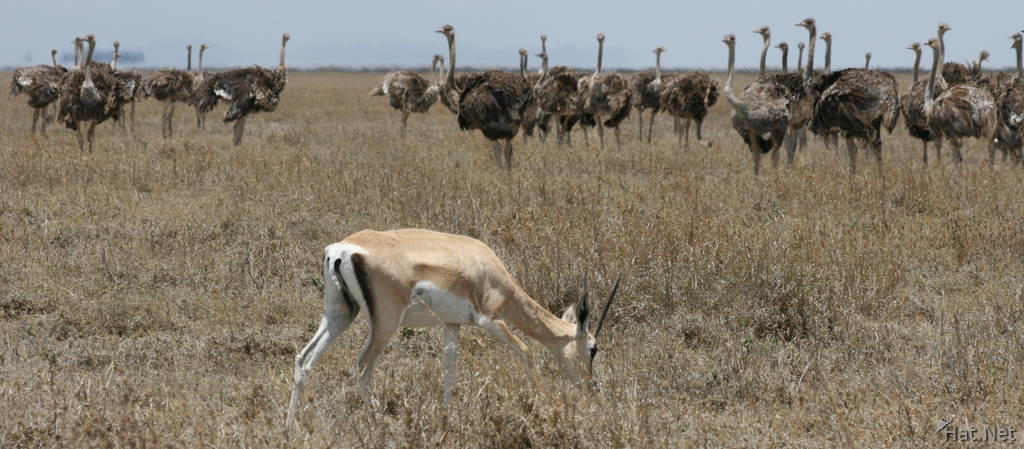
Ostriches and Gazelles feed next to each other.  They both watch for predators and alert each other to danger.  Since the visual abilities of the two species are different, they can each identify threats the other animal would not as readily see.  
a)
Parasitism
b)
Commensalism
c)
 Mutualism 
d)
Competition.  
37.
A bird makes a nest in a tree.  The bird gets a house, but the tree is unharmed.
a)
commensalism
b)
mutualism
c)
Parasitism
d)
predation
38.
A squirrel hides his acorns from the chipmunks for the winter.
a)
commensalism
b)
parasitism
c)
competition
d)
mutualism
39.
Dwarf mistletoe is a plant that grows into the bark of a tree to obtain water and nutrients. The mistletoe is a ______________
a)
prey
b)
parasite
c)
predator
d)
niche