
 Worksheets
Ecosystems Exam Review
Total questions: 110
Worksheet time: 5hrs 43mins

Water
Air
Soil
Sunlight
Water
Soil
Carbon Dioxide
Carbon Dioxide
Sunlight


Choose the correct levels of Organization from lowest to highest...
population, community, ecosystem, organism
organism, population, community, ecosystem
organism, population, ecosystem, community
population, organism, community, ecosystem
A community is a level in organization that is....
made of populations of different species that live in the same place and interact.
a single individual species of organisms that are similar.
all the individual organisms of the same species in the same place.
A(n) ______ is a group of organisms that are have similar characteristics and can mate with each other to produce offspring that can also mate and reproduce.
organism
species
population
community
A prairie dog, a hawk, and a badger all are members of the same ________________.
niche
community
species
population
An example of a population is
all trees in a forest
all maple trees in a forest
all plants in a forest
all animals in a forest
This is the study of interactions between organisms and the interactions that organisms have with their environment.
Evolution
Ecology
Biology
Commensalism

What ecological level of organization can be seen here?
Species
Population
Community
Ecosystem

What is the largest level of ecological organization that can be observed in the image?
Species
Population
Community
Ecosystem
Which levels of ecological organization are made up of ONLY BIOTIC factors?
Ecosystem
Community
Population
4,386 Red Foxes in Massachusetts in October 2020
Community
Species
Population
Organisms

About how many visible organisms are in this image of the Mojave Desert?
About 10
About 15
About 30
About 45

What is one ABIOTIC factor in this ecosystem?
frog
tadpole
water
snail

What is one BIOTIC factor in this ecosystem?
Soil
Water weeds
Sun
Water
All living and non-living things that interact in an area is the definition of __________________.
Ecosystem
Community
Population
Organism
A member of one species is the definition of ____________.
Ecosystem
Community
Population
Organism
Is a Behavior and physical characteristics of species that allow them to live successfully in their environment.
Natural Selection
Adaptation
Insight learning
Cooperative behavior
Is a characteristic that makes an individual suited to the environment and helps it to survive and reproduce in its environment.
Adaptation
Natural Selection
Habitat
Behavior
The disappearance of all members of a species from Earth
Biodiversity
Keystone species
Extinction
Invasive species
Non-native species
Biodiversity
Keystone species
Extinction
Invasive species
A type of symbiosis between 2 species in which one species benefits and the other species is neither helped or harmed
Symbiosis
Mutualism
Commensalism
Parasitism
A type of symbiosis in which both species benefit from living together
Symbiosis
Mutualism
Commensalism
Parasitism
A type of symbiosis in which one organism lives with, on, or in a host and harms it
Symbiosis
Mutualism
Commensalism
Parasitism
An interaction in which one organism kills another for food or nutrients
Predation
Prey
Competition
Niche
Any relationship in which 2 species live closely together and that benefits at least one of the species.
Symbiosis
Mutualism
Commensalism
Parasitism
The struggle between organisms to survive as they attempt to use the same limited resources in the same place at the same time
Predation
Prey
Competition
Niche
An animal that is hunted and killed by another for food
Predation
Prey
Competition
Niche
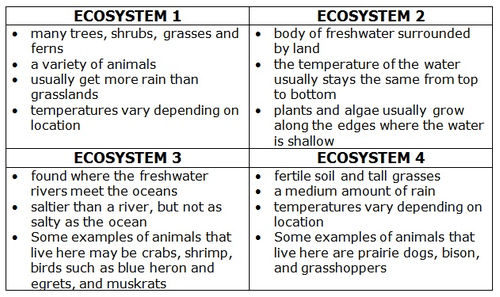
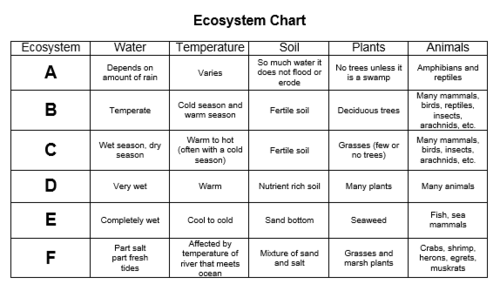
1. A lot of mammals
2. Usually warm weather
3. Very few trees
4. Fertile soil
An example of a population is
all trees in a forest
all maple trees in a forest
all plants in a forest
all animals in a forest
The non-living parts of an organism's environment are called...
community
biotic factors
habitat
abiotic factors
A community is a level in organization that is....
made of populations of different species that live in the same place and interact.
a single individual species of organisms that are similar.
all the individual organisms of the same species in the same place.
In a habitat, animals have a __________, which is how they interact, get food and shelter.
niche
ecosystem
community
population
The physical part of the ecosystem that meets the needs of an organism is called:
role
ecosystem
habitat
population
The living or once living parts of an organism's environment are called its...
community
habitat
biotic factors
abiotic factors
An organism is an abiotic factor
True
False
4,386 Red Foxes in Massachusetts in October 2020
Community
Species
Population
Organisms
A(n) ______ is a group of organisms that are have similar characteristics and can mate with each other to produce offspring that can also mate and reproduce.
organism
species
population
community
Choose the correct levels of Organization from lowest to highest...
population, community, ecosystem, organism
organism, population, community, ecosystem
organism, population, ecosystem, community
population, organism, community, ecosystem
This is the study of interactions between organisms and the interactions that organisms have with their environment.
Evolution
Ecology
Biology
Commensalism
A living thing...
an organism.
the biosphere.
a population.
a community.

How many species of animal are in this image?
8
19
2
10
Factors used to describe a habitat would include...
Amount of rainfall
An organisms "profession or role"
Temperature range
The type of plants found there
About how many visible organisms are in this image of the Mojave Desert?
About 10
About 15
About 30
About 45
The squirrel eats nuts, seeds, and insects. It builds a nest in a tree. It is eaten by foxes, hawks, and racoons. It buries its food in the ground for storage over the winter - this helps disperse the seeds for plants. It carries diseases that can be spread in the community.
This situation best shows the squirrel's...
Niche
Habitat
Ecosystem
Community
Which levels of ecological organization are made up of ONLY BIOTIC factors?
Ecosystem
Community
Population
What is the largest level of ecological organization that can be observed in the image?
Species
Population
Community
Ecosystem
What ecological level of organization can be seen here?
Species
Population
Community
Ecosystem
A prairie dog, a hawk, and a badger all are members of the same ________________.
niche
community
species
population


Click on the image to make it larger-- Choose all that apply: The hawk gets energy from...
mouse
rabbit
wildflowers
snake

Click on the image to make it larger-- Choose the living things that are producers...
wildflowers
rabbit
snake
grass

Click on the imgae to make it larger-- Choose the herbivores in the food web....
hawk
mouse
rabbit
snake
A ____________________ shows how energy is passed from one living thing to another...
ecosystem
food chain
habitat
A cow eats grass found in its habitat. A cow is a
producer
consumer
herbivore
Bears eat berries and salmon. Bears are ...
producers
carnivores
omnivores

Why might an organism have more than one arrow coming from them in a food web?
More than one organism may eat them.
They may eat more than one other organism.
This organism gets its energy from multiple sources.
Grass > Grasshopper > Bird > Snake

Plants are called _____________ as they make their own food.
consumers
producers
decomposers
conductors

Plants obtain light from the sun to make food during _______________.
respiration
pollination
reproduction
photosynthesis
Consumers that feed on plants are also known as ____________.
herbs
herbivores
spores
reservoirs
Consumers that eat other animals are also known as ________________.
carnivores
carnivals
producers
decomposers
Animals that eat both plants and animals are known as ______________
greedy
herbivores
carnivores
omnivores


In the food web shown, who is the secondary consumer?
grass
mouse
rabbit
fox
What does a primary consumer eat?
tertiary consumers
secondary consumers
producers
decomposers


