
 Worksheets
Science - Grade 6
Total questions: 110
Worksheet time: 2hrs 0mins
The organ system that moves blood to all parts of your body is __________________.
nervous system
respiratory system
skeletal system
circulatory system
Where do scientists do the experiments to test their ideas and make discoveries?
Lavatory
Laboratory
Library
Obituary
All living things are built from . . .
cells
nucleus
plankton
microscopic
The smallest living things are just one cell are called . . . .
cells
microscopic
unicellular
multi-cellular
Plant and animal cells have a . . . , which controls how the cell work.
vacuole
nucleus
cellulose
cytoplasm
. . . is the green chemical which captures the energy of sunlight.
Vacuole
Chlorophyll
Cellulose
Cytoplasm

The picture is the example of . . . .
Plant cell
Animal Cell
Human cell
Bacteria cell
A cell is like a ______________
House
School
City
Road
What is cytoplasm made up of (mostly)?
Nothing
Cytoskeleton
Just water
Water & Nutrients
What two jobs does the nucleus have?
Breaks down proteins
Makes cell laws
Animal cells don't have a nucleus
Stores the cell's DNA


The cell membrane is on the ________ of the cell wall.
outside
inside

Eukaryotic cells: The difference between plants and animal cells is only plants have
mitochondria
a cell membrane
chloroplast and a cell wall
a nucleus

Cell B is most likely
a bacterial cell
an animal cell
a plant or animal cell
a plant cell
The function of the chloroplast is to
Convert food into energy
convert sunlight into sugar
convert sugar into energy
convert food into sugar
The function of the nucleus is to
let things in and out of the cell
store nutrients, water, and, waste
control the activities of the cell
convert sunlight into energy
Plants produce their own food through their _______, animals ______ their food for energy.
chloroplast, eat
mitochondria, eat
eat, cytoplasm
eat, produce
______ eat their food, while _______ produce their food through chloroplast.
plants, animals
Eukaryotic, Prokaryotic
plants, plants
animals, plants

Which structures are found ONLY in plants?
Mitochondria, Cell wall
cell wall, cell membrane
nucleus, chloroplast
chloroplast, cell wall
The function of the cell wall is to
provide structure
store nutrients, water, waste
convert sunlight to energy
convert food into energy
The cell wall is on the _______ of the cell membrane.
outside
inside
The function of the mitochondria is to
convert sunlight into sugar
allow materials to enter and exit the cell
provide structure
convert food into energy

Which structures are found in both plant and animal cells?
chloroplast, vacuoles, nucleus, cell membrane
mitochondria, cell wall, nucleus, cell membrane
cell membrane, vacuoles, nucleus, mitochondria
cell wall, nucleus, vacuoles, mitochondria
The function of the nucleus is to
store water, waste and nutrients
store genetic information
allow materials to enter and exit the cell
allow organelles to float inside it

Cell A is most likely
a plant cell
an animal cell
a bacteria cell
a Prokaryotic cell
A jelly like fluid that holds organelles is called the
cytoplasm
nucleus
vacuole
cell membrane

The brain of the cell
Cell Membrane

If 4 cells divide/reproduce, how many cells will there be?
4
8
6
12
A cell is...
The basic unit of life
A nonliving part of our body
Made of different types of cells
Able to be seen without a microscope
A group of organs that works together is called...
a team
organic tissue
organelles
an organ system
Select all the steps that are part of the digestive system:
food enters the system through the mouth
food travels down the oesophagus
through digestion, food is broken down into particles
the blood carries the nutrients to the rest of the body
Which of the following ISN'T an organ?
eye
heart
brain
hair
Select all the blood vessels:
veins
heart
arteries
lungs
What is the function of the circulatory system?
to separate the nutrients from the waste
to transport substances all over the body
to help different parts of the body communicate with one another
to allow the cells in the body to respire
What is the function of the circulatory system?
to separate the nutrients from the waste
to transport substances all over the body
to help different parts of the body communicate with one another
to allow the cells in the body to respire
How does the nervous system work?
signals come only from the sense organs
signals come only from the spinal cord
signals travel along nerves to all the body organs
signals come only from the brain
How do nerves help the different organs in the body to work together?
they help them communicate
they help them carry out new functions
they help them create signals
Why do all the cells in the body need oxygen?
to send signals to the brain
to feel better
to respire and get energy
to separate nutrients from waste
Which of the following elements is a waste product of the human respiratory system?
oxygen
water
carbon dioxide
When does carbon dioxide leave our bodies?
when we sweat
when we breathe out/ exhale
when we breathe in/ inhale

The nervous system helps different organ systems to ___________________.
communicate
work together
coordinate
all of these
The respiratory system works together with the nervous system. Which is an example of this?
We can still breathe even while asleep.
Digestion of food is better with exercise.
Nutrients are absorbed by the blood through the intestine.
Which DOESN'T belong to the respiratory system? Tick TWO.
pancreas
esophagus
windpipe
ribs
lungs
Which is NOT a function of the respiratory system?
break down food
process oxygen
take out carbon dioxide
Which organ pumps blood?


Which organ system transports important substances all over the body?
circulatory system
digestive system
nervous system
respiratory system

The circulatory system are mostly made up of tubes called ________________.
blood vessels
intestines
esophagus
nerves
Which two organs are part of the digestive system? Tick two.
intestines
mouth
lungs
heart
spinal cord

What is the main function of this organ system?
digestion of food
circulation of blood
communication
respiration
A ____________________ that work together is called an organ system.
group of organs
group of systems
organs
systems
The (a) system is the body system that allows you to inhale and exhale air (spelling counts!)
Which organ system includes the bones and cartilage?
Nervous system
Muscular system
Skeletal system
Respiratory system
Which organ system contains skeletal muscle, cardiac muscle, and smooth muscle?
Nervous system
Muscular system
Skeletal system
Circulatory system
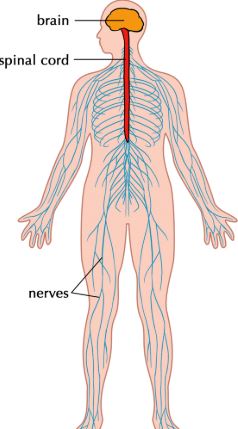
What system is pictured?
Skeletal
Circulatory
Nervous
Muscular

Which two body systems are working together to make this type of physical movement from the basketball player?
Circulatory and Excretory
Skeletal and Muscular
Nervous and Digestive
Respiratory and Skeletal

What is the function of the system pictured?
Helps pumps your blood through out your body.
Helps move and protect your body.
Helps take in oxygen and remove carbon dioxide.
Helps maintain body your temperature.

What organ is this?
Heart
Lungs
Intestine
Trachea
The ribs protect your...
heart
lungs
liver
all of the above

Which system is the stomach in?
respiratory
digestive
skeletal
circulatory
What is the main function of the respiratory system?
enables us to breathe
move nutrients throughout the body
protects our organs
breakdowns the food into smaller pieces

What is the main job of the digestive system?
break down foods into nutrients that can be used by the body
enables us to breathe
pump blood throughout the body
support our body
Bones and joints make up _______________ system
nervous
digestive
muscular
skeletal
When you touch something soft, signals travels from your.... through..... to your .....
skin, brain, nerves
nerves, skin, brain
skin, nerves, brain
brain, skin, nerves

What is C?
veins from lungs
artery to lungs
veins from body
artery to body

Which part is bronchus?
A
B
C
D
The brain is located in the head and is protected by...
skull
rib
femur
spine
The large intestine is called...
(a)
All organ systems have this at its most basic unit.
Cells
Neurons
Tissues
Organs

Organs that work together are part of a(n) ________________________.
cells
tissue
organ system
Sieve tubes and companion cells are present in _____________.
xylem
phloem
cork
cambium
A twig of white-coloured flowers is placed in a beaker containing coloured water. After some time, the white petals become coloured. Which tissue is responsible for this?
Xylem
Phloem
cork
cambium
Which of the following is not a function of epidermal tissue?
Protection
Absorption of water
Transport of water
Gaseous exchange
A permanent tissue is described as complex tissue when it has ___________.
one type of cells, performing two or more different functions
more than one type of cells, performing different functions
one type of cells, performing one function
more than one type of cells, performing one common function
Photosynthesis takes place in leaves due to ______________.
chloroplasts present in parenchyma cells
chloroplasts present in complex cells
chloroplasts present in collenchyma cells
chloroplasts present in epidermal cells

What type of muscle tissue is this?
cardiac
skeletal
smooth

Label the muscle type from left to right.
cardiac smooth skeletal
skeletal cardiac smooth
skeletal smooth cardiac
cardiac skeletal smooth
The liquid part of blood.
Plasma
Platelets
red blood corpuscles
white blood corpuscles
Striated muscles constitute about ____% of the body weight
25
40
50
70
Fluid Connective Tissue is concerned with transportation of:
glucose
amino acid
fat globules
oxygen
water
Ligaments connect muscles to bones at joints.
True
False
Plant tissue that helps as water conducting tissues.
Xylem
Phloem
Epidermis
Vascular bundles
Xylem and phloem tissues together is known as ______
Vascular bundles
Food and water tissues
Tissues
Protective tissues
The tissue which conducts the messages from one part of the body to the other is
Nervous tissue
Epithelial tissue
Connective tissue
A muscle
Nervous tissue consists of
Nerve cell
Tendons
Cyton
Lymph
About two-third of the body weight is made up of _____ tissue.
Nerves
Bones
Muscles
Tissues
Nerve cells are found in _____ and _____
Brain, spinal
Brain , Nerves
Brain , vertebral column
Brain, backbone
The elastic bands that connect one bone to another bone.
Ligament
Tendons
Cartilage
Bones
Tough solid connective tissue is less harder than bones.
Bones
Ligaments
Tendons
Cartilage
_______ is a blood like fluid without the red blood cells that protects the body against infections
Blood
Lymph
Plasma
Fluid

