
 Worksheets
Cambridge Science Unit 6 Stage 7
Total questions: 111
Worksheet time: 1hrs 12mins

How fast does sound travel
343 meters per second
343 Kilometers per second
Sound travels faster in a vacuum
True
False
Reorder the following from fastest to slowest. In which medium does sound travel the fastest?
Solid
liquid
gas
Sound can be reflected off of surfaces like walls
True
False
A baby crying is an example of a (a) pitch sound
A lions roar would be an example of a (a) pitch sound
Record an example of a low pitch sound
Record an example of a high pitch sound
What causes a sound to be produced?
Vibrations
Ears
Something moving
Science
When an object vibrates (a) it is likely to make a (b) pitch sound. Someone blowing a whistle is an example of this type of pitch.
The loudness of sound is measured in ...
Decibles (dB)
Newtons (N)
Kilohertz (kHz)
Sonicals (Sn)
When something vibrates, it passes the vibration to...
its surrounding environment
your ears
your hands
itself
True or False:
Sound energy needs a medium (solid, liquid or gas) to travel through.
True
False
Why does sound travel a longer distance through solids?
Because the particles are loosely bonded
Because the particles are spread out
Because the particles are tightly packed together
Why does sound travel the shortest distance through gases?
Because the particles are loosely bonded
Because the particles are spread out
Because the particles are tightly packed together
Which two materials will absorb sound?
Wooden or tiled floors
Cushions/pillows
Fabric curtains
Glass
Which two materials will reflect sound, creating echoes?
Wooden or tiled floors
Cushions/pillows
Fabric curtains
Bare walls

What type of noise would this sound wave make?
Loud noise
Quiet noise
High pitch noise
Low pitch noise

What type of noise would this sound wave make?
Loud noise
Quiet noise
High pitch noise
Low pitch noise

Sound can travel through solids and liquids only.
true
false

Sound travels best through ............... .
liquids
gases
solids

.................. objects make sound
Vibrating
moving
Shaking

Vibration is a very quick movement ............ and .............
up and down
back and forth
left and right

Continent

Magma

Volcano

Fold Mountain

Layers

Reorder the Earth's physical layers from the top to the center.
Crust
Upper Mantle
Lower Mantle
Outer Core
Inner Core
Reorder the Earth's chemical layers from the top to the center.
Crust
Mantle
Core

As you travel from the inner core toward the crust, how would temperature, pressure and density of the material change?
They would all increase
They would all decrease.
They would stay the same.
Temperature would decrease, but pressure and density would increase.
Your feet are on
The crust
The mantle
The core
Earhquakes takes place on
The crust
The mantle
The core
It is as hot as the surface of the Sun
Crust
Mantle
Core
What layer of the Earth is the thinnest layer?
inner core
outer core
mantle
crust
Which layer of the Earth is the hottest?
Crust
Mantle
Inner Core
Outer Core

Which statement is true about traveling down toward earth's core?
Temperature
&
Density
both decrease
Temperature increases,
Density decreases
Temperature
&
Density both increase
Density increases &
Temperature decreases

Where does earth's magnetic shield originate from
Asthenosphere
Mesosphere
Core
Magnetosphere
The outermost layer of the Earth.
Crust
Mantle
Outer Core
Inner Core
The Earth is (a) years old
The center of the earth is known as the Earths (a)

What is magma
Very hot liquid rock
Very cold liquid rock
The gas form of rock
Sound waves that bounce off a solid surface are called
are absorbed and lose the majority of energy.
do not require a medium to pass through.
reflected waves.
Your awareness of the energy of sound is
absorption.
loudness.
reflected waves.
diffraction.
Loudness can be measured by a unit called
a decibel (dB).
a medium.
transverse waves.
surface waves.
Sound is a form of energy. How is it produced?
by waiting
by vibrating objects
Do sound waves travel through a medium?
YES
NO
It is the highness or lowness of sound or a musical note.
Timbre
Loudness
Pitch
In which of these types of media will sound travel faster?
solid
liquid
gas
vaccum

Which one has a higher pitch?
Cello
Violin
Which one has a lower pitch?
Cello
Violin

Which sound wave has high pitch?
a
b
c
d


An (a) is a reflected sound.
A place where no sound exists is (a)
Which sound wave has the lowest pitch?
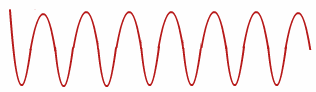
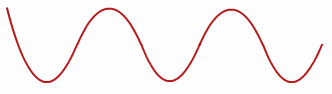
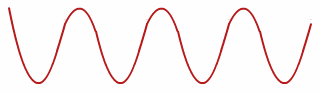
Which sound wave has the highest pitch?


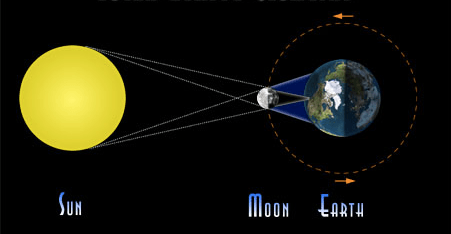
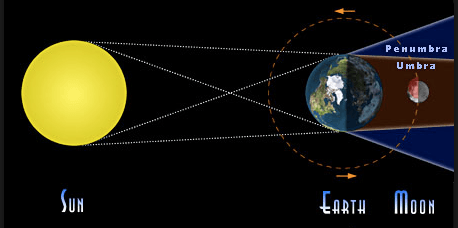
A _____________________ eclipse occurs when the Moon passes into the darkest part of the Earth’s shadow.
Total Lunar Eclipse
Moon Phases
Lunar Eclipse

Lunar eclipse
solar eclipse

During a solar eclipse...
The sun is blocked by the moon
The moon is blocked by the sun
The Earth is blocked moon
A lunar eclipse only happens during a ________ moon.
New
Full
Crescent
Gibbous

It happens when the Earth moves between the Sun and the moon, blocking part of the Sun's light from reaching the moon.
solar eclipse
lunar eclipse
neap tides
spring tides

What is the darkest inner part of the shadow cone called, where a total eclipse can be viewed?
antumbra
umbra
penumbra
gibbous

The line up for a solar eclipse is:
Sun-Earth-Moon
Sun-Moon-Earth
Earth-Sun-Moon
Earth-Moon-Mars
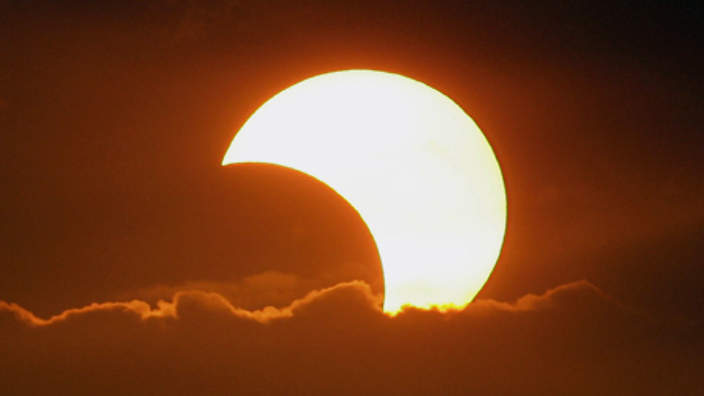

This picture represents (a)

This picture represents (a)
A __________ ___________eclipse occurs when the Sun’s surface is completely blocked out by the Moon.
Total Solar
Partial Solar
A _____________ _____________ eclipse occurs when only part of the Sun’s surface is blocked by the Moon.
Total Solar
Partial Solar

In the diagram above, a _______________ eclipse is occurring.
Lunar
Solar
In the diagram, letter A represents the total shadow of the lunar eclipse. What is the name of the shadow?
Umbra
Penumbra
Where is the ring of fire
around South America
around the Atlantic Ocean
around Africa
around the Pacific Ocean
Lava and Magma
are different types of volcanic rock
are the same but lava is out of the ground
are the same but magma is out of the ground
lava is denser than magma
If a volcano can not erupt any more it is called
active
inactive
dormant
extinct
A volcano that is no longer active.
Sleeping
Alive
Dormant
Inactive
Liquid rock below the earth's crust.
Lava
Cinder
Magma
Ash
The zone of Seismic volcanic activity around the Pacific Ocean.
Ring of Fire
Volcanic Ash
Volcanic Bomb
Ring of Volcanoes
A (a) is a vent in Earth's crust through which melted rock flows onto Earth's surface
What volcano is not erupting but it is supposed to erupt again?
dormant volcano
active volcano
extinct volcano
What event happens when there is a sudden, violent shaking of the earth?
earthquake
deposition
construction
flowing rivers
Very few earthquakes happen along plate boundaries.
True
False
When scientists map the location of earthquakes, where do they find that most earthquakes happen?
middle of plates
in the core of the earth
near the sun
plate boundaries

Which of the following best describes an earthquake?
A large storm with very high speed winds
A violent shaking of the Earth that occurs when two tectonic plates bump into each other
A large cloud that generates rain, hail, and lightning

A force caused the continents to drift apart over time. Once scientists figured out what that force was, the theory of plate tectonics was born! The image above shows what Geologists think the Earth looks like millions of years ago. What name was given to this landmass?
Plate Tectonics
Oceana
Pangea
North America
the place where two different plates have contact.
Pacific Plate
Mountains
Earthquakes
Plate Boundaries

Describe the most likely relationship between these mountains and nearby tectonic plates.
The mountains are probably formed by earthquakes
The mountains are probably formed by the movement of glaciers
The mountains are probably located near the edge of 2 tectonic plates.
The mountains are probably formed by running water.

Is there a pattern to the locations of earthquakes and volcanoes around the globe?
No, earthquakes and volcanoes are random.
Yes, earthquakes and volcanoes usually occur near the boundaries of tectonic plates.
yes, earthquakes and volcanoes usually occur in the middle of tectonic plates.
No, earthquakes and volcanoes usually occur under water.
Mountains can originate from a level surface that is folded upwards.
True
False
Fold mountains are formed when two plates collide head on and their edges are crumbled just like when you ball up a piece of paper.
True
False
Water that falls from clouds as rain, snow, sleet or hail
Evaporation
Condensation
Precipitation
Surface Runoff
The changing of liquid to a gas
Evaporation
Precipitation
Infiltration
Condensation
The process by which water from plants turns into a gas
Evaporation
Infiltration
Transpiration
Atmosphere
The Hawaiian Islands were formed as a result of _____________.
deposition
glaciers
hurricanes
volcanic activity
Certain land features form where plates meet. Which land feature forms where two continental plates collide?
glaciers
oceans
mountains
trenches

What was Wegener's theory?
the earth is flat
the continents were once joined together
What did Wegener notice about the continents?
their coastlines fit together like puzzle pieces
most of them start with the letter A
What is Pangaea?
an underwater mountain chain
a supercontinent that existed millions of years ago
Wegener found similar fossils on continents that are now?
joined by land bridges
separated by water
Evidence of glaciers was found on what two warm continents?
Africa and South America
Australia and Africa
What is the cause of most tsunamis?
an earthquake underwater
a boat striking an iceberg
Where do most tsunamis occur?
Ring of Fire (Pacific Ocean)
Mid Atlantic Ridge (Atlantic Ocean)
This man was responsible for creating the idea of continental drift.
Alfred Wegener
Neil Hess
Harry Cooper
Alex Roger
What happens to a tectonic plate once it subducts under another?
It merges with the other plate to make a thicker plate
It melts back into the mantle
It creates a mountain.
It creates an island chain.
The idea that the continents were once joined together and since drifted apart is called
Pangaea
Continental Drift
Wegener's supercontinent
Sea-Floor spreading

