

wayground logo

Free Printable Worksheets

Font size

S
M
L
XL
Worksheets

Astronomy

Total questions: 114

Worksheet time: 1hrs 9mins

Name
Class
Date
1.

How many planets are there in the Solar System?

a)

Nine

b)

Fifteen

c)

Eight

d)

Eleven

2.

What does Earth orbit around?

a)

Pluto

b)

The moon

c)

The Solar System

d)

The Sun

3.

What is the shape of the planets?

a)

A square

b)

Triangular

c)

Spherical

d)

A circle

4.

An orbit is...

a)

The spinning of the Earth

b)

The path that Earth follows around the Sun

c)

How long it takes the Earth to revolve around the Sun

d)

The path that the Sun follows around the Earth

5.

What moves in an elliptical orbit around Earth?

a)

The moon

b)

The Sun

c)

Asteroids

d)

Other planets

6.

One full orbit is called a...

a)

Axis

b)

Rotation

c)

Inertia

d)

Revolution

7.

How long does Earth's revolution around the Sun take?

a)

24 hours

b)

365 days

c)

10 years

d)

30 minutes

8.

How long does the Moon's revolution take?

a)

365 days

b)

One month

c)

10 years

d)

30 minutes

9.

What keeps planets in orbit around the Sun?

a)

Nothing

b)

Force and motion

c)

Friction

d)

Gravity and inertia

10.

What keeps you on Earth?

a)

Gravity

b)

Inertia

c)

Friction

d)

Magnetism

11.

The Earth moves in an ____________ orbit around the Sun

a)

Circular

b)

Elliptical

c)

Round

d)

Square

12.
The second planet of the Solar System is...
a)
Venus
b)
Mercury
c)
Mars
13.
The fifth planet of the Solar System is...
a)
Saturn
b)
Jupiter
c)
Uranus
14.
The third planet of the Solar System is...
a)
Mars
b)
Venus
c)
Earth
15.
The last (eighth) planet of the Solar System is...
a)
Neptun
b)
Uranus
c)
Mercury
16.
The first planet of the Solar System is...
a)
Mars
b)
Mercury
c)
Venus
17.
The fourth planet of the Solar System is...
a)
Jupiter
b)
Mars
c)
Earth
18.
The biggest planet of the Solar System is...
a)
Saturn
b)
Uranus
c)
Jupiter
19.
The hottest planet of the Solar System is...
a)
Mercury
b)
Venus
c)
Jupiter
20.
The smallest planet of the Solar System is...
a)
Mercury
b)
Venus
c)
Mars
21.
The coldest planet in the Solar System is...
a)
Uranus
b)
Neptune
c)
Saturn
22.
At the centre of the Solar System there is..
a)
The Moon
b)
The Sun
c)
The Earth
23.
How many gas giants are there in the Solar System?
a)
Two
b)
Four
c)
Three
24.
How many planets are in the solar system?
a)
10
b)
8
c)
9
d)
7
25.
Which planets have rings?
a)
Earth, Mercury, Jupiter, and Saturn
b)
Pluto, Venus, Neptune, and Mars
c)
Saturn, Uranus, Jupiter, and Neptune
d)
Mars, Earth, Uranus, and Venus
26.
Which planet has the most moons?
a)
Jupiter
b)
Earth
c)
Saturn
d)
Mars
27.
Which planets are the gaseous planets?
a)
Mercury, Mars, Neptune, and Uranus
b)
Earth, Venus, Jupiter, and Neptune
c)
Neptune, Saturn, Jupiter, and Earth
d)
Jupiter, Saturn, Uranus, and Neptune
28.
Which planet is closest to the Sun?
a)
Earth
b)
Jupiter
c)
Mercury
d)
Venus
29.
The Roman god of water is the inspiration for which planet?
a)
Jupiter
b)
Neptune
c)
Venus
d)
Mars
30.
How many planets have water on them?
a)
6
b)
3
c)
4
d)
1
31.
Which planet is home to the Great Red Spot?
a)
Jupiter
b)
Mars
c)
Saturn
d)
Venus
32.
Which planets have zero moons?
a)
Uranus and Mercury
b)
Neptune and Mars
c)
Venus and Earth
d)
Mercury and Venus
33.
Which planet is now classified as a dwarf planet?
a)
Mercury
b)
Mars
c)
Pluto
d)
Jupiter
34.
What is the hottest planet?
a)
Mercury
b)
Venus
c)
Earth
d)
Mars
35.
Which planet orbits on its axis sideways?
a)
Earth
b)
Jupiter
c)
Saturn
d)
Uranus
36.
Bodies, natural satellites that orbit the Sun
a)
Sun
b)
Planets
c)
Moon
d)
Stars
37.
The third planet from the Sun
a)
Mercury
b)
Neptune
c)
Venus
d)
Earth
38.
The central star in our solar system
a)
Earth
b)
Sun
c)
Northern Star
d)
Moon
39.
What type of surface does the first four planets have?
a)
Rock
b)
Liquid
c)
Gas
d)
Gas and Liquid
40.
What planet is closest to the Sun?
a)
Mercury
b)
Earth
c)
Neptune
d)
Mars
41.
Which planet is farthest from the Sun?
a)
Saturn
b)
Uranus
c)
Neptune
d)
Venus
42.
Which is not true about our moon?
a)
No atmosphere
b)
Has Craters
c)
Has water
d)
Orbits the Earth
43.
What season comes after Winter?
a)
Spring
b)
Fall
c)
Summer
44.
In 365 days, the Earth __________ around the Sun
a)
Rotates
b)
Revolves
45.
In 24 hours, the Earth _____________.
a)
Revolves
b)
Rotates
46.
When a hemisphere is pointed directly towards the Sun, what season will it be?
a)
Fall
b)
Winter
c)
Spring
d)
Summer
47.
What is the phase of the moon when you cannot see it in the sky?
a)
Full
b)
Quarter
c)
Half
d)
New
48.
The moon changes it shape in the sky.
a)
True
b)
False
49.
The moon reflects light from the Sun.
a)
True
b)
False
50.
The Sun affects Earth in all of the following ways EXCEPT:
a)
it heats up Earth's surface
b)
it provides energy for plants
c)
it is stored in fossil fuels such as coal
d)
it reflects light from the Moon
51.
If the Earth moved farther away from the Sun, what would probably happen?
a)
There would be colder weather
b)
There would be more seasons
c)
There would be no moon
d)
There would be no tides
52.
The motion of Earth around the Sun most affects the
a)
timing of tides.
b)
length of a month.
c)
cycle of the seasons.
d)
phases of the Moon.
53.
About how long does it take Earth to make one complete orbit (revolution) around the Sun?
a)
24 hours
b)
7 day
c)
1 month
d)
1 year
54.
During which season is the northern hemisphere tilted toward the Sun?
a)
Summer
b)
Fall
c)
Winter
d)
Spring
55.
During the winter months the Earth is ______.
a)
tilted closer toward the Sun
b)
tilted farther away from the Sun
c)
spinning slower than in Summer
d)
spinning faster than in Summer
56.
During which two seasons is neither hemisphere of Earth tilted toward or away from the Sun?
a)
Summer and Winter
b)
Winter and Spring
c)
Fall and Winter
d)
Fall and Spring
57.
What causes the seasons of the year?
a)
The tilt of Earth on its axis
b)
The rotation of the Moon around Earth
c)
The spinning of Earth on its axis
d)
The northern and southern hemisphere
58.
Which is TRUE of the day-night cycle on Earth?
a)
All parts of Earth are in sunlight at the same time
b)
As the Earth rotates only the part of the Earth lighted by the Sun experiences daytime
c)
Each time the Earth revolves around the Sun, one day has passed
d)
It takes the Earth eighteen hours to complete one day-night cycle
59.
Which of the following is the result of the rotation of Earth?
a)
Cloud formation
b)
Day and night
c)
The seasons
d)
Weather
60.
Which MOST affects the ocean's tides?
a)
the rotation of Earth
b)
the gravitational pull of the Moon
c)
the revolution of Earth around the Sun
d)
the water cycle
61.
At which of the following times of day would your shadow be the longest?
a)
6:00 AM
b)
9:00 AM
c)
1:00 PM
62.
At which of the following times of day would your shadow be the shortest?
a)
7:00 AM
b)
3:00 PM
c)
12:00 PM (noon)
63.
Telescopes make objects look
a)
farther away than normal.
b)
darker than normal.
c)
whiter than normal.
d)
closer than normal.
64.
Which of the following is a characteristic of both the Earth and the Moon?
a)
Atmosphere containing oxygen
b)
Rocky surface covered with landforms
c)
Flowing water in oceans and rivers
d)
Fossils and fossil fuels under the surface
65.

A student observed the Moon on a Tuesday evening. She drew a picture of its shape in her science notebook. Approximately how long will she have to wait before she can see the Moon the same shape and position again?

a)

365 days

b)

29 days

c)

7 days

d)

1 week

66.

The Moon’s surface has many more craters than the Earth’s. What best explains the difference in the number of craters on the surface of the Moon and the Earth?

a)

The Moon rarely gets impacted by meteorites.

b)

The Earth’s atmosphere protects it from impacts.

c)

The Moon’s gravity attracts more meteorites than Earth's.

d)

The Earth rotates on its axis more quickly than the Moon.
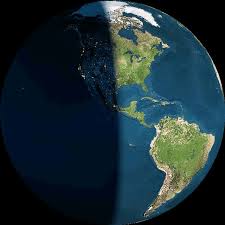
67.

Day and night is caused by the -

a)

orbit of Earth around the Sun

b)

orbit of Earth around the Moon

c)

rotation of Earth on its axis.

d)

rotation of the Moon on its axis

68.

Why do we see different phases of the Moon?

a)

The Moon follows the Sun around Earth.

b)

The Moon orbits around Earth.

c)

The Moon rotates around the Sun.

d)

The Moon changes shape each night.

69.

Which planet is the third planet from the Sun?

a)

Uranus

b)

Mercury

c)

Neptune

d)

Earth

70.

When the Sun, Moon, and Earth are in the positions in the model, what will occur?

a)

a lunar eclipse

b)

a solar eclipse

c)

night time

d)

full moon

71.

Which statement does NOT describe a characteristic of the Sun?

a)

Made mostly of hydrogen gas.

b)

Holds the planets in orbit with its gravity.

c)

Is the only star in our solar system.

d)

Lunar rocks remain unchanged indefinitely.

72.

Which statement describes how the Sun appears to move in the sky as observed each day?

a)

The Sun sets in the north in the evening.

b)

The Sun rises in the east in the morning.

c)

The Sun sets in the east in the evening.

d)

The Sun rises in the south in the morning.

73.

Which is the sixth planet from the Sun?

a)

Earth

b)

Uranus

c)

Saturn

d)

Neptune

74.

Which of the following facts describe the physical characteristics of Earth? Click all that apply.

a)

rocky surface

b)

weathering and erosion occurs

c)

no atmosphere

d)

brightest object in the sky

e)

liquid water

75.

Earth experiences day and night because it -

a)

always faces the Sun

b)

rotates on its axis once each day

c)

orbits on its axis once each day

d)

orbits around the Sun

76.

Which statement is a fact about the Earth and the Moon?

a)

Earth and the Moon both have liquid water.

b)

Earth and the Moon both rotate on an axis.

c)

Earth and the Moon both have a natural satellite.

d)

Earth and the Moon both experience weathering and erosion.

77.

This model can be used to show how the Moon moves around Earth. The model also shows all the following except -

a)

how Earth and the Moon compare in size.

b)

the land areas of Earth and the Moon.

c)

how the Moon orbits around Earth.

d)

the amount of light Earth reflects.

78.

Which of the following planets is always closer to the Sun than it is to Earth?

a)

Mercury

b)

Neptune

c)

Saturn

d)

Jupiter

79.

The diagram shows Earth orbiting the Sun. Letters A and B show two locations in Earth's orbit around the Sun. How long will it take for Earth to travel from point A to point B?

a)

1 month

b)

3 months

c)

6 months

d)

9 months

80.

The surface of Earth constantly changes while the surface of the Moon has remained the same for millions of years. Why is there less change on the surface of the Moon?

a)

Earth's gravity is not as strong as Moon's gravity.

b)

Earth orbits the Sun at a faster rate.

c)

Earth is closer to the Sun.

d)

Earth has wind and water and the Moon does not.

81.

A student wanted to create an informational poster about Earth's rotation on its axis. Which facts should the student add to their poster? Click all that apply.

a)

365 days

b)

causes day and night

c)

makes the Sun appear to move across the sky

d)

causes seasons

e)

24 hours

82.

When you are getting up to go to school in Texas, a student on the other side of Earth is getting ready for bed. What is the reason for this?

a)

Earth orbits around the Sun.

b)

The Moon orbits around Earth.

c)

The Sun rotates on its axis.

d)

Earth rotates on its axis.

83.

Which toy moves the same way that Earth moves on its axis?

a)
b)
c)
d)
84.

Regular eclipses of the Sun and the Moon are best explained by which of the following?

a)

Th relative masses of the Sun, Earth and the Moon

b)

The different compositions of the Sun and the Moon

c)

The rotation of Earth and Moon on their axes

d)

The movement of Earth and the Moon around the Sun

85.
Phases of the moon in which the moon appears to be getting larger are referred to as _.
a)
waxing
b)
waning
c)
new
d)
eclipse
86.
What Moon phase is this?
a)
Waxing Crescent
b)
Waning Gibbous
c)
Waning Crescent
d)
Waxing Gibbous
87.
What Moon phase is this?
a)
Full Moon
b)
Waxing Gibbous
c)
New Moon
d)
Half Moon
88.
What Moon phase is this?
a)
Old Moon
b)
Far Side of the Moon
c)
New Moon
d)
Waxing Gibbous
89.
What phase comes AFTER this one?
a)
Waning Crescent
b)
Waning Gibbous
c)
Waxing Crescent
d)
Third Quarter
90.

Which of the following is most responsible for the changing of seasons on Earth?

a)

Orbit of the Earth around the Sun

b)

Tilt of the axis of Earth

c)

Rotation of the Sun

d)

Rotation of the Earth

91.
The Moon orbits Earth in a ________________ direction
a)
clockwise
b)
counterclockwise
c)
upwards
d)
downwards
92.

If Katherine wanted to represent a solar eclipse, at what position should she place the Moon?

a)

A

b)

B

c)

C

d)

D

93.
Which type of eclipse occurs when the Moon comes directly between Earth and the Sun?
a)
Lunar eclipse
b)
Solar eclipse
94.
What is illuminating the Moon?
a)
Nuclear Fusion
b)
Sunlight
c)
Mirrors
d)
Flood Lights
95.
A solar eclipse only happens during a ________ moon.
a)
New
b)
Cresent
c)
Gibbous
d)
Full
96.

Name the eclipse.

a)

solar eclipse

b)

lunar eclipse

97.
A lunar eclipse only occurs during which moon phase?
a)
New Moon
b)
3rd Quarter
c)
Full Moon
d)
1st Quarter
98.
How many phases does the moon go through?
a)
4
b)
8
c)
10
d)
16
99.

What part of the moon do we see from Earth?

a)

dark side

b)

the near side

c)

bottom

d)

top

100.
The solar system consists of the sun, smaller objects, and ...
a)
8 planets and their moons
b)
6 planets 
c)
only moons
d)
more than 100 stars
101.
They are small and have rocky bodies. 
a)
this describes the inner planets 
b)
this describes the outer planets 
102.
Saturn's rings are made of chunks of 
a)
volcanoes
b)
ice and rock
c)
nitrogen and helium 
d)
ice and 
103.
Uranus is different that other planets because it rotates on it's side. 
a)
True
b)
False
104.
The 2nd planet from the Sun is...
a)
Venus
b)
Mars
c)
Earth
d)
Pluto
105.
Mercury is the ____ planet from the sun. 
a)
1st
b)
2nd 
c)
3rd
d)
4th
106.
The surface of this planet appears red due to rusting iron in the rocks.
a)
Mercury
b)
Mars
c)
Pluto
d)
Venus
107.
This is the largest planet in the solar system.
a)
Saturn
b)
Jupiter
c)
Uranus
d)
Venus
108.
This is the smallest planet in the solar system
a)
Mercury
b)
Venus
c)
Earth
d)
Mars
109.
Only planet known to have life
a)
Earth
b)
Mars
c)
Venus
d)
Mercury
110.

Which of the following statements is correct?

a)

Pluto was once classified as a dwarf planet, but is now classified as a main planet

b)

Pluto was never classified as a planet

c)

Pluto has always been considered a planet

d)

Pluto was once considered a planet, but no longer is

111.
The order of the planets is:
a)
Mars,Venus,Earth,
Mercury,Saturn
Jupiter, Uranus, Neptune
b)
Earth,Venus,Mars
Jupiter, Neptune,
Mercury,Saturn,
Uranus
c)
Mercury,Venus,Earth
Mars,Jupiter,
Saturn,Uranus
Neptune
112.

Name the inner planets

a)

Saturn, Jupiter, Earth, Mercury

b)

Mercury, Venus, Earth, Mars

c)

Venus, Earth, Mercury, Saturn

d)

Neptune, Venus, Mercury, Mars

113.

True or False:

Models of the Solar System are JUST like the real Solar System.

a)

True

b)

False

114.

Ms. Johns shows her class a correct model of the Solar System.

What can the model show that is just like the real Solar System?

a)

how heavy the Earth is

b)

how big the planets are

c)

how fast the Sun spins

d)

how many planets there are
