Font size
 Worksheets
Enzyme Quiz
Total questions: 45
Worksheet time: 40mins
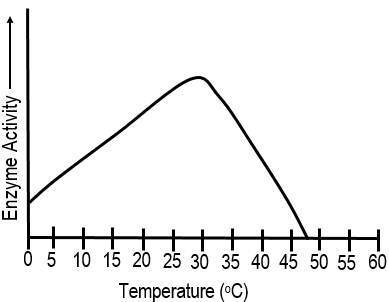
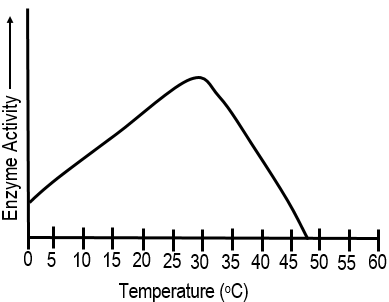
Based on the graph, what temperature does this enzyme work optimally?
15 C
40 C
30 C
47 C


Enzyme A works optimally at pH 7, however, it was removed from its environment and placed into a pH of 1. This is not in its working range. This enzyme is not nonfunctioning how it used too. What do we call the process of an enzyme becoming not functional due to pH change or temp change?
Naturing
Denaturing
Transcription
Translation
Enzyme A works optimally at pH 7, however, it was removed from its environment and placed into a pH of 1. This is not in its working range. This enzyme is not functioning how it used too. Why is the enzyme not functional anymore?
The enzyme shape has altered
The enzyme changed color
The enzyme used all the substrate
The substrate change shape
One morning, Drake ate lots of salt and vinegar chips, which have lots of acid on them. Throughout the day, Drake was feeling stomach pains and his food in his stomach is not being broken down by the enzymes. Why would the enzymes in Drakes stomach not break down the food?
The enzymes have denatured due to the acid in the chips changing the shape of the enzyme.
The enzymes in the stomach have broken the substrate down in to smaller parts
The enzymes in the stomach have built the pieces of substrate in to larger molecules called polymers
The enzymes will function normally not matter the pH change.

What temperature will Pepsin, in the graph, be the least functional?
40 degrees Celsius
30 degrees Celsius
60 degrees Celsius
90 degrees Celsius

Kristina is studying enzymes and noticed that the protein. The protein in question is shown and has a specific shape. Kristina is manipulating this protein by dropping the temperature to out of the protein's working range. What would be Kristina's observation be after dropping the temperature of the Hemoglobin protein to freezing (out of optimal range) be? SELECT ALL THAT APPLY
The protein denatured and changed shape
The protein denatured and does not function the same
The protein's polypeptide sequence is getting longer
Translation occurs before transcription

Why are there many codon options for the amino acid Proline (Pro)?
this allows for less changes in the polypeptide sequence, resulting the same protein and less mutations if the polymerase was to and a mistake
this allows for more changes in the polypeptide sequence, resulting the same protein and less mutations if the polymerase was to and a mistake
So that the mRNA can fit in the ribosome and be read three RNA bases at a time
So that there are not different triglyceride produced
Lactase is an enzyme that breaks down a sugar found in dairy products known as lactose. Some people are lactose intolerant, and this can be due to not having enough lactase production. People who are lactose intolerant may not feel well after eating foods containing lactose.
What does lactase do to lactose?
break down the bigger sugar, lactose, into monosaccharides
break down the bigger sugar, lactose, into lipids
Combine the monosaccharides to form the bigger sugar, lactose
Combine the nucleic acids to form the bigger sugar, lactose
Lactase is an enzyme that breaks down a sugar found in dairy products known as lactose. Some people are lactose intolerant, and this can be due to not having enough lactase production. People who are lactose intolerant may not feel well after eating foods containing lactose.
What is the substrate in the scenario?
lactase
lactose
enzyme
protein
Lactase is an enzyme that breaks down a sugar found in dairy products known as lactose. Some people are lactose intolerant, and this can be due to not having enough lactase production. People who are lactose intolerant may not feel well after eating foods containing lactose.
If the person that ate the dairy/lactose was to have a fever of 104.3 degrees fahrenheit. What would occur to the protein if this is out of the optimal range of operation? SELECT ALL THAT APPLY
the enzyme, lactase, will denature
the enzyme, lactase, will change structure
the enzyme, lactase, will function less - if at all
the enzyme will break more lactose down
the enzyme will break apart into amino acids
An enzyme called glucocerebrosidase breaks down a glycolipid in the body known as glucocerebroside. However, in a genetic disease known as Gaucher’s disease, the body does not produce enough glucocerebrosidase. Therefore glucocerebroside can build up in the body and this can cause serious side effects such as anemia and swelling of the liver and spleen.
Where do instructions to synthesize glucocerebrosidase originate from?
DNA
mRNA
tRNA
Amino Acids
An enzyme called glucocerebrosidase breaks down a glycolipid in the body known as glucocerebroside. However, in a genetic disease known as Gaucher’s disease, the body does not produce enough glucocerebrosidase. Therefore glucocerebroside can build up in the body and this can cause serious side effects such as anemia and swelling of the liver and spleen.
What is the substrate in the scenario?
a glycolipid
a protein
the enzyme
spleen
A popular lab that can be performed by students is to test the reaction rate of catalase enzyme when it acts on the substrate hydrogen peroxide. Catalase has the ability to break down hydrogen peroxide. Catalase can be found in beef liver from the grocery store! However, if the beef liver is boiled first, the catalase will not be able to break down hydrogen peroxide.
What occured to the enzyme in the beef liver, catalase?
it was denatured due to being heated
it was denatured due to being in acidic conditions
it was catalyzed due to the basic conditions
it was denatured due to the non optimal pH conditions
ATP is produced by cellular respiration in your human body cells. There are a variety of enzymes that work to produce ATP, but one of those enzymes is called phosphofructokinase-1. This enzyme is sensitive to blood acidity. Blood can become more acidic if a patient is in respiratory distress.
If you were under respiratory distress, what would be occurring to the phosphofructokinase-1?
It will change shape and function less if at all.
It will NOT change shape, but it WILL change function
It will change shape, but it will NOT change function
it will NOT change shape, and NOT change function

What is the optimal working condition for Salivary Amylase?
6
1
5
10
9

Which two enzymes share a working pH of 7.5?
Pepsin and Salivary Amylase
Alkaline Phosphatase and Pepsin
Pepsin only works at a pH of 6
Salivary Amylase and Alkaline Phosphatase

If the enzyme A was to be placed in the pH of 6, the enzyme would function less or not at all. Why did the function of enzyme A change?
The pH change caused a structure of the polypeptide change
the pH change caused the DNA to fold
the pH caused the mRNA to coil and
the pH caused the cell to lyse

What is the optimal conditions for enzyme B?
Temp of 78 degrees and pH of 8
Temp of 50 degrees and pH of 4
Temp of 90 degrees and pH of 3
Temp of 78 degrees and pH of 2

The diagram represents one way an enzyme can be inhibited. Which statement explains the effect of an inhibitor on an enzyme?
A substrate will be able to bond with the enzyme.
The enzyme will likely be attacked by immune cells
The enzyme will be unable to produce more enzymes.
A substrate will be unable to attach to the enzyme.
What is an enzyme?
A protein that speeds up chemical reactions
A protein that breaks apart molecules
A protein needed for cell structure
A neurological protein involved in cell signaling
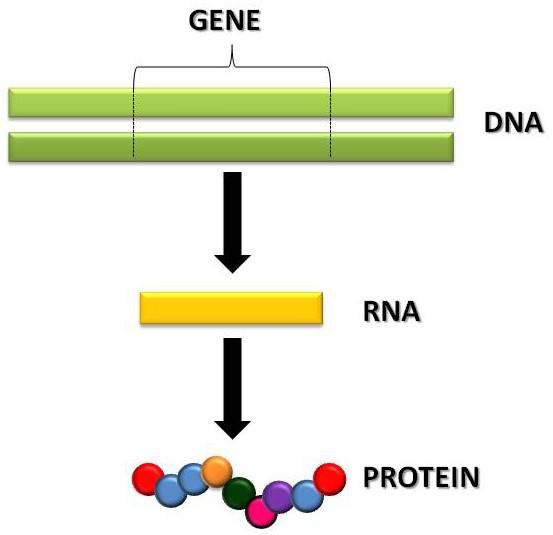
All the genes in both a prokaryotic cell and a eukaryotic cell are expressed at the same time.
True
False
ATG CCA AAT
What happens to an enzyme if the temperature decreases too low?
No effect
Enzyme increases rate
Enzyme decreases rate
Enzyme denatures
When an enzyme becomes denatured, its active site loses it shape. This means that the ______________ chains in the protein (enzyme) become disrupted and cause the protein to unravel and lose its shape.
hyrocarbon
amino acid
nucleic acid
glycoprotein

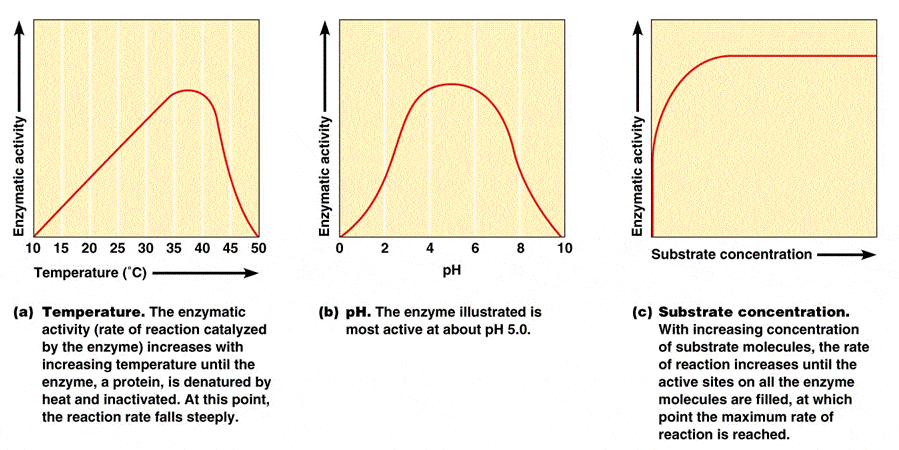
James is conducting an experiment on an enzyme commonly found in the human stomach. At a pH of 4, what could happen to this enzyme?
It would catalyze the digestion of proteins at a faster rate.
It would have no effect on its activity.
It would function at its optimum activity level.
It would possibly denature and lose function.
What happens to an enzyme when it denatures?
The activation energy of the reaction is doubled.
The activation energy of the reaction is lowered.
It's optimal conditions for temperature of the enzyme are doubled.
The shape of the enzyme molecule is changed.
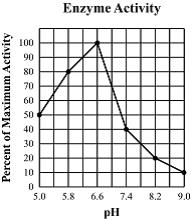
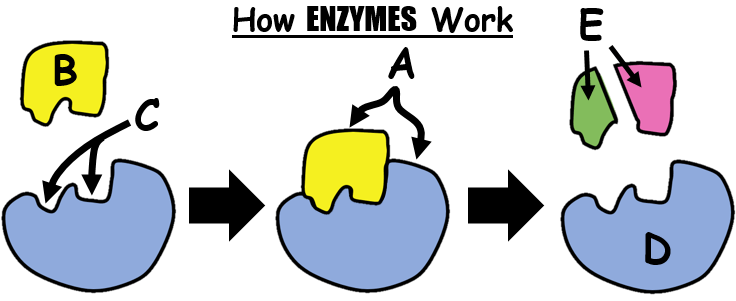
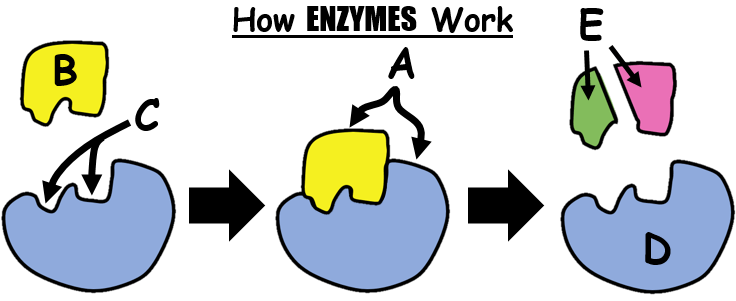
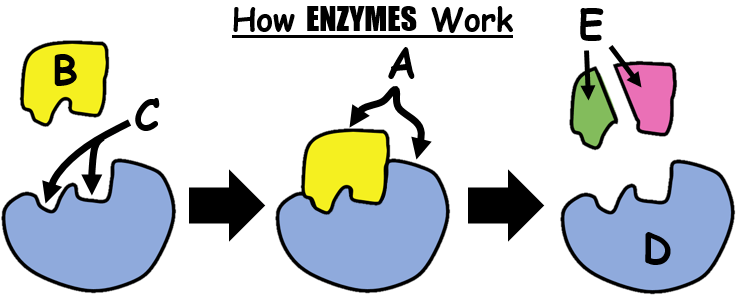
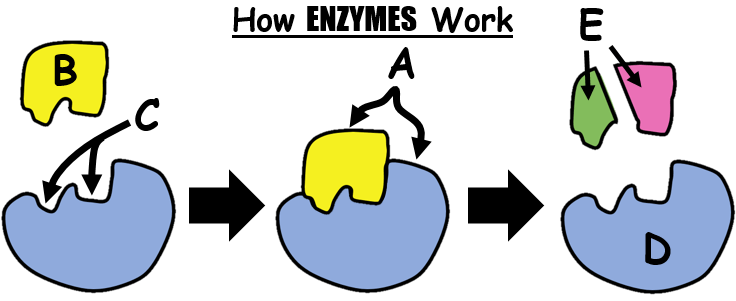
Which 2 factors can affect the rate of enzyme activity?
Light intensity
Temperature
pH
Oxygen concentration
Enzymes can denature (change shape) when the temperature gets too high.
Enzymes can only be used once in a chemical reaction.
Extreme pH can denature enzymes.
Enzymes speed up chemical reactions.