
 Worksheets
Review through chemical equations CP
Total questions: 71
Worksheet time: 1hrs 8mins
Properties you can observe without changing the identity of the substance are called _____________ properties.
chemical
physical
transient
malleable
Flammability is an example of a ___________ property
physical
chemical
reversible
transitive


Na2S
Mg3N2


How many neutrons does oxygen-16 have?
16
15.99
8
Doesn't contain any neutrons

How many electrons are in Aluminium?
40
27
13
14
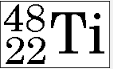
How many protons does this isotope of titanium have?
48
22
26
70
How many neutrons does an Oxygen-19 isotope have?
19
8
11
10
Beryllium
Be
By
Br
Bi
Sodium
S
Sd
Na
K
NH3 + HCl → NH4Cl
PbCl2 + AgNO3 → Pb(NO3)2 + AgCl
__Li + __Cl2 -> __LiCl

Which metal is more reactive than calcium?
magnesium
potassium
silver
aluminum

Will this reaction happen if solid copper is dipped into a solution of zinc nitrate?
Yes
No
What is the percent by mass of a solution made by dissolving 20.0 g of NaCl into 180.0 g of water?
10.0 %
11.1 %
80.0 %
20.0 %
The ___ is the part of the solution being dissolved
solute
solvent
What is the percent by mass of a solution containing 56.5 g of salt in 500 g of water?
11.3 %
5.56%
8.85%
10.2 %
Acid, Base, Neutral: H2SO4
Acid
Base
Neutral
Acid, Base, Neutral: Ba(OH)2
Acid
Base
Neutral
Acid, Base, Neutral : KOH
Acid
Base
Neutral
Acid, Base, Neutral: CaCl2
Acid
Base
Neutral
Which level on a pH scale do bases belong in ?
0-6
8-14

Water, H2O, is classified as what type of molecule?
a polar molecule
a nonpolar molecule
a coordinate covalent compound
an ionic compound

Liquids made up of polar molecules are really good at dissolving ___
metallic solids
lipids and fats
molecular solids
other polar substances

Ths substance in the beaker on the left is
a base
neutral
an acid

If the tested this same substance using a piece of blue litmus paper, the litmus paper would
stay blue
turn red

The test tubes are filled with soft drink and the beaker are full of water at different temperatures. Which of the beakers most likely has the hottest water?
the left one
the one in the middle
the one on the right
A substance that is 3 on the pH scale would be a(n):
acid
base
neutral
solute
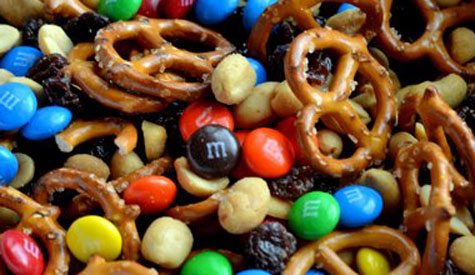



rust (Fe2O3)
compound
heterogenous mixture
homogenous mixture
pure substance

______________ are made from a combination of 2 or more elements chemically combined in fixed proportions...
Molecules
Pure Substances
Compounds
Elements

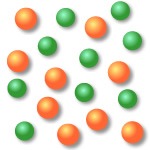
What would letter B be classified as?
Element
Compound
Mixture of Elements
Mixture of Compounds
Mixture of Elements and Compounds

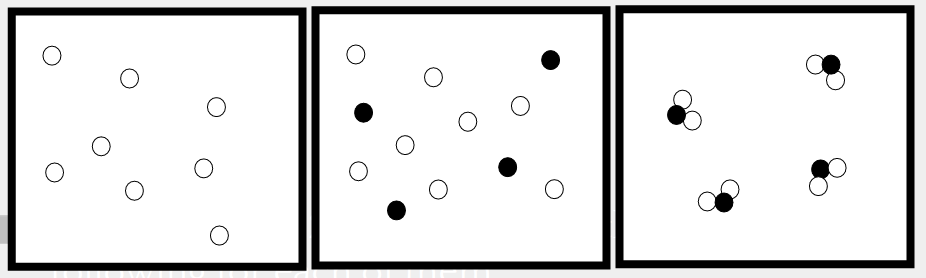
Which is a heterogeneous mixture?
A
B
C
D
E

The diagram above represents which type of matter?
compound
element
homogeneous mixture
heterogeneous mixture

Dirt floating in water, but most of the dirt is settled at the bottom. This an example of which type of mixture?
A solution
A colloid
A suspension
A compound
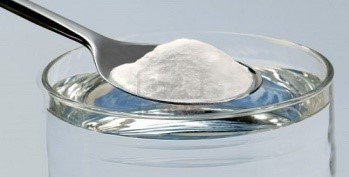
2 Breads + 1 Bologna -->1 Bologna sandwich
What if you have 6 Breads and 2 Bologna, how many sandwiches can you make?
6
3
2
1
The limiting reactant is the ingredient _________________
That you have the most of
that runs out first
The one you need to most of
What is the first thing you need to do in order to solve a stoichiometry problem?
write and balance the equation.
check your ingredients
do the math
Will this reaction occur?
Mg + CuNO3 --->
yes
no
Will this reaction occur?
K + NaNO3 --->
yes
no
A list of elements that organizes them in order of their reactivity is called
Negativity Series
Netflix Series
Activity Series
Displacement Series


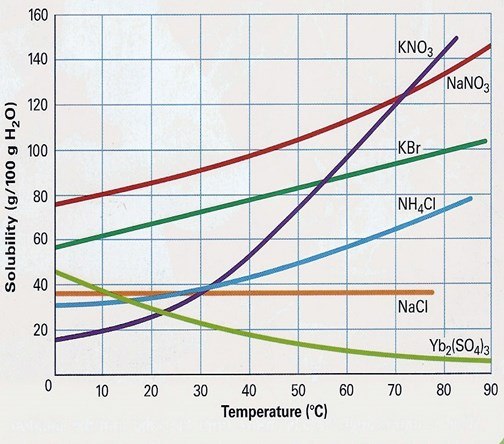
At 80'C, KBr's solubility is:
100g
90g
80g
0g
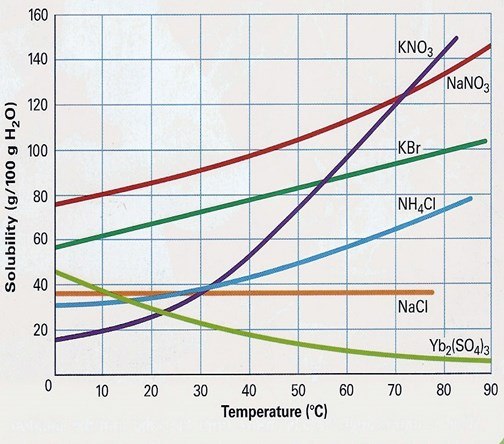
Identify if the following solution would be saturated, unsaturated, or supersaturated: 103 g KBr at 70'C.
Unsaturated
Saturated
Supersaturated

How does a solution become supersaturated?
by pouring lots of solute in it then stirring.
dissolve a little solute in it and stir.
heat the solution to make it dissolve more solute and then cool it down.
dissolve a small amount of solvent in it then heat it up.
The higher the temperature, the more dissolved oxygen in water.
True
False
What happens to fish when the water temperature increases?
they get more active
they get less active
fish are coldblodded therefore they are unaffected by water temperature

The electrons in a nonpolar covalent molecule are shared...
Evenly
Unevenly
Electrons are not shared
None of the Above
The electrons in a polar covalent molecule are shared...
Evenly
Unevenly
Electrons are not shared
None of the Above

