
 Worksheets
Periodic Table Review Game
Total questions: 66
Worksheet time: 51mins
Name
Class
Date
1.
The atomic number tells you what?
a)
number of electrons
b)
number of protons
c)
number of neutrons
d)
both electrons and protons in an atom.
2.
Which element is not a metal?
a)
H
b)
Re
c)
Al
d)
B
3.

The atoms along the staircase are called
a)
metals
b)
nonmetals
c)
metalloids
d)
noble gases
4.
Which is a halogen?
a)
Helium
b)
Chlorine
c)
Oxygen
d)
Neptune
5.
Which is an alkali metal?
a)
Magnesium
b)
Iron
c)
Sodium
d)
Europium
6.
Elements in a ..................have similar chemical properties.
a)
period
b)
group
c)
row
7.

a)
energy levels
b)
valence electrons
c)
protons
d)
neutrons
8.
a)
Same group
b)
Same period
9.
a)
Group 1
b)
Group 17
c)
Group 18
d)
Group 2
10.
a)
Metals
b)
Nonmetals
c)
Metalloids
11.
a)
Metals
b)
Nonmetals
c)
Metalloids
12.
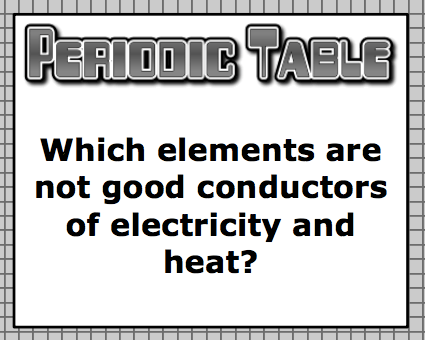
a)
Metals
b)
Nonmetals
c)
Metalloids
13.

How did Mendeleev arrange the elements?
a)
alphabetical
b)
density
c)
melting point
d)
atomic mass
14.
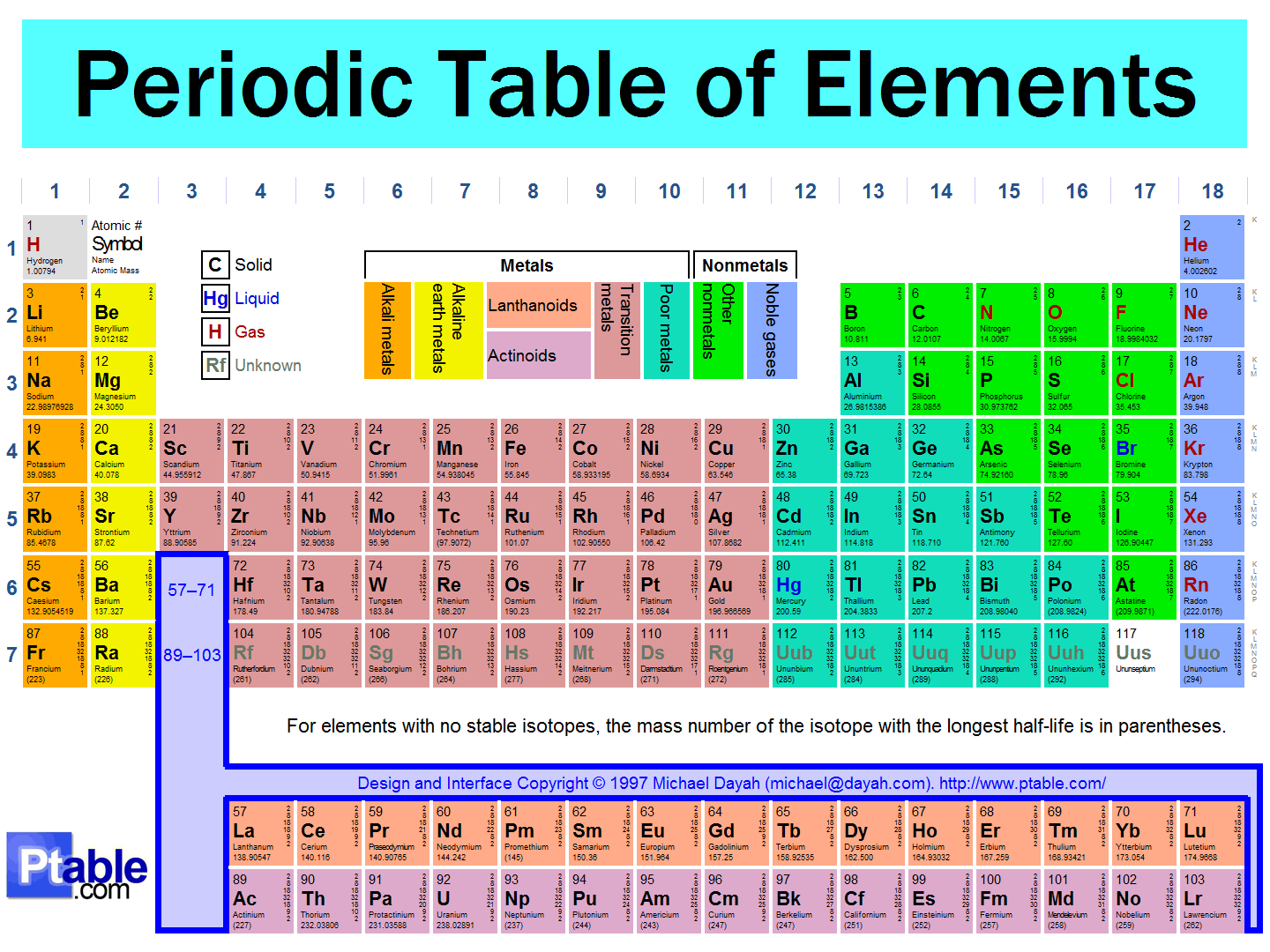
The horizontal row on the periodic table is called a
a)
group
b)
family
c)
period
d)
atomic number
15.

Which of the following is the most metallic element in period 3?
a)
Boron (B)
b)
Sodium (Na)
c)
Argon (Ar)
d)
Silicon (Si)
16.

Which of these element is the least metallic?
a)
Potassium (K)
b)
Carbon (C)
c)
Sulfur (S)
d)
Neon (Ne)
17.

A rule that states that repeating chemical and physical properties of elements change periodically with the atomic number of the elements is the _________.
a)
periodic law
b)
alkaline-earth metals
c)
actinide
d)
group rule
18.

Most of the elements on the periodic table are classified as _____.
a)
Metals
b)
Nonmetals
c)
Metalloids
d)
Periods
19.
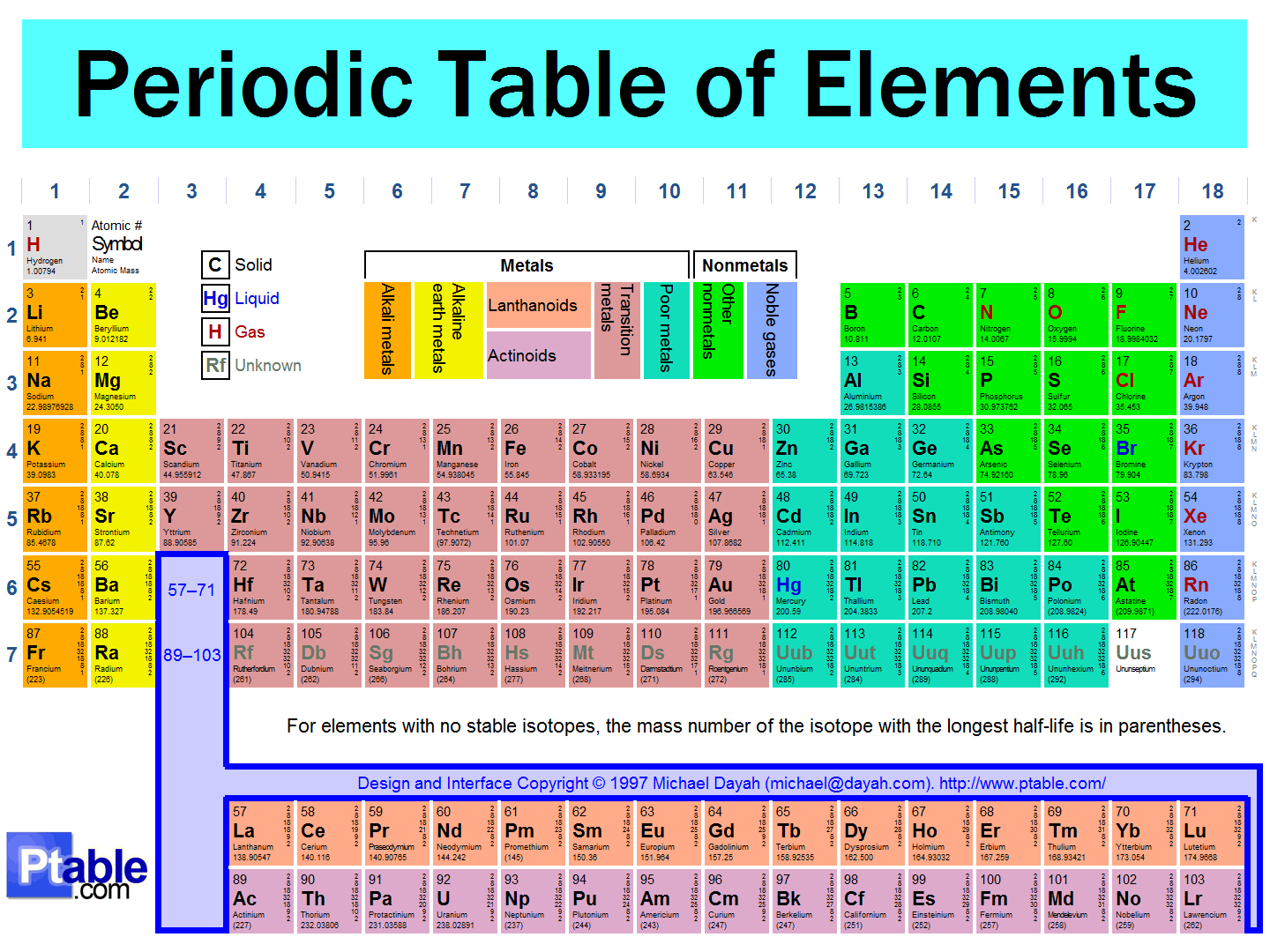
This class of elements are sometimes called "semiconductors."
a)
Metals
b)
Nonmetals
c)
Metalloids
d)
Groups
20.
In the modern periodic table elements are arranged by:
a)
atomic mass
b)
atomic number
c)
valence electrons
d)
number of isotopes
21.
How many electrons does Oxygen need to fill its outer shell?
a)
3
b)
4
c)
1
d)
2
22.
How many Valance electrons does Iodine Have?
a)
6
b)
16
c)
7
d)
17
23.
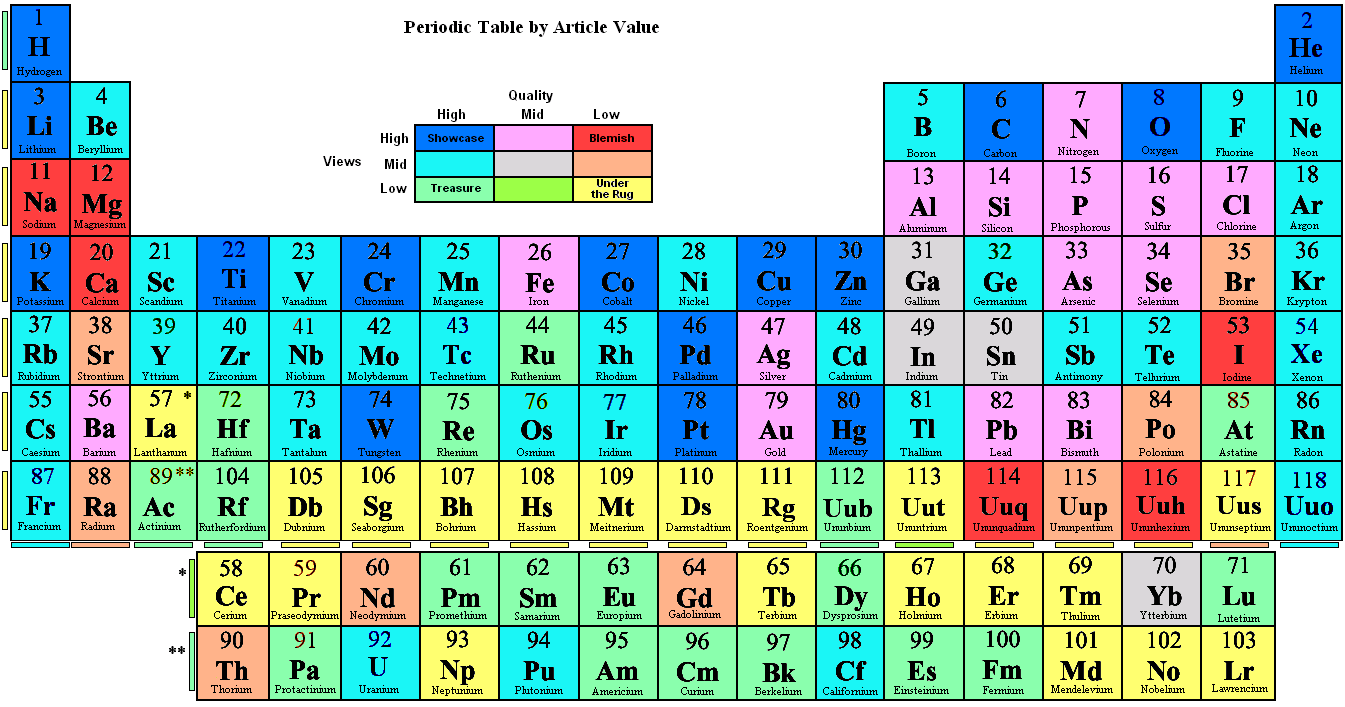
The period for Bromine is ___________.
a)
3
b)
2
c)
4
24.
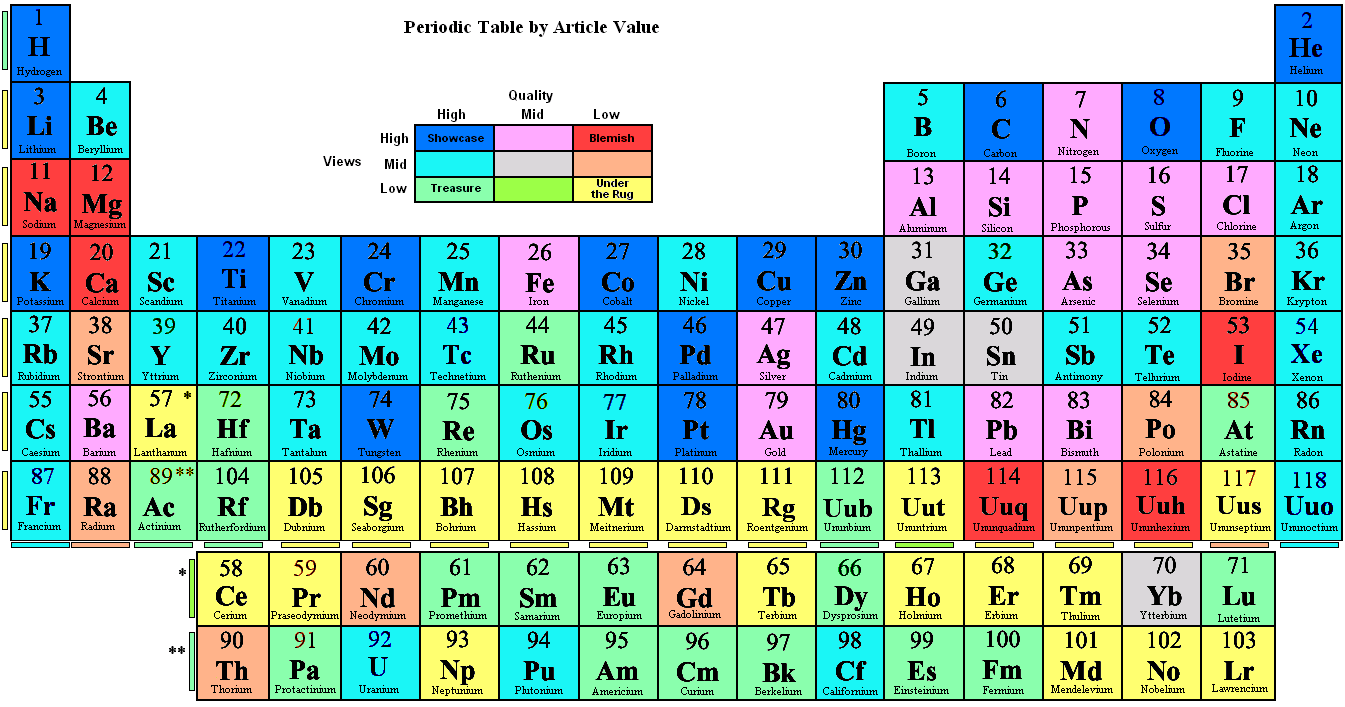
Beryllium is in group number______.
a)
Group 2
b)
Group 3
c)
Group 4
d)
Group 7
25.
The periodic table has __ periods.
a)
18
b)
8
c)
2
d)
7
26.
An element's identity is determined by the number of
a)
electrons.
b)
protons.
c)
neutrons.
d)
valence.
27.
Group 18 elements are known as the _____ _____ and have full valence shells.
a)
royal gases.
b)
supreme solids.
c)
noble gases.
d)
legit liquids.
28.
Which elements have the most similar chemical properties?
a)
K and Na
b)
K and Ca
c)
K and Cl
d)
K and S
29.
What period and group is Silver (Ag)?
a)
Period 2, Group 1
b)
Period 3, Group 16
c)
Period 5, Group 11
d)
Period 2, 14
30.
The elements in this group only have 1 valence electron and include Li, Na, and K.
a)
Group 11
b)
Group 1
c)
Group 3
31.
Which of the following is not a property of metals?
a)
brittle
b)
malleable
c)
lustrous
d)
conductive
32.
The periodic table has __ groups.
a)
8
b)
7
c)
18
d)
2
33.
Calcium is most like which of the following?
a)
Barium
b)
Potassium
c)
Cesium
d)
Nitrogen
34.
The alkali metals have how many valence electrons?
a)
1
b)
2
c)
7
d)
8
35.
The noble gases have how many valence electrons?
a)
1
b)
2
c)
7
d)
8
36.
Membership in a family is based on the number of
a)
electrons
b)
valence electrons
c)
protons
d)
neutrons
37.
The atomic number tells you what?
a)
number of electrons
b)
number of protons
c)
number of neutrons
d)
both electrons and protons in an atom.
38.
If a material can easily be drawn into the shape of a wire, it is
a)
Ductile
b)
Magnetic
c)
Malleable
d)
Reactive
39.
How many Valance electrons does Iodine Have?
a)
6
b)
16
c)
7
d)
17
40.
Which elements have the most similar chemical properties?
a)
K and Na
b)
K and Ca
c)
K and Cl
d)
K and S
41.
The subatomic particle with a negative charge is the
a)
electron
b)
proton
c)
neutron
d)
nucleus
42.
Valence electrons are:
a)
Electrons farthest away from the nucleus
b)
Electrons closest to the nucleus
c)
Electrons that just come and go - they don't stay with the atom
d)
Electrons in the second shell
43.

This could be the dot diagram of
a)
Be
b)
B
c)
C
d)
Ne
44.
Most elements will gain or lose electrons so that they end up with _______ valence electrons.
a)
2
b)
6
c)
8
d)
10
45.
How is helium different from the other noble gases?
a)
It will react with other elements.
b)
It has 10 valence electrons.
c)
It has 2 valence electrons.
d)
It is heavier than the other noble gases.
46.
Valence Electrons determine an element's _____________.
a)
Reactivity
b)
Location
c)
Identity
d)
Color
47.
What element in period 2 has 7 valence electrons?
a)
Beryllium
b)
Chlorine
c)
Magnesium
d)
Fluorine
48.
How many energy levels are found in period 2?
a)
1
b)
2
c)
3
d)
4
49.
Which element has the same number of electrons in the outermost energy level as lithium?
a)
Hydrogen
b)
Beryllium
c)
Carbon
d)
Magnesium
50.
Which element has the same number of energy levels as nitrogen?
a)
Boron
b)
Chlorine
c)
Phosphorous
d)
Silicon
51.
How many electrons should Lithium have around its Lewis dot model?
a)
1
b)
2
c)
3
d)
4
52.

This is a correct dot diagram for magnesium (Mg)
a)
true
b)
false
53.

This is a correct dot diagram for neon (Ne)
a)
true
b)
false
54.

Which of the following is the correct Lewis dot structure for the molecule fluorine (F2)?
a)
A
b)
B
c)
C
d)
D
55.

What is the correct formula for this molecule?
a)
NH
b)
N3H
c)
NH3
d)
NH4
56.

This is a correct dot diagram for oxygen (O)
a)
true
b)
false
57.
Hydrogen needs _____ electrons in its valence shell to be stable.
a)
4
b)
6
c)
8
d)
2
58.

What is krypton?
a)
element
b)
compound
c)
mixture
59.

What is water?
a)
element
b)
compound
c)
mixture
60.

When two or more elements chemically combine
a)
element
b)
compound
c)
mixture
d)
solution
61.
Which one can be found on the periodic table?
a)
Compound
b)
Element
62.

?
a)
Boron
b)
Carbon
c)
Nitrogen
d)
Lithium
63.

?
a)
Helium
b)
Oxygen
c)
Sodium
d)
Phosphorous
64.
What is the goal of the Lewis Dot Structure?
a)
To determine the electron position.
b)
To show the element's valence electrons & bonding capabilities.
c)
To find the atomic mass of an element.
d)
To search for the number of electrons in an individual atom.
65.
When chlorine reacts it wants to ______________ electron.
a)
gain 1
b)
lose 1
c)
gain 2
d)
lose 2
66.

How many extra electrons does carbon need to be stable?
a)
six
b)
four
c)
five
d)
three
100 %

