wayground logo

Free Printable Worksheets

Font size

S
M
L
XL
Worksheets

Sound

Total questions: 90

Worksheet time: 2hrs 45mins
Name
Class
Date
1.
You and your father inspect an empty house with the hopes of buying it. You walk through the rooms talking to one another, and you notice that your voices and footsteps are echoing in the big, empty house. What causes the echo?
a)
sound waves reflecting off smooth, flat surfaces throughout the house
b)
sound waves moving around the large rooms
c)
sound waves moving slowly through air
d)
sound waves refracting around corners in the empty rooms
2.
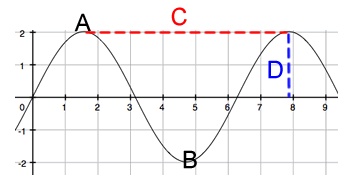
If distance C on the diagram increased, what would happen to the pitch? 
a)
The pitch would be louder. 
b)
The pitch would be softer. 
c)
The pitch would be higher. 
d)
The pitch would be lower. 
3.
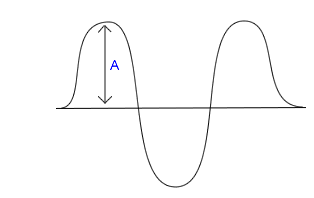
If the distance represented by the letter A were increased, how would it change the way the sound was heard?
a)
The sound would be higher. 
b)
The sound would be lower. 
c)
The sound would be softer. 
d)
The sound would be louder. 
4.
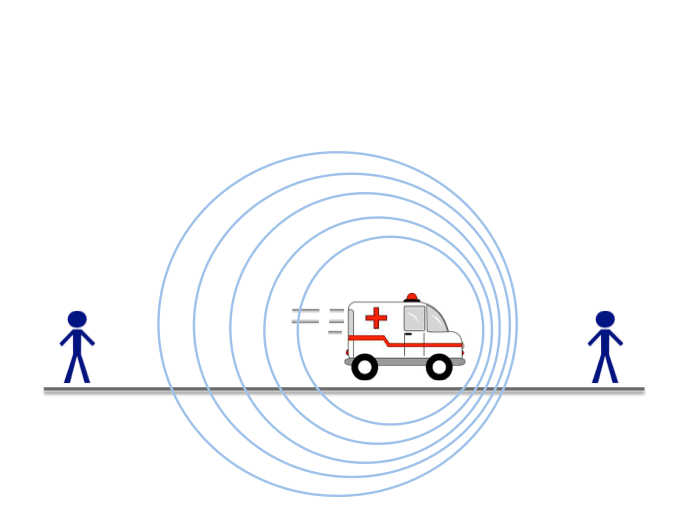
What best describes the doppler effect?
a)
An apparent change in frequency of a wave due to the relative motion between a wave source and an observer
b)
When sound changes pitch
c)
When light changes color
d)
An apparent change in the amplitude of a wave due to the relative motion between a wave source and an observer.
5.
A wave that requires a medium through which to travel
a)
mechanical wave
b)
chemical wave
c)
electromagnetic wave
d)
pitch
6.
When an ambulance move TOWARD you it sounds ________ pitched. 
a)
high
b)
low
c)
medium
7.
What can you tell about this object's motion?
a)
Moving to the North (up).
b)
Moving to the South (down). 
c)
Moving to the West (left). 
d)
Moving to the East (right). 
8.
______ is how high or low a sound is; depends on the frequency.
a)
pitch
b)
frequency
c)
sound
d)
medium
9.
A reflected sound wave is know as a/an ___________.
a)
frequency
b)
pitch
c)
echo
d)
rarefaction
10.
After the train passed, the pitch of the train whistle became lower. This change in sound would be represented by what change in the diagram above? 
a)
The distance represented by C would increase. 
b)
The distance represented by C would decrease. 
c)
The distance represented by D would increase. 
d)
The distance represented by D would decrease. 
11.
If I increase the energy of a wave, what will happen to the pitch? 
a)
stays the same
b)
increases
(higher pitch)
c)
decreases
(lower pitch)
d)
goes up but levels off
12.
A soft, high pitch sound would have which of the following....
a)
low frequency 
high amplitude
b)
low frequency 
low wavelength 
c)
high frequency 
low amplitude
d)
high frequency 
high amplitude 
13.
______ is how loud or soft a sound is; depends on the amplitude.
a)
pitch
b)
frequency
c)
loudness
d)
medium
14.
When the car moves AWAY from you, its horn seems...
a)
Low pitched
b)
High pitched
c)
Normal
15.
Hearing your brother's music playing from down the hall is an example of what type of wave interaction?
a)
reflection
b)
interference
c)
refraction
d)
diffraction
16.
A wave in which the particles vibrate in the same direction as that in which the wave is traveling; sound waves
a)
longitudinal wave
b)
ocean wave
c)
transverse wave
d)
mechanical wave
17.
A soft, low pitch sound would have which of the following....
a)
low frequency 
high amplitude 
b)
high frequency 
high amplitude 
c)
low frequency 
low wavelength  
d)
low frequency
low amplitude 
18.
When comparing the two waves that are shown, how would Wave A (green wave) differ than Wave B (black wave)?
a)
Wave A and B have the same amplitude, but wave B (black) has a lower pitch.
b)
Wave A and B have the same amplitude, but Wave A has a lower pitch. 
c)
Wave A and B have the same pitch, but Wave A is a softer sound. 
d)
Wave A and B have the same pitch, but Wave B is a softer sound. 
19.
When does sound refract?
a)
When it travels in a vacuum.
b)
When it moves through cold air.
c)
When it travels in only one medium.
d)
When it moves from one medium to another.
20.
How are light waves and sound waves similar?
a)
The both carry matter & energy
b)
They both carry energy.
c)
They both travel in vacuums.
d)
They both carry matter.
21.

________ is a reflected sound.

a)

Vibration

b)

Echo

c)

Pitch

d)

Volume

22.
Sound waves are what kind of wave?
a)
Longitudinal
b)
Transverse
c)
Surface
d)
Electromagnetic
23.
Sound is caused by....
a)
molecules
b)
vibrations
c)
people
d)
space
24.
If you want to change the pitch of a sound, you have to change the ___
a)
frequency
b)
amplitude
c)
speed
d)
volume
25.
A sound with a high frequency has a _____ pitch. A sound with a ____ frequency has a low pitch.
a)
high, low
b)
low, high
c)
medium, high
d)
high, medium
26.

What wave characteristic determines the loudness of a sound?

a)

frequency

b)

speed

c)

wavelength

d)

amplitude

27.

Sound is a form of 

a)

Music

b)

Energy

c)

Strength

d)

Beats

28.

Area of a sound wave where particles are apart

a)

Compression

b)

Rarefaction

29.

Sound can also be called _______

a)

noise.

b)

heat.

c)

matter.

d)

distance.

30.
Why is sound able to travel faster through a solid than a gas?
a)
Gas molecules are packed tightly.
b)
Sound does not travel faster through a solid than a gas.
c)
Solid molecules are packed tightly.
d)
Gas molecules move slowly.
31.
Sound does not travel in space because
a)
Space is too far away.
b)
There is no matter in space.
c)
Space is the final frontier
d)
Space has planets.
32.
How does sound travel?
a)
Sounds travels in waves
b)
sound travels slow
c)
sound travels fast
d)
sound doesn't travel
33.
Sound travels fastest through...
a)
gas
b)
liquid
c)
solids/metals
d)
space
34.
Sounds travels slowest through...
a)
space
b)
solids/metals
c)
gas
d)
liquids
35.
Sound is a form of energy produced by ______________.
a)
vibrations
b)
distances
c)
prisms
d)
Ms. Crews
36.
How is sound produced?
a)
By the vibration of particles
b)
By the transfer of particles 
37.
Area of a longitudinal wave where particles are CLOSE together.
a)
Compression
b)
Rarefaction
38.
Area of a longitudinal wave where particles are APART. 
a)
Compression
b)
Rarefaction
39.
Sound moves in a _________.
a)
Transverse wave
b)
Longitudinal wave
40.
Sound is a form of? 
a)
energy
b)
pitch
c)
volume
41.

How can I produce a sound?

a)

heating an object

b)

hitting an object

c)

moving the mouth

d)

looking an object

42.

The ______________ dense the material the _______________ the sound will travel.

(a)  

43.

If the material is ________________ dense the sound wave will travel ________________

(a)  

44.

As particles in gas get more heat energy they move faster. A _________________ gas will allow sound to move_________________ than a cool gas.

(a)  

45.

Between waves B and D, which is louder?

a)

Wave B

b)

Wave D

46.
Sound travels as a ___________ wave. 
a)
longitudinal
b)
transverse
c)
water
d)
slinky
47.
Sound reflecting off a surface produces a(n) 
a)
wave. 
b)
echo. 
c)
transverse. 
d)
reflection. 
48.
A narrow beam of light that travels in a straight line. 
a)
lightning
b)
flood light
c)
light ray
d)
light weight
49.
If you see an object as orange,
a)
it is absorbing orange light and reflecting all other colors. 
b)
it is reflecting all colors. 
c)
it is absorbing all colors. 
d)
it is reflecting orange light and absorbing all other colors. 
50.
If you cannot see through an object, in other words, light does not pass through it,  it is 
a)
transparent.
b)
translucent.
c)
opaque.
d)
solid.
51.
This type of material allows most light to pass through but forms a blurry image, like looking through a fogged up window.
a)
opaque
b)
translucent
c)
transparent
d)
echo
52.
Sound waves are ___________ waves that can only travel through ______.
a)
transverse,   air
b)
transverse, matter
c)
longitudinal, liquids
d)
longitudinal, matter
53.
A sound wave can travel through a vacuum or empty space.
a)
True
b)
False
54.
Any reflecting surface is known as a(n)
a)
opaque object.
b)
mirror.
c)
lens.
d)
glass.
55.
A ______ has at least one curved side and causes light to bend.
a)
light
b)
mirror
c)
lens
d)
retina
56.
How loud or soft people hear a sound is related to the _________ of the sound wave.
a)
amplitude
b)
longitude
c)
echo
d)
lens
57.
Sound intensity is measured in units called ________ named after Alexander Graham Bell.
a)
tones
b)
hertz
c)
amplitudes
d)
decibels
58.
A sound wave requires a medium, or material to travel through.
a)
True
b)
False
59.
A green plant appears green because it is absorbing all colors except
a)
yellow.
b)
blue.
c)
red.
d)
green.
60.
Glasses and contacts contain ______ which bend light to hit your retina correctly.
a)
lenses
b)
glass
c)
polish
d)
coatings
61.
The distance from one point on a wave to that same point on the next wave is known as
a)
amplitude.
b)
frequency.
c)
wavelength.
d)
reflection.
62.
Wave frequency is measured in the unit of 
a)
hertz.
b)
pings.
c)
clicks.
d)
tones.
63.
Waves transfer
a)
water. 
b)
wind. 
c)
energy. 
d)
particles. 
64.
How high or low a sound is, is that sound's
a)
wave. 
b)
pitch. 
c)
longitude. 
d)
amplitude. 
65.
Something that emits light is known as a(n) _____   _____. 
a)
light source
b)
flashlight
c)
light saber
d)
reflect
66.
True or False? Sound is a vibration.
a)
True
b)
False
67.

Sound is -

a)

mechanical energy

b)

chemical energy

c)

not energy

68.

Q1.If you press down on a piano key it makes a sound wave. Now you press the key harder, and it's louder. How did that change the sound wave?

a)

The sound's amplitude and energy increased.

b)

The sound's wavelength increased.

c)

The sound's frequency increased.

d)

The sound's energy would decrease

69.

The voice box is also called as

a)

(a) stomach

b)

(b) heart

c)

(c) larynx

d)

(d) mouth

70.

High frequency waves make

a)

high pitch sounds

b)

low pitch sounds

c)

loud sounds

d)

soft sounds

71.

What happens to the speed of sound when it travels in warmer objects?

a)

constant

b)

faster

c)

slower

d)

cannot be determine

72.

In what medium does the sound travel the fastest?

a)

solid

b)

liquid

c)

gas

d)

all of the above

73.

Speed of sound depends on the __________.

a)

the pressure of the medium

b)

the temperature of the medium

c)

. the temperature of the source producing sound

d)

temperature and humidity of the medium

74.

Below is the data of air temperature of the four cities at the same time:

Metro Manila 29 0C

Cebu City 27 0C

Davao City 26 0C

Butuan City 25 0C

Which city does sound travel the fastest?

a)

Butuan City

b)

Cebu City

c)

Davao City

d)

Metro Manila

75.
Why is sound able to travel faster through a solid than a gas?
a)
Gas molecules are packed tightly.
b)
Sound does not travel faster through a solid than a gas.
c)
Solid molecules are packed tightly.
d)
Gas molecules move slowly.
76.

Sound waves travel the slowest through _____________.

a)

gases

b)

solids

c)

liquids

77.
Sound is caused by....
a)
molecules
b)
vibrations
c)
people
d)
space
78.

Sarah and Maria made a telephone using two cans and a string. It was a very long string. Maria went upstairs in her house and Sarah stayed downstairs. Maria spoke softly into the can. "I can hear you!' Sarah said back. How can this happen?

a)

Sound waves travel through a vacuum.

b)

Sound waves travel from high to low.

c)

Sound waves travel through solids like the string.

d)

Maria talked so loudly that Sarah could hear her without the phone.

79.

Which of the following does the speed of sound waves depend on?

a)

loudness

b)

pitch

c)

temperature

d)

thickness

80.

Which of the following explains why echo is heard in an empty gym?

a)

There are only hard surfaces so sound only reflects

b)

Sound has nowhere to go

c)

Sound travels in waves

d)

. Sound is unpredictable.

81.

Which wave property is observed when a boy shouts and hears his own voice inside the church?

a)

echolocation

b)

refraction

c)

reflection

d)

both reflection and refraction

82.

How much is the increase in the speed of sound in the air for every 1C0 increase in temperature?

a)

0.06 m/s

b)

0.6 m/s

c)

6 m/s

d)

60 m/s

83.

Which factor does not affect the speed of sound?

a)

density

b)

distance

c)

elasticity

d)

temperature

84.

Which phenomenon explains why sound is heard at longer distances at night than in the day?

a)

refraction

b)

reflection

c)

echolocation

d)

reverberations

85.

How fast does sound travel if the air temperature is 25 0C?

a)

334 m/s

b)

340 m/s

c)

343 m/s

d)

346 m/s

86.

What is the relationship of temperature to the speed of sound?

a)

equal

b)

no relationship

c)

directly proportional

d)

inversely proportional

87.

Which of the following is true about the effect of air temperature on the speed of sound?

a)

The lower the temperature the faster the speed.

b)

The higher the temperature the faster the speed.

c)

The higher the temperature the slower the speed.

d)

The temperature does not affect the speed of sound

88.

Concerts usually take place during nighttime where everyone has a chance to see and to enjoy the live show. Why does sound contribute to the concert schedule?

a)

Sound is more audible at night due to minimizing noise.

b)

Sound propagates faster in the air at night than at daytime

c)

Sound is heard well in far areas during nighttime than during daytime

d)

Sound changes and refracts when it encounters a medium of different densities.

89.

What is the speed of sound in dry air at 0 Degree C?

a)

31 m/s

b)

331 m/s

c)

3300 m/s

d)

300000 m/s

90.

Below is the data of air temperature of the four cities at the same time:

Metro Manila 29 0C

Cebu City 27 0C

Davao City 26 0C

Butuan City 25 0C

Which city does sound travel the slowest?

a)

Butuan City

b)

Cebu City

c)

Davao City

d)

Metro Manila