wayground logo

Free Printable Worksheets

Font size

S
M
L
XL
Worksheets

Science 8 Online Revision 7: SE 2

Total questions: 85

Worksheet time: 1hrs 4mins

Name
Class
Date
1.

What was the skins used for?

a)

building material

b)

clothes

c)

containers

d)

knives

2.

Which of this natural resource was used as fuel?

a)

Rock

b)

Shell

c)

Wood

d)

Skins

3.

Example of best environment for growing crops is ....

a)

glasshouse

b)

farming

c)

hydroponics

d)

hydrophonics

4.

Why should we remove an invasive species?

a)

They won't be able to survive in a new environment.

b)

They will eat native species and cause other species to decrease.

c)

We should not remove them and let nature be.

5.

Which is a consequence of an increase in greenhouse gases?

a)

Ice caps freezing

b)

global cooling

c)

sea levels rising

6.

As species go extinct what will happen to the biodiversity in that ecosystem?

a)

Decrease

b)

Increase

c)

Stay the same

7.

What will happen to ocean life if the water gets warmer?

a)

They will be fine

b)

decrease in variation

c)

increase in variation

8.

What is biodiversity?

a)

All the same species living in one area

b)

the variability among organisms

c)

all the endangered species in one area

9.
How has the atmosphere changed over the last 10,000 years?
a)
Carbon dioxide has increased
b)
Carbon dioxide has decreased
c)
Water vapour has remained at a constant level
d)
Nitrogen has increased
10.
A farmer is using a crop duster to help spray chemicals on his crops to kill insects. The chemicals the farmer uses seeps into the soil and drains into the nearby river. How does this affect the animals that live in the river?
a)
They swim away
b)
They change color
c)
They get sick or die
d)
The chemicals give them more energy
11.
How does nutrient-rich agricultural runoff influence water ecosystems?
a)
increases overall productivity
b)
increases oxygen levels
c)
decreases algal productivity
d)
can result in harmful algal blooms
12.
In what ways can algal blooms be harmful?
a)
blocks out sunlight
b)
releases toxins into the water
c)
consumes oxygen when it dies
d)
All of the above
13.
Most water pollution is the result of
a)
human activities.
b)
drought.
c)
volcanic eruptions.
d)
storms.
14.
the trend of increasing global temperatures is known as 
a)
global warming
b)
ozone layer
c)
greenhouse effect
d)
acid rain
15.

Pollution occurs if

a)

there is more waste that resources can tolerate.

b)

there is less waste than environmental capacity.

c)

recycling occurs.

d)

waste is thrown away.

16.

Air pollution is

a)

a form of photochemical smog.

b)

gaseous sulfur and phosphorus.

c)

a concentration of a trace substance at a level greater than occurs in average air.

d)

concentrated in tropical regions.

17.

The increase in Earth's temperature caused by carbon dioxide trapping radiation is

a)

thermal feedback.

b)

the greenhouse effect.

c)

photochemical smog.

d)

the anaerobic process.

18.

Conservation is

a)

invention and diffusion of new agricultural practices.

b)

breeding programs to rebuild endangered species.

c)

maintenance of resources in their present condition.

d)

the sustainable use and management of natural resources.

19.

Preservation is

a)

the sustainable use and management of natural resources.

b)

maintenance of resources in their present condition.

c)

invention and diffusion of new agricultural practices

d)

breeding programs to rebuild endangered species.

20.
What is the biggest danger posed by global warming to people living in coastal areas?
a)
increased precipitation
b)
increased acidity of sea water
c)
lack of carbon dioxide in the atmosphere
d)
rising sea level
21.

How can the planting of new trees most help reduce climate change?

a)

Trees help create breezes.

b)

Trees release moisture that cools the atmosphere.

c)

Trees take in carbon dioxide from the atmosphere during photosynthesis.

d)

Trees block the release of greenhouse gases from soil.

22.

Trees are so important to our environment because they absorb (sink) which greenhouse gas?

a)

methane

b)

carbon dioxide

c)

water vapor

d)

oxygen

23.

Oil, gasoline and coal are all examples of this type of fuel.

a)

natural gases

b)

fossil fuels

c)

alternative fuels

d)

bio-fuels

24.

Which layer of our atmosphere is being destroyed causing our sun to do more damage to our skin.

a)

ozone

b)

mesosphere

c)

exosphere

d)

troposphere

25.

Many species that lived in the past no longer exist today. So how do we know about them?

a)

Books

b)

Internet

c)

Word-of-Mouth

d)

Fossils

26.

In 1859, Charles Darwin proposed a theory based on the concept of natural selection. His theory explains the evidence of the gradual changes of all organisms over millions of years. This theory is known as the Theory of __________________.

a)

Mutation

b)

Adaptations

c)

Natural Selection

d)

Evolution

27.
A plant with orange flowers was crossed with a plant with blue flowers. All of the offspring have orange flowers. Which of these terms describes the blue flower trait?
a)
Recessive
b)
Dominant
c)
Codominant
d)
Incomplete Dominance
28.
The punnett square shows a cross between two flowering plants. One parent has pink flowers (Pp) and the other parent has white flowers (pp). What percentage of pink flowers will you have? 
a)
0
b)
25
c)
50
d)
75
29.
The cross of a plant with white flowers (WW) and a plant with Green flowers (ww) is shown in the Punnett square below. What would be the genotype and phenotype of the offspring from this cross?
a)
Ww - white
b)
Ww - green
c)
WW - white
d)
ww - green
30.
What was one contribution Gregor Mendel made to science by performing his experiments on plants?
a)
Showing traits are inherited
b)
Proving that plants are living organisms
c)
Showing that the structure of DNA is a double helix
d)
Proving that random mutations cause the creation of new species
31.
The observed trait (physical appearance) that appears in an organism as a result of its genetic makeup is called the organism’s?
a)
Allele
b)
Gene
c)
Genotype
d)
Phenotype
32.
What Is Heredity?
a)
The transmission of genetic characters from parents to offspring.
b)
Something to do with genes
c)
The study of Genetics
d)
None of the above
33.
What's a Dominant Gene?
a)
None of the Above 
b)
A gene that is expressed phenotypically in heterozygous or homozygous individuals.
c)
A gene that is phenotypically expressed in the homozygous state but has its expression masked in the presence of a dominant gene.
d)
The gene with the least power
34.
What's a Recessive Gene?
a)
The gene with the most power 
b)
None of the Above
c)
A gene that is phenotypically expressed in the homozygous state but has its expression masked in the presence of a dominant gene.
d)
The study of Family
35.
What is Genotype?
a)
The genetic makeup of an organism or group of organisms with reference to a single trait, set of traits, or an entire complex of traits.
b)
Typing Genes
c)
A video game on computers 
d)
The traits you are able to see on a person
36.
What is Phenotype? 
a)
A game 
b)
The appearance of an organism resulting from the interaction of the genotype and the environment.
c)
None of the Above
d)
The study of football
37.
What's Homozygous?
a)
having identical pairs of genes for any given pair of hereditary characteristics.
b)
Different things an organism can buy 
c)
The price of something
d)
A disease 
38.
What is Heterozygous? 
a)
A cure for a disease 
b)
A genetic malfunction 
c)
1+1=None of the above 
d)
having dissimilar pairs of genes for any hereditary characteristic
39.
Alleles that are the same are called
a)
homozygous
b)
heterozygous
c)
dominant
d)
recessive
40.
Alleles that are different are called
a)
heterozygous
b)
homozygous
c)
dominant
d)
recessive
41.
Traits that are often covered up and show only in the homozygous state are called
a)
homozygous
b)
heterozygous
c)
dominant
d)
recessive
42.
Traits shown by capital letters
a)
dominant
b)
recessive
c)
sex-linked
d)
codominant
43.
trait shown by lower case letters
a)
dominant
b)
recessive
c)
sex-linked
d)
codominant
44.
Phenotype is
a)
what an organism looks like
b)
letters of the organism
c)
what the organism does
d)
found by amniocentesis 
45.
Genotype is
a)
the letters of the organism
b)
what the organism does
c)
what the organism looks like
d)
found by amniocentesis 
46.

Complete the following word equation:

Metal + Acid -->

a)

Salt + water

b)

Salt + hydrogen

c)

Salt + Water + Carbon dioxide

47.

Complete the following word equation:

Metalcarbonate + acid -->

a)

Salt + Hydrogen

b)

Salt + Water + Carbon Dioxide

c)

Salt + Water

48.

What colour does the solution turn when sulfuric acid is added to copper carbonate?

a)

Blue

b)

Green

c)

Clear

d)

Purple

49.

How do you remove the water to leave solid copper sulfate crystals?

a)

Filter

b)

Evaporate

c)

Distill

50.

What does the word insoluble mean?

a)

Does dissolve

b)

Doesn't dissolve

c)

Is part of a solid

51.

What is the test for Hydrogen gas?

a)

Squeaky pop

b)

Lime water turning cloudy

c)

Add pH paper

52.
Which food is the most acidic?
a)
bananas
b)
lemon juice
c)
orange juice
53.
Salts that are made with hydrochloric acid are called ______________.
a)
chlorides
b)
sulfates
c)
nitrates
d)
carbonates
54.
Salts that are made with sulfuric acid are called ______________.
a)
chlorides
b)
sulfates
c)
nitrates
d)
carbonates
55.
Salts that are made with nitric acid are called ______________.
a)
chlorides
b)
sulfates
c)
nitrates
d)
carbonates
56.
A salt is formed when nitric acid combines with sodium hydroxide. What is the name of the salt?
a)
Sodium chloride
b)
Sodium nitrate
c)
Hydrogen Nitrate
d)
Nirate
57.
If you combine an acid and a base, this occurs.
a)
acidification
b)
basification
c)
neutralization
d)
negativation
58.

Which salt would be formed by reacting cobalt carbonate and hydrochloric acid?

a)

Cobalt sulfate

b)

Cobalt chloride

c)

Cobalt hydroxide

d)

Cobalt sulfide

59.
Atoms are made up of?
a)
sugar, spice and nice
b)
neutrons, protons, electrons
c)
copper, water, nuclear
d)
air, solid, liquid
60.
Electrical charges that are the same _______ each other, and electrical charges that are different _______ each other.
a)
Attract, Repel
b)
Repel, Attract
c)
Attract, Attract
d)
Repel, Repel
61.
Electricity is the flow of ______.
a)
electrons
b)
protons
c)
neutrons
d)
atoms
62.
a)

Battery

b)

Lines

c)

Resistor

d)

bulb

63.
a)

resistor

b)

Ammeter

c)

Voltmeter

d)

Switch

64.
a)

voltage

b)

Voltmeter

c)

Volume

65.
a)

Ampere

b)

Switch

c)

Bulb

d)

Battery

66.
a)

Ammeter

b)

Ampere

c)

And

67.
A series circuit has ____ path(s) that the electric current can take. 
a)
One
b)
Two 
c)
Three 
d)
Four
68.
Which of these objects is an insulator?
a)
Copper Wire
b)
Paper Clip
c)
Steel Pole
d)
Rubber Gloves
69.
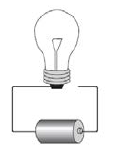
What kind of circuit is this?
a)
series
b)
parallel
70.
What kind of circuit is this?
a)
Series
b)
Consecutive
c)
Parallel
d)
Training
71.
The picture shows an electrical circuit. This circuit is a series circuit because: 
a)
It has 3 light bulbs.
b)
The same current flows through all three light bulbs.
c)
It uses a single battery.
d)
The electrical current is divided between the three light bulbs.
72.
The flow of electricity through a conductor is called...
a)
resistance
b)
voltage
c)
current
d)
source of electric current
73.
The best conductors for electricity are made of...
a)
wood
b)
plastic
c)
rubber
d)
metal
74.
Which best describes a simple series circuit?
a)
Electricity flows along one pathway.
b)
The flow of electricity comes from the switch.
c)
Electricity flows along many pathways.
d)
The flow of electricity comes from the light bulb.
75.
What is a switch's function in a circuit?
a)
to make the current hotter or colder
b)
turn on and off the flow of current
c)
the pathway that current flows
d)
to add more power to the circuit
76.
What is a Parallel circuit? 
a)
Has only one path 
b)
Has more than one path 
c)
Allows energy to travel through easily 
d)
Has only one light bulb
77.
What is an electrical circuit?
a)
lets you turn the energy on and off
b)
a closed path where where electricity flows
c)
stop electricity from flowing through
78.
What is a battery?
a)
switch
b)
power source
c)
insulator
79.
This circuit has a battery, buzzer, and switch.
When the switch is closed the buzzer will sound because -
a)
the switch gives energy to the battery
b)
the buzzer is made of special plastic
c)
the wires are cooled by the surrounding air
d)
electricity can flow in a complete path
80.
Which bulbs will light?
a)
1 and 2
b)
2 and 3
c)
3 and 4
d)
4 and 2
81.
Choose the correct sentence.
a)
This circuit will work because it is an open circuit.
b)
This circuit will work because it is a closed circuit.
c)
This circuit will NOT work because it is an open circuit.
d)
This circuit will NOT work because it is a closed circuit.
82.
Which of these best completes the circuit?
a)
rubber band
b)
metal nail
c)
leather shoelace
d)
wooden toothpick
83.

In a battery, electrons collect at the __________________ end of the battery.

a)

positive

b)

middle

c)

negative

84.
This is a picture of a simple electromagnet. How can the electromagnet be made stronger?
a)
Add more coils of wire to the nail.
b)
Use a smaller battery.
c)
Reverse the poles of the magnet.
d)
Remove all the coils and the nail.
85.
While electric current is flowing through a wire, what surrounds the wire?
a)
a magnetic field
b)
a glowing light
c)
neutrons
d)
protons