wayground logo

Free Printable Worksheets

Font size

S
M
L
XL
Worksheets

Grade 8 Biology Revision

Total questions: 85

Worksheet time: 1hrs 29mins
Name
Class
Date
1.

What is the main organ of the circulatory system?

a)

small intestine

b)

bone

c)

lungs

d)

heart

2.
The circulatory system works with the ___________ system to provide our body with oxygen.
a)
respiratory
b)
digestive
c)
muscular
d)
skeletal
3.
The main function of the circulatory system is 
a)
To give the body structure and support
b)
Excrete waste
c)
transport blood, nutrients, and gases throughout the body
d)
to transport messages from the body to the brain
4.

Running is an activity that causes the cells in the muscular system to use oxygen at a faster rate. Which system responds by delivering more oxygen to these cells?

a)

digestive

b)

nervous

c)

circulatory

d)

endocrine

5.

It consists of...

a)

the heart, which is a muscular pumping device.

b)

the heart, which is a muscular pumping device, and a closed system of vessels called arteries and capillaries.

c)

the heart, which is a muscular pumping device, and a closed system of vessels called arteries, veins, and capillaries.
6.
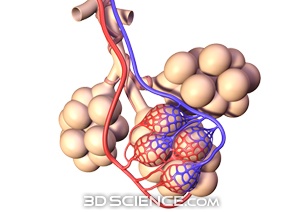
The air sacs that are covered with capillaries where gas exchange takes place
a)
bronchi
b)
lungs
c)
oxygen
d)
alveoli
7.

The large muscle that contracts and relaxes and moves air in and out of the lungs.

a)

epiglottis

b)

alveoli

c)

diaphragm

d)

trachea

8.
What is the main function of the respiratory system?
a)
to provide oxygen and remove carbon dioxide from the body
b)
to bring oxygen to the body
c)
to break down food and absorb nutrients
d)
to remove oxygen from the body and deliver carbon dioxide
9.

What is the purpose of the respiratory system?

a)

takes in oxygen and release carbon dioxide

b)

takes in carbon dioxide and releases oxygen

c)

takes in nitrogen and releases carbon dioxide

d)

takes in oxygen and releases nitrogen

10.
What happens to cause air to be exhaled from the lungs?
a)
The rib muscles contract and move outward.
b)
The chest cavity expands and grows larger.
c)
The lungs contract and then expand.
d)
The diaphragm relaxes and moves upward.
11.
The respiratory system is the body system in which _______ exchange takes place.
a)
blood
b)
gas
c)
nutrients
d)
waste
12.
When you breathe, your lungs take in ___ and remove ___. 
a)
air/oxygen
b)
oxygen/carbon dioxide 
c)
carbon dioxide/waste 
d)
waste/air 
13.
Which does not make up the circulatory system?
a)
heart
b)
blood
c)
lungs
d)
blood vessels
14.
The heart pumps blood to get ________ to our cells.
a)
carbon dioxide
b)
urea
c)
oxygen
15.
What is the main organ in the circulatory system?
a)
vein
b)
lung
c)
heart
d)
aorta 
16.
What is the main function of the respiratory system?
a)
to provide oxygen and remove carbon dioxide from the body
b)
to bring oxygen to the body
c)
to break down food and absorb nutrients
d)
to remove oxygen from the body and deliver carbon dioxide
17.

What is the job of your circulatory system?

a)

To pump blood around the body

b)

To breathe in oxygen

c)

To move your body

d)

To create blood cells

18.

How do your circulatory and respiratory systems work together?

a)

Your heart protects your lungs

b)

Lungs bring food into the body for your blood

c)

Oxygen and carbon dioxide are exchanged between your lungs and blood.

d)

The respiratory system makes blood for your circulatory system

19.
The circulatory system works with the ___________ system to provide our body with oxygen.
a)
respiratory
b)
digestive
c)
muscular
d)
skeletal
20.
What does blood transport?
a)
Nutrients
b)
Oxygen 
c)
Carbon Dioxide
d)
All of the above
21.
What is tube that is also known as your wind pipe?
a)
esophogus
b)
bronchi
c)
trachea
d)
alveoli
22.
What is the Circulatory System also known as?
a)
The heart
b)
Cardiovascular System
c)
Nervous System
d)
Aorta
23.

What is included in the respiratory system?


Select ALL that apply.

a)

nose

b)

trachea

c)

lungs

d)

heart

24.

What is included in the circulatory system?


Select ALL that apply.

a)

veins

b)

trachea

c)

heart

d)

arteries

25.
The System that contains blood vessels and the heart is the...
a)
circulatory system
b)
respiratory system
c)
digestive system
d)
Integumentary System
26.

When you breathe, your lungs take in ___ and remove ___.

a)

air, oxygen

b)

oxygen, carbon dioxide

c)

carbon dioxide, waste

d)

waste, air

27.

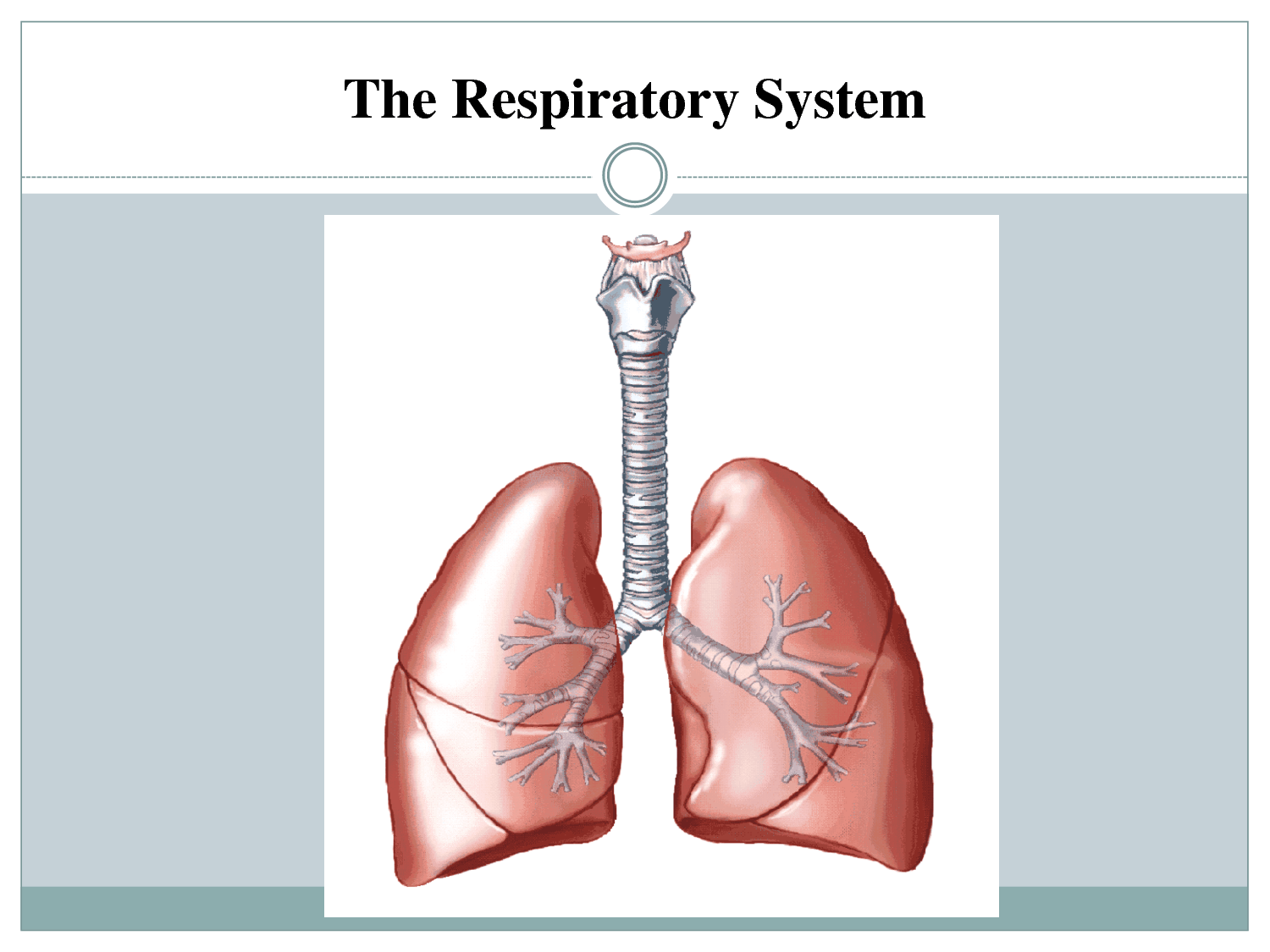
Identify this system.

a)

Digestive System

b)

Circulatory System

c)

Immune System

d)

Respiratory System

28.

Red blood cells hold onto O2 with the protein ________ which needs the element ________.

a)

hemoglobin, phosphorus

b)

hemoglobin, iron

c)

myoglobin, phosphorus

d)

myoglobin, iron

29.
This part of blood helps it clot, when you get cut.
a)
Red blood cells
b)
Plasma
c)
Platelets
d)
White blood cells
30.

_______ is/are made mostly of water and makes up about 55% of the blood

a)

Plasma

b)

Platelets

c)

Red blood cells

d)

White blood cells

31.
What does blood transport?
a)
Nutrients
b)
Oxygen 
c)
Carbon Dioxide
d)
All of the above
32.

The part of the respiratory system that humans use for talking is the...

a)

trachea

b)

pharynx

c)

larynx

d)

bronchi

33.

The small blood vessels where exchange of O2 and CO2 occurs are called...

a)

arteries

b)

capillaries

c)

veins

d)

heart

34.

The part of the lungs where gas exchange occurs is/are called.

a)

trachea

b)

bronchi

c)

bronchioles

d)

alveoli

35.

The flap of tissue that covers the larynx so that food goes down the esophagus to the stomach and not down to the lungs is called the...

a)

pharynx

b)

epiglottis

c)

alveoli

d)

bronchi

36.

When you breathe in, the lungs _________ in order to _________ air pressure, so that air will flow in.

a)

expand, decrease

b)

shrink, decrease

c)

expand,increase

d)

shrink, increase

37.
A series of steps used by scientists to solve a problem or answer a question. 
a)
scientific method
b)
recipe
c)
data collection
d)
metric system
38.
A testable explanation to a problem that has not yet been tested. 
a)
data
b)
theory
c)
hypothesis
d)
fact
39.
What is a hypothesis?
a)
A hypothesis is the right answer to an experiment.
b)
A hypothesis is the wrong answer to an experiment.
c)
A hypothesis is an educated guess.
d)
I don't know.
40.
The summary at the end of an experiment that explains the results. 
a)
conclusion
b)
procedures
c)
materials
d)
responding variable
41.
Dependent variable means
a)
the scientist controls what to test
b)
educated guess
c)
ask a question
d)
what is being measured
42.
What is the first step in the scientific method?
a)
Ask a question
b)
Conclusion
c)
No Horse Play
d)
Observe
43.
A series of steps used by scientists to solve a problem or answer a question. 
a)
scientific method
b)
experiment
c)
data collection
d)
metric system
44.
Which is NOT a step in the scientific method?
a)
Make observation
b)
Form a theory
c)
Collect data
d)
Form a hypothesis
45.
A possible explanation to a problem that has not yet been tested. 
a)
data
b)
theory
c)
hypothesis
d)
fact
46.
An organized procedure used by scientists to test a hypothesis. 
a)
scientific method
b)
experiment
c)
data collection
d)
metric system
47.
During this step you look for any information about the Testable Question you can find.
a)
conclusion
b)
experiment
c)
hypothesis
d)
background research
48.
A drawing, object, description, animation or other way used to represent an idea, event or object to help others better understand the idea, event or object.
a)
conclusion
b)
model
c)
hypothesis
d)
background research
49.
You will collect and record this during an experiment.
a)
data
b)
conclusion
c)
hypothesis
d)
background research
50.
This data characteristic refers to how close your measurement is to the true or actual measurement.
a)
precision
b)
sloppiness
c)
accuracy
d)
closeness
51.
This data characteristic refers to how close a set of measurements of the same quantity is to each other.
a)
precision
b)
sloppiness
c)
accuracy
d)
closeness
52.
One of these must explicitly state the Independent Variable and Dependent Variable.
a)
conclusion
b)
"I wonder…?"
c)
manipulated variable
d)
testable question
53.
This is your prediction about how the Dependent Variable in an experiment will respond to changes in the Independent Variable.
a)
conclusion
b)
"I wonder…?"
c)
manipulated variable
d)
hypothesis
54.
The Independent Variable is tested to see if it is the ___.
a)
cause
b)
effect
c)
conclusion
d)
control
55.
The Dependent Variable is observed to see if it is a/an ___.
a)
cause
b)
effect
c)
conclusion
d)
control
56.
The experiment set-up(s) which include the changed variable you are testing for cause-and-effect relationship (the Independent Variable has been changed in this set-up).
a)
control
b)
independent
c)
experimental
d)
dependent
57.
The experiment set-up representing normal, typical or current conditions (the Independent Variable has not been changed in this set-up).
a)
control
b)
independent
c)
experimental
d)
dependent
58.
Any and every factor in an experiment that could be changed.
a)
control
b)
experimental
c)
variable
d)
conclusion
59.
The factor changed by the experimenter during set-up.
a)
controlled
b)
independent
c)
experimental
d)
dependent
60.
The factor observed/measured for change during the experiment.
a)
controlled
b)
independent
c)
experimental
d)
dependent
61.

Any experiment factor which is not being tested for the Cause-and-Effect Relationship.

a)

controlled

b)

independent

c)

experimental

d)

dependent

62.
In an experiment the _____ Variable may go up, down or not change.
a)
controlled
b)
independent
c)
experimental
d)
dependent
63.
Synonym for Independent Variable.
a)
constant
b)
responding variable
c)
manipulated variable
64.
Synonym for Dependent Variable.
a)
constant
b)
responding variable
c)
manipulated variable
65.
Synonym for Controlled Variable.
a)
constant
b)
responding variable
c)
manipulated variable
66.

What type of blood vessel carries blood towards the heart?

a)

Vein

b)

Artery

c)

Capillary

d)

Tube

67.

Which two body systems interact to carry out gas exchange?

a)

Digestive and Respiratory

b)

Circulatory and Muscular

c)

Circulatory and Respiratory

d)

Muscular and Skeletal

68.

What is the main function of the circulatory system?

a)

To turn food into nutrients

b)

To transport substances around the body

c)

To respond to stimuli

d)

To move from place to place

69.

Where does gas exchange occur in the lungs?

a)

Bronchi

b)

Trachea

c)

Pharynx

d)

Alveoli

70.

The diaphragm, trachea, and alveoli are part of the ________________ system.

a)

Respiratory

b)

Circulatory

c)

Digestive

d)

Endocrine

71.

Arteries carry (almost always) oxygenated blood

a)

Towards the heart

b)

Towards the lungs

c)

Away from the heart

d)

Away from the lungs

72.

Which part of the blood carries oxygen in a protein called hemoglobin?

a)

White Blood Cells

b)

Red Blood Cells

c)

Platelets

d)

Plasma

73.

Which part of the blood helps form a clot?

a)

White Blood Cells

b)

Red Blood Cells

c)

Platelets

d)

Plasma

74.

If you are sick, which part of your blood would there be more of?

a)

White Blood Cells

b)

Red Blood Cells

c)

Platelets

d)

Plasma

75.

Why are capillaries important to the circulatory system?

a)

The breakdown of food into usable nutrients occurs there

b)

The movement of muscles to perform locomotion occurs there

c)

The exchange of materials between the blood and body cells occurs there

d)

The pumping of blood occurs there

76.

How many chambers does the human heart have?

a)

3

b)

4

c)

2

d)

1

77.

The chambers of the heart are called the

a)

Left and right atria, left and right ventricles

b)

Left and right alveoli

c)

Left and right top rooms, left and right bottom rooms

d)

Left and right vesicles

78.

To make sure food doesn't go down the trachea, the ________________ covers it while you swallow.

a)

Epitome

b)

Uvula

c)

Appendix

d)

Epiglottis

79.

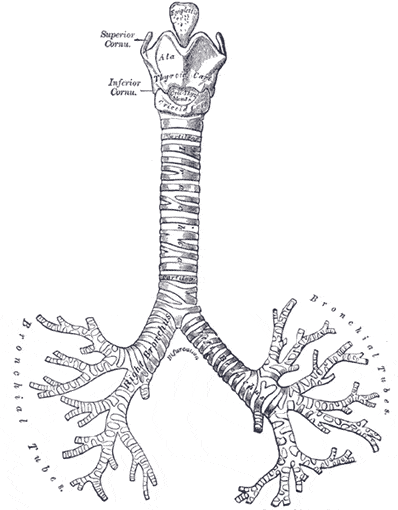
What is the name of #7?

a)

Trachea

b)

Bronchi

c)

Pharynx

d)

Alveoli

80.

What is the name of #3?

a)

Bronchi

b)

Trachea

c)

Bronchioles

d)

Mouth

81.

What is the name of #6?

a)

Bronchioles

b)

Trachea

c)

Pharynx

d)

Alveoli

82.

What is the name of #10?

a)

Alveoli

b)

Bronchioles

c)

Trachea

d)

Bronchi

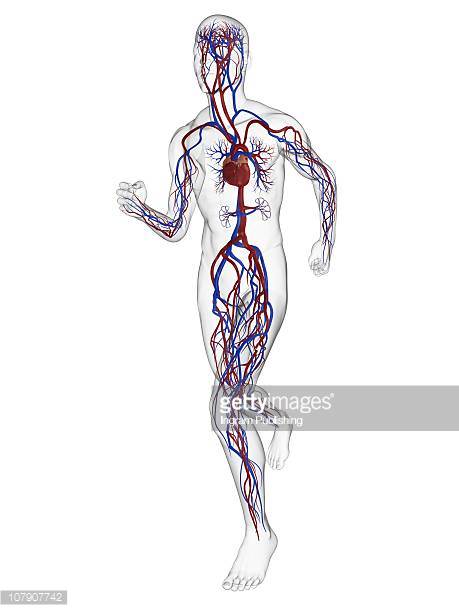
83.

What is the name of #5?

a)

Vena cava

b)

Right atrium

c)

Aorta

d)

Left ventricle

84.

What is the name of #9?

a)

Left Ventricle

b)

Right Ventricle

c)

Left Atrium

d)

Right Atrium

85.

What happens in the lungs?

a)

Carbon dioxide goes into the blood and oxygen leaves the blood

b)

Carbon dioxide and oxygen go into the blood

c)

Oxygen goes into the blood and carbon dioxide leaves the blood

d)

Oxygen and carbon dioxide leave the blood