wayground logo

Free Printable Worksheets

Font size

S
M
L
XL
Worksheets

Wildlife Biology Semester Review

Total questions: 88

Worksheet time: 2hrs 51mins

Name
Class
Date
1.

What duck is pictured here?

Is it a dabbler or a diver?

a)

Green-winged Teal

b)

Blue-winged Teal

c)

Gadwall

d)

American Wigeon

2.

What type of Duck is pictured here?

Is it a Dabbler or Diver?

a)

Hooded Merganser

b)

Common Goldeneye

c)

Ruddy Duck

d)

Bufflehead

3.

What duck is pictured here?

Is it a dabbler or a diver?

a)

Canvasback

b)

Redhead

c)

Ruddy Duck

d)

Northern shoveler

4.

What duck is pictured here?

Is it a dabbler or a diver?

a)

Mallard

b)

American Wigeon

c)

Northern Shoveler

d)

Wood Duck

5.

What duck is pictured here?

Is it a dabbler or a diver?

a)

Blue-winged teal

b)

Green-winged teal

c)

Gadwall

d)

American Wigeon

6.

What duck is pictured here?

Is it a dabbler or a diver?

a)

Lesser Scaup

b)

Common Goldeneye

c)

Ring-necked Duck

d)

Ruddy Duck

7.

What duck is pictured here?

Is it a dabbler or a diver?

a)

Green-winged Teal

b)

Blue-winged Teal

c)

Ruddy Duck

d)

Hooded Merganser

8.

What duck is pictured here?

Is it a dabbler or a diver?

a)

Gadwall

b)

Mallard

c)

Green-winged Teal

d)

American Wigeon

9.

What duck is pictured here?

Is it a dabbler or a diver?

a)

Blue-winged Teal

b)

Green-winged Teal

c)

American Wigeon

d)

Wood Duck

10.

What duck is pictured here?

Is it a dabbler or a diver?

a)

Northern Shoveler

b)

American Wigeon

c)

Mallard

d)

Green-winged Teal

11.

What duck is pictured here?

Is it a dabbler or a diver?

a)

Northern Shoveler

b)

Northern Pintail

c)

Redhead

d)

Ruddy Duck

12.

What duck is pictured here?

Is it a dabbler or a diver?

a)

Lesser Scaup

b)

Common Goldeneye

c)

Ring-necked Duck

d)

Gadwall

13.

What duck is pictured here?

Is it a dabbler or a diver?

a)

Wood Duck

b)

American Wigeon

c)

Mallard

d)

Green-winged Teal

14.

What duck is pictured here?

Is it a dabbler or a diver?

a)

Redhead

b)

Canvasback

c)

Northern Shoveler

d)

Gadwall

15.

What duck is pictured here?

Is it a dabbler or a diver?

a)

Green-winged Teal

b)

Bufflehead

c)

Common Goldeneye

d)

American Wigeon

16.

What duck is pictured here?

Is it a dabbler or a diver?

a)

Wood Duck

b)

Mallard

c)

Green-winged Teal

d)

Red-breasted Merganswer

17.

What duck is pictured here?

Is it a dabbler or a diver?

a)

Bufflehead

b)

Hooded Merganser

c)

Common Goldeneye

d)

Ruddy Duck

18.

What bird is pictured here?

a)

Sage Grouse

b)

Ring-necked Pheasant

c)

Wild Turkey

d)

None of the Above

19.

Identify what order the insect shown belongs to.

a)

Diptera

b)

Coleoptera

c)

Orthoptera

d)

Hemiptera

e)

Hymenoptera

20.

Identify what order the insect shown belongs to.

a)

Diptera

b)

Coleoptera

c)

Orthoptera

d)

Hemiptera

e)

Hymenoptera

21.

Identify what order the insect shown belongs to.

a)

Diptera

b)

Coleoptera

c)

Orthoptera

d)

Hemiptera

e)

Hymenoptera

22.

Identify what order the insect shown belongs to.

a)

Diptera

b)

Coleoptera

c)

Orthoptera

d)

Hemiptera

e)

Hymenoptera

23.

Identify what order the insect shown belongs to.

a)

Diptera

b)

Coleoptera

c)

Orthoptera

d)

Hemiptera

e)

Hymenoptera

24.

Identify what order the insect shown belongs to.

a)

Diptera

b)

Lepidoptera

c)

Orthoptera

d)

Hemiptera

e)

Hymenoptera

25.

Identify what order the insect shown belongs to.

a)

Diptera

b)

Coleoptera

c)

Orthoptera

d)

Hemiptera

e)

Hymenoptera

26.

Identify what order the insect shown belongs to.

a)

Diptera

b)

Lepidoptera

c)

Orthoptera

d)

Hemiptera

e)

Hymenoptera

27.

Identify what order the insect shown belongs to.

a)

Diptera

b)

Coleoptera

c)

Orthoptera

d)

Hemiptera

e)

Hymenoptera

28.

Identify what order the insect shown belongs to.

a)

Diptera

b)

Coleoptera

c)

Orthoptera

d)

Hemiptera

e)

Hymenoptera

29.

Identify what order the insect shown belongs to.

a)

Diptera

b)

Coleoptera

c)

Orthoptera

d)

Hemiptera

e)

Hymenoptera

30.

Identify what order the insect shown belongs to.

a)

Diptera

b)

Coleoptera

c)

Orthoptera

d)

Hemiptera

e)

Hymenoptera

31.

Which level of biological classification is the LEAST specific (biggest)?

a)

Domain

b)

Kingdom

c)

Genus

d)

Family

32.

Which level of biological classification is the MOST specific (smallest)?

a)

Phylum

b)

Kingdom

c)

Order

d)

Species

33.

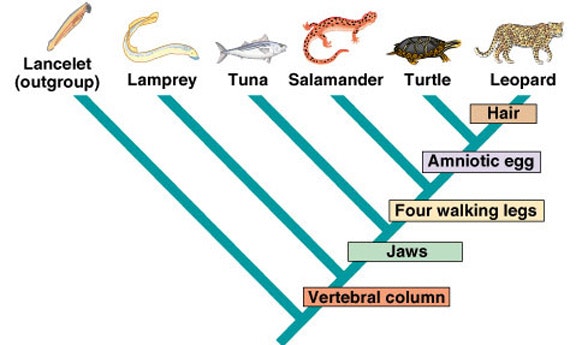
What trait do Tuna have that Lamprey do not?

a)

Hair

b)

Vertebral column

c)

amniotic egg

d)

jaws

34.
According to this cladogram, birds are LEAST related to -
a)
Amphibians
b)
Sharks
c)
Ray Finned Fish
d)
Crocodiles
35.
Which trait do only humans have, according to the cladogram?
a)
jaws
b)
mammary glands & hair
c)
terrestrial during all life stages
d)
opposable thumbs
36.

What number is the common ancestor of C and D

a)

1

b)

2

c)

3

d)

4

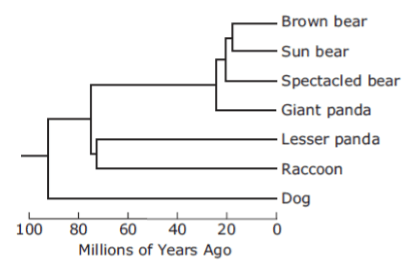
37.

Who is the closest relative to the brown bear?

a)

Giant panda

b)

Dog

c)

Lesser panda

d)

Sun bear

38.
Where is the alligator and T. rex's common ancestor?
a)
Point A
b)
Point B
c)
Point C
d)
Point D
39.
Where is the sponge and mouse's most common ancestor?
a)
Point E
b)
Point B
c)
Point C
d)
Point D
40.
Kudzu has overgrown many parts of southern Missouri and native ground plants have disappeared from the area. This is an example of:
a)
Parasitism between kudzu and the native plants
b)
A predator prey relationship between ground plants and kudzu
c)
Competition occurring between the native and invasive species
d)
Commesalism occurring between the kudzo and native plants
41.
What effect will an invasive species have on the carrying capacity of an ecosystem?
a)
The carrying capacity will increase
b)
The carrying capacity for everyone will decrease
c)
The carrying capacity will only decrease for those in competition for same resource
d)
The carrying capacity for all animals will stay the same
42.
When taken to a new habitat, non-native plants often threaten native plants of the new habitat.  Why do they do this?
a)
Non-native plants are able to mutate rapidly
b)
Non-native  plants cause native animals to relocate
c)
Non-native plants are able to be used for medicine
d)
Non-native plants compete with native plants for resources
43.
Biodiversity refers to
a)
extinct species
b)
the variety of species on Earth
c)
nonrenewable resources
d)
the rate of species decline
44.
Which of the following is a key characteristic of most invasive species?
a)
Ability to breathe in the air & in the water
b)
Large, sharp teeth
c)
Produce many offspring
d)
Is a top predator
45.

The lack of natural predators is one thing that makes populations of invasive species hard to manage?

a)
True
b)
False
46.
Species that are indigenous to an area with no human intervention
a)
invasive species
b)
native species
c)
all species that live in an ecosystem
47.
Invasive species have a negative impact on...
a)
the ecosystem
b)
the economy
c)
Both the ecosystem and the economy
d)
None of these
48.

Are mushrooms most closely related to Animals or plants? (Who do they share a MORE recent common ancestor with)?

a)

Point E

b)

Point B

c)

Point C

d)

Point D

49.
an organism that makes its own food
a)
producer
b)
consumer
c)
herbivore
d)
scavenger
50.
an animal that eats both plants and animals
a)
carnivore
b)
herbivore
c)
omnivore
d)
consumer
51.
In an energy pyramid, energy_______ as you move up the pyramid.
a)
Increases
b)
Decreases
c)
Stays the same
d)
Changes up and down
52.
An organism that eats another organism.
a)
Autotroph
b)
Heterotroph
c)
Plant
d)
Producer
53.
In the energy pyramid here, how much of the energy in the producers gets passed to the herbivores?
a)
10%
b)
20%
c)
80%
d)
90%
54.
A food pyramid represent the relative amount of energy in trophic levels. Which of the following correctly shows a food pyramid?
a)
A
b)
B
c)
C
d)
D
55.
The deer, grasshopper, and bird are all examples of which type of consumers on this food pyramid?
a)
decomposers
b)
omnivores
c)
carnivore
d)
herbivore
56.
A third-level consumer has to be which type?
a)
Carnivore.
b)
Decomposer.
c)
Producer.
d)
Herbivore.
57.
A secondary consumer 
a)
eats primary consumers
b)
eats producers
c)
eats plants
58.
All the organisms on earth get their energy directly or indirectly from?
a)
Oxygen
b)
Water 
c)
Nitrogen
d)
The Sun
59.
Use the diagram to answer the question.
The trout is a source of food for the human and the eagle. When there are more than one organism vying for the same source we call this____?
a)
Population
b)
Resources
c)
Community
d)
Competition
60.
A coyote captures, kills, and eats a rabbit. What type of symbiotic relationship is this?
a)
mutualism
b)
commensalism
c)
parasitism
d)
predation
61.
A tapeworm lives in the intestines of a dog. It absorbs food the dog has eaten and grows larger in the process. The dog becomes weaker from malnutrition. What type of symbiotic relationship is this?
a)
mutualism
b)
commensalism
c)
parasitism
d)
predation
62.
The flower of the yucca plant provides the only location where the yucca moth can lay her eggs. In the process, the moth pollinates the yucca flower. What type of symbiotic relationship is this?
a)
mutualism
b)
commensalism
c)
parasitism
d)
predation
63.
Cleaner shrimp living in the ocean eat ectoparasites (parasites on the outer surface of the animal) off of fish. What type of symbiotic relationship is this?
a)
mutualism
b)
commensalism
c)
parasitism
d)
predation
64.
NItrogen-fixing bacteria live in the roots of some plants. They provide nitrogen in a form the plants need and obtain a "home" and nourishment from the plants. What type of symbiotic relationship is this?
a)
mutualism
b)
commensalism
c)
parasitism
d)
predation
65.
Remoras are small fish that swim close to or attach themselves to sharks.  Remoras eat small scraps left as the sharks feed and the sharks are unaffected. 
a)
Competition
b)
Predation
c)
Mutualism
d)
Commensalism
66.
Which interaction benefits both organisms?
a)
A flea living on a dog
b)
A bee pollinating a flower
c)
A tapeworm living inside an animal
d)
A mosquito biting a person
67.
 Hummingbirds feed on nectar from flowers.  The flowers are pollinated by hummingbirds as they move from flower to flower. What type of symbiosis is this?
a)
commensalism
b)
mutualism
c)
parasitism
d)
predation
68.

Pseudoscorpions often hitch rides on the backs of large beetles or true bugs. What is the ecological relationship?

a)

Mutualism

b)

Commensalism

c)

Parasitism

d)

Competition

69.
Barnacles sometimes live on the outside surface of other larger shelled organisms without causing any harm. What is the ecological relationship?
a)
Mutualism
b)
Parasitism
c)
Commensalism
d)
Predator-Prey
70.
Ants protect soft bodied aphids and in return the aphids feed the ants a sugary drink. What is the ecological relationship?
a)
Cooperation
b)
Parasitism
c)
Commensalism
d)
Mutualism
71.

A relationship between two organisms where one benefits while the other is harmed but not typically killed is known as what?

a)
Decomposition
b)
Consummerism
c)
Mutualism
d)
Parasitism
72.
The nonliving aspects of an ecosystem.
a)
Abiotic factors
b)
Biotic factors
73.
The living portions of the ecosystem.
a)
Biotic factors
b)
Abiotic factors
74.

Lions and hyenas live in close proximity and eat the same types of foods. What is the ecological relationship?

a)

Mutualism

b)

Commensalism

c)

Parasitism

d)

Competition

75.

A bird builds a nest in a tree and the tree is neither helped nor harmed. What is this type of relationship?

a)

commensalism

b)

predation

c)

mutualism

d)

parasitism

76.

Plants on the bottom of the forest floor do not get as much sunlight when they grow near tall trees. What type of relationship is this?

a)

Mutualism

b)

Commensalism

c)

Competition

d)

Parasitism

77.

Which of the following shows the levels of organization in order from simple to complex?

a)

1. Cell

2. Tissue

3. Organ

4. Organ System

5. Organism

b)

1. Cell

2. Tissue

3. Organelle

4. Organ

5. Organ System

c)

1. Tissue

2. Organelle

3. Cell

4. Organ

5. Organism

d)

1. Organ

2. Tissue

3. Cell

4. Organism

5. Organ System

78.

A group of the same organisms living together in the same place at the same time is:

a)

An organism

b)

A population

c)

A community

d)

A biome

79.

What are groups of different populations living togther in the same place at the same time called?

a)

An organism

b)

A population

c)

A community

d)

A biosphere

80.

What is it called when you have groups of different populations along with their abiotic factors?

a)

An organism

b)

A population

c)

A community

d)

An ecosystem

81.

An ecosystem contains living and nonliving things.

a)

True

b)

False

82.
What are the ecological levels of organization from smallest to the largest?
a)
organism, population, community, ecosystem, biome, biosphere
b)
organism, community, population, ecosystem, biome, biosphere
c)
organism, population, community, biome, ecosystem, ecosphere.
d)
organism, community, population, biome, ecosystem, ecosphere
83.

Organize these options into the right categories to show whether that energy source in RENEWABLE or NON-Renewable (remember this is on our human time scale)

Categorize the following

Solar Power

Wind Energy

Hydroelectric Energy

Geothermal

Coal

Oil

Natural Gas

Nuclear

BIomass

Renewable
Non-Renewable
84.

Non-renewable Energy Sources produce LESS Greenhouse Gases than renewable energy sources

a)

True

b)

False

85.

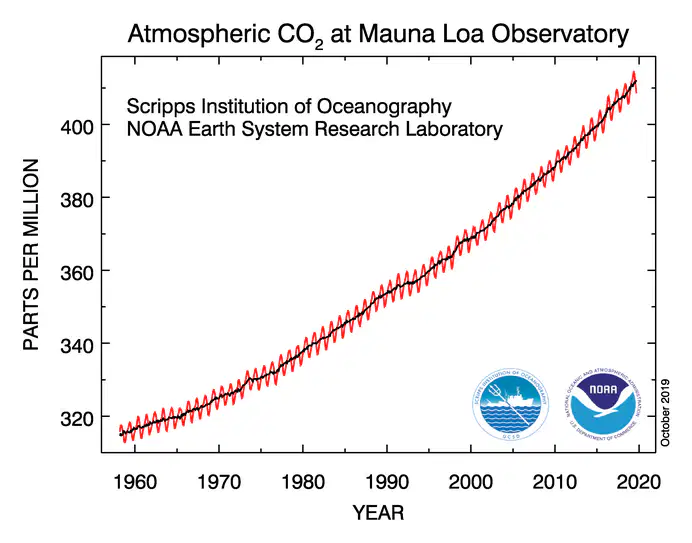
Identify the trend in Carbon Dioxide (a greenhouse gas) over time

a)

Staying the same

b)

Increasing

c)

Decreasing

86.

What makes something an invasive species

a)

Being Outside Its Range

b)

Being inside its native range

c)

Causing Harm to the Economy, Environment, or Human Health

87.

Identify what happens to Average Global Temperature as Carbon Dioxide increases

a)

Temp decreases

b)

Temp stays the same

c)

Temp increases

d)

There is no correlation or cause between them

88.

Identify the term that describes problems caused by nutrient pollution by fertilizers

a)

Eutrophication

b)

Greenhouse Affect

c)

Global Climate Change

d)

No problems are caused