wayground logo

Free Printable Worksheets

NEW

Font size

S
M
L
XL
Worksheets

Unit Review: Earth's Early History and Light Waves

Total questions: 50

Worksheet time: 1hrs 2mins

Name
Class
Date
1.

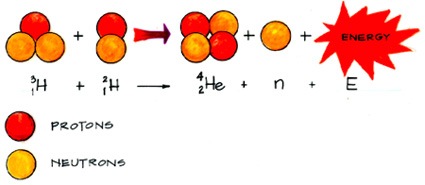
What process takes place inside a star to generate energy?

a)

Nuclear fission

b)

Hydrogen Creation

c)

Nuclear fusion

d)

Helium forming

2.

All stars (and most of the visible universe) are made up of which two elements?

a)

Helium and Lithium

b)

Hydrogen and Helium

c)

Hydrogen and Ferrium

d)

Carbon and Oxygen

3.
A nebula is:
a)
A cloud of ice
b)
A cloud of dust and gas
c)
A cloud of just gas
d)
A cloud of just dust
4.
A nebula starts to collapse because of:
a)
A nearby star shining it's light
b)
A passing spaceship
c)
A passing comet
d)
Gravity
5.
As a nebula collapses it also begins:
a)
Expand
b)
Rotate
c)
Shake
d)
Turn to ice
6.
A nebula collapses down into a disk known called:
a)
A compact disk
b)
An irregular cloud
c)
An accretion disk
d)
An circular disk
7.
What forms in the very center of the accretion disk?
a)
A protosun
b)
A planet
c)
A protoplanet
d)
A planetesimal
8.
What is forming in the accretion disk away from the center?
a)
Light
b)
Protostars
c)
Planetesimals
d)
Hydrogen
9.
The planetesimals keep:
a)
Colliding and breaking apart
b)
Colliding and sticking together
c)
Colliding and bouncing around
d)
Breaking down into smaller pieces
10.
The group of inner planets are known as:
a)
The Terrestrial Planets
b)
The Gas Giants
c)
The Outer Planets
d)
The Hallow Planets
11.
What caused the lighter elements to leave the terrestrial planets?
a)
Gravity from the Gas Giants
b)
Nothing, the lighter elements stayed
c)
Gravity from the Sun
d)
Heat from the Sun
12.
The group of outer planets are known as:
a)
The Terrestrial Planets
b)
The Gas Giants
c)
The Inner Planets
d)
The Rocky Planets
13.

Why did the lighter elements stay in the Gas Giants?

a)

Just because the solar wind does not affect these planets

b)

Because they less dense

c)

Because the solar wind does not affect these planets AND their own gravity is strong enough

d)

Just because their own gravity is strong enough

14.
Intense pressure in the protosun (protostar) caused:
a)
Fire in the Sun to start
b)
Helium to break down into Hydrogen
c)
Nuclear Fusion to start
d)
Nuclear Fusion to end
15.
What two objects do scientists study to learn about the formation of the solar system?
a)
Comets & Asteroids
b)
Comets & Exoplanets
c)
Exoplanets & Asteroids
d)
Asteroids & Distant Stars
16.
A plate boundary where two plates move away from each other is called
a)
Divergent Boundary
b)
Convergent Boundary
c)
Transform Boundary
d)
Subduction
17.
Scientists hypothesize that a super continent existed 200 million years ago.  This continent is called
a)
America
b)
Super Earth
c)
Pangea
d)
Eurasia
18.
A Plate Boundary where two plates move toward each other is called
a)
Convergent Boundary
b)
Divergent Boundary
c)
Transform Boundary
d)
Subduction
19.
What is the difference between the lithosphere and asthenosphere that makes up the mantle?
a)
The lithosphere is ismade of dense solid meal whle the asthenosphere is made of liquid molten metal
b)
The lithosphere is a mixture of gasses while the asthenosphere is made of solid rock
c)
The lithosphere is molten rock that moves while the asthenosphere is ridid and thin
d)
The lithosphere is made of solid rock while the asthenosphere is more flexible hot rock that moves.
20.
Convergent Plate Movement can create
a)
Rifts
b)
Mountains
c)
Ocean Ridges
d)
Radiation
21.
You an feel the sun's rays on your face as you lay by the beach on a warm summer day.  Which type of heat transfer is this an example of?
a)
Conduction
b)
Convection
c)
Radiation
d)
Radioactive
22.
_______________ Currents within the mantle cause the earth's plates to move and shift s molten material rises and falls due to density and gravity
a)
Convection
b)
Radiation
c)
Conduction
d)
Wind
23.
Divergent Plate movement can create
a)
Convection Currents
b)
Conduction
c)
Mountains
d)
Rifts and ocean ridges
24.
When pressure builds between two tectonic plates, it can suddenly release causing a (an) ______________________
a)
Earthquake
b)
Volcano
c)
Convection Current
d)
Gravitational Pull
25.
The movement of metals within the earth's outer core cause a ____________________________ that is detectable on the earth's surface using a compass
a)
Gravitational Pull
b)
Volcanic Eruption
c)
Magnetic field
d)
Convection Current
26.

What is the process that continually adds new crust to the ocean floor along both sides of the mid-ocean ridge?

a)

subduction

b)

continental drift

c)

convergent

d)

sea floor spreading

27.

What is a plate boundary where two plates slip past each other moving in opposite directions?

a)

transform

b)

convergent

c)

divergent

28.

What is the process by which the ocean floor sinks beneath a deep ocean trench and back into the mantle?

a)

continental drift

b)

mid-ocean ridge

c)

faults

d)

subduction

29.
What are the puzzle pieces of the Earth's surface called?
a)
Tectonic plates
b)
Puzzles
c)
Earthquakes
30.

What is the force that moves the continents?

a)

Conduction

b)

Convection

c)

Radiation

d)

Conveyor belts

31.

Originally the Continental drift theory was not well received by other scientist. Why?

a)

There was a competing theory at the time that was more believable.

b)

There was no data showing the continents ever moved.

c)

The scientists did not know the force responsible for moving the continents.

d)

The scientist presenting the data was unreliable.

32.
How long ago is Pangea believed to have existed?
a)
200-300 million years ago
b)
1000-2000 years ago
c)
10,000-20,000 years ago
d)
20-30 billion years ago
33.

Where did Wegener find plant fossils that today would not be able to survive on that type of land?

a)

North America

b)

Antarctica

c)

China

d)

India

34.

What was Alfred Wegenerś Continental Drift theory?

a)

The continents used to be joined together to form a supercontinent.

b)

The continents have since drifted apart to their current location

c)

Pangaea was formed around 250 million years ago

d)

All of the above

35.
Which process involves the joining of small nuclei?
a)
Beta decay
b)
Alpha decay
c)
Nuclear fission
d)
Nuclear fusion
36.
What is nuclear fission?
a)
Big nucleus splits to small nuclei
b)
Small nuclei fuse into a bigger nucleus
c)
Stars
d)
Making compounds
37.
_______________ is the process by which unstable atoms emit radiation until they become stable.
a)
Radiation
b)
Chemical Reaction
c)
Radioactive Decay
d)
Isotopes
38.

_______ occurs when unstable nuclei release a helium nucleus.

a)

Alpha Decay

b)

Beta Decay

c)

Gamma Decay

d)

Gamora Decay

39.

_______ occurs when a neutron turns into a proton and the atom releases an electron.

a)

Alpha Decay

b)

Beta Decay

c)

Gamma Decay

d)

Gamora Decay

40.

What is transferred from place to place by waves?

a)

matter

b)

energy

c)

particles

d)

light

41.

What does the arrow in the picture represent?

a)

amplitude

b)

wavelength

c)

frequency

d)

trough

42.

What does the arrow in the picture represent?

a)

wavelength

b)

echolocation

c)

amplitude

d)

peak

43.

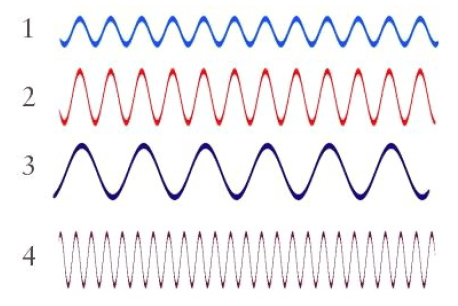
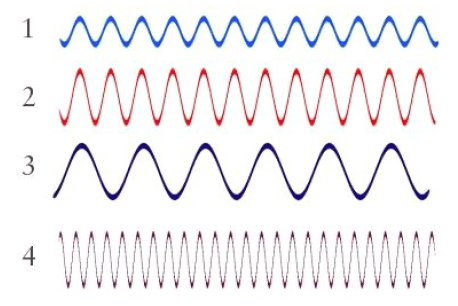
Which wave in the diagram has the greatest frequency?

a)

1

b)

2

c)

3

d)

4

44.

Which wave in the diagram has the longest wavelength?

a)

1

b)

2

c)

3

d)

4

45.

What type of interference is represented in the diagram?

a)

Constructive

b)

Destructive

46.

What type of interference is represented in this diagram?

a)

Constructive

b)

Destructive

47.
Which has the LONGEST wavelength and, therefore, the lowest frequency/energy
a)
Gamma Rays
b)
Radio Waves
c)
Visible Light
d)
Infrared rays
48.
Which has the SHORTEST wavelength and, therefore, the highest frequency/most energy
a)
Radio waves
b)
Ultraviolet Rays
c)
Gamma Rays
d)
X-rays
49.
Which section of the spectrum is the ONLY one we can see?
a)
X-rays
b)
Visible Light
c)
Gamma Rays
d)
Ultraviolet Rays
50.

Which color has the longest wavelength?

a)

Yellow

b)

Red

c)

Green

d)

Purple