
Font size
 Worksheets
Chemistry Semester 1 Review
Total questions: 205
Worksheet time: 3hrs 15mins
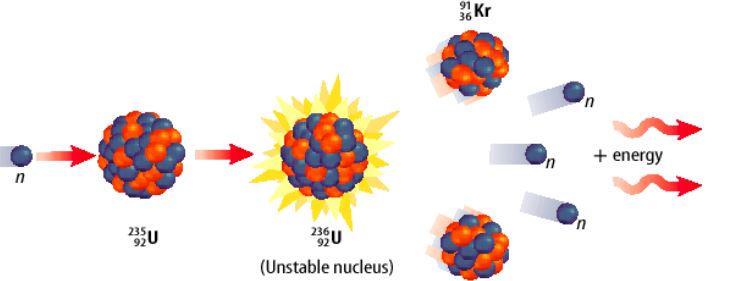
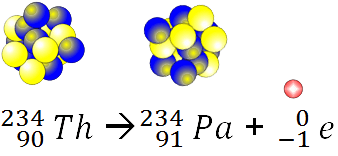
finish the equation
22688Ra --> ____ + 22688Ra
42He
0-1e
y


Convert 675 mL to L
6500 L
0.675 L
67.5 L
675,000 L


The SI unit for time is the __?__.
hours (h)
liter (L)
gram (g)
second (s)
What SI unit is used to measure length?
meters
liters
centimeters
kilograms
The atomic number is the same as......
the number of protons
the number of electrons
the number of neutrons
the number of protons plus neutrons
The mass number is the same as......
the number of protons
the number of electrons
the number of neutrons
the number of protons plus neutrons
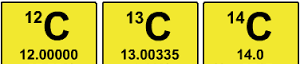
If we are talking about the isotope carbon-14, the mass number of this isotope is.....
12
13
14
6
Isotopes of an element have different numbers of ......
protons
neutrons
electrons
The number of these particles determines what element an atom represents.
protons
neutrons
electrons
photons
Whether an atom's nucleus is stable is determined by:
the ratio of protons to neutrons
the ratio of protons to electrons
the ratio of neutrons to electrons
the number of electrons in each energy level
To determine the charge of an atom you should:
compare protons and electrons
combine protons and neutrons
compare protons and neutrons
combine neutrons and electrons
Which particle(s) has/have a positive (+) charge
protons
neutrons
electrons
photons
Which particle(s) has/have a neutral (0) charge?
protons
neutrons
electrons
photons
If you change the number of electrons in an atom, what are possible effects? (check all that apply)
nucleus may become more or less stable
the atomic mass will change
the charge of the atom will change
it will become a different element


JJ Thomson was credited for the discovery of the
center of the universe
proton
electron
neutron
The atomic model associated with Thomson is the
plum pudding model
nuclear mode.
planetary model
the electron cloud model
Which device did JJ Thomson use to discover the electron?
X-ray machine
scanning tunneling electron microscope
spectrometer
cathode ray tube
Which is a finding attributed to Rutherford's Gold Foil Experiment?
atoms are indivisible and have a dense positive nucleus.
atoms are divisible and have multiple layers of electrons scattered uniformly about the atom.
atoms are like plum pudding with positive and negative charges uniformly scattered throughout the atom.
atoms are mostly empty space with a dense positive nucleus.
Rutherford used what type of radiation to bombard the gold foil?
alpha particles.
beta particles.
gamma radiation.
neutrinos.
What did Rutherford expect to happen to the alpha particles bombarding the gold foil?
they would be absorbed by the gold.
they would be deflected by the gold.
they would go completely through the gold foil.
the would be changed into beta radiation by the gold foil.
Which scientist first theorized atoms cannot be created destroyed or divided?
Niels Bohr
Richard Feynman
Democritus
Ernest Rutherford
Check all of Daltons Postulates
All matter is composed of extremely small particles called atoms
All atoms of a given element are identical, having the same size, mass, and chemical properties. Atoms of a specific element are different from those of any other element.
Atoms cannot be created, divided into smaller particles, or destroyed.
Different atoms combine in simple whole number ratios to form compounds.
In a chemical reaction, atoms are separated, combined, or rearranged.
How is the modern periodic table arranged?
By increasing atomic mass
By increasing atomic number
Alphabetically
By increasing number of protons
Aluminum
Metal
Non-metal
Metalloid
Atoms in the same family have
Similar masses
The same number of valence electrons
Different properties
The same number of protons
Most metals are NOT
Ductile
Good conductors
Gases at room temperature
Shiny
What is the name of group number 1?
halogens
noble gases
alkali metals
alkaline earth metals
where are the metaloids found
far left, vertical
stair step/diagonal
far right horizontal
at the bottom
What group number are the halogens found?
18 (8A)
1
2
17 (7A)
Periodic law states that the elements are arranged according to their atomic ________ so that elements with similar chemical properties are in the same ________ and properties repeat periodically.
numbers, rows
masses, rows
masses, column
numbers, column
A grouping of elements based on similar chemical properties, arranged by columns in the periodic table; also known as a group
family
period
row
isotope
A row on the Periodic Table of Elements
family
period
row
isotope
Metals (select all that apply)
are found on the right side of the periodic table.
are found on the left side of the periodic table.
are good conductors of heat and electricity.
are brittle.
are malleable and ductile.
Nonmetals (select all that apply)
are found on the right side of the periodic table.
are found on the left side of the periodic table.
are good conductors of heat and electricity.
are brittle.
can be solid, liquids, or gases at room temperature.
The lines in the emission spectrum for hydrogen are formed from ___.
energy given off when the electron moves from higher energy levels to lower energy levels
electrons given off as hydrogen burns
protons given off when protons move from higher energy levels to lower energy levels
electrons given off as hydrogen cools
Which color has the highest frequency?
green
blue
red
yellow
Which color has the highest energy per photon quanta?
green
blue
red
yellow
Energy of a photon is ___ proportional to frequency.
directly
inversely
Frequency of light is ___ proportional to wavelength.
directly
inversely
When electron falls from an excited state to a ground state, (a) is emitted by the electron.
If a photon hits an atom, the electron will ___________ the energy. It is promoted from a _____ energy level to a ______ energy level.
absorb; lower; higher
emit; lower; higher
absorb; higher; lower
emit; higher; lower
_____________________ is the lowest energy level an electron will occupy in an atom.
ground state
excited state
Which of the following statements is false?
The energy of a photon is directly related to its wavelength
A line spectrum is produced when light is emitted from an excited atom
The energy of a photon is directly related to its frequency
Light is composed of photons with specific amounts of energy
According to Bohr, the energy absorbed by an electron upon excitation comes in a fixed amount called
exact energy
fixed energy
quantized energy
None of the above
What is a photon?
A ray from the sun
An electron
A particle with no mass that can be thought of as a bundle of energy
A particle that has the ability to blow up an atom
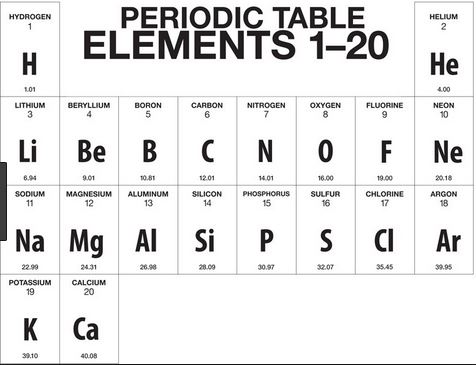
How many valence electrons does Nitrogen Have?
1 Valence electron
2 Valence electron
3 Valence electron
4 Valence electron
5 Valence electron
How many valence electrons does Helium Have?
1 Valence electron
2 Valence electron
3 Valence electron
4 Valence electron
5 Valence electron
How many valence electrons does Hydrogen Have?
1 Valence electron
2 Valence electron
3 Valence electron
4 Valence electron
5 Valence electron
How many valence electrons does Magnesium Have?
1 Valence electron
2 Valence electron
3 Valence electron
4 Valence electron
5 Valence electron
How many valence electrons does Aluminum Have?
1 Valence electron
2 Valence electron
3 Valence electron
4 Valence electron
5 Valence electron

According to the Octet Rule, atoms of elements react with each other in order to attain ____ electrons in their outermost energy level or shell.
2
4
6
8
10
Which of the following elements LOSES 1 electron in order to attain an octet?
potassium
calcium
helium
boron
fluorine

Do you think Carbon at the central already achieved an octet?
Yes
No

Do you think Nitrogen at the central already achieved an octet?
Yes
No
Which of the following states that electrons occupy orbitals of lowest energy first?
Hund’s Rule
Aufbau Principle
Pauli Exclusion Principle
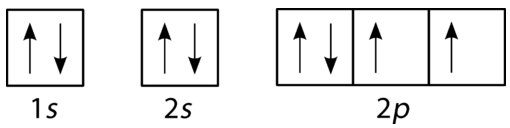
This orbital diagram represents:
Carbon
Boron
Nitrogen
Oxygen

This orbital diagram represents
Nitrogen
Oxygen
Carbon
Neon

What is incorrect about this orbital diagram?
Both arrows in the 2p box should be pointing up
There are too many electrons in the 1s orbital
In the 2p boxes, there should only be 1 electron in the first 2p box and one in the 2nd 2p box
All the arrows should be pointing up
What does the Pauli Exclusion Principle state?
An orbital can only hold a maximum of 2 electrons, each with opposite spins
An orbital can hold a minimum of 6 electrons, each with opposite spins
An orbital can hold a maximum of 6 electrons, each with the same spin
An orbital can hold a maximum of 2 electrons, each with the same spin

Which orbital diagram violates of Hund's Rule?
A
B
C
D

This orbital diagram represents
Nitrogen
Oxygen
Carbon
Neon
1s22s22p63s23p64s23d10
What is the maximum number of electrons that an S orbital can have?
1 electron
2 electrons
3 electrons
4 electrons
How many electrons can the d sublevel(orbital) hold?
8
10
2
4
Why do all bonds form?
to fill the outermost energy level
so an atom can be unstable
so the number of protons and electrons can equal.
so they can gain neutrons.
What two types of atoms make a covalent bond?
2 nonmetals
2 metals
1 metal and 1 nonmetal`
Ionic bonds are between
metals and nonmetals
2 metals
2 nonmetals
Water is an example of what?
molecular compound (covalent compound)
ionic compound
Salt is an example of what?
ionic compound
covalent compound
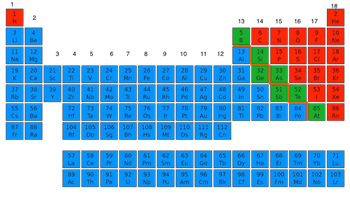

What are the seven diatomic elements?
H2, Cl2, Br2, O2, N2, I2, F2
H2, Cl2, I2, F2, Hg2, Br2, Fe2
H2, Cu2, Ni2, B2, O2, I2, Fe2
What are diatomic elements?
Elements that form two-atom molecules when not combined in a compound.
Two elements that combine with one atom from each element.
Elements that are always in pairs no matter what.
Is O2 a diatomic element?
Yes
No
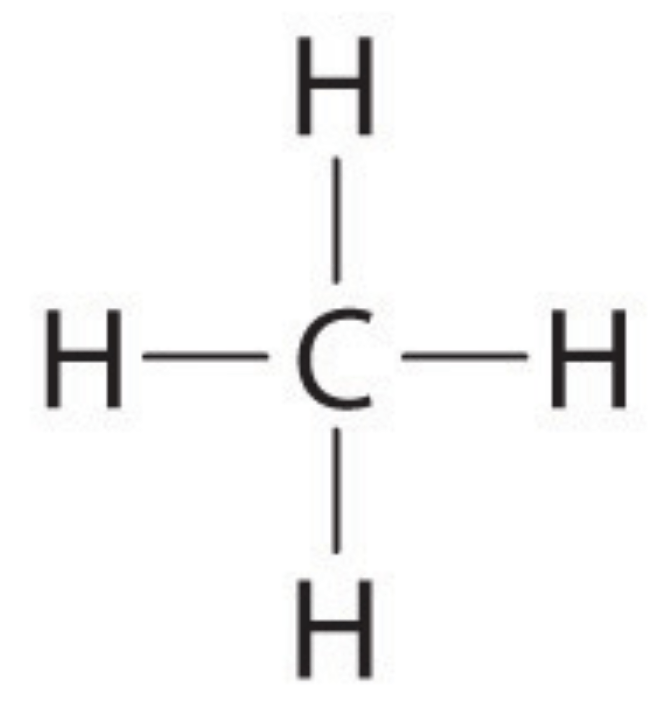
Classify the following molecule.
polar
nonpolar
Why is the molecule nonpolar?
There are nonbonding pairs on the central atom.
There are different types of elements bonded to the central atom.
There are no nonbonding pairs on the central atom and all of the atoms bonded to the central atom are the same.

Classify the following molecule.
polar
nonpolar

Why is the molecule polar?
There are nonbonding pairs on the central atom.
There are different types of elements bonded to the central atom.
There are no nonbonding pairs on the central atom and all of the atoms bonded to the central atom are the same.

Classify the following molecule.
polar
nonpolar

Why is the molecule polar?
There are nonbonding pairs on the central atom.
There are different types of elements bonded to the central atom.
There are no nonbonding pairs on the central atom and all of the atoms bonded to the central atom are the same.

Classify the following molecule.
polar
nonpolar

What shape would this have?
Trigonal planar
Pyramidal
Tetrahedral
Bent

Any molecule with only two atoms must be linear. Three-atom molecules such as BeCl2 can also be linear. For linear molecules, the bond angle is
360°
180°
120°
90°


Identify the molecule structure
Bent
Linear
Trigonal Planar
Pyramidal

What is the Molecular Geometry?
Quadralateral
Bent 104
Trigonal Pyramidal
Quad Pyramidal

What is the Molecular Geometry?
Quadrahedral
Tetrahedral
Tetralateral
Quadinterval

What is the Molecular Geometry
Triginal Pyramidal
Linear
Trigonal Planar
SeeSaw

What Molecular Structure is this?
Strait
Planar
Di linear
Linear

What is the Molecular Geometry?
Linear
T Shape
See Saw
Bent
Which substance would have the weakest intermolecular forces of attraction?
CH4
NaCl
H2O
MgF2

Intermolecular forces for: CO2
Dispersion Force
Dipole dipole
Hydrogen bonding

The weaker the intermolecular forces of a substance the _____________ the boiling point
higher
lower
Which of the following will have the lowest melting point?


Which substance has the weakest intermolecular forces?
Substance A, boiling point of 75 °C
Substance B, boiling point of 105 °C
Substance C, boiling point of 25 °C
Substance d, boiling point of 45 °C
Melting and boiling points depend on thermal energy and the strength of ________
intramolecular forces
intermolecular forces
polar covalent bonds
metallic bonds
From fluorine to iodine, the boiling points of the halogens
decrease down the group BECAUSE fluorine is the most reactive halogen
decrease down the group BECAUSE fluorine is the most electronegative halogen
increase down the group BECAUSE iodine has the most electrons
increases down the group BECAUSE iodine has the largest atomic radius
What intermolecular forces are present for halogen molecules?
permanent dipole-dipole
hydrogen bonding
induced dipole-dipole
ionic
Fill in the blanks:
In the halogens, going down the group, atomic radius _________. More inner shells causes shielding to __________. ____ nuclear attraction to capture an electron from another species. Reactivity ___________.
decreases, decrease, more, increases
increases, decrease, less, increases
increases, increase, less, decreases
decreases, increase, more, decreases
What is the best explanation for the trend in boiling points down the halogens group?
The covalent bonds become stronger
The hydrogen bonds become stronger
The permanent dipole-dipole interactions become stronger
The induced dipole-dipole interactions (London forces) increase
FeCl3

Which letters are pointing to the subscripts of this compound?
A
B
C
Na1+ F1-
K1+ S2-
When naming ionic compounds with transition metals you need to include roman numerals to show the _____ of the metal..
atomic number
mass number
charge
ionization energy
When naming a compound, which of these is written first?
Metal
Nonmetal
Anion
Cation
When naming a compound, what must the last part be?
the element with "ide" at the end
the element with the ending "ite"
the name of the element
the element with "ide" at the end, unless its a polyatomic ion
If I gain electrons I become
Positive because I've added to my atom
negative because I've added electrons
same because i'm balanced
equal because now I have electrons
By looking at the formula of an ionic compound, we can determine the charge (oxidation state) of a transition metal.
True
False
What is the what charge of manganese in the compound: Mn2O3
+1
+2
+3
-3
What is the charge of copper in the compound: CuBr2
+1
+2
-1
-2
What is the what charge of lead in the compound: lead (IV) iodide
+1
+4
+6
-1
What is the name of the following compound: NaCl
sodium chloride
sodium (I) chloride
sodium chlorine
sodium (I) chlorine
What is the name of the following compound: CuBr2
copper bromine
copper bromide
copper (I) bromide
copper (II) bromide
What is the charge of copper in the compound: CuBr2
+1
+2
-1
-2
Which is the correct formula for the compound: lead (II) fluoride
Pb2F
PbF2
PbF
PbF7
Unlike Ionic compounds, Covalent compounds require what when naming them?
A roman numeral
A charge
A prefix
When naming covalent compounds: Mono is the prefix for....
1
2
3
4
5
When naming covalent compounds: Di is the prefix for....
1
2
3
4
5
When naming covalent compounds: Tri is the prefix for....
1
2
3
4
5
When naming covalent compounds: Tetra is the prefix for....
1
2
3
4
5
When naming covalent compounds: Penta is the prefix for....
1
2
3
4
5
When is the prefix mono not used?
It is never used when naming covalent compounds
It is never used on the second element
It is never used when on the first element
What is the name for NI3?
Mononitrogen TretraIodide
Nitrogen Triiodide
Nitrogen (III) Triiodide
Nitrogen Iodide
What is the name for CCl4?
Carbon (IIII) Chloride
Carbon Trichloride
Monocarbon Tetrachloride
Carbon Tetrachloride
What is the chemical name for H2O?
Water
Dihydrogen Monoxide
Hydrogen (II) Oxide
Dihydrogen Oxygen
What is the name for P2O5?
Diphosphorous Pentaoxide
Phosphorous Oxide
Phosphorous (III) Oxide
Diphosphide Oxide
What are covalent compounds made up of?
metal(s)
nonmetal(s)
transition metals
noble gasses
What would be the formula for Phosphorous Petaflouride?
P1F6
P1F5
PF6
PF5
What is the formula for Phosphorous Trichloride?
P1Cl3
PCl4
PCl3
PCl5
What is the formula for carbon monoxide?
C1O1
C2O2
CO
CO2
In covalent bonds are cations and anions present?
Yes, they are present.
No, they are not present.

Where are nonmetals typically located on the periodic table?
In the middle of the periodic table
To the left of the transition metals
Staircase of the periodic table
To the right of the staircase

