wayground logo

Free Printable Worksheets

Font size

S
M
L
XL
Worksheets

H.W. Q-2 Chem-1: Midterm Review

Total questions: 208

Worksheet time: 7hrs 56mins

Name
Class
Date
1.

What is the mass in grams of 2.50 moles of Na?

a)

23 grams

b)

16.6 grams

c)

27.5 grams

d)

57.5 grams

2.

How many neutrons in Carbon-14?

a)
6
b)
7
c)
14
d)
8
3.
How many neutrons does the isotope of lithium have?
a)
8
b)
3
c)
4
d)
5
4.

What is the molar mass of Nitrogen?

a)

7.01 g/mol

b)

14.02 g/mol

c)

28 g/mol

d)

100 g/mol

5.

How many grams are there in 4.5 moles of Carbon?

a)

64

b)

36

c)

54

d)

24

6.
The first person to ever talk about an atom was
a)
Democritus
b)
Rutherford
c)
Dalton
7.
How did Rutherford discover the proton?
a)
Cathode tube ray experiment
b)
Gold Foil Experiment
c)
Planetary Model
d)
Plum Pudding Model
8.
Who stated that all atoms of the same element are excacty alike?
a)
Democritus
b)
Dalton
c)
Thomson
d)
Borh
9.
What scientist is best known for his "Plum Pudding" model of the atom?
a)
J.J. Tomson
b)
Ernest Rutherford
c)
John Dalton
d)
Democritus
10.
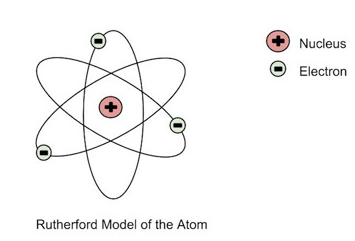
Place the following scientists in order, from earliest to latest: 
A) Ernest Rutherford
B) J.J. Thomson
C) John Dalton
a)
B,C,A
b)
C,A,B
c)
A,C,B
d)
C,B,A
11.
Rutherford's gold foil experiment provided evidence that...
a)
negative and positive charges are spread evenly throughout the atom.
b)
alpha particles have a positive charge.
c)
gold is not a dense as previously thought.
d)
there is a dense positively charged nucleus at the center of an atom.
12.

Find the number of moles in 84 grams of Mg?

a)

3.0 mol Mg

b)

3.5 mol Mg

c)

84 mol Mg

d)

7.0 mol Mg

13.

How do you find the mass number?

a)

Protons+Electrons

b)

Protons+Neutrons

c)

Protons+Neutrons+Electrons

d)

Calculate it using the percent abundance for each isotope

14.

How does Carbon-12 and Carbon-14 differ?

a)

# of protons

b)

Mass #

c)

# of neutrons

d)

Mass # and # of neutrons

15.

How many neutrons does Thorium-182 have?

a)

92

b)

90

c)

182

d)

129

16.

What is the molar mass of Cl2?

a)

17.00 g/mol

b)

35.45 g/mol

c)

70.90 g/mol

d)

89.02 g/mol

17.

Which of the following is/are conclusions based on Rutherford’s gold foil experiment?

a)

Atom is mostly empty space

b)

The nucleus is positively charged

c)

The atom has a small dense nucleus

d)

All answers are correct

18.

Which one of these is Dalton's Model?

a)
b)
c)
d)
19.

Which experiment was performed by J. J. Thomson in 1897?

a)
Oil Drop Experiment
b)
Gold Foil Experiment
c)
Wave  Experiment
d)
Cathode Ray Experiment
20.

What part(s) of Dalton's atomic theory is wrong? Click all that apply.

a)

Atoms cannot be subdivided

b)

Atoms can be created or destroyed

c)

atoms are combined separated or rearranged in chemical reactions

d)

atoms are identical in mass

21.

What are the units for molar mass?

a)

grams

b)

amu

c)

grams/mole

d)

liters

22.

What is the mass of one mole of silver?

a)

32.06 g

b)

107.87 g

c)

14.01 g

d)

22.99 g

23.

48.86 g of cobalt is equal to how many moles of cobalt?

a)

1319 moles

b)

1.800 moles

c)

0.8291 moles

d)

1.200 moles

24.

How many moles are in 20 grams of Ca (Calcium)?

a)

0.5

b)

1

c)

3

d)

20

25.
What is the molar mass of CO2?
a)
12
b)
16
c)
32
d)
44
26.

Calculate the molar mass for Al(OH)3

a)

78.0 g/mol

b)

72 g/mol

c)

28 g/mol

d)

25 g/mol

27.

Calculate the molar mass of NH4NO2

a)

50 g/mol

b)

60 g/mol

c)

64 g/mol

d)

78 g/mol

28.

Calculate how many moles are in 13 grams of NaOH?

Remember Molar Mass of NaOH= 40 g

a)

325 moles

b)

0.520 moles

c)

520 moles

d)

.0325 moles

29.

What is the mass of 2.50 mole of oxygen gas O2?

a)

40 g

b)

80 g

c)

16 g

d)

32 g

30.
How many moles are in 16.94g of water?
a)
16.94 mol H2O
b)
0.9401 mol H2O
c)
305.3 mol H2O
d)
1.063 mol H2O
31.
How many grams of carbon are in 0.63 moles of carbon?
a)
3.79x10²³ g C
b)
.0524 g C
c)
7.57 g C
d)
.800 g C
32.

What is the molar mass of Al2O3?

a)

100 g/mol

b)

87.5 g/mol

c)

102 g/mol

d)

102 mole

33.
What is the total number of moles contained in 115 g of C2H5OH?
a)
1.0
b)
1.5
c)
3.0
d)
2.5
34.

When you are converting from gram to mole you...

a)

divide by the molar mass of the element or compound.

b)

multiply by the molar mass of the element or compound.

c)

divide by avogadro's number.

d)

multiply by avogadro's number.

35.

When you are converting from mole to gram you.....

a)

divide by avogadro's number..

b)

multiply by avogadro's number.

c)

divide by the molar mass of the element or compound.

d)

multiply by the molar mass of the element or compound.

36.

Isotopes of an element contain an equal number of protons but a different number of ____________________.

a)

neutrons

b)

electrons

c)

atomic numbers

37.

How many protons are in the isotope pictured above?

a)

29

b)

34

c)

63

d)

92

38.

Element X has 13 neutrons with a mass number of 28. Element Y has 13 protons. These elements are:

a)

Different elements

b)

Isotopes

39.

to solve how many grams are in 9.05 x 10^23 atoms of Sodium you need to....

a)
b)
c)
d)

All of the answers are correct.

40.

Which of the following would have more mass: 1 mole Li, 1 mole Au,

a)

1 mole Li

b)

1 mole Si

c)

1 mole Au

d)

None, all are equal

41.
How many moles are in 19.82 g Mg? 
a)
1.226 mol Mg
b)
481.7 mol Mg
c)
1.000 mol Mg
d)
 0.8156 mol Mg
42.
How many moles of sulfur atoms are there in 5.0 g of sulfur?
a)
160 mol
b)
8.3 x 10⁻²⁴ mol
c)
0.16 mol
d)
2.7 x 10⁻²² mol
43.
Which of the following dimensional analysis setups will correctly convert 2.50 moles of sodium to grams of sodium?
a)
A
b)
B
c)
C
d)
D
44.
What charge does an electron have?
a)
positive
b)
negative
c)
neutral
d)
no charge
45.
How many electrons can an p sublevel hold?
a)
1
b)
2
c)
3
d)
4
46.
How many electrons can an d sublevel hold?
a)
1
b)
2
c)
3
d)
4
47.
How many electrons can an f sublevel hold?
a)
1
b)
2
c)
3
d)
4
48.
How many electrons can an s sublevel hold?
a)
1
b)
2
c)
3
d)
4
49.
What are the sublevels that make up the n=1 energy level?
a)
s
b)
s, p
c)
s, p, d
d)
s, p, d, f
50.
What are the sublevels that make up the n=2 energy level?
a)
s
b)
s, p
c)
s, p, d
d)
s, p, d, f
51.
What are the sublevels that make up the n=3 energy level?
a)
s
b)
s, p
c)
s, p, d
d)
s, p, d, f
52.
What are the sublevels that make up the n=4 energy level?
a)
s
b)
s, p
c)
s, p, d
d)
s, p, d, f
53.
How many atomic orbitals are there in the s sublevel?
a)
1
b)
2
c)
3
d)
4
54.
How many atomic orbitals are there in the p sublevel?
a)
2
b)
3
c)
4
d)
5
55.
How many atomic orbitals are there in the d sublevel?
a)
3
b)
4
c)
5
d)
6
56.
How many atomic orbitals are there in the f sublevel?
a)
4
b)
5
c)
6
d)
7
57.
Electrons fill energy levels and sublevels _____ energy first.
a)
lower
b)
higher
58.
According to the Aufbau Principle, which sublevel should starting filling with electrons after 5s?
a)
6s
b)
5p
c)
4d
d)
3f
59.
Identify the following element:
1s22s22p63s23p64s23d10
a)
nickel
b)
copper
c)
zinc
d)
gallium
60.
The second energy level (n=2) contains a total of 5 electrons...how many more electrons can fit in the 2nd energy level?
a)
0
b)
3
c)
5
d)
7
61.

The second energy level (n=2) can hold up to how many total electrons?

a)

2

b)

8

c)

18

d)

32

62.

The third energy level (n=3) can hold up to how many electrons?

a)

2

b)

8

c)

18

d)

32

63.
Which of the following statements is true about the 3s and the 4s sublevels?
a)
These sublevels have the same energy
b)
These sublevels are the same distance from the nucleus
c)
These sublevels hold different amounts of electrons
d)
These sublevels have the same shape
64.
Sublevel with single orbital shaped like a sphere.
a)
s
b)
p
c)
d
d)
f
65.
Sublevel with a set of 3 dumbbell shaped orbitals. 
a)
s
b)
p
c)
d
d)
f
66.
A valence electron or electrons exist in the ______ energy level.
a)
Farthest in
b)
Middle
c)
Furthest out
67.
How many valence electrons do atoms in group 16 have?
a)
4
b)
5
c)
6
d)
7
68.
What atom matches this electron configuration?
1s22s22p63s23p64s23d10
a)
Zinc
b)
Copper
c)
Nickel
d)
Germanium
69.
What atom matches this electron configuration?
1s22s22p63s2
a)
Neon
b)
Magnesium
c)
Aluminum
d)
Potassium
70.
What electron configuration matches an oxygen atom?
a)
1s22s22p63s2, 3p64s23d104p5
b)
1s22s22p4
c)
1s22s22p6
d)
1s22s22p63s23p64s23d1
71.
What do you start electron configuration with?
a)
1s2
b)
1d10
c)
1f14
d)
1p6
72.
Which of the following is a p block element?
a)
Ca
b)
Ar
c)
Re
d)
Au
73.
What is the maximum number of electrons that an orbital can have?
a)
1 electron
b)
2 electrons
c)
3 electrons
d)
4 electrons
74.
What is the number of valence electrons for Carbon?
a)
12
b)
6
c)
5
d)
4
75.
What is the shorthand electron configuration for Sulfur atom?
a)
[Ar] 3p4
b)
[He] 3s23p4
c)
[Ne] 3s23p4
d)
[Na] 3s23p3
76.
What noble gas should be used to write the shorthand configuration for Te?
a)
Ar
b)
Kr
c)
Xe
d)
Sb
77.

This is a correct dot diagram for neon (Ne)

a)

True

b)

False

78.

Which of the following elements will NOT be surrounded by an octet of electrons in a correctly drawn Lewis structure?

a)

Carbon

b)

Oxygen

c)

Chlorine

d)

Hydrogen

79.

By replacing the element symbol, this could be the dot diagram of

a)

Mg

b)

Cl

c)

C

d)

O

80.
What does an atom's group number help us determine?
a)
Number of protons
b)
Number of electrons
c)
Number of valence electrons
d)
Number of shells
81.

According to the octet rule most elements need _______ valence electrons.

a)

2

b)

8

c)

6

d)

18

82.
How many electrons should Flourine have around its Lewis dot model?
a)
5
b)
6
c)
7
d)
8
83.

Which of these is incorrect?

a)
b)
84.

This is a correct dot diagram for carbon (C)

a)

true

b)

false

85.

This is a correct dot diagram for nitrogen (N)

a)

true

b)

false

86.
Which element is pictured?
a)
neon
b)
fluorine
c)
magnesium
d)
argon
87.
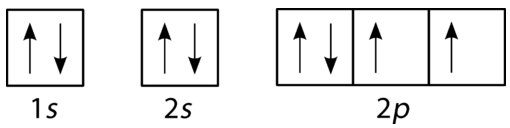
This orbital diagram represents:  
a)
C
b)
B
c)
N
d)
O
88.
Which element is pictured?
a)
neon
b)
fluorine
c)
magnesium
d)
argon
89.
This orbital diagram represents:  
a)
C
b)
B
c)
N
d)
O
90.
Which orbital shows a violation of Hund's Rule?
a)
A
b)
B
c)
C
d)
D
91.
Ionization energy is...
a)
the energy required to add an electron to a specific atom
b)
how much energy it takes to remove an electron from an atom
c)
the energy required to shield the outer electrons from the nucleus
d)
a measure of the ability of an atom to attract electrons
92.
Atoms that have a high electronegativity, _______________.
a)
give up their electrons more easily.
b)
hold on to their electrons more tightly.
c)
have more electron shells.
93.
Which of the following will have a lower ionization energy than Scandium (Sc)?
a)
Helium (He)
b)
Titanium (Ti)
c)
Calcium (Ca)
d)
Magnesium (Mg)
94.

The vertical (up and down) columns in the Periodic Table are called

a)

groups

b)

towers

c)

periods

d)

atomic numbers

95.
The Modern Periodic Table of Elements is arranged by
a)
atomic mass
b)
atomic number
c)
valence electrons
d)
number of isotopes
96.
Which group of the periodic table is composed of inert (not reactive)  gases?
a)
alkali metals
b)
alkaline earth metals
c)
halogens
d)
noble gases
97.
Which is an alkali metal?
a)
Magnesium
b)
Iron
c)
Sodium
d)
Europium
98.
Which is a halogen?
a)
Helium
b)
Chlorine
c)
Oxygen
d)
Neptune
99.
Elements in a ..................have similar chemical properties.  
a)
period
b)
group
c)
row
100.

The letter, C, is a ... of carbon.

a)

Name

b)

Nickname

c)

Chemical Symbol

d)

Pseudonym

101.

Name this group: These metals are the most reactive.

a)
b)
c)
d)
102.

This is the section where you find the TRANSITION METALS These metals contain familiar metals such as gold, iron, and copper.

a)
b)
c)
d)
103.

Find these groups: Locate Lanthanides and Actinides.

a)
b)
c)
d)
104.

I am a metal


I am in group 2


I am in period 6


I am…

a)

Mo

b)

Re

c)

S

d)

Ba

105.

I am a nonmetal


I am in period 2


I am in group 16/6A

a)

Ba

b)

Si

c)

Ba

d)

O

106.

Find an element with similar chemical properties to Barium (Ba).

a)

Ca an Ra, because they are in the same group and have similar chemical properties.

b)

Cs and La, b/c they are in the same period number.

c)

Ca and Y, b/c they are 90 degree angle and have similiar properties.

107.
Which element is depicted from this orbital diagram
a)
Fluorine
b)
Neon
c)
Chlorine
d)
Argon
108.
This orbital diagram represents:  
a)
C
b)
B
c)
N
d)
O
109.
This could be the dot diagram of 
a)
Ne
b)
Si
c)
Al
d)
Be
110.

This could be the dot diagram of

a)

Ca

b)

Cl

c)

C

d)

S

111.

This could be the dot diagram of

a)

Ne

b)

Ge

c)

Al

d)

Be

112.

Nitrogen is in column 15 or Group 5A. Which of the following is the correct electron dot structure for nitrogen?

a)
b)
c)
d)
113.

Which of the following would have 2 valence electrons

a)

Alkali metals

b)

Alkaline earth metals

c)

Halogens

d)

Noble Gasses

114.
An element with five valence electrons is
a)
phosphorus
b)
oxygen
c)
beryllium
d)
rubidium
115.

This could be the dot diagram of

a)

Al

b)

Cl

c)

C

d)

O

116.

This could be the dot diagram of

a)

Al

b)

Cl

c)

C

d)

Xe

117.

Atoms of the same element will always have the same number of --- 

a)
neutrons
b)
protons
c)
isotopes
d)
atoms
118.

Ions have the same number of protons but different number of _________________

a)

neutrons

b)

electrons

c)

protons

d)

toes

119.

Which of the following ions have a +2 charge?

a)

Hydrogen (H)

b)

Magnesium (Mg)

c)

Calcium (Ca)

d)

Lithium (Li)

120.

Atoms in Group 13 have ​​ valence electrons, so they will ​ (a)   electrons to form a​ +3 charge

​ ​ (b)  

Choose from the below words
lose
gain
valence
3
8
5
121.

Atoms in Group 16 have ​​ (a)   valence electrons, so they will ​ (b)   electrons to have a​ -2 ​charge

Choose from the below words
lose
gain
2
neutral
valence
6
8
122.

Atoms in Group 2 have ​​​ (a)   valence electrons, so they will ​ ​ (b)   electrons to have a​ +2 ​charge

Choose from the below words
6
neutral
valence
8
2
lose
gain
123.
As you move down a group, atomic radius increases because - 
a)
you add more and more neutrons
b)
you add more and more protons
c)
you add more and more shells (energy levels)
d)
you add more atomic mass
124.
The atom with the largest atomic radius in Period 4 (row 4) is - 
a)
K
b)
Kr
c)
Fe
d)
Fe
125.

Of the halogens, which has the smallest radius?

a)

F

b)

Br

c)

He

d)

At

126.

Which of the following will have a higher electronegativity than arsenic (As)?

a)

Carbon (C)

b)

Neon (Ne)

c)

Antimony (Sb)

d)

Germanium (Ge)

127.

Which of the following halogens has the greatest electronegativity?

a)

Chlorine (Cl)

b)

Bromine (Br)

c)

Iodine (I)

d)

Astatine (At)

128.

What is a negatively-charged ion which forms when an atom gains electrons?

a)

cation

b)

anion

c)

electron

d)

ion

129.
Which atom has the largest atomic radius?
a)
potassium
b)
rubidium 
c)
francium
d)
cesium
130.

Which of the following atoms would have the largest radius?

a)

chlorine

b)

silicon

c)

sodium

d)

argon

131.
How are elements on the periodic table arranged by?
a)
in alphabetic order
b)
simular physical & chemical properties
c)
their symbols
d)
Just simular physical properties
132.

Ionic bonds typically form between

a)

A metal and a nonmetal

b)

Two nonmetals

c)

Two metals

d)

A metalloid and a metal

133.

Which has a lower ionization energy: Lithium or Potassium?

a)

Lithium

b)

Potassium

134.

As you move across the periodic table, from left to right, ionization energy is __________________.

a)

decreasing

b)

increasing

135.

As you move across a period, do the atoms get smaller or larger?

a)

smaller

b)

larger

136.

Which atom is more electronegative?

a)

K

b)

Rb

c)

Cl

d)

B

137.

Ionization energy is ....

a)

the energy required to add an electron to an atom

b)

the energy required to shield the outer electrons from the nucleus

c)

a measure of the ability of an atom to attract electrons

d)

how much energy it takes to remove an electron from an atom

138.

Which statement correctly and completely identifies a trend?

a)

Atomic radius decreases across a period, and increases down a group

b)

Electronegativity decreases across a period and decreases down a group

c)

Ionization energy increases across a period and increases down a group

139.

Vertical columns of elements (families) on the periodic table with similar properties

a)

period

b)

row

c)

groups

d)

quadrants

140.

Which of the following could form an ionic compound? Check all that apply.

a)

Na+ and F-

b)

S2- and O2-

c)

Ca2+ and Fe3+

d)

Mg2+ and Cl-

141.

What is the formula for Al + S?

a)
Al2S3
b)
Al3S2
c)
Al2SO4
d)
AlS
142.

Which of the below is an ionic compounds?

a)

Ni

b)

MgCl2

c)

H2O

d)

CH4

143.

Which of the following is true for ionic bonding & ionic compounds? (3 correct statements)

a)

They must be made of ions with like charges.

b)

The negative ion must be written first.

c)

Compounds must have an overall charge of zero.

d)

They are made of metals and nonmetals.

e)

The positive ion must be written first.

144.

Be and F can combine to form BeF2, an ionic compound. Select ALL the true statements.

a)

Each Be atom loses two electrons from the outer shell.

b)

Each F atom gains two electrons from Be.

c)

The force holding the ionic compound together is electrostatic attraction.

d)

Each F ion has a charge of -1

145.

Ionic bonds form between

a)

A metal & a nonmetal

b)

2 metals

c)

2 nonmetals

146.

A cation has a __________ charge

a)

positive

b)

negative

c)

neutral

147.

A cation is formed by:

a)

losing electrons

b)

gaining electrons

c)

losing protons

d)

gaining protons

148.

An anion has a _________ charge

a)

positive

b)

negative

c)

neutral

149.

An anion is formed by

a)

losing electrons

b)

gaining electrons

c)

losing protons

d)

gaining protons

150.

In an ionic bond electrons are

a)

shared EQUALLY

b)

shared UNEQUALLY

c)

transferred

151.

In an ionic bond the CATION is always the

a)

metal

b)

nonmetal

152.

In an ionic bond the ANION is always the

a)

metal

b)

nonmetal

153.

Which of the following is NOT a step in forming an ionic bond?

a)

One atom shares its electrons with another one

b)

Opposite charged ions form due to the transfer of electrons

c)

One atom gives electrons to another one

154.

Which of the following is the correct formula for this ionic bond?: Al & S

a)

AlS3

b)

Al2S3

c)

Al3S2

d)

Al3S

155.

Elements in the ALKALI METAL family form this ion charge:

a)

+1

b)

+2

c)

-1

d)

-2

156.

Elements in the ALKALINE EARTH METAL family form this ion charge:

a)

+1

b)

+2

c)

-1

d)

-2

157.

Elements in the HALOGEN family form this ion charge:

a)

+1

b)

+2

c)

-1

d)

-2

158.

An ion of OXYGEN would have what charge?

a)

+1

b)

+2

c)

6

d)

-2

159.

An ion of NITROGEN would have what charge?

a)

+1

b)

+3

c)

5

d)

-3

160.

Determine the formula when pairing: Na & S

a)

Na2SNa_2S

b)

NaSNaS

c)

NaS2NaS_2

161.

Determine the formula when pairing: K & N

a)

K3NK_3N

b)

KNKN

c)

KN3KN_3

162.

Determine the formula when pairing: Al & O

a)

Al2O3Al_2O_3

b)

Al3O2Al_3O_2

c)

Al2O2Al_2O_2

163.

Determine the formula when pairing: Ca & O

a)

CaOCaO

b)

Ca2O2Ca_2O_2

c)

CaO2CaO_2

164.
According to the octet rule most elements need _______ valence electrons.
a)
2
b)
8
c)
6
d)
18
165.
What is the best explanation of VSEPR theory?
a)
It explains the shapes that electrons make around atoms when they repel
b)
It explains how many electrons fit into an element's valent shell
c)
It explains why electrons pair up
d)
It explains why electrons repel each other
166.
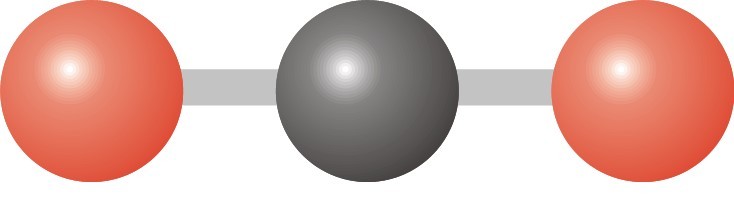
Which molecule would have this molecular geometry?
a)
BF3
b)
CH4
c)
PCl5
d)
CO2
167.
Who could this be?
a)
H2O
b)
NH3
c)
CO2
d)
CH4
168.

What is the molecular shape of a silicon dioxide (SiO2) molecule?

a)

linear

b)

trigonal planar

c)

bent

d)

tetrahedral

169.

The atoms in a molecule of water adopt what kind of molecular geometry?

a)

Linear

b)

Tetrahedral

c)

Bent

d)

Trigonal planar

170.

Ammonia, NH3, adopts a tetrahedral geometry. However, the non-bonding pair on the central nitrogen atom distorts the bond angle away from the expected 109.5°. Which of the following statements correctly describes how the bond angle is distorted?

a)

The actual bond angle is reduced: it is less than 109.5°

b)

The actual bond angle is increased: it is more than 109.5°

171.
 A lone pair is defined as
a)
A pair of bonding electrons
b)
One non-bonding electron
c)
A pair of non-bonding electrons
d)
A pair of electrons on the central atom
172.
What molecular shape is the structure shown here? (BCl3)
a)
linear
b)
trigonal planar
c)
tetrahedral
d)
trigonal pyramidal
173.

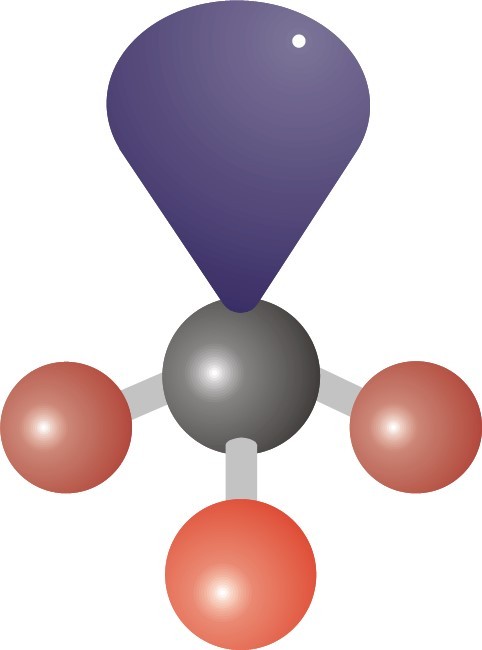
What shape would this have?

a)

Trigonal planar

b)

Pyramidal

c)

Tetrahedral

d)

Bent

174.
Choose the correct shape for this molecule:
a)
linear
b)
Trigonal pyramidal
c)
Bent
d)
Tetrahedral
175.
*
a)
trigonal pyramid
b)
linear
c)
bent
d)
angular
176.
What molecular shape is the structure shown here? (BeCl2)
a)
linear
b)
bent
c)
trigonal planar
d)
tetrahedral
177.
According to VSEPR, molecules adjust their shapes to keep which of the following as far away as possible?
a)
Pairs of valence electrons
b)
Inner shell electrons
c)
Mobile Electrons
d)
Electrons closest to the nucleus
178.

The VSEPR theory basically states that the shape of a molecule is based on the...

a)

nuclear attractions

b)

nuclear repulsions

c)

electrostatic attractions

d)

electron repulsions

179.

The Lewis Dot diagram for hydronium H3O+ is shown on the left. What shape is the molecular geometry?

a)

trigonal planar

b)

linear

c)

tetrahedral

d)

trigonal pyramidal

180.
What is the VSEPR theory used to predict?
a)
Bond Strength
b)
Polarity
c)
Molecular Shape
d)
Electronegativity
181.
What molecular shape is the structure shown here? (H2O)
a)
tetrahedral
b)
trigonal planar
c)
bent
d)
trigonal pyramidal
182.
Which of the following molecular shapes would have a bond angle of 180 Degrees?
a)
Bent
b)
Trigonal Planar
c)
Tetrahedral
d)
Linear
183.

The acronym VSEPR stand for

a)

very strong electron pair repulsion.

b)

varied symmetry electrostatic proton reaction.

c)

venomous snakes enjoy pink ribbons.

d)

valence shell electron pair repulsion.

184.

VSEPR theory is used to predict

a)

the number of unshared pairs of electrons in a Lewis structure.

b)

the number of multiple bonds in a Lewis structure.

c)

the three-dimensional geometry of a molecule.

d)

the three-dimensional crystal lattice structure of ionic compounds.

185.

Which shape would the molecule shown have?

a)
linear
b)
trigonal planar
c)
trigonal pyramid
d)
bent of angular
186.
SiClhas what shape?
a)

linear

b)

pyramidal

c)
tetrahedral
d)

trigonal planar

187.
What molecular shape is the structure shown here? (NH4+)
a)
linear
b)
trigonal planar
c)
tetrahedral
d)
trigonal pyramidal
188.

Lone pairs of electron ​ (a)   other electron pairs ​​ (b)   strongly than bonded pairs. This ​ (c)   the bond angle.​

Choose from the below words
repel
more
reduces
attract
less
increases
189.
How many lone pairs of electrons are on the P atom in PF3?
a)
1
b)
2
c)
3
d)
0
190.
How many unshared pairs of electrons will a bent molecule have? 
a)
1
b)
2
c)
3
d)
4
191.
What shape would PHhave?
a)
Trigonal Planar
b)
Trigonal Bipyramidal
c)
Bent
d)
Linear
192.

Why is the bond angle in NH3 molecule is smaller than that in CH4 molecule?

a)

Among the four electron pairs around the central atom N in NH3

molecule, there are two lone pairs which require more space than bonding pairs and tend to compress the angles between the bonding pairs.

b)

Among the four electron pairs around the central atom N in NH3

molecule, there is one lone pair which requires more space than a bonding pair and tends to compress the angles between the bonding pairs.

c)

Among the four electron pairs around the central atom N in NH3

molecule, there is one lone pair which requires less space than bonding pairs and tend to increase the angles between the bonding pairs.

d)

In reality, bond angle in NH3 molecule is larger than that in CH4 molecule.
193.
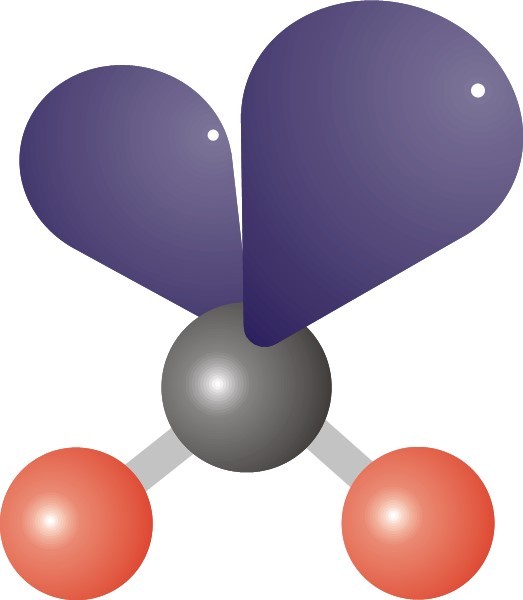
Who could this be? 
a)
CO2
b)
NH3
c)
H2S
d)
CH4
194.

How many lone pairs are on S in SH2? What shape is the molecule?

a)

none/linear

b)

one/trigonal planar

c)

two/bent

d)

two/tetrahedral

195.

Which of these is the shape of CCl4?

a)
b)
c)
d)
e)
196.
In chemical compounds, covalent bonds form when
a)
the electronegativity difference between two atoms is very large.
b)
electrons are completely transferred between two metals.
c)
pairs of electrons are shared between two nonmetal atoms.
d)
two nonmetal atoms are attracted to each other by opposite charges.
197.
Predict the bond that will form between Be and F.
a)
Ionic
b)
Covalent
198.
Predict the bond that will form between Se and Cl
a)
Ionic
b)
Covalent
199.

Which of these is the shape of NH3?

a)
b)
c)
d)
e)
200.

Why is the molecule polar?

a)

There is a lone pair on the central atom, creating a negative side to the molecule.

b)

There are different types of elements bonded to the central atom.

c)

There are no lone pairs on the central atom and all of the atoms bonded to the central atom are the same.

201.

Why is the molecule nonpolar?

a)

There are lone pairs on the central atom.

b)

There are different types of elements bonded to the central atom.

c)

There are no lone pairs on the central atom and all of the atoms bonded to the central atom are the same (symmetrical).

202.

The molecule show would have a ​ ​ ​ (a)   shape and ​ (b)   be symmetric making the molecule ​ (c)  

Choose from the below words
Tetrahedral
Linear
not polar
would
trigonal pyramid
tetrahedral
polar
triganol pyramid
would not
203.

5. CH2Cl2

a)

Polar

b)

Non-polar

204.

1. N2

a)

Polar

b)

Non-polar

205.
 A lone pair is defined as
a)
A pair of bonding electrons
b)
One non-bonding electron
c)
A pair of non-bonding electrons
d)
A pair of electrons on the central atom
206.

3 atoms bonded and 0 lone pairs

a)

linear

b)

trigonal planar

c)

bent

d)

tetrahedral

e)

trigonal pyramidal

207.
What molecular shape is the structure shown here? (H2O)
a)
tetrahedral
b)
trigonal planar
c)
bent
d)
trigonal pyramidal
208.

Is this molecule polar or non-polar?

a)

Polar

b)

Non-polar