Worksheets
Atomic Theory and Periodicity Review
Total questions: 92
Worksheet time: 2hrs 20mins


A) Ernest Rutherford
B) J.J. Thomson
C) John Dalton
John Dalton stated:
Atoms are tiny, invisible particles.
Atoms of one element are all the same.
Atoms of different elements are different.
Compounds form by combining atoms.
All of the statements listed.
John Dalton wrote postulates to make the idea of the atom useful. Which postulate below was proven wrong?
All elements are made up of tiny indivisible particles called atoms.
The atoms of one element are different from the atoms of another element.
Atoms of different elements chemically combine to form chemical compounds.
During chemical reactions, atoms are rearranged.
What evidence did Rutherford use to support the idea that the atom was mostly empty space?
the vast majority of the alpha particles went through the foil unaffected.
the vast majority of the alpha particles were deflected at 90 degrees.
one alpha particle was deflected by the gold foil.
beams of alpha particles were deflected by magnets.
What did Rutherford expect to happen to the alpha particles bombarding the gold foil?
they would be absorbed by the gold.
they would be deflected by the gold.
they would go completely through the gold foil.
the would be changed into beta radiation by the gold foil.

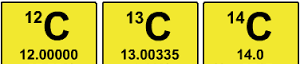
Protium, Deuterium and Tritium are isotopes of the element Hydrogen.
Why does Tritium have a greater mass number than both Protium and Deuterium?
It has more protons
It has more neutrons
It is electrically neutral
It has more electrons

What is the mass number of a nitrogen atom that has 8 neutrons?
15
14
22
8
What is the mass number of an atom that contains 9 protons, 10 neutrons, and 9 electrons?
9
10
18
19




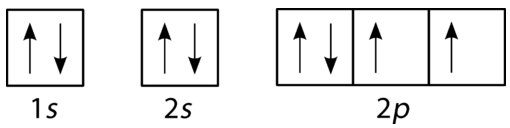
This could be the dot diagram of
Mg
Cl
C
O
What are valence electrons?
The total number of electrons in an atom
The number of electrons in the outermost shell
The number of electrons in the second shell
The number of protons in the outermost shell
What are the elements (Be, Mg, Ca,...) in Group 2 called?
Alkali metals
Alkaline earth metals
Halogens
Noble Gases
Elements that have atoms with full valence shells in the ground state are in
Group 1
Group 2
Group 17
Group 18

Which of these is correct?


Which has the longest wavelength?
Gamma Rays
Visible Light
Microwaves
Radiowaves
Which has the highest frequency?
Gamma Rays
Visible Light
Microwaves
Radiowaves
Which electromagnetic waves carry more energy?
If it has a long wavelength
If it has a short wavelength
If it has a low frequency
They all carry the same amount of energy
The frequency of violet light is 7.5x10¹⁴ Hz. What is its wavelength?
4.0x10⁻⁷ m
4.0x10⁷ m
2.25x10²³m
2.25x10²³ Hz
4.10 x 10⁻¹² m. What is the frequency?
Red light has a wavelength of 675 x 10-9 m. What is its frequency?
2.03x10¹¹ m
4.44x10¹⁴ Hz
4.44x10¹⁴ nm
2.03x10¹¹ Hz

The unknown emissions spectra belongs to the element
Hydrogen
Mercury
Neon
Sodium

The unknown emissions spectra belongs to the element
Hydrogen
Mercury
Neon
Sodium

Each element on the periodic table can be identified by its
classification as a solid, liquid or gas.
location on the table.
ability to react to form compounds.
unique spectral "fingerprint."
What group number are the halogens found?
18 (8A)
1
2
17 (7A)
Periodic law states that the elements are arranged according to their atomic ________ so that elements with similar chemical properties are in the same ________ and properties repeat periodically.
numbers, rows
masses, rows
masses, column
numbers, column
Metals (select all that apply)
are found on the right side of the periodic table.
are found on the left side of the periodic table.
are good conductors of heat and electricity.
are brittle.
are malleable and ductile.
Nonmetals (select all that apply)
are found on the right side of the periodic table.
are found on the left side of the periodic table.
are good conductors of heat and electricity.
are brittle.
can be solid, liquids, or gases at room temperature.
Which element has similar chemical properties as sodium but has 7 energy levels?
Francium (Fr)
Cesium (Cs)
Rubidium (Rb)
Potassium (K)
Which has the smaller Electronegativity?
Cl
Al
Which has the larger Electronegativity?
Carbon
Nitrogen
Which of the following will have a larger radius than Gallium (Ga)?
Ge
Al
Mg
Sr
Which of these has the smallest atomic radius?
K
Rb
Fr
Cs
Which would be the easiest to take an electron from?
He
F
Ba
Fr
As you move to the right across the periodic table atoms tend to get smaller because, ______________.
the atoms have more mass.
the atoms have more neutrons
the atoms have more protons.
the atoms have more electrons.
What is meant by isolectronic?
Group of atoms or ions that have the same electronic configuration
Group of atoms or ions that have the same protonic configuration
Group of atoms or ions that have the same charges
Group of atoms or ions that have different electronic configuration
What is the example of species that are isolectronic species?
Na+ and Mg2+
Na+ and Na
Na+ and Na2+
Which species has the larger radius?
Na
Na+
Which species has the larger radius?
Cl
Cl-
Which is larger... P or P3- ? … and why?
P3- because it gains an energy level
P3- due to extra electron repulsion
P because it loses an energy level
P because of extra electron repulsion
Na+ (Zeff=+9) and Al3+(Zeff=+11) are isoelectronic species (1s2 2s2 2p6). Which of these ion is smaller?
Na+
Al3+
They have the same size
1s22s22p63s23p64s23d10


1s22s22p63s23p64s23d10

Which block (s, p, d, or f) contains the non-metals?
s block
p block
d block
f block
both d and f
1s22s22p63s2