
 Worksheets
SCIENCE FORM 3 ;CHAPTER 1; STIMULI AND RESPONSES REVIEW
Total questions: 93
Worksheet time: 47mins
Which of these is an internal stimulus?
Pizza
A Bear
Thirst
light
Cells in your eye send messages to your your pupil constrict. What stimulus is this a response to?
chemicals
touch
light
sound
When you blink in response to something coming towards your eye, this is called a...
stimulus
change
response
tropism
Tropisms is. . .
a directional response of plants to stimuli
Moment of plant towards light
Response of roots with water
Response to gravity
Part of plants which grows towards stimulus is known as
Response in plant
Nastic movement
Negative tropisms
Positive tropisms
Parts in plants that gives positive thigmotropism. (Please choose 2 correct answers)
Leaves
Tendrils
Twining stems
Sensory organs
Shoots grow towards light.
Based on the above statement, which of the explanation below is true?
It shows positive geotropism
It shows positive hydrotropism
It shows positive phototropism
None of the given answer
What is seismonastic?
Nastic movements response to water
Nastic movements response to touch
Nastic movements response to light
Nastic movements response to temperature

Mimosa sp. responds to touch by folding its leaves inwards when touched. The responds occurs rapidly.
Thigmotropism
Phototropism
Geotropism
Nastic movement

When the plant grows toward the light.
Negative hydrotropism
Positive geotropism
Negative phototropism
Positive phototropism

The GIF shows a type of plant response towards touch. Name the response.
Phototropism
Geotropism
Hydrotropism
Thigmotropism

The GIF shows a type of plant response towards a light. Name the response.
Phototropism
Geotropism
Hydrotropism
Tigmotropism

The GIF shows a type of plant response towards water. Name the response.
Phototropism
Geotropism
Hydrotropism
Tigmotropism

The GIF shows a type of plant response towards gravity. Name the response.
Phototropism
Geotropism
Hydrotropism
Thigmotropism
Nastic movement
Antara hubungan organ deria dengan rangsangan di bawah, yang manakah tidak benar?
Which pair of the sensory organ with stimulus below, is not true?
Mata/Eyes - Cahaya/Light
Hidung/Nose - Udara/Air
Lidah/Tongue - Bahan kimia/Chemical substances
Telinga/Ear - Bunyi/Sound
What are the factors that affect the sensitivity of the skin?
Apakah faktor-faktor yang memberi kesan kepada kepekaan kulit?
I The number of sensory receptors present
Bilangan reseptor deria yang hadir
II The thickness of epidermis layer
Ketebalan lapisan epidermis
III The thickness of dermis layer
Ketebalan lapisan dermis
I and II only
I and III only
II and III only
I, II and III
What sensory organ is used by blind people in Braille reading?
Apakah organ deria yang digunakan oleh orang cacat penglihatan dalam membaca Braille?
Skin
Nose
Eye
Tongue

Diagram 1 shows the cross section of a human eye.
Name the parts Z
Iris
Optic nerve
Cornea
Pupil

Diagram 2 shows the cross section of the human nose.
What is the function of X?
Moistens the nasal cavity
Melembapkan rongga nasal
Interprets the impulses as a smell
Menterjemahkan impuls sebagai satu bau
Secretes mucus to dissolve the chemicals
Mengeluarkan mukus untuk melarutkkan kimia
Detects and sends the impulses to the brain
Mengesan dan menghantar impuls kepada otak
Apakah fungsi rerambut pada lapisan di dalam lubang hidung?
What is the function of the hairs on the inside lining of the nose?
Untuk merembeskan mukus yang membantu melembapkan udara
To secrete mucus that help to moisten the air
Untuk melindungi rongga nasal semasa menarik nafas
To protect the nasal cavity during inhalation
Untuk memerangkap partikel asing yang hadir dalam udara sedutan
To trap foreign particles present in the inhaled air
Untuk meningkatkan proses tarikan dan hembusan nafas
To enhance the inhalation and exhalation process

Rajah 2 menunjukkan keratan rentas kulit manusia.
Diagram 2 below shows a cross-section of human skin.
Pasangan stimuli manakah yang bergerak balas terhadap reseptor P dan Q?
Which pair of stimuli do receptors P and Q respond to?
P - Sakit/Pain, Q - Tekanan/Pressure
P - Sentuhan/Touch, Q - Sejuk/Cold
P - Sejuk/Cold Q - Sakit/Pain
P - Tekanan/Pressure, Q - Sentuhan/Touch
Antara yang berikut, yang manakah tidak benar tentang hidung?
Which of the following is not correct about nose?
Sel- sel deria terletak di bawah hidung
Sensory cells are located under the nose
Hidung ialah organ deria untuk deria bau
The nose is a sensory organs for a sense of smell
Jumlah cecair meningkat semasa seseorang menghidapi selesema
The amount of fluid increases when a person suffers from flu
Sel –sel peka bau di dalam hidung amat sensitif terhadap bahan kimia
Sensitive cells in the nose are very sensitive to chemicals
Semasa seseorang itu menghidapi selesema, makanannya tidak akan berasa sedap. Hal ini demikian kerana
When a person suffers from flu, the food will not be delicious. This is so because
Hidung dan lidah tidak lagi berfungsi
Nose and tongue are no longer work
Bakteria di dalam mulut melemahkan kebolehan sel –sel reseptor mengesan rasa makanan
Bacteria in the mouth weaken the ability of the cell-receptor to detect the taste of the food
Kuantiti mukus yang banyak di bukaan hidung menghindarkan bahan kimia daripada merangsang sel-sel reseptor bau
The abundance of mucous quantities in the nasal opening prevents chemicals from stimulating the receptor cells of the smell
Sel-sel peka bau telah diserang virus selesema dan tidak dapat berfungsi
Sensitive cells have been attacked by flu virus and cannot function

Rajah 5 menunjukkan kawasan lidah manusia yang berbeza
Diagram 5 shows different area of human tongue.
Kawasan manakah lebih sensitif terhadap cuka dan madu?Which parts are more sensitive to vinegar and honey?
P, R
P, Q
Q, S
R, P
Antara struktur telinga berikut, yang manakah mempunyai cecair?
Which of these ear structure has fluid?
Jendela bujur
Oval window
Gegendang telinga
Ear drum
Tiub Eustachio
Eustachio tube
Koklea
Cochlea
Penglihatan yang jelas hanya boleh didapati semasa imej terbentuk dengan tepat pada
Clear vision is only available when the image is formed exactly on
Kornea
Cornea
Anak mata
Eye ball
Retina
Retina
Kanta mata
Eye lens
Retina has two types of photoreceptor: Cone cells and ______
Rod cells
Cone cells
Sensory cells
Optic nerves
Name of cells that sensitive to different light intensities
Cone cells
Rod cells
Complete the following mechanism of sight.
Light--> a)________-->Aqueous humour--> b)________--> Eye lens--> Vitreous humour--> c)_______--> Optic nerve --> d) Brain
Cornea, Pupil, Retina, Brain
Pupil, Cornea, Retina, Brain
Cornea, Retina, Pupil, Brain
Retina, Pupil, Brain, Retina
Complete the following mechanism of sight.
Sound --> Earlobe --> a)_______--> Eardrum --> b)_______ --> Oval window --> c) ________ --> Auditory nerve --> d) _______
Cochlea, Ear canal, Ossicles, Brain
Ear canal, Cochlea, Ossicels, Brain
Ear canal, Ossicles, Cochlea, Brainb
Part of human ear that not involved in hearing mechanism. (Tick 2 answers)
Semicircular canals
Ossicles
Cochlea
Eustachian tube

Human nervous system. Label A.
Brain
Spinal cord
Cranial nerves
Spinal nerves

Human nervous system. What is B?
Brain
Spinal cord
Cranial nerves
Spinal nerves
Human nervous system. Label A.
Brain
Spinal cord
Cranial nerves
Spinal nerves
Human nervous system. What is B?
Brain
Spinal cord
Cranial nerves
Spinal nerves

Human nervous system. What is C?
Brain
Spinal nerves
Cranial nerves
Spinal cord

Human nervous system. What is D?
Brain
Spinal nerves
Cranial nerves
Spinal cord

What is labeled Z?
Nervous system
Central nervous system
Peripheral system
Peripheral nervous system
What is labeled Y?
Nervous system
Central nervous system
Peripheral system
Peripheral nervous system
The human nervous system is able to detect ______________.
rsponses
stimuli
impulses
information
Human nervous system send _________________ in the form of __________________.
responses, impulses
information, impulses
stimuli, impulses
fear, impulses
A human nervous system can produce an appropriate _____________.
answers
responses
interpretation
stimuli

Voluntary actions are taken under _________________ control.
conscious
unconscious
semi-conscious
caution
Involuntary actions are taken under _________________ control.
conscious
unconscious
semi-conscious
caution
Example of involuntary action is ____________________.
reading
talking
breathing
writing
Example of voluntary action is ____________________.
peristalsis
heartbeat
breathing
reading
Which one below is CORRECT in describing voluntary action?
Affector > brain > effector > response
Affector > effector > response
Affector > effector > spinal cord > response
Effector > Affector > spinal cord > response
Which one below is CORRECT in describing involuntary action?
Affector > brain > effector > response
Affector > effector > response
Affector > effector > spinal cord > response
Effector > Affector > spinal cord > response

In an experiment, when a torch is shined towards a student's eye, the pupil will become smaller.
Explain the sequence on the pathway of this impulse?
Affector > brain > effector > response
Affector > brain > effector
Affector > effector > response
Affector > effector > spinal cord > response

What is the response in the above activity?
catching the ruler
voluntary action
release the ruler
involuntary action
The above experiment shows ______________ action and is done _________________.
voluntary, consciously
voluntary, unconsciously
involuntary, consciously
involuntary, unconsciously
Response is very important in our lives so that we can _____________________.
coordinate our brain during certain time only.
coordinate and control body organs to function efficiently in the time required.
coordinate study, resting and sleeping time.
to protect ourselves from harms.

The figure above explains a pathway of impulse in human nervous system during hot object experiment. This pathway explains ____________________.
a voluntary action
an involuntary action
a reflex anatomy
a relation between stimuli and response
Human nervous system consists of
Central Nervous System
Peripheral nervous system
Pulmonary nervous system
Systemic nervous system
Which of following are voluntary action
Singing
Heart beat
Photosynthesis
Drawing

Which of the following are grouped in the central nervous system?
cranial nerves
brain
spinal nerves
spinal cord
Which of the following are the correct sequence of voluntary action?
Stimulus --> Receptor --> Spinal cord --> Effector --> Response
Stimulus --> Receptor --> Brain --> Effector --> Response
Stimulus --> Effector --> Brain --> Receptor --> Response
Stimulus --> Effector --> Spinal cord --> Receptor --> Response
A stimulus is _________
process in which organisms grow larger.
a change in the environment that causes a reaction
a reaction to a change in surroundings
the center of a cell

Identify the stimulus..."A person shivers because it is cold outside"
Cold temperature
A person shivers
Identify the response:
You are at the mall walking through the food court. You smell fresh baked pizza and realize that you skipped lunch. You buy a piece of pizza and eat it before going to buy your CD
the smell of pizza
buying a piece of pizza
buying the CD
food court
Name of cells that sensitive to different light intensities
Cone cells
Rod cells
Part of human ear that not involved in hearing mechanism
Semicircular canals
Ossicles
Cochlea
Eustachian tube
The sensetivity of skins towards stimuli depends on(tick 2)
Number of receptor
Surrounding temperature
Thickness of epidermis
Humidity of air
Short sightedness happened because
Eye lens too thick
Eye lens too thin
Eyeball too short
Eyeball too long
10.The older person is weaker their ability of hearing because
aging
range of hearing become larger
ear drum become more elastic
ear drum less elastic
Seismonastic is a type of nastic response that stimulated to touch. Which plants shows seismonastic?
morning glory
paddy plant
venus fly trap
sunflower plant
2. The largest sensory organ
eye
tongue
ear
skin
nose
5. Smell receptors are located at the ........parts of nasal cavity
upper
lower
What is the advantage of monocular vision?
provide a narrow field of vision
able to form three dimensional image
field of vision overlap greatly
able to detect enemies coming from any direction
What is the characteristic of stereoscopic vision?
Provide wide field of vision
Produce two dimensional images
Able to estimate distance accurately
both eyes located at the sides of the head

The two lines appear bent even though they are actually straight because ...
The image formed on the blind spot
Brain cannot interpret the image accurately
Stimulus cannot be detected by the effector
It is not involuntary action
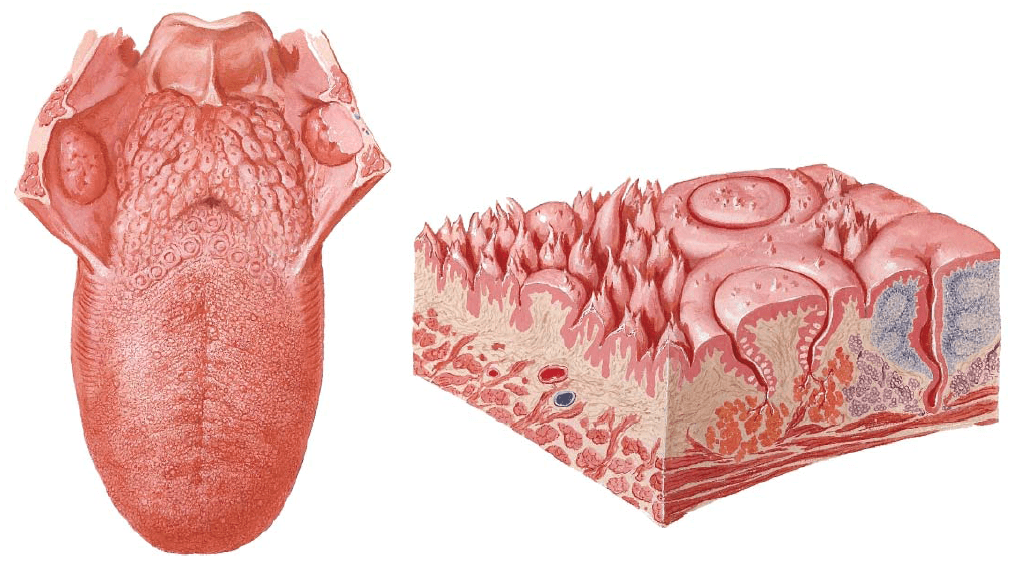
Small projections located on the tongue’s surface where taste buds are located are known as:
papillae
gustatory cells
olfactory epithelium
mucous producing glands

Which part of the ear contains ossicles which made up of hammer, anvil, and stirrup?
middle ear
outer ear
inner ear
eardrum

Which part of the ear is shaped like a snail shell?
eardrum
auditory nerve
cochlea
Eustachian tube

Which part of the ear sends signals to the brain?
optic nerve
ear canal
auditory nerve
middle ear


Which of the following structures are parts of middle ear?
semicircular canal
earlobe
ossicles
cochlea
Which of the following serves as the function(s) of ossicles in our human ear structure?
To transmit sound waves.
Balance the air pressure.
To amplify sound vibrations.
To provide support.
Cochlea
is used to balance our body.
contains fluid
has sensory hair cells to vibrate and amplify sound vibrations.
has sensory hair cells to detect body movement.
Ear drum
separates the middle ear from the inner ear.
Amplify sound vibrations and transfer them to the oval window.
converts sound waves into sound vibrations.
is one of the inner ear parts.
Hearing sensation is provided by
ear drum.
ear bones.
cochlea.
auditory centre of cerebral cortex.
If sensory hairs of ALL sensory hair cells are distorted,
his auditory centre of cerebral cortex will then be malfunctioned.
no sensory nerve impulses can be initiated by sensory hair cells.
hearing sensation is provided.
no sound wave will be collected.
Eustachian tube
is made up of ear bones
is fluid-filled.
is to equalize air pressure on two sides of the ear drum.
is blocked by valves.
Semicircular canals
have sensory hair cells to detect sound vibrations.
do not contains of fluid
are located at middle ear.
are responsible to detect change of position during movement.
Stimuli around us are detected by these .
(a)
Happens spontaneously without any conscious thought beforehand.
................................. .............................
(a)
Information sent in the body are known as these.
(a)
Process of moving food through the intestine.
(a)
The end of involuntary action.
(a)
Part of the eye which is the most sensitive to light.
(a)

