
NEW
Font size
 Worksheets
Characteristics of Matter Review
Total questions: 56
Worksheet time: 42mins
Anything that has mass and takes up space
matter
mass
weight
volume
The amount of matter in a substance
volume
weight
mass
matter
The amount of space something an object takes up
matter
mass
weight
volume
Which theory describes the arrangement and movement of particles in solids, liquids, and gases?
Theory of relativity
Atomic theory
Kinetic molecular theory
Theory of gravity
A substance with a definite shape and a definite volume. Particles are tightly packed and vibrate in place. Has low energy
solid
liquid
gas
plasma
Substance that has no definite shape or volume. Has high energy and molecules mover faster and strikes the sides of their container more often when heated. Are also compressible.
solid
liquid
gas
plasma
A substance that does not have a definite shape or volume. Has extremely high energy. Can be found on the sun & stars. Also in neon signs
solid
liquid
gas
plasma
A substance with a definite volume, but no definite shape; this substance takes the shape of its container and particles slide past one another. Has moderate energy.
solid
liquid
gas
plasma

Identify the particles.
solid
liquid
gas
none

Identify the particles.
solid
liquid
gas
none

Identify the particles .
solid
liquid
gas
none
What are the three ways matter is classified?
Solids, Liquids, Gases
Elements, Compounds, Mixtures
Metals, Nonmetals, Metalloids
Mass, Density, Volume
Substance that can’t be broken down or separated by chemical means.
Example: Hydrogen (H) or Lithium (Li)
mass
elements
matter
homogeneous mixtures
A substance that has two or more elements or compounds not chemically combined but can be physically separated
Elements
Compounds
Mixtures
Mixture: components are evenly distributed
homogeneous
heterogeneous
Mixture: components are NOT evenly distributed.
homogeneous
heterogeneous
A homogeneous mixture in which the minor component (Solute) is uniformly distributed within the major component (solvent)
solution
solubility
Acid
Base
The substance being dissolved
solute
solvent
solution
heterogeneous mixture
The substance doing the dissolving
solute
solvent
solution
Heterogeneous mixture
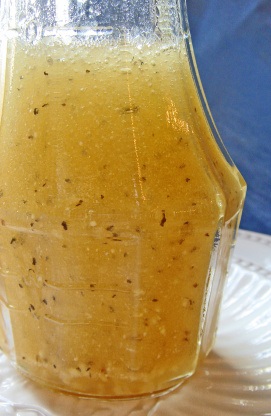
Characteristics that describe matter are called
not and cold properties
motion and force properties
stable and unstable properties
physical and chemical properties
A property that describes substances based on its ability to change into a new substance with different properties.
chemical property
physical property
rusting
chemical change
Density is
anything that has mass and volume.
the relationship between mass and volume.
how much matter is in an object.
the amount of space an object takes up.
What is the formula for density?
density = mass x volume
density = mass / volume
density = mass + volume
density = mass - volume
Sam has a rock. The rock has a mass of 14 g and a volume of 2 cm3. What is the density of the rock?
7 mL
7 g/cm3
28 g/cm3
0.14 g/cm3
What is the density of a substance that has a mass of 45g and a volume of 9mL?
9g/mL
6g/mL
5g/mL
4g/mL

What is the density of a chunk of rubber that has a mass of 352.5 g and a volume of 235 cm3 ?
0.67 g/cm3
1.5 g/cm3
82,837.5 g/cm3
117.5 g/cm3

Sea water has a density of 1.03 g/mL. What is the mass of 10,000 mL?
10, 300 g
11,300 g
9709 g
0.000103 g

Which of the following is a chemical property?
Volume
Ability to rust
Density
Phase of matter
A chemical property that describes the ability of a substance to burn.
oxidation
melting
flammability
reactivity
A substance is found to have the following characteristics:
Very bitter taste
Feels slippery to the touch
Produces OH- ions when dissolved in water
In what category would the substance be classified?
acid
base
enzyme
fatty acid
a substance that vigorously reacts with most metals to produce hydrogen; it readily conducts electricity; it turns litmus red and has a pH of less than 7; it typically is corrosive or sour-tasting
acid
base
neutral
solution
a substance that does not react with most metals or readily conduct electricity; it turns litmus blue and has a pH of greater than 7; it typically feels slippery and is bitter-tasting
acid
base
neutral
solution
Which of the following is the strongest base?
oven cleaner - 13.5
lemon juice - 2.5
soap - 10
blood - 7.4
Which of the following is the strongest acid?
oven cleaner - 13.5
lemon juice - 2.5
soap - 10
blood - 7.4
Which is the correct set of acid properties?
sour taste, corrosive, change litmus from red to blue
sour taste, corrosive, change litmus from blue to red
sweet taste, slippery, change litmus from blue to red
sour taste, slippery, change litmus from blue to red

According to the pH scale, which item is a stronger base than soap?
baking soda
ammonia solution
tomato
bleach
a measure of how acidic or basic a solution is; the low it is the more acidic, the higher the more basic
concentration
pH
conductivity
solubility curve
a substance that has a pH of 7; water is an example
acid
base
neutral
concentration
Products of a neutralization reaction are always:
an acid and a base
an acid and a salt
a salt and water
a salt and a base
An acid is a substance that produces ________ ions in a solution.
Hydrogen
Hydroxide
Sodium
Acetate
Which of the following could you use to determine if a substance is an acid or a base?
Litmus Paper
pH Paper
Red Cabbage Juice
All of the above

