
 Worksheets
C7 Revision
Total questions: 50
Worksheet time: 50mins
What is the SI unit of MASS (m)?
Kilograms (kg)
Newtons (N)
Pounds (lb)
Grams (g)
What is the SI unit of DISTANCE (d)?
Metres (m)
Kilometres (km)
Centimetres (cm)
Light Years (ly)
What is the SI unit of TEMPERATURE (T)?
degrees Fahrenheit (°F)
degrees Celsius (°C)
Kelvin (K)
degrees Kelvin (°K)

What is the SI unit of TIME (t)?
hours (h)
minutes (min)
milliseconds (ms)
second (s)
What is the unit of ACCELERATION (a)?
m/s
N
m/s2
m
What is the unit of SPEED/ VELOCITY (V)?
m/s
km/h
m/s2
m/s/s
Two cubes of the same size were measured. Cube A was 52 g and cube B was 130 g. Which cube has the greatest density?
A
B
What is the SI unit of DENSITY (ρ)?
m
m2
m3
kg/m3
Jack has a rock. The rock has a mass of 14 g and a volume of 2 cm3. What is the density of the rock?
7 mL
7 g/cm3
28 g/cm3
17 g/cm3
What is the volume of 150 grams of lead if it has a density of 11.3 g/cm3?
13.3 g
13.3 cm3
0.075 g
1695 cm3

During which interval is the object traveling at a constant velocity?
B to C
D to E
F to G
All of the above

During which intervals is the object speeding up?
A to B
B to C
D to E
G to H

This distance-time graph shows an object that is
Accelerating
Moving with constant speed
Decelerating
Stationary

This distance-time graph shows an object that is
Increasing speed away from the start
Moving away from the start at a constant speed
Decreasing speed toward the start
Moving toward the start at a constant speed

This distance-time graph shows an object that is
Increasing speed toward the start
Moving away from the start at a constant speed
Decreasing speed away from the start
Moving toward the start at a constant speed


This speed-time graph shows an object that is
Moving with constant speed
Accelerating
Decelerating
Stationary

This speed-time graph shows an object that is
Moving with constant speed
Accelerating
Decelerating
Stationary

This speed-time graph shows an object that is
Moving with constant speed
Accelerating
Decelerting
Stationary

This speed-time graph demonstrates an object that is
Moving with constant speed
Accelerating
Decelerating
Stationary

A drag racer accelerated from 0 m/s to 200 m/s in 5 s. What was the acceleration?
0 m/s
40 m/s2
-40 m/s2
40 m/s
A stopped car begins moving and reaches a speed of 30 m/s in 5 s. What is its acceleration?
-25m/s2
+6m/s2
+5m/s2
-5m/s
A little freshman moves down the hall at 4.2 m/s. When he sees Luke coming, he slows down. After 4.2 s, he is moving at 1.2 m/s. What is his acceleration?
+0.25 m/s2
-0.7 m/s2
+0.625 m/s2
-12 m/s2
What is the SI unit of FORCE (F)?
Joule (J)
Newton (N)
Kilogram (kg)
Metre (m)
The force of gravity on Jupiter is a little more than 2 times the gravitational force on Earth. If an object has a mass of 50 kg and a weight of 490 N on Earth, what would be the object's approximate mass and weight on Jupiter?
50 kg and 490 N
100 kg and 490 N
50 kg and 980 N
100 kg and 980 N
What is the SI unit of WORK DONE (W.D.) ?
Joule (J)
Watt (W)
Newton (N)
Pascal (Pa)
What is the SI unit of ENERGY (E)?
Watt (W)
Joule (J)
Ampere (A)
Volt (V)
When work is done, there is always a(n) ___________ .
constant rate
single movement involved
transfer of energy
increase in the mechanical advantage
A student needs 10 N of force to lift a box to the top of a 2 m shelf. How much work do they do?
12 J
8 J
20 J
5 J
How high up is a 3200 kg plane if it has 960000 J of G.P.E. ?
10 m
30 m
307200000 m
300 m
How does conservation of energy explain why something that is falling should speed up?
It gains kinetic energy because it gains potential energy.
It loses kinetic energy because no work was done on it.
It gains kinetic energy because it loses potential energy.
It loses kinetic energy because the Earth gains potential energy.
The Law of Conservation of Energy states:
Energy can created or destroyed but not transformed
Energy cannot be created or destroyed, it can only transformed
Energy can't be created, destroyed or transformed
Energy cannot be created or destroyed.
How much K.E. does a moving 6 kg object have if it moves at 3 m/s?
27 J
18 J
9 J
2 J
The specific heat capacity of a substance is the quantity of heat required to
melt 1 kg of the substance.
raise the temperature of the substance by 10C.
raise the temperature of 1 kg of the substance by 10C.
Latent heat is
the heat absorbed or released at a boiling process during a change of phase
the heat absorbed or released at a constant temperature during a change of phase
the heat absorbed or released at a constant temperature during a change of phase of 1 kg object
the heat absorbed or released by an object to increase or decrease its temperature by 1 degree Celcius
What is the formula to calculate specific latent heat of vaporisation?
L = Q/m
c = Q/(mΔƟ)
Q = mcΔƟ
Q = mL
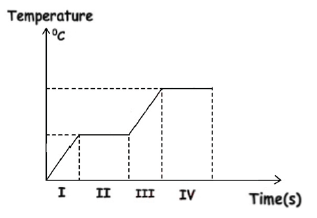
Consider the following temperature-time graph when a solid is heated. which part of the graph involves latent heat of vaporization?
Part I
Part II
Part III
Part IV

The specific latent heat released at stages?
Spring constant is measured in
N
N/m
m

At point P, _______.
the force applied to the spring is equal to its elongation
Hooke's Law ceases to be valid
the spring is can be stretched but still springs back into shape reversibly
the spring constant increases

When comparing spring A to B,
A has a larger spring constant than B so A is a stiffer spring
B has a larger spring constant than A so A is a stiffer spring
A has a larger spring constant than B so B is a stiffer spring
B has a larger spring constant than A so B is a stiffer spring

Which sentence describes the relationship shown on this scatter plot?
As the temperature decreases, the visitors increase.
As the temperature increases, the number of visitors increases.
As the visitors increase, the temperature decreases.
No correlation
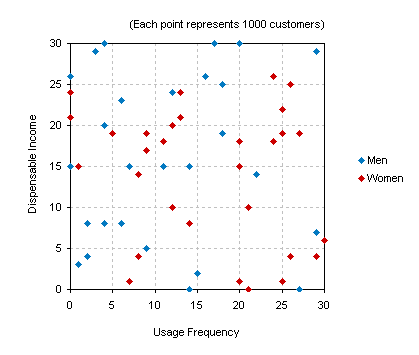
What type of Correlation?
Positive Correlation
Negative Correlation
No Correlation

What type of Correlation?
Positive Correlation
Negative Correlation
No Correlation
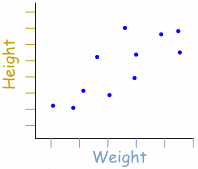
What type of correlation?
Positive Correlation
Negative Correlation
No Correlation
A positive correlation is a relationship between two variables such that as one variable decreases the other decreases.
True
False
A negative correlation is a relationship between two variables such that as one variable increases the other decreases.
True
False

