wayground logo

Free Printable Worksheets

NEW

Font size

S
M
L
XL
Worksheets

PMA 2 Chem Honors

Total questions: 63

Worksheet time: 2hrs 42mins

Name
Class
Date
1.

The positive ions tend to _____________ electrons.

a)

lose

b)

gain

2.
Why do elements bond?
a)
To be friends
b)
To create a new element
c)
To become stable
3.
What atom matches this electron configuration?
1s2s2p3s2
a)
Neon
b)
Magnesium
c)
Aluminum
d)
Potassium
4.
How many electrons can the first energy level hold?
a)
1
b)
2
c)
8
d)
0
5.
How many valence electrons does Chlorine have?
a)
5
b)
2
c)
7
d)
5
6.
Which element is pictured?
a)
neon
b)
fluorine
c)
magnesium
d)
argon
7.
Electrons occupy orbitals of lowest energy first is part of what electron configuration rule?
a)
Hund’s Rule
b)
Aufbau Principle
c)
Pauli Exclusion Principle
8.
Which electron configuration belongs to Chlorine (Cl)?
a)
1s2s2p3s3p5
b)
1s2s2p3s3p6
c)
1s2s2p3s3p7
9.
Molten compound does NOT conduct electricity.
a)
ionic compound
b)
covalent compound
10.
When dissolved in water, the solution is a good conductor of electricity.
a)
ionic compounds
b)
covalent compounds
11.
What is a cation
a)
a metal with a negative (-) charge
b)
a non-metal with a negative (-) charge 
c)
a metal with a positive (+) charge 
d)
a non-metal with a positive (+) charge
12.
What is a anion
a)
a metal with a negative (-) charge
b)
a non-metal with a negative (-) charge 
c)
a metal with a positive (+) charge 
d)
a non-metal with a positive (+) charge
13.
Covalent Compounds HAVE a positive (+) or negative (-) charge 
a)
True
b)
False
c)
Que onda, Hagerman? 
d)
What was that now? 
14.
NaCl
a)
Ionic
b)
Covalent
c)
Metallic
d)
Polyatomic Ion 
15.
CO2
a)
Ionic
b)
Covalent
c)
Polyatomic Ion 
d)
Metallic 
16.
MgCl2
a)
Ionic
b)
Covalent
c)
Polyatomic Ion
d)
Metallic 
17.
SO4
a)
Covalent
b)
Ionic
c)
Metallic
d)
Polyatomic Ion
18.
If pure water has no charge, why is it dangerous to stay in a thunderstorm
a)
B/c rain water has other (ionic) compounds mixed with it, giving it a charge
b)
B/c rain water is the same thing as pure water 
c)
B/c water is a polyatomic ion with a small charge
d)
B/c pure water and rain water together create another ionic bond 
19.
Phosphorous trichloride
a)
PCl3
b)
P3Cl
c)
P3Cl3
d)
PCL
20.
What is the formula for Tricarbon Octahydride?
a)
Ca3O
b)
C2H8
c)
C3H8
d)
Ca3H8
21.
A covalent compound made of one sulfur and two oxygen atoms would be named
a)
sulfur dioxide.
b)
sulfur oxide.
c)
disulfur oxide.
d)
sulfide oxygen.
22.
The covalent compound N2O5 would be named
a)
nitrogen oxide.
b)
dinitrogen oxide.
c)
nitrogen pentoxide.
d)
dinitrogen pentoxide.
23.

Which of the following compounds is sharing their valence electrons unequally?

a)

Br2

b)

HF

c)

O2

d)

F2

24.

A _______ covalent compound forms when electrons are shared unequally.

a)

polar

b)

nonpolar

c)

ionic

d)

metallic

25.

Which of the following is the correct name for the compound K2O?

a)

potassium dioxide

b)

potassium oxide

c)

dipotassium monoxide

d)

potassium hydroxide

26.

Which of the following compounds contains a polyatomic ion?

a)

KBr

b)

CaCl

c)

Mg3(PO4)2

d)

Na2O

27.
What is the name for the compound AgCl?
a)
Silver Chloride
b)
Silver Chlorate
c)
Silver Chloroxide
d)
Silver Chlortassium
28.
Which of the following is the correct formula for Lead (IV) Iodide? 
a)
PbI4
b)
Pb2I4
c)
Pb4I
d)
LI4
29.
What is the chemical formula of Iron (II) Sulfide? 
a)
FeS
b)
Fe2S2
c)
Fe2S6
d)
FeSO3
30.
What is the formula for Nickel (II) chlorate? 
a)
Ni(ClO2)2
b)
NiClO3
c)
Ni(ClO3)2
d)
NiCl2
31.

What are diatomic elements?

a)

Elements that form two-atom molecules when not combined in a compound.

b)

Two elements that combine with one atom from each element.

c)

Elements that are always in pairs no matter what.

32.

What are the seven diatomic elements?

a)

H2, Cl2, Br2, O2, N2, I2, F2

b)

H2, Cl2, I2, F2, Hg2, Br2, Fe2

c)

H2, Cu2, Ni2, B2, O2, I2, Fe2

33.

Is K2 a diatomic element?

a)

Yes

b)

No

34.
What is the correct formula for this molecule?
a)
NH
b)
N3H
c)
NH3
d)
NH4
35.
Which of the following is the correct Lewis structure for the compound PBr3?
a)
structure A
b)
structure B
c)
structure C
d)
structure D
36.
What is the correct structure for BF3?
a)
Option A.
b)
Option B. 
c)
Option C.
d)
Option D.
37.

Elements in the same group or column have the same ...

a)

# of valence electrons

b)

# of shells

c)

# of protons

d)

Mass Number

38.

Elements in the same group have __________

a)

Similar Properties

b)

Same number of shells

c)

Similar Mass

39.
Most of the elements on the periodic table are classified as _____.
a)
Metals
b)
Nonmetals
c)
Metalloids
d)
Periods
40.
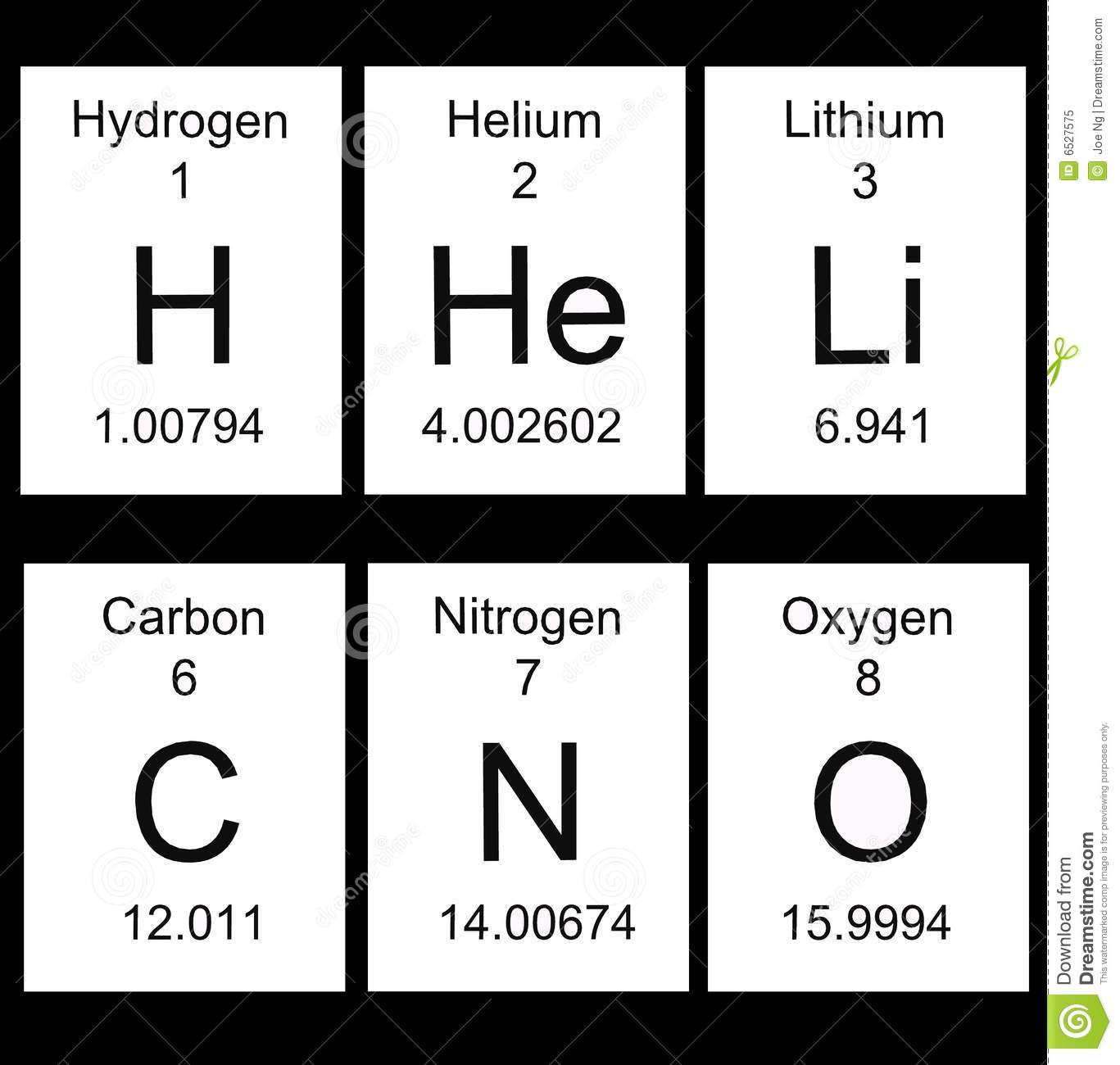
What is the chemical symbol for Lithium?
a)
H
b)
He
c)
Li
d)
N
41.
What Periodic Table family is represented by the Lewis dot diagram?
a)
Halogens
b)
Alkali Metals
c)
Transition Metals
d)
Noble Gases
42.
Which of the following is the atomic number of an alkali metal?
a)
31
b)
20
c)
18
d)
19
43.
Which properties are characteristic of the Group 1 metals?
a)
high reactivity and the formation of unstable compounds
b)
low reactivity and the formation of unstable compounds
c)
high reactivity and the formation of stable compounds
d)
low reactivity and the formation of stable compounds
44.
What group on the Periodic Table contains the elements of the alkaline earth family?
a)
1
b)
2
c)
17
d)
18
45.
Which of the following is the most reactive group of non-metals? 
a)
Alkali
b)
Alkali Earth
c)
Halogen
d)
Noble Gas
46.
As the Coulombic attraction of an atom increases, the electronegativity of the atom: increases or decreases?
a)
increases 
b)
decreases
47.
Which element has the greatest electronegativity: Nitrogen (N) or Arsenic (As)?
a)
Nitrogen (N)
b)
Arsenic (As)
48.

Which has the highest ionization energy?

a)

Ca

b)

As

c)

Br

49.

Which would be the easiest to take an electron from?

a)

He

b)

F

c)

Ba

d)

Fr

50.
For an electron to change from ground state to an excited stated it must...
a)
Absorb energy
b)
Release energy
51.
Emission of light from an atom occurs when an electron
a)
drops from a higher to a lower energy level.
b)
   jumps from a lower to a higher energy level.   
c)
   moves within its atomic orbital.
d)
falls into the nucleus.
52.

If an electron moves from n=4 to n=2 it ____

a)

absorbs energy

b)

releases energy

53.

Look carefully at the picture. It shows an electron in the excited state on the left, and the electron returning to its ground state on the right. When the electron return to the ground state it emits a_______________________.

a)

blast of cold air

b)

electrostatic charge

c)

proton

d)

photon (light)

54.

What property determines if an atom is identified as Chlorine?

a)

it has 18 neutrons

b)

it has an atomic mass of 35

c)

it has 17 protons

d)

Its element symbol is Cl

55.

How many neutrons are in an average Chlorine atom?

a)

17

b)

35

c)

35.45

d)

18

56.
The atomic number is equal to _.
a)
the number of protons and electrons
b)
the number of neutrons only
c)
the total number of protons and neutrons
d)
the number of protons neutrons and electrons
57.

The nucleus of an atom contains which subatomic particles?

a)

protons and electrons

b)

protons and neutrons

c)

electrons and neutrons

d)

protons, electrons, and neutrons

58.
How many neutrons does this isotope of lithium have?
a)
8
b)
3
c)
4
d)
5
59.

What property determines if an atom is identified as Chlorine?

a)

it has 18 neutrons

b)

it has an atomic mass of 35

c)

it has 17 protons

d)

Its element symbol is Cl

60.
How do the following two elements bond together?
K1+  S2- 
a)
KS
b)
K8S
c)
K6S3
d)
K2S
61.
How do the following two elements bond together?
Al3+  O2-         
a)
AlO
b)
Al2O3
c)
Al3O6
d)
Al3O2
62.

The name of FeCl₂ is

a)

iron chloride

b)

iron (II) chloride

c)

iron (I) chloride

d)

iron dichloride

63.

Which of the following combinations would need roman numerals in the name?

a)

potassium + fluorine

b)

beryllium + oxygen

c)

boron + iodine

d)

lead + oxygen