
 Worksheets
Chemistry 1st Semester Review
Total questions: 76
Worksheet time: 1hrs 17mins
What is the definition of matter?
The smallest particle in a substance
Something that has mass and takes up space
How much something weighs
Something that only goes through a chemical change
What does an elements ATOMIC NUMBER represent?
number of atoms in its nucleus
number of protons in its nucleus
What is the atomic symbol for Carbon?
Ca
C
Cb
Cn


Which of the following is a physical change?
rusting
tarnishing
burning
boiling
If 2g of one substance is reacted with 4g of the other substance, the product is expected to have a mass of
8g
2g
4g
6g
How many significant figures are in 0.08030?
4
2
5
6
Which of the following is the correct classification of coffee once it is brewed?
element
compound
heterogeneous mixture
homogeneous mixture
Which of the following is TRUE about the liquid state of matter?
The particles are free to move and fill the container.
The particles have only vibrational motion.
The volume is constant.
The shape is constant.
The atomic number is equal to
electrons + neutrons
protons
neutrons
protons + neutrons
The mass number is equal to
electrons + neutrons
protons
neutrons
protons + neutrons
The number of ____________ changes in ions.
protons
electrons
neutrons
atoms
How many significant figures are in the answer to 5.1 x 3.64?
2
3
5
1
What element's electron configuration is [Ar]4s23d5?
magnesium
bromine
sodium
manganese
What is the correct electron configuration for oxygen?
1s22s22p4
1s22s23s24s2
1s22s22p63s23p4
1s22s42p2
Which has the largest atomic radius?
Se
Cr
Ta
In
Which of the following is an alkaline earth metal?
potassium
copper
barium
gallium
Which element is found in the d-block of the periodic table?
calcium
fluorine
uranium
molybdenum
How many valence electrons do the halogens have?
1
2
6
7

How many total valence electrons does SF4 have?
28
22
34
6
Draw the Lewis Dot structure for PCl5 and determine the predicted molecular geometry
octahedral
trigonal pyramidal
seesaw
trigonal bipyramidal
What is the molecular geometry of SF4?
tetrahedral
trigonal pyramidal
trigonal bipyramidal
seesaw

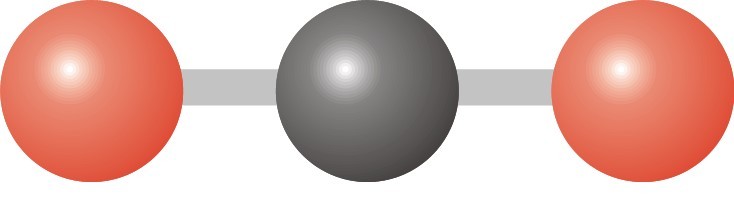
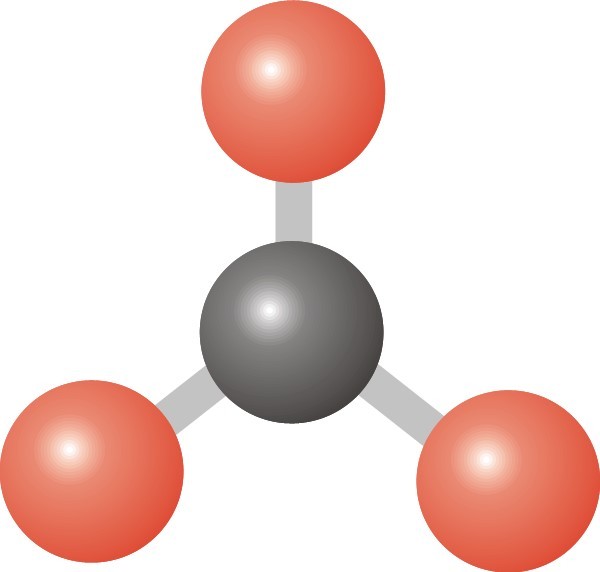
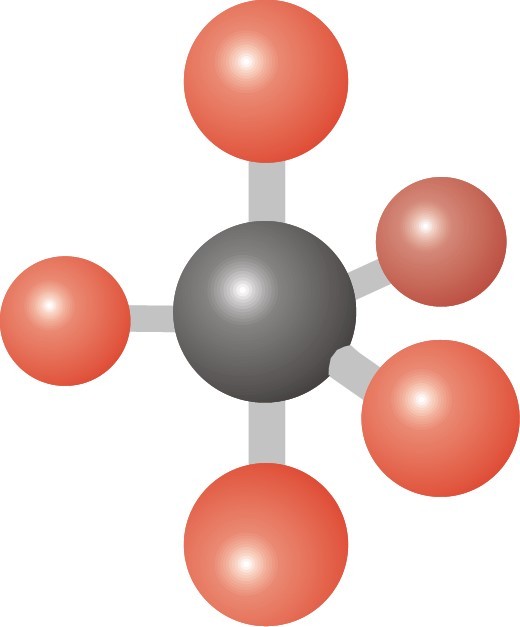
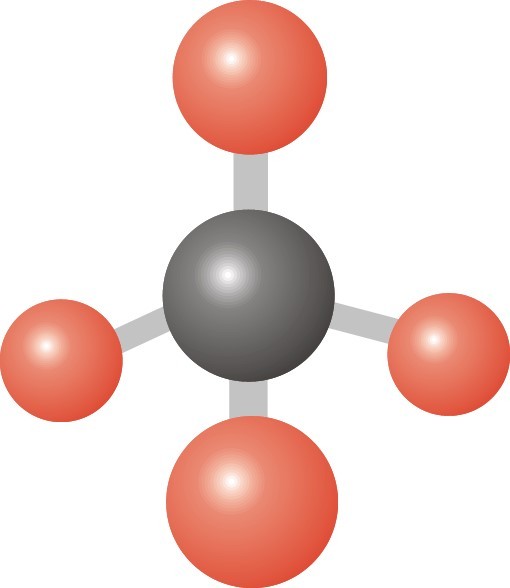
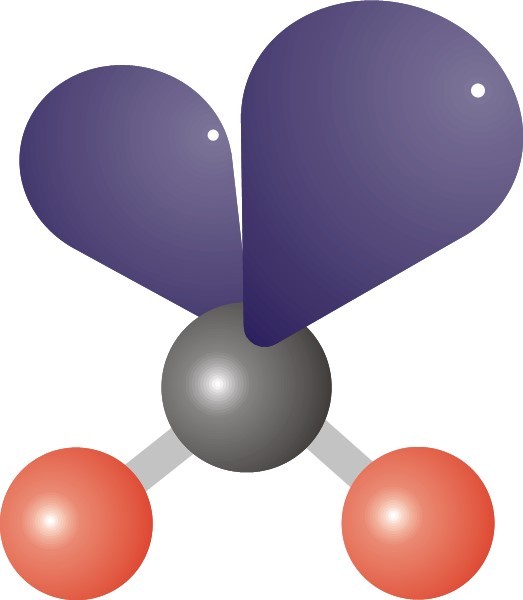
3 atoms bonded and 0 lone pairs
linear
trigonal planar
bent
tetrahedral
trigonal pyramidal


What is the name of J.J. Thomson's Model of an Atom?
Jimmy Neutron Model
Solar System Model
Plum-Pudding Model
Quantum mechanical Model
What results did Rutherford observe in his Gold-Foil experiment?
He observed that all alpha particles did go through a gold-foil in straight lines
He observed that most alpha particles did not go through a gold-foil and stopped on one side of the gold foil.
He observed that a small number of alpha particles bounced off the gold-foil at very large angles
He observed that all alpha particles slightly deflected from the straight line when going through a gold-foil
Choose one of the conclusions that Ernest Rutherford made based on the experimental results of his Gold-Foil experiment
He concluded that the atom is indivisible
He concluded that the atom is mostly empty space
He concluded that the atom has neutrons
He concluded that the atom is tightly packed with subatomic particles all mixed together
Based on the experimental results of his Gold-Foil experiment, Ernest Rutherford concluded that
The very dense center of the atom has a positive charge
The very dense center of the atom has a negative charge
The very dense center of the atom has no charge
The atom doesn't have a center and all particles are distributed evenly like in a chocolate chip cookie
If the atom has 25 electrons, how many protons does it need to have to be neutral?
5 protons
25 protons
it doesn't need protons
15 protons
Moseley organized the Periodic table by atomic _________, and Mendeleev organized it by atomic ___________
Mass, Number
Number, Mass
Structure, Mass
Number, Isotope
What is the trend for electronegativity as you move left to right across a period and why?
EN increases because the shielding effect increases causing the effective nuclear charge to decrease as you add more protons to the nucleus
EN decreases because the shielding effect decreases causing the effective nuclear charge to increase as you add more protons to the nucleus
EN increases because the effective nuclear charge increases as you add protons to the nucleus and increase the number of valence electrons in the outer shell
EN decreases because the effective nuclear charge decreases as you reduce the number of protons in the nucleus and increase the number of valence electrons in the outer shell
What is the trend for EN as you move down a group or family and why?
EN increases because the number of energy levels decrease causing an increase in the shielding effect and a decrease in the effective nuclear charge.
EN decreases because the number of energy levels increases causing an increase in the shielding effect and a decrease in the effective nuclear charge
EN increases because the number of energy levels increases causing a decrease in the shielding effect and an increase in the effective nuclear charge
EN decreases because the number of energy levels decrease causing a decrease in the shielding effect and a decrease in the effective nuclear charge.
Arrange the following elements in order by increasing electronegativity - Sn, Sr, I, Ag, Zr
Sr, Zr, Ag, Sn, I
Sr, Ag, Zr, I, Sn
I, Sn, Ag, Zr, Sr
Sn, I, Zr, Ag, Sr

Which element has a higher electronegativity value?
Niobium
Tin
Cadmium
Iodine


How many electrons can a d sublevel hold?
14
10
2
6
How many orbitals does an s sublevel have?
1
3
5
7
How many orbitals does a d sublevel have?
1
3
5
7
How many orbitals does an f sublevel have?
1
3
5
7
What are the orbitals for n=4
s
s, p
s, p, d
s, p, d, f
Electrons fill energy levels and sublevels _____ in energy first.
lower
higher
For each of the following sublevels, which is lowest in energy?
4s
3d
4p
5s

Region of high probability of finding an electron
atomic orbital
ground state
Heisenberg uncertainty principle
electron configuration

