wayground logo

Free Printable Worksheets

Font size

S
M
L
XL
Worksheets

Final Foundations of Biology REVIEW

Total questions: 123

Worksheet time: 2hrs 39mins

Name
Class
Date
1.

The smallest piece of an element:

a)

quark

b)

electron

c)

shell

d)

atom

2.

Classification system for elements is called:

a)

Elements

b)

Periods

c)

The Periodic Table of Elements

d)

Families

3.

The subatomic particles are called:

a)

protons, nucleus and electrons

b)

protons, electrons and neutrons

c)

protons, positives and negatives

d)

cloud, shell and quarks

4.

The scientist who invented the classification system for the elements:

a)

Dimitri Mendeleev

b)

Niels Bohr

c)

Sir Isaac Newton

d)

Albert Einstein

5.

The cloud-like space that electrons travel around:

a)

nucleus

b)

shell

c)

neutrons

d)

Oort cloud

6.

The abbreviation for an element:

a)

element name

b)

atomic number

c)

chemical symbol

d)

atomic symbol

7.

What is the sum of an atom's protons and neutrons called?

a)

atom

b)

atomic theory

c)

atomic mass

d)

atomic number

8.

The columns on the periodic table that are color coded and describe the number of electrons in the outer shell of the atomic structure of the element:

a)

families

b)

groups

c)

periods

9.
The atomic number of this pictured element is
a)
28
b)
58.6934
c)
Ni
d)
Nickel
10.
what does the 6 represent?
a)
Atomic mass
b)
atomic number
c)
chemical symbol
d)
element name
11.

The rows or periods on the periodic table describe:

a)

the same number of outer electrons

b)

the same number of shells

c)

the same number of protons

d)

the same mass

12.
The atomic number tells you what?
a)
number of electrons
b)
number of protons
c)
number of neutrons
d)
both electrons and protons in an atom.
13.
What is the formula to solve for the neutron?
a)
Mass + Atomic Number= Neutrons
b)
Mass x Atomic Number = Neutrons
c)
Mass - Atomic Number = Neutrons
d)
Mass + Number of Protons = Neutron
14.

The vertical (up and down) columns in the Periodic Table are called

a)

groups

b)

towers

c)

periods

d)

atomic numbers

15.
All cells come from___________ cells.
a)
pregnant
b)
pre-existing
c)
paternal
d)
pin size
16.
______________ are the basic unit of life.
a)
DNA
b)
RNA
c)
Cells
d)
Takis
17.

Which of the following are physical properties of metal?

a)

Luster

b)

Conductivity

c)

Malleability

d)

Ductility

18.
Who are the three scientists credited with creating the Cell Theory?
a)
Schlieden, Schwann, Virchow
b)
Schindler, Schmeil, Vanderhoot
c)
Schwimmer, Shanazzek, Van Halen
19.
What was Schleiden convinced of? 
a)
All plants are made of cells
b)
All animals are made of cells
c)
All cells form spontaneously
d)
None of the above
20.
Who noted that animals are made of cells and concluded that all living things are made of cells and cell products? 
a)
Rudolf Virchow
b)
Anton van Leeuwenhoek
c)
Theodor Schwann
d)
Robert Hooke
21.
Who discovered that cells come from preexisting cells and whose research lead to the major principles of cell theory?
a)
Matthias Schleiden
b)
Robert Hooke
c)
Zacharias Janssen
d)
Rudolf Virchow
22.
Which of the following controls movement of materials in and out of a cell? 
a)
Cell wall
b)
Cell membrane
c)
Cytoplasm
d)
Nucleus
23.
Genetic information is stored in the nucleus of all single or multicellular cells called
a)
Eukaryotes
b)
Prokaryotes
c)
Organelles
d)
Cytoplasm
24.
The jellylike substance that contains proteins, nucleic acids, minerals, ions, and organelles is what?
a)
Prokaryote
b)
Nucleus
c)
Cytoplasm
d)
Eukaryote
25.
Functions in energy production, known as the energy factory of the cell
a)
mitochondria
b)
chloroplast
c)
vacuole
d)
cytoplasm
26.
Microscopic single-cells that do not have a nucleus or other membrane-bound organelles. 
a)
DNA
b)
RNA
c)
Eukaryotes
d)
Prokaryotes
27.
Which organelle is the protein factory? 
a)
Ribosomes
b)

Mitochondria

c)
Centriole
d)
Lysosomes
28.
Rigid, outermost layer of the plant cell
a)
nucleus
b)
cell membrane
c)
cell wall
d)
cytoplasm
29.
The control center that controls all the functions of the cell
a)
cytoplasm
b)
cell wall
c)
cell membrane
d)
nucleus
30.
Contains chlorophyll and is where photosynthesis takes place. Found in plant cells only.
a)
mitochondria
b)
chloroplast
c)
vacuole
d)
cytoplasm
31.
I store water in both plant and animal cells. What am I?
a)
cytoplasm
b)
ribosomes
c)
vacuole
d)
lysosomes
32.

processes and PACKAGES PROTEINS

a)

golgi bodies

b)

mitochondria

c)

ribosomes

d)

vacuole

33.

Active transport is the movement of large materials across a cell membrane from ______ to ______ concentration

a)

high to low

b)

low to high

c)

high to high

d)

low to low

34.

Active transport across a cell membrane from low to high concentration, requires

a)

energy (ATP)

b)

no energy

c)

water

d)

oxygen

35.

Active transport is the movement of large materials across a cell membrane from ______ to ______ concentration

a)

high to low

b)

low to high

c)

high to high

d)

low to low

36.

A type membrane protein that can pump one substance in one direction, while transporting another substance in the opposite direction.

a)

pump transport

b)

bulk transport

c)

diffusion

d)

osmosis

37.

small compartment enclosed by a membrane formed during transport of material during endo + exocytosis

a)

vesicles

b)

large vacuole

c)

mitochondria

d)

lysosome

38.

A general term for the various types of active transport that move particles into a cell by enclosing them in a vesicle made out of plasma membrane.

a)

Endocytosis

b)

Exocytosis

c)

Osmosis

d)

Diffusion

39.

A form of bulk transport in which materials are transported from the inside to the outside of the cell in membrane-bound vesicles that fuse with the plasma membrane.

a)

Endocytosis

b)

Exocytosis

c)

Osmosis

d)

Diffusion

40.

A green powder is heated & a gas is given off while it turns to a black solid. This describes

a)

Physical Change

b)

Chemical Change

c)

Change in State

d)

Change in Temperature

41.

A Chemical Change is also known as what?

a)

Physical Change

b)

Physical Property

c)

Chemical Reaction

d)

Chemical Property

42.
Changes in size and shape are examples of ­­­­­_____ changes in matter.
a)
Physical
b)
Chemical
43.
Which biomolecule has sugars and starches?
a)
Lipids
b)
Proteins
c)
Carbohydrates
d)
Nucleic Acid
44.
Which biomolecule functions include enzymes­ which speeds the rate of chemical reactions, structural components in cells, mechanical functions in muscles and cytoskeleton, cell signaling, and immune response; provides structure and helps with chemical reactions 
a)
Protein
b)
Lipids
c)
Carbohydrate
d)
Nucleic Acid
45.
True or false: Some physical changes involve chemical reactions.
a)
True
b)
False
46.
Which biomolecule is made of nucleotides and contain you DNA?
a)
Carbohydrate
b)
Lipids
c)
Protein
d)
Nucleic Acid
47.
Which biomolecule is important source of energy for humans; glucose for human cells, tissues, and organs; provides fiber, sugar, and starches; provides structural support, cell wall, and cell membrane maker?
a)
Nucleic Acid
b)
Lipid
c)
Carbohydrate
d)
Protein
48.
Which biomolecule includes fats, such as triglycerides, oils, waxes, and steroids (cholesterol); insoluble in water; provides energy storage, insulation, part of cell membrane, and hormones 
a)
Nucleic Acid
b)
Lipids
c)
Carbohydrate
d)
Protein
49.
What is the monomer of nucleic acids?
a)
Glycerol
b)
Monosaccharides
c)
Amino Acids
d)
Nucleotides
50.
The arrangement of which three components is used to distinguish one molecule from another?
a)
carbon, hydrogen, and oxygen
b)
glucose, fructose, and ribose
c)
peptide, fatty acid, and purine
d)
water, carbon dioxide, and notrogen
51.
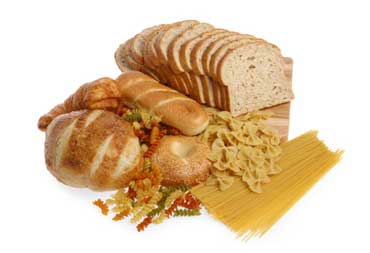
Which biomolecule is found in pastas and breads? (Hint: it is a polymer)
a)
Lipid
b)
Protein
c)
Simple Carbohydrate
d)
Complex Carbohydrate
52.
Which biomolecule is this a picture of? (Hint: it is made of amino acids)
a)
Proteins
b)
Nucleic Acids
c)
Lipids
d)
Carbohydrates
53.
Which biomolecule group includes fats, oils, and waxes?
a)
Proteins
b)
Nucleic Acid
c)
Lipids
d)
Carbohydrate
54.

What is the function of lipids?

a)

provides quick energy

b)

stores energy

c)

helps with growth and repair of tissues

d)

stores genetic information

55.
ALL polymers (large molecules) are made up of...
a)
monosaccharides
b)
monomers
c)
proteins
d)
None of these
56.
Which group of organic compounds contains fatty acids?
a)
Carbohydrates
b)
Lipids
c)
Nucleic Acids
d)
Proteins
57.
What do disaccharides, such as sucrose, and polysaccharides, such as starch, have in common?
a)
They are lipids made of fatty acids.
b)
They are proteins made of amino acids.
c)
They are nucleic acids made of nucleotides.
d)
They are carbohydrates made of simple sugars.
58.

What is the function of carbohydrates?

a)

provides quick energy

b)

stores energy

c)

helps with growth and repair of tissues

d)

stores genetic information

59.

What is the function of proteins?

a)

provides quick energy

b)

stores energy

c)

helps with growth and repair of tissues

d)

stores genetic information

60.

What is the function of nucleic acid?

a)

provides quick energy

b)

stores energy

c)

helps with growth and repair of tissues

d)

stores genetic information

61.

What is the monomer for carbohydrates?

a)

Monosaccarides

b)

Fatty Acids

c)

Amino Acids

d)

Nucleotides

62.

Which are examples of a carbohydrate?

a)

glucose, pasta, bread

b)

fats, oils, waxes

c)

meats, enzyme, lactase, eggs

d)

DNA, RNA

63.

Which are examples of lipids?

a)

glucose, pasta, bread

b)

fats, oils, waxes

c)

meats, enzyme, lactase, eggs

d)

DNA, RNA

64.

Which are examples of proteins?

a)

glucose, pasta, bread

b)

fats, oils, waxes

c)

meats, enzyme, lactase, eggs

d)

DNA, RNA

65.
What does DNA stand for?
a)
Deoxyribonucleic acid
b)
Denitrogenous acid
c)
Deribonucleic acid
d)
Diribonucleic acid
66.
Which of the following best describes a DNA molecule?
a)
double helix
b)
contains ribose
c)
made of amino acids
d)
contains Uracil
67.
Which of the following best describes a DNA molecule?
a)
double helix
b)
contains ribose
c)
made of amino acids
d)
contains Uracil
68.
DNA is a polymer made of:
a)
Nucleotides
b)
Ribosomes
c)
Purines
d)
Pyrimidines
69.
In a molecule of double-stranded DNA, the amount of Adenine present is always equal to the amount of
a)
cytosine
b)
guanine
c)
thymine
d)
uracil
70.
Which organelle is DNA usually found in?
a)
cell membrane
b)
vacuole
c)
ribosome
d)
nucleus
71.
Guanine bonds with ______________.
a)
Adenine
b)
Guanine
c)
Cytosine
d)
Thymine
72.
What will the matching sequence be on a strand that reads AAGCTAT?
a)
AACGATA
b)
TTCGTTA
c)
CCTGATA
d)
TTCGATA
73.
Which shows the correct complementary base pairing for DNA?
a)
C-A, T-G
b)
A-G, C-T
c)
C-G, U-A
d)
T-A, G-C
74.
How does RNA differ from DNA?
a)
RNA contains uracil and deoxyribose
b)
RNA contains ribose and thymine
c)
RNA contains uracil and ribose
d)
RNA contains adenine and ribose
75.
How would the DNA sequence GCTATA be transcribed to mRNA?
a)
GCUAUA
b)
CGATAT
c)
CGAUAU
d)
GCUTUT
76.
The process by which the genetic code of DNA is copied into a strand of RNA is called
a)
translation
b)
transcription
c)
transformation
d)
replication
77.
What are the three components of a nucleotide?
a)
sugar, hydrogen, nitrogen base
b)
sugar, oxygen, nitrogen base
c)
sugar, phosphate, nitrogen base
d)
sugar, phosphate, protein
78.

What is the correct order to make a protein?

a)

Protein, DNA, RNA

b)

RNA, DNA, Protein

c)

DNA, RNA, Protein

d)

Protein, RNA, DNA

79.

RNA has what base that is instead of thymine?

a)

guanine

b)

adenine

c)

thymine

d)

uracil

80.
Where does transcription take place?
a)
nucleus
b)
cytoplasm
c)
ribosome
81.
Translation takes place in the 
a)
ribosome
b)
chloroplast
c)
nucleus
d)
mitochondria
82.

Which of the following summarizes what is happening during translation?

a)

mRNA ⇒ DNA

b)

DNA ⇒ mRNA

c)

mRNA ⇒ protein

d)

protein ⇒ mRNA

83.
Which of the following is not a compound?
a)
HCl
b)
Cl
c)
NaCl
d)
CO2
84.
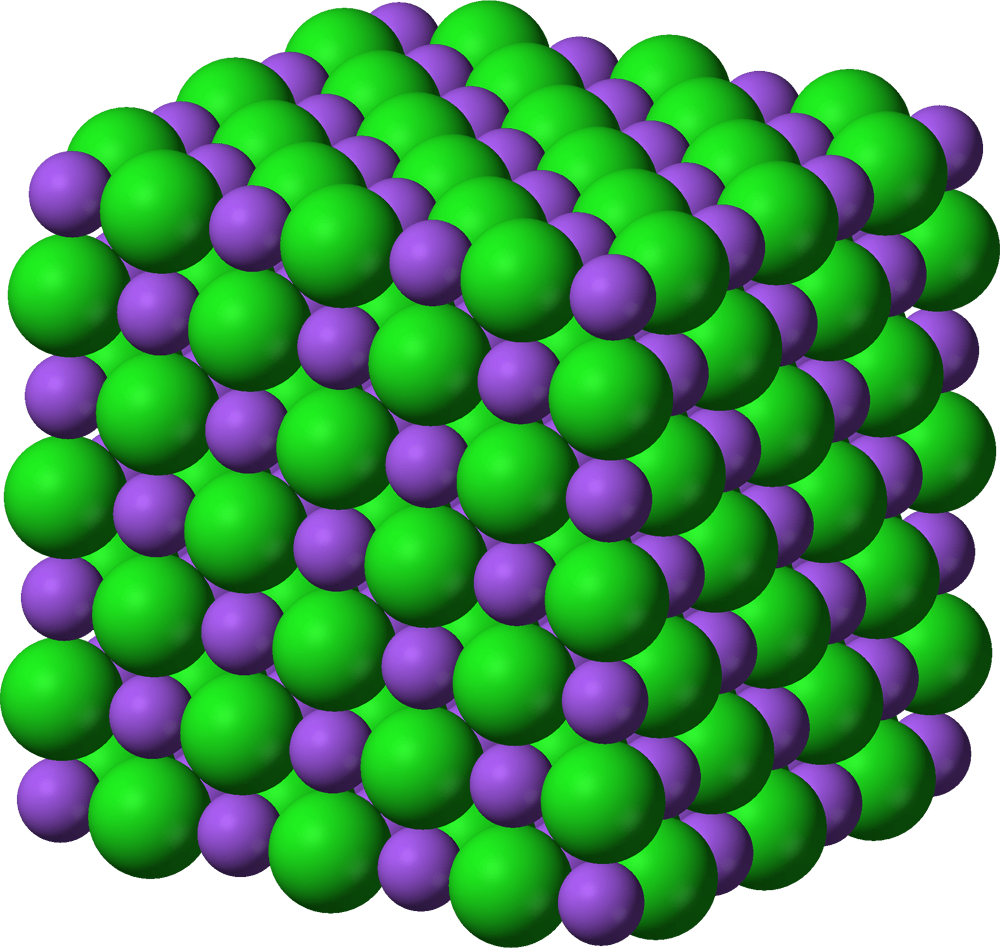
Does this picture show a compound?
a)
No
b)
Yes
85.

The second stage of protein synthesis is called a

a)

mitosis

b)

replication

c)

translation

d)

transcription

86.

Diffusion is a form of...

a)

Active Transport

b)

Passive Transport

87.
What is a mixture?
a)
elements chemically combined
b)
a combination of different things
c)
it is found on the Periodic Table 
d)
it is made of chemical
88.

Which of the following is NOT a type of passive transport?

a)

Osmosis

b)

Diffusion

c)

Endocytosis

d)

Facilitated Diffusion

89.
Diffusion is the movement of molecules from
a)
an area of equilibrium to an area of high concentration.
b)
an area of low concentration to an area of high concentration.
c)
an area of high concentration to an area of high concentration.
d)
an area of high concentration to an area of low concentration.
90.
If a red blood cell is put in a salt solution, what will happen to the cell?
a)
It will shrivel.
b)
It will swell and burst.
c)
It will shrivel and swell and burst
d)
It will do nothing at all
91.
What type of transport is this?
a)
Endocytosis
b)
Diffusion
c)
Exocytosis
d)
Osmosis
92.
What is homeostasis?
a)
How the body releases oxygen
b)
Passive transportation 
c)
How the body regulates itself for survival (keeping a stable internal environment)
d)
Active transport
93.

Why do all bonds form?

a)

so the number of protons equals the number of electrons

b)

so an atom can become unstable

c)

to fill the outermost energy level

94.

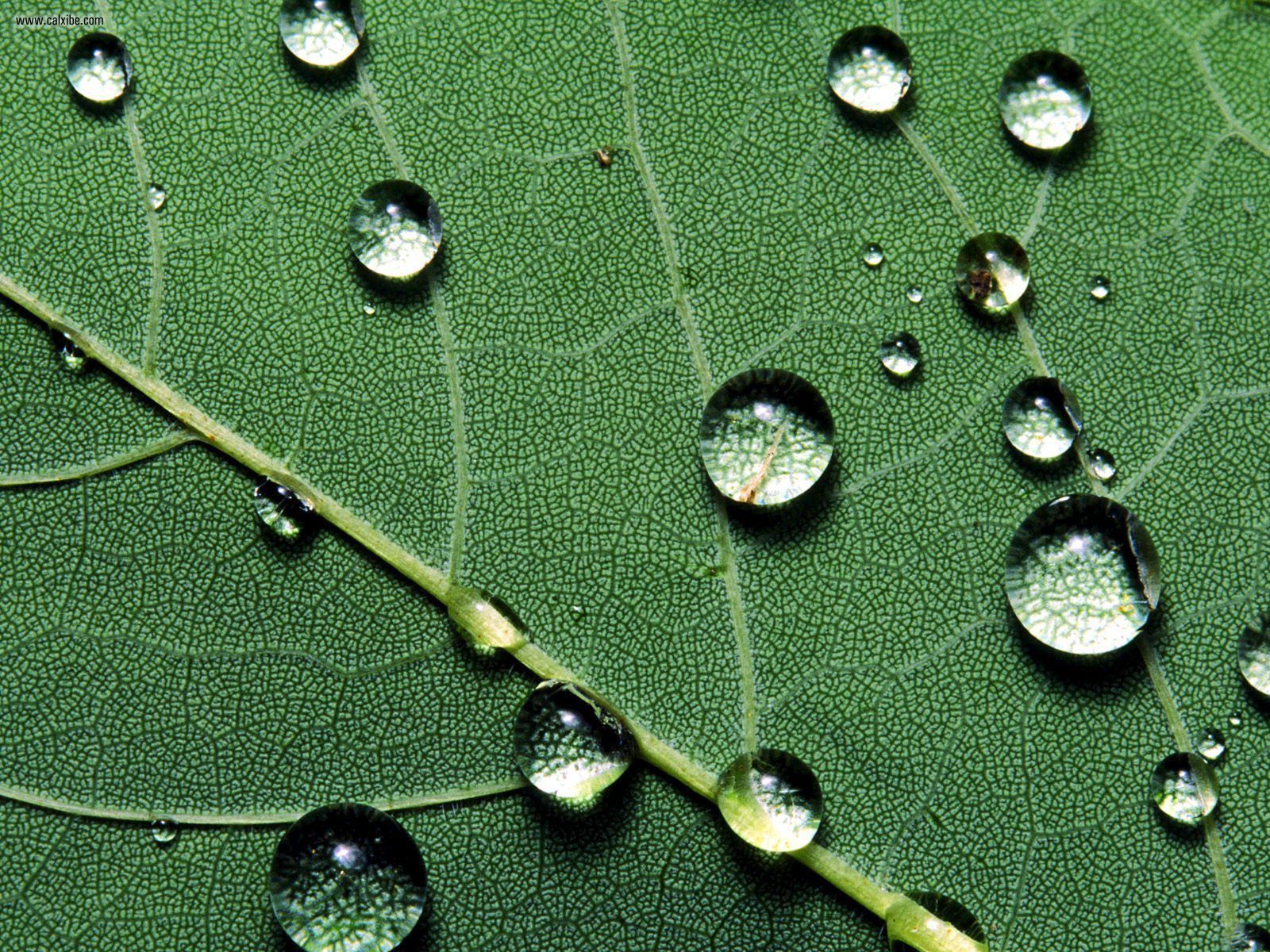
Water sticks to other substances, like this leaf. This is called...

a)

Adhesion

b)

Cohesion

95.

Valence electrons are found

a)

in the innermost energy level of an atom

b)

in the middle energy levels of an atom

c)

in the outermost energy levels of an atom

96.
Covalent bonds are between...
a)
Metal and Non-metal
b)
Non-metal and Non-metal
c)
Metal and Metal
97.
How are covalent bonds formed?
a)
Sharing of electrons
b)
Transfer of electrons
98.

When water molecules stick to other water molecules, beads form. This is because of...

a)

cohesion

b)

adhesion

c)

solution

d)

nonpolarity

99.
Why does water move from the roots to the leaves of plants through the plants' tiny tubes?
a)
specific heat 
b)

capillary action

c)

atoms

d)
density
100.
Mitosis is a type of ________________ reproduction.
a)
Sexual
b)
Asexual
101.
Results of cell division or mitosis include all of the following EXCEPT?
a)
growth
b)
repair damaged cells
c)
replace damaged cells
d)
dead cells
102.
How many chromosomes does a human cell have?
a)
42
b)
46
c)
24
d)
64
103.
How many chromosomes does a human cell have?
a)
42
b)
46
c)
24
d)
64
104.
Where does an off spring get its traits in asexual reproduction?
a)
From both parents
b)
From only one parent
c)
From neither parent
d)
There are no traits handed down
105.
How many daughter cells are produced in mitosis?
a)
1
b)
2
c)
4
d)
6
106.
Sexual reproduction requires _____ parents and asexual reproduction requires ___ parents
a)
1,1
b)
2,2
c)
2,1
d)
1,2 
107.

During what phase of Mitosis do the chromosomes line up in the Middle

a)

Metaphase

b)

Prophase

c)

Telophase

d)

Anaphase

108.

What are the "X" shaped things in the drawing.

a)

PMATs

b)

Chromosomes

c)

Ribosomes

d)

Telophase

109.

PMAT helps us remember the correct order of the phases of Mitosis. Which of the following has the phases of Mitosis in the correct Order

a)

Interphase, Mitosis, Cytokinesis

b)

Prophase, Metaphase, Anaphase, Prophase

c)

Anaphase, Telophase, Prophase, Telophase

d)

Prophase, Metaphase, Anaphase, Telophase

110.

In which phase of Mitosis do the Chromosomes pull Apart

a)

Metaphase

b)

Prophase

c)

Anaphase

d)

Telophase

111.

What is the purpose of Mitosis?

a)

Growth of an organism and Repair of damaged tissue

b)

To help the body get rid of extra cells

c)

To increase the amount of classwork you have to do

d)

To get rid of the nucleus

112.
a)

INCREASES GENETIC VARIATION

b)

TAKES PLACE IN PROPHASE I

c)

CROSSING OVER

d)

ALL ARE TRUE

113.
Cells spend 90% of their time in this stage of the cell cycle. This is the reason you would see most cells in this stage if viewed under a microscope.
a)
Prophase
b)
Metaphase
c)
Anaphase
d)
Interphase
114.

CROSSING OVER INCREASES

a)

LIFE SPAN

b)

GENETIC VARIATION

c)

THE NUMBER OF OFF-SPRING

d)

ALL ARE TRUE

115.

WHAT TYPE OF CELLS STORE THE GENETIC INFORMATION THAT IS PASSED TO OFF-SPRING

a)

BODY CELLS

b)

MITOSIS

c)

EGG

d)

SPERM

e)

EGG AND SPERM

116.

CROSSING OVER INCREASES

a)

LIFE SPAN

b)

GENETIC VARIATION

c)

THE NUMBER OF OFF-SPRING

d)

ALL ARE TRUE

117.

CROSSING OVER TAKES PLACE DURING

a)

PROPHASE II

b)

PROPHASE I

c)

INTERPHASE

d)

METAPHASE I

118.

DURING WHICH PHASE OF MEIOSIS DOES GENETIC VARIATION INCREASE

a)

PROPHASE II

b)

PROPHASE I

c)

ANAPHASE I

d)

ANAPHASE II

119.

MITOSIS

a)

INCREASES GENETIC VARIATION

b)

ALLOWS TRAITS TO BE PASSED ON TO OFFSPRING

c)

PRODUCES 2 IDENTICAL DAUGHTER CELLS

d)

ALL ARE TRUE

120.

FERTILIZATION OCCURS WHEN

a)

THE SPERM UNITES WITH THE EGG

b)

THE SPERM UNDERGO MEIOSIS

c)

THE EGG UNDERGOES MEIOSIS

d)

THE EGG AND SPERM UNDERGOES MEIOSIS

121.

FERTILIZATION OCCURS WHEN

a)

THE SPERM UNITES WITH THE EGG

b)

THE SPERM UNDERGO MEIOSIS

c)

THE EGG UNDERGOES MEIOSIS

d)

THE EGG AND SPERM UNDERGOES MEIOSIS

122.

MOVING MOLECULES AGAINST A CONCENTRATION GRADIENT IS

a)

PASSIVE TRANSPORT

b)

ACTIVE TRANSPORT

123.

NORMAL HUMANS HAVE 46 CHROMOSOMES, HOW MANY WILL THE GERM CELLS HAVE AFTER MEIOSIS?

a)

46

b)

23

c)

12

d)

92