
 Worksheets
2023 INTEGRATED SCIENCE Mid-Term REVIEW
Total questions: 125
Worksheet time: 2hrs 39mins
Most of the space in the universe is empty. Part of the reason for the emptiness of space is that the matter in the universe is gravitationally attracted to other pieces of matter. Most matter in the universe gets pulled into one of the many massive systems held together by the gravitational pull of black holes. These massive systems can be millions of light-years wide and contain millions of stars and planets.
What do scientists call these massive systems?
Solar Systems
Nebulae
Galaxies
Planetary Systems
A huge collection of stars , gas and dust
Universal
Universe
Galaxy
Solar system
Inner and Outer planets
Which of these contains only one star?
solar system
planet
universe
galaxy
Which of these objects contains no stars?
solar system
planet
universe
galaxy
Which of these is never ending?
solar system
planet
universe
galaxy
Which of these would you use to measure distances in a galaxy?
miles
light years
astronomical units
inches
What makes up a Universe?
Galaxies; Planetary Systems; & Stars & Planets
Nebulae; Quasars; & Dark Matter
Supernovas; Asteroids; & Comets
Black Holes; Galaxies; & Nebulae
What do we call our Planetary System?
Milky Way
Universe
The Solar System.
Milky Way Galaxy
What is the name of the star in our Planetary System?
Moon
Jupiter
Saturn
The Sun.
What do light years measure?
Temperature
Size.
Speed
Distance.

Which of the following list the correct hierarchy (rank) in the Universe from biggest to smallest?
Universe, galaxies, solar system, stars and planets
Planets, stars, solar system, galaxies, universe
Solar system, galaxies, stars, planets, universe
Universe, solar system, galaxies, planets and stars

Which component from the table is MOST likely a solar system? (click the picture to enlarge)
Component 4
Component 2
Component 1
Component 3
The distance that light can travel in a year is called....
A light second
A light minute
A light month
A light year
Why do we use light years and astronomical units (149.6 million kilometers) to measure distances in space?
Scientists want to sound smart.
Hubble discovered these units and wanted to use them.
Space is too small to use km, it wouldn't make sense.
Space is too big, vast, enormous to use traditional units, like miles.

How are galaxies held together.
gas
dust
stars
gravitational attraction
How many stars are in a galaxy.
billions
thousands
hundreds
Ten

A
B
C
D

A
B
C
D
Which is the largest object in our solar system?
Moon
Mars
Venus
Sun

Hertzsprung-Russell Diagram shows the correct order of increasing surface temperature (coolest to hottest) for stars is?
Red, Yellow, White, Blue
Red, Yellow, Red, Yellow
Blue, White, Yellow, Red
Blue, Red, White, Yellow


Two stars are identified on the Hertzsprung-Russell diagram below.
Based on this diagram, how do the characteristics of Star 1 and Star 2 compare?
Star 1 is cooler and less bright than Star 2
Star 1 is hotter and brighter than Star 2
Star 1 is cooler and brighter than Star 2
Star 1 is hotter and less bright than Star 2
A Hertzsprung-Russell diagram (H-R diagram) is used to…
classify stars by temperature and brightness
illustrate various wavelengths of light
show the distances between stars
differentiate between stars and planets

The universe is made of _______.
star
nothing
galaxies
planets

Which galaxy do we live in?
Milky Way
Andromeda
Backward
Cartwheel

Galaxies are made of millions of ______.
universes
black holes
planets
stars

Which of the following lists the planets of our solar system in the correct order, starting with the sun and moving out?
Mars, Venus, Earth, Mercury, Saturn, Jupiter, Uranus, Neptune
Mercury, Venus, Earth, Mars, Jupiter, Saturn, Uranus, Neptune
Earth, Venus, Mars, Mercury, Jupiter, Saturn, Uranus, Neptune
Mercury, Venus, Earth, Mars, Jupiter, Saturn, Uranus, Neptune, Pluto

What is the name of the special star at the center of our solar system?
Betelgeuse
Vega
Sun
Sirius

What are the 3 main types of galaxies? Check all that apply.
Spiral
Swirly
Elliptical
Irregular

all of space and everything in it including stars, planets, galaxies, etc.
galaxy
milky way
solar system
universe

What planet do we live on?
Mars
Venus
Earth
Jupiter

What is the most commonly accepted scientific theory of the origin of the universe?
The Big Bang Theory
Multiverse Theory
Steady State Theory
The BIg Splat


How old is the Milky Way?
13.7 billion years old
12 billion years old
13.7 million years old
13.7 trillion years old
What holds a galaxy together?
pressure
glue
gravity
planets
Which type of galaxy is a flat, rotating disk of billions of stars, gas and dust with a central concentration of stars?
Spiral
Elliptical
Irregular
Triangular
The classification of Galaxy is based on its observable characteristics. Which of these characteristics is used to classify galaxies?
shape
temperature
types of forces
chemical elements
Where are we located within our galaxy?
On one of the spiral arms
On the outer edge
In between 2 of the spiral arms
In the center bulge
What makes up about 90% of all matter in a galaxy?
Stars
Gases
Dust
Dark Matter
A galaxy that is shaped like a sphere, football, or egg is an example of a(n)
Spiral Galaxy
Elliptical Galaxy
Irregular Galaxy
A galaxy that has not regular or definite shape is called a(n)
Spiral Galaxy
Elliptical Galaxy
Irregular Galaxy

Which type of galaxy is shown in the image?
Spiral
Elliptical
Irregular

A group of stars that form a galaxy is called what?
cluster
planet
universe
gravity
How is this technology such as satellites demonstrate improving our understanding of the universe?
It can cont individual atoms in a substance in order for scientists to study them.
It can send audio to communicate to other planets in our solar system.
It has sent pictures of aliens and stars in other universes.
Satellites have sent clear, distinct images of distant objects, like other galaxies that way we can learn about them
Which statement below best describes the Universe?
The Universe is a black hole made of dark matter.
The Universe is a giant cloud of dust and gas in space.
The Universe contains the Milky Way galaxy which contains most of the stars in space.
The Universe contains many billions of galaxies and each galaxy contains many billions
of stars.
The sun is much larger than the moon. However, as viewed from Earth, the sun and moon appear to be the same size. Why do the sun and moon appear to be the same size when viewed from Earth?
The moon is much hotter than the sun.
The moon is much denser than the sun.
The moon is much brighter than the sun.
The moon is much closer to Earth than the sun.
What is the largest body in our solar system?
Jupiter
Earth
Saturn
Sun
Which unit of measurement would we use to measure the distance between Earth and another body within our Solar System.
Astronomical Unit (AU)
Light Year (ly)
Miles (mi)
Kilometers (km)
an immense cloud of dust & gas where stars are born
black hole
nebula
prominence
supernova
a massive ball of gas held together by gravity with a core so hot that nuclear fusion occurs
star
black hole
white dwarf
galaxy
Sirius is a star about 8.6 light years away from Earth. Which of these statements is correct based on this information?
It would take about 8.6 years for astronauts to travel to Sirius.
Light from Sirius takes about 8.6 years to reach Earth.
Light from Sirius takes about 8.6 light years to reach Earth.
Light from Sirius takes about 8.6 billion years to reach Earth.

The Sun is the biggest star in the sky.
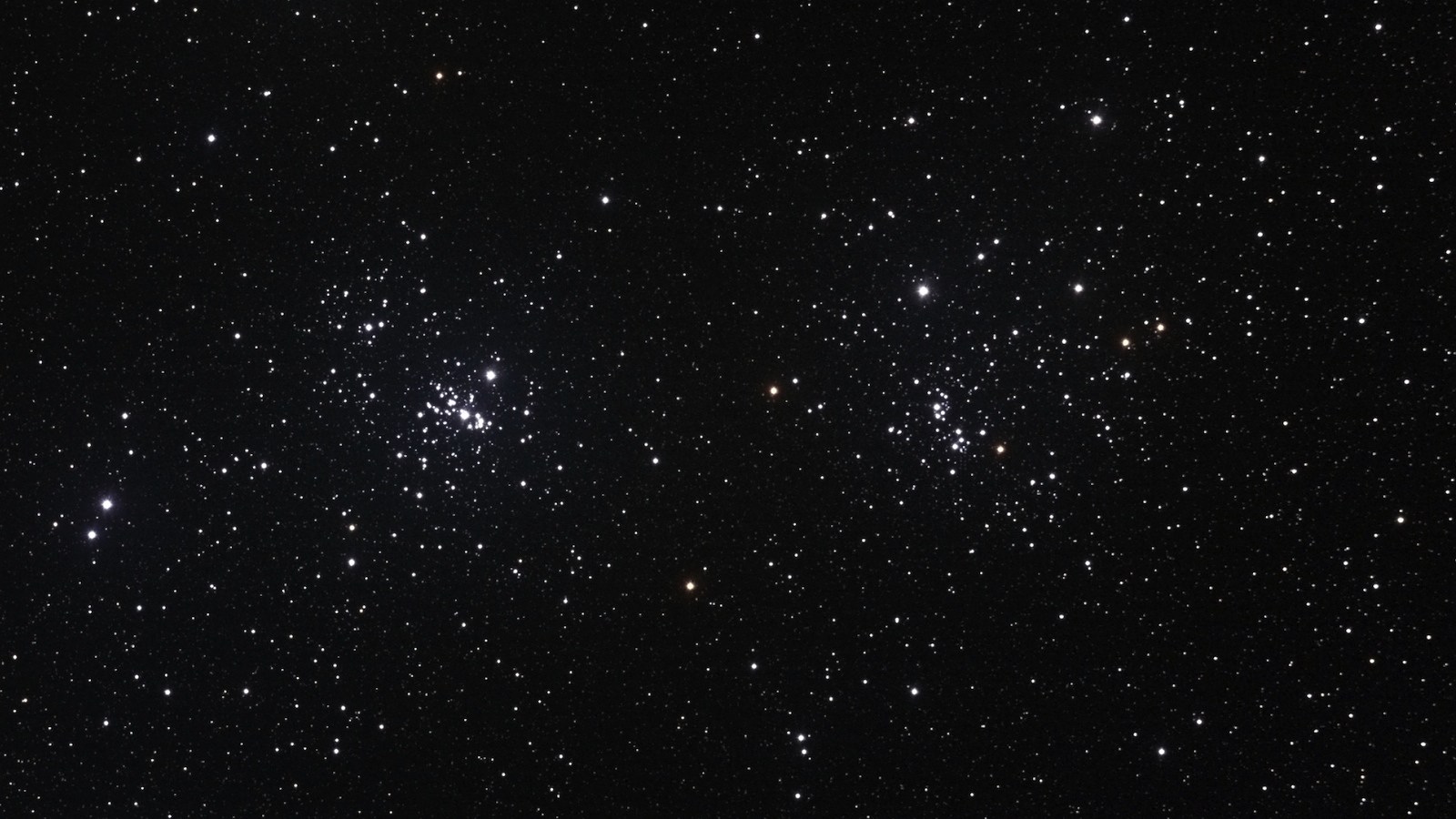
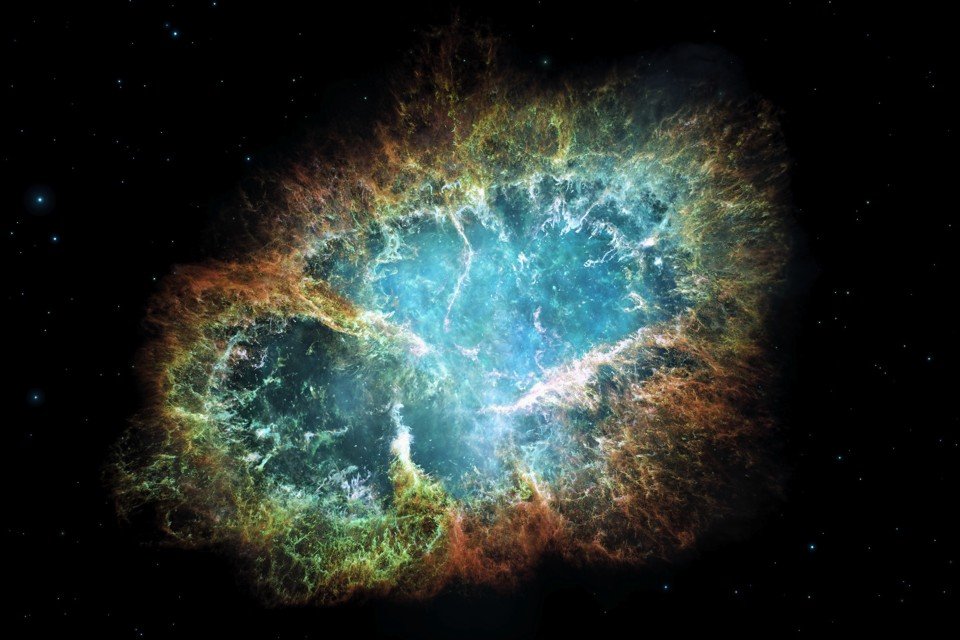

Star brightness is defined in terms of apparent magnitude. Apparent magnitude is how bright the star appears from Earth.
How does the brightness of white dwarfs compare to the brightness of the Sun?
The Sun is less bright than white dwarfs.
White dwarfs are less bright than the Sun
White dwarfs and the Sun have the same brightness
White dwarfs are not seen from Earth, therefore you can not compare the brightness.

The Hertzsprung-Russell Diagram is used to classify stars in terms of luminosity and temperature. Brighter stars are shown at the top of the diagram, while fainter stars are shown in the lower part of the diagram. Stars on the left side of the diagram are hotter than stars on the right side of the diagram.
Which of the following statements best describes the main sequence stars?
The main sequence stars are brighter than the White Dwarfs. The very hot, extremely small stars are located in group D.
The main sequence stars are located in group B. The main sequence stars are much brighter than the Giants located in group C.
The main sequence stars are located in group D. Main sequence stars trend from extremely bright stars in the lower right corner to cool, faint stars in the upper left corner of the diagram. The Sun is an example of a main sequence star.
The main sequence stars are located in group A. These stars trend from cool, faint stars in the lower right corner to hot, extremely bright stars in the upper left corner of the diagram. The Sun is an example of a main sequence star.

According to the diagram, which of these types of stars has the greatest luminosity?
Hot white dwarf
Hot main sequence star
Cool super giant
Cool giant

Stars are classified on the Hertzsprung-Russell diagram according to their absolute magnitude and their surface temperatures at a given time in a star’s life cycle. What classification would a star have if it was very hot and very bright?
Main Sequence
White Dwarf
Supergiant
Giant
Which statement is true?
The galaxies are moving toward us.
The galaxies are moving away from us.
The universe remains static or unchanged in motion.
None of the above
Where is the center of the universe located?
There is no center of the universe.
At the center of the Milky Way galaxy.
14.5 billion light years away from Earth.
In a large singularity near the Andromeda Galaxy.
What was contained in the singularity that gave rise to the Big Bang? Choose the best answer.
a. Gamma rays
b. Electrons in a highly excited state
c. One atom of every known element in our universe
d. All the mass, energy, and time in our universe
What do the initial moments after the Big Bang have in common with the universe as it exists now?
a. All the stars, galaxies, and planets that exist today were formed just a few moments after the Big Bang.
b. The universe back then could not sustain life, and it cannot sustain life now.
c. The universe was extremely hot then, and it is still extremely hot now.
d. The universe began expanding then, and it is still expanding today.
What are patterns of stars in the sky called?
Galaxies
Constellations
Star Systems
Comets
What does the Hertzsprung-Russell Diagram graph?
A star's absolute brightness and temperature
A star's apparent and true brightness
A star's distance and temperature
A star's distance and apparent brightness
Astronomers think that in the future the universe will continue to
Shrink
Expand
Explode
Collapse
The explosion of a supergiant is called a(n)
Big Bang
Black Hole
Nebula
Supernova
Scientists believe the universe began with an explosion called the__________
Big Bang
Black Hole
Super Nova
Nebula
Which statement is true?
The galaxies are moving toward us.
The galaxies are moving away from us.
The universe remains static or unchanged in motion.
None of the above
Most scientists believe the Big Bang Theory explains which of the following questions?
How our planets and moons formed
How our universe began
How the sun turns hydrogen into helium
How fast light travels through space
Which elements are most
abundant in the visible
universe?
Hydrogen and Carbon
Carbon and Helium
Hydrogen and Oxygen
Hydrogen and Helium
This planet has more mass than the rest of the planets combined.
Uranus
Earth
Pluto
Jupiter
All stars are gaseous spheres that
belong to the Milky Way galaxy.
are similar to the Sun.
emit energy from their cores.
What are two effects the Moon has on Earth?
seasons and tides
seasons and eclipses
tides and eclipses
Spherical objects that have their own orbital paths are _____.
dwarf planets
asteroids
planets
What characteristics do outer planets have?
rotate slower than other planets
rocky, mostly iron
few or no moons
smallest planets
rotate more quickly
called Gas Giants
have many moons
larger planets
Pick all that apply. Compare the Sun to other stars.
Our Sun is a Giant Star.
Our Sun is a solitary star.
Our Sun is a yellow star.
Our Sun is larger and more massive than 90% of the other stars.
What is the Big Bang theory?
The Big Bang theory states that the universe began from one point and has been contracting ever since.
The Big Bang theory states that the universe began from one point and has been expanding ever since.
The Big Bang theory states that the universe began from one point and has been expanding and contracting ever since.
What characteristics do inner planets have?
rotate slower than other planets
rocky, mostly iron
few or no moons
smallest planets
rotate more quickly
called Gas Giants
have many moons
larger planets

In the diagram given, what happens as we move to the left?
Which of the following best describes a star? A star is a celestial body -
composed of rock and metal with a very high density.
that is too big to be an asteroid, but too small to be a planet.
that rotates on an axis and revolves around the Sun.
composed of gases that emit light due to nuclear reactions.

The Milky Way galaxy is described as a disk of stars orbiting a central point on the disk. Which of these best explains why people on Earth cannot see the entire shape of the Milky Way?
Earth is a part of this galaxy.
Many more stars exist outside the galaxy
The stars in the center of the galaxy are extremely small
The center of the galaxy consists of a dense cluster of stars
An object will continue moving in a straight line unless it is acted on by an unbalanced force. Which of the following best explains Earth's motion?
There is no unbalanced force acting on Earth because space is empty and nothing touches Earth.
The gravitational force pulling Earth toward the sun is equal and opposite to the force pulling the sun toward Earth, so there is no unbalanced force acting on Earth.
The sun moves in an elliptical orbit around Earth, and the sun's gravity pulls Earth along.
Earth moves in an elliptical orbit around the sun because the gravitational force of the sun attracts Earth.
True or False:
The Big Bang Theory is the ONLY explanation for the origin of the universe.
True.
False.
The first elements formed in our universe were...
Light and small
Big and heavy
Which event happened first?
The formation of the Earth
The sudden expansion of matter from a point of singularity
Gravity caused all matter in the universe to come together
The universe cooled and atoms were formed
Which event happened LAST?
The formation of the Earth
The sudden expansion of matter from a point of singularity
Gravity caused all matter in the universe to come together
The universe cooled and atoms were formed

