
 Worksheets
Anatomy Unit 2 Test Review
Total questions: 56
Worksheet time: 39mins
Prickly layer; contains thick bundles of intermediate filaments of pre-keratin
stratum lucidum
stratum granulosum
stratum basale
stratum spinosum
stratum corneum
deepest layer; attached to the underlying dermis:
stratum spinosum
stratum basale
stratum lucidum
stratum granulosum
stratum corneum
the outermost layer; 20-30 cell layers thick; cells are dead skin protection
stratum spinosum
stratum granulosum
stratum basale
stratum lucidum
stratum corneum
waterproofing layer; slows water loss
stratum basale
stratum lucidum
stratum granulosum
stratum spinosum
stratum corneum
thin and transparent, clear layer; found only in thick skin
stratum basale
stratum spinosum
stratum granulosum
stratum lucidum
stratum corneum
These cells synthesize skin pigment to give skin and hair its color; found in the deepest layer of the epidermis:
keratinocytes
melanocytes
Langerhans' cells
Merkel cells
Which layer of the dermis contains pain and touch receptors and epidermal ridges?
papillary
reticular
collagen
adipose
Which layer of the dermis is 80% of its thickness, contains collagen for strength, and had flexure lines?
Papillary
Reticular
Basale
Adipose
Which of the following lists the stratum of the epidermis from deep to superficial?
corneum, lucidum, granulosum, spinosum, basale
basale, spinosum, granulosum,lucidum, corneum
granulosum, lucidum, corneum, basale, spinosum
What cell produces a protien which allows for waterproofing of the skin, nails, and hair?
The functions of the skin include all of these except:
taking in nutrients
Reducing water loss
preventing the entry of microorganisms
regulating body temperature

If you have a decrease in melanin you may also have an increase in which of the following:
Sunburns
Skin cancer
U.V. Damage
DNA Damage
All increase
What are the 5 functions of Skin?
Protection
Regulating body temperature
Sensations
Vitamin D Synthesis
All of these are functions
Sweating, vasodilation, vasoconstriction and goosebumps are examples of:
Maintaining homeostasis temperature
Sensations
Only excretion
Protection
What is the function of keratin?
Protein that toughens and waterproofs
Sweat gland that helps cool
Oil gland to help skin stay soft and hair shiny
The hypodermis is made up of ______ and functions as a shock absorber.
osteocytes
simple squamous cells
stratefied cuboidal cells
adipose tissue

The movement shown is a person moving his leg outward. This movement is known as:
abduction
adduction
rotation
flexion

Which muscle is used to make a "duckface"?
frontalis
orbicularis oculi
orbicularis oris
masseter

If you're standing on your tip toes to grab something from the top shelf, you're using your:
gastrocnemius
rhomboids
frontalis
pectoralis major

The primary muscle for hip extension is the:
gluteus maximus
soleus
deltoid
latissimus dorsi

___provides energy for muscle contraction and relaxation.
cAMP
ADP
ATP
M line
Where does cellular respiration take place?
chloroplast
mitochondria
ribosomes
nucleus


Only one found in a lacuna and the Main bone cells
Osteogenic cells
Osteoblasts
Osteocytes
Osteoclasts

The ends of a long bone are called the
diaphysis
epiphyses
periosteum
endosteum
Bone forming cells:
osteocytes
osteoblasts
osteoclasts
osteomasts
Bone destroying cells:
osteocytes
osteoblasts
osteomasts
osteoclasts
Must be present in the blood at all times for the nervous system to transmit messages, for muscles to contract, and for blood to clot:
calcium
adipose tissue
phosphorus
iodine
Blood cell formation:
ossification
hemostasis
hematopoiesis
hemophilia

What is the name of the yellow bone?
occipital
parietal
temporal
frontal

Identify the function of the Axial skeletal structure.
Locomotion
Movement
Protection
Stature

Identify a function of the axial skeleton
allows for movement of the wrist and hand
protects nerves and blood vessels at the elbos
supports the trunk of the body
allows for movement of the foot and ankle
The ___, or thigh bone, is the only bone in the thigh.
humerous
femur
radius
ulna
Two bones, the ___ and the ulna, form the skeleton of the forearm.
radius
tibia
fibula
femur
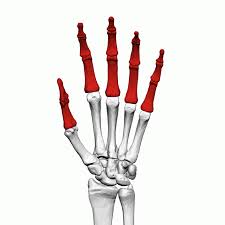
Which bones are highlighted
phalanges
carpals
metatarsals
metacarpals

