wayground logo

Free Printable Worksheets

Font size

S
M
L
XL
Worksheets

Revision chemistry

Total questions: 100

Worksheet time: 3hrs 32mins

Name
Class
Date
1.
Which element has 31 protons ?
a)
Gallium 
b)
Germanium
c)
Gadolinium
d)
Polonium
2.
What number indicates the nucleus?
a)
1
b)
2
c)
3
d)
4
3.
Oxygen’s atomic number is 8. This means that an oxygen atom must have
a)
8 electrons
b)
8 protons
c)
8 neutrons
d)
a mass number of 8
4.
What number indicates an electron?
a)
1
b)
2
c)
3
d)
4
5.
Which statement best describes an electron?
a)
Smaller mass than a proton and a negative charge
b)
Smaller mass than a proton and a positive charge
c)
Greater mass than a proton and a negative charge
d)
Greater mass than a proton and a positive charge
6.
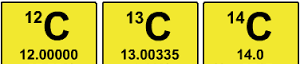
What do these isotopes of carbon all have in common?
a)
neutrons & mass number
b)
atomic number and neutrons
c)
atomic number and electrons
d)
protons, atomic number, and mass number
7.
What quantities vary between isotopes of an element?
a)
protons, electrons, and atomic mass
b)
protons, electrons, and atomic number
c)
neutrons and electrons
d)
neutrons and atomic mass
8.
If X is the symbol for an element, which of the following two symbols represent    isotopes of the same element?     I. 7735X  II. 7733X  III. 8137X  IV. 8135 X
a)
I and II
b)
III and IV
c)
I and IV
d)
I and III
9.
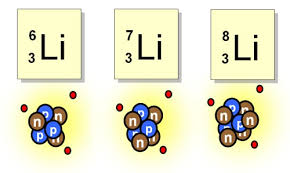
which atom has  4 neutrons?
a)
Li-6
b)
Li-7
c)
Li-8
d)
they have the same # of neutrons
10.
The rate at which a radioactive element decays is its ____.
a)
quarter life
b)
whole life
c)
wonderful life 
d)
half life
11.

The three types of nuclear radiation in order of decreasing penetrating power are

a)

alpha, beta, gamma

b)

alpha, gamma, beta

c)

beta, alpha, gamma

d)

gamma, alpha, beta

12.
If the half life of a radioactive element is 100yrs, how long would it take for the radioactivity to reduce by one half?
a)
200yrs
b)
100yrs
c)
50yrs
d)
300yrs
13.

Which type of nuclear decay did Radon-198 go through?

a)

alpha decay

b)

beta decay

c)

gamma decay

14.

What will the values of x and y be?

a)

x=194, y =83

b)

x=194, y =84

c)

x=194, y =85

d)

I don't know. I should probably study this stuff more before the test.

15.

A sample of Radium-228 decays from 100g to 12.5g. How many half lives did it experience?

a)

1

b)

2

c)

3

d)

4

16.

How much of a 250g sample would be left after 5 half lives?

a)

125g

b)

62.5g

c)

31.25g

d)

7.81g

17.
What is the left part of a chemical equation called?
2H2 + O2 --> 2H2O
a)
Reactants
b)
Products 
c)
Yields 
d)
Chemical Equation 
18.
What is the right part of a chemical equation called...
2H2 + O2 --> 2H2O
a)
Reactants
b)
Products 
c)
Yields 
d)
Chemical Equation 
19.
How many atoms of carbon (C) are in C6H12O6?
a)
3
b)
6
c)
12
d)
24
20.
Balance this equation.
_Mg + _Cl--> _MgCl2
a)
1, 2,1
b)
already balanced
c)
2,1,1
d)
1,1,2
21.
What is the TYPE of reaction when a metal reacts with oxygen
a)
displacement
b)
precipitation
c)
reduction
d)
oxidation
22.
Given the unbalanced equation: Al + O2 --> Al2O3
What is the coefficient of Al?
a)
1
b)
2
c)
3
d)
4
23.
What does the Law of Conservation of Mass state?
a)
Matter cannot be gained or lost in a chemical reaction.
b)
Matter can only be lost in a chemical reaction.
c)
Matter can only be gained in a chemical reaction.
d)
Matter can be gained and lost in a chemical reaction. 
24.
State whether the following compound is soluble or insoluble.  calcium carbonate CaCO
a)
soluble
b)
insoluble
25.
State whether the following compound is soluble or insoluble. potassiun bromide KBr
a)
Soluble
b)
Insoluble
26.
State whether the following compound is soluble or insoluble. Zinc hydroxide Zn(OH)2
a)
Soluble 
b)
Insoluble
27.
State whether the following compound is soluble or insoluble. iron(ii) sulfide FeS
a)
soluble
b)
insoluble
28.
State whether the following compound is soluble or insoluble. Silver iodide AgI
a)
Soluble 
b)
Insoluble 
29.
State whether the following compound is soluble or insoluble. Silver iodide AgI
a)
Soluble 
b)
Insoluble 
30.
State whether the following compound is soluble or insoluble.Potassium hydroxide KOH
a)
Soluble 
b)
Insoluble
31.
State whether the following compound is soluble or insoluble.Silver acetate AgC2H3O2
a)
Soluble 
b)
Insoluble
32.
State whether the following compound is soluble or insoluble.nickel chloride NiCl2
a)
Soluble 
b)
Insoluble
33.
State whether the following compound is soluble or insoluble.Lead iodide PbI2
a)
Soluble
b)
Insoluble
34.
How many more grams of KNOdissolve at 50 ⁰C compared to 0 ⁰C?
a)
85 g
b)
15 g
c)
70 g
d)
100 g
35.
What is the maximum temperature where at least 60 g of HCl can dissolve?
a)
45 ⁰C
b)
55 ⁰C
c)
35 ⁰C
d)
65 ⁰C
36.
What is the minimum temperature needed to dissolve at least 10 g of KClO3?
a)
25 ⁰C
b)
10 ⁰C
c)
5 ⁰C
d)
100 ⁰C
37.
Which of the following substances increase solubility at the slowest rate with increasing temperature?
a)
SO2
b)
NaCl
c)
KCl
d)
KNO3
38.

What is the solubility of NaNO3 at 20 C in 100 g of water?

a)

90 g

b)

80 g

c)

40 g

d)

160 g

39.

How many grams of SO2 can dissolve at 50 ⁰C in 100 g of water?

a)

5 g

b)

10 g

c)

20 g

d)

39 g

40.
Which salt is LEAST soluble at 0 ºC?
a)
K2Cr2O7
b)
KNO3
c)
 KClO3
d)
Ce2(SO4)3
41.
A solution of potassium chlorate, KClO3, has 20 grams of the salt dissolved in 100 grams of water at 70 ºC. Approximately how many more grams of the salt can be added to the solution before reaching the saturation point?
a)
10 grams
b)
30 grams
c)
80 grams
d)
60 grams 
42.

What state of matter/phase change is occurring from points A-B on the graph?

a)

Solid

b)

Melting

c)

Liquid

d)

Vaporizing / Boiling

e)

Gas

43.

What state of matter/phase change is occurring from points B-C on the graph?

a)

Solid

b)

Melting

c)

Liquid

d)

Vaporizing / Boiling

e)

Gas

44.

What state of matter/phase change is occurring from points C-D on the graph?

a)

Solid

b)

Melting

c)

Liquid

d)

Vaporizing / Boiling

e)

Gas

45.

What state of matter/phase change is occurring from points D-E on the graph?

a)

Solid

b)

Melting

c)

Liquid

d)

Vaporizing / Boiling

e)

Gas

46.

What state of matter/phase change is occurring from points E-F on the graph?

a)

Solid

b)

Melting

c)

Liquid

d)

Vaporizing / Boiling

e)

Gas

47.

Describe how the energy is changing in this graph:

a)

Increasing

b)

decreasing

c)

stays the same

48.

Which segments of this graph show a phase change is occurring?

a)

AB, CD, & EF

b)

BC & DE

c)

AB, BC, & CD

d)

DE & EF

49.

Describe how the energy is changing in this graph:

a)

Increasing

b)

decreasing

c)

stays the same

50.
What state of matter is X?
a)
solid 
b)
liquid
c)
gas
d)
supercritical fluid
51.
What is point A?
a)
triple point
b)
critical point
c)
equilibrium point
d)
normal melting point
52.
Water exists as a _____________ at 700 mmHg and 50 °C.
a)
solid
b)
liquid
c)
gas
d)
supercritical fluid
53.
What phase change(s) may occur at pressures below 4.58 mmHg?
a)
sublimation/deposition
b)
melting/freezing
c)
all phase changes are possible at these pressures
d)
vaporization/condensation
54.
Water exists as a _____________ at 3 mmHg and 50 °C.
a)
solid
b)
liquid
c)
gas
d)
supercritical fluid
55.
Which statement is true for carbon dioxide at -60 °C?
a)
All three phases are possible.
b)
It can exist as a solid or a gas, depending on pressure.
c)
It is a solid.
d)
With enough pressure it can be melted.
56.
Which phase change increases the molecule's freedom of movement?
a)
Melting
b)
Freezing
c)
Condensing
57.
Describe the substance between letters D and E. 
a)
Gas
b)
Liquid
c)
Melting
d)
Evaporating
58.
If a nitrogen gas occupies a volume of 500 ml at a pressure of 0.971atm. What volume will the gas occupy at a pressure of 1.50 atm?  
a)
P1V1 = P2V2
b)
PV = nRT
c)
P1/T1 = P2/T2
d)
V1/n1 = V2/n2
59.
In order to convert to Kelvin, you add ______ to the Celsius measurement.
a)
372
b)
273
c)
237
d)
732
60.
What is 50 C in Kelvin?
a)
223
b)
323
c)
100
d)
50
61.
100 degrees Celsius is equal to _______ Kelvin. 
a)
0 K
b)
273 K
c)
173 K
d)
373 K
62.
Determine the Kelvin temperature required for 0.0470 mol of gas to fill a balloon to 1.20 L under .998 atm pressure. 
a)
0 K 
b)
107 K 
c)
207 K 
d)
307 K 
63.
Determine the number of moles in a container of gas at STP with a volume of 99.2 L. 
a)
2222.08 moles
b)
4.43 moles
c)
22.4 moles 
d)
76.8 moles
64.
What are the spectator ions in this reaction?
CuCl2(aq) + NaOH(aq) → Cu(OH)2(s) + NaCl(aq)
 
a)
Cu2+ and OH1-
b)
Na2+ and Cl2-
c)
Na1+ and Cl1-
d)
Na1+ and OH1-
65.
What is a valence electron?
a)
The sum of neutrons and protons.
b)
The # of electrons in the last shell.
c)
A type of bond.
d)
A popular compound.
66.
Is this ionic bond drawn correctly?
a)
Yes
b)
No
67.
Ionic bonds are between...
a)
Metal and Non-metal
b)
Non-metal and Non-metal
c)
Metal and Metal
68.
How are ionic bonds formed?
a)
Transfer of electrons
b)
Sharing of electrons
69.
Name this compound:   MgS
a)
Sulfur Magnesium
b)
Magnesium Sulfate
c)
Magnesium Sulfur
d)
Magnesium Sulfide
70.

How should you read the formula LiF?

a)

Lithiide Fluorine

b)

Lithium Fluorium

c)

Lithium Fluoride

d)

Lithium Phosphine

71.

What happens to valence electrons in ionic bonding?

a)

The metal loses valence electrons to the nonmetal

b)

The metal and nonmetal share electrons equally

c)

The nonmetal loses valence electrons to the metal

d)

Both the metal and nonmetal lose electrons

72.

What force holds together cations and anions in ionic bonds?

a)

The electrical attraction between the positive cation and the negative anion

b)

The electrons shared between the positive cation and the negative anion

c)

The magnetic attraction between the positive cation and the negative anion

d)

The gravitational attraction between two pieces of matter

73.
What two types of atoms make a covalent bond?
a)
2 Nonmetals
b)
1 Nonmetal and 1 Metal
c)
2 Metals
d)
2 Noble Gases
74.
How are covalent bonds explained?
a)
When one atom takes the other atom's electron
b)
When the atom shares an electron with an another atom
c)
When the two nucleus merge
d)
When the neutrons leave the nucleus
75.

Name the following

Ca3(PO4)2

a)

calcium phosphate

b)

calcium (III) phosphate

c)

tricalcium diphosphate

d)

calcium phosphide

76.
How many atoms of oxygen are in the chemical formula of Barium Phosphate?
a)
8
b)
4
c)
24
d)
16
77.
As you move down a group, atomic radius increases because - 
a)
you add more and more neutrons
b)
you add more and more protons
c)
you add more and more shells (energy levels)
d)
you add more atomic mass
78.
Francium (Fr) has the lowest ionization energy in Group 1 because - 
a)
it has the smallest number of valence electrons
b)
it has the greatest atomic mass
c)
it has the greatest number of protons, so it attracts its electrons the strongest
d)
its 1 valence electron is very far from the nucleus, so little energy is needed to remove it
79.
Which of the following will have a lower ionization energy than Scandium (Sc)?
a)
Helium (He)
b)
Titanium (Ti)
c)
Calcium (Ca)
d)
Magnesium (Mg)
80.
Electronegativity is...
a)
the ability of an atom to attract/ accept electrons
b)
the ability of an atom to lose electrons
c)
the energy required to remove an electron from a specific atom
d)
how easy it is to make friends. 
81.
Which has the greater Electronegativity: 
N or C?
a)
C
b)
N
82.
As atoms of elements in group 16 are considered in order from top to bottom, the electronegativity of each successive element....
a)
decreases
b)
increases
c)
remains the same
d)
none of the above
83.
As you move across the periodic table atoms tend to get smaller because, ______________.
a)
the atoms have more mass.
b)
the atoms have less mass
c)
the atoms have more protons.
d)
the atoms have less electrons.
84.
Elements in the same column of the periodic table always have the same # of _______ as one another.
a)
Protons
b)
Neutrons
c)
Electrons
d)
Valence Electrons
85.
What atom matches this electron configuration?
1s22s22p63s23p64s23d10
a)
Zinc
b)
Copper
c)
Nickel
d)
Germanium
86.
What electron configuration matches an oxygen atom?
a)
1s22s22p63s2, 3p64s23d104p5
b)
1s22s22p4
c)
1s22s22p6
d)
1s22s22p63s23p64s23d1
87.
The electron configuration of an atom is 1s22s22p6.  The number of electrons in the atom is 
a)
3
b)
6
c)
8
d)
10
88.
Which electron configuration belongs to Chlorine (Cl)?
a)
1s2s2p3s3p5
b)
1s2s2p3s3p6
c)
1s2s2p3s3p7
89.
Identify the Electron Configuration for Aluminum (Al)
a)
1s2s2p3s3p1
b)
1s2s2p3s3p3
c)
1s2s2p3s4p1
90.

What is the short hand electron configuration for Br?

a)

[He]4s23d104p5

b)

[Ne]4s23d104p5

c)

[Ar]4s23d104p5

d)

[Kr]4s23d104p5

91.

What does Hund's rule state?

a)

Orbitals must be filled alone before being paired up

b)

Electrons must have opposite spin in the orbitals

c)

electrons must be placed from low energy to high energy orbitals

92.

What does the Pauli Exclusion principle state?

a)

Electrons must be placed alone before being paired

b)

Electrons must be placed low energy to high energy

c)

Electrons in an orbital must have opposite spin

93.

What happens to the equilibrium if we add methane (CH4)?

a)

It shifts left, towards the reactants

b)

It shifts right, towards the products

c)

It does not shift

94.

What happens to the equilibrium if we remove water (H2O)?

a)

It shifts left, towards the reactants

b)

It shifts right, towards the products

c)

It does not shift

95.

What happens when the system is cooled (heat is removed)?

a)

The reaction shifts left, towards the reactants

b)

The reaction shifts right, towards the products

c)

There is no shift

96.

What happens when the system is warmed (heat is added)?

a)

The reaction shifts left, towards the reactants

b)

The reaction shifts right, towards the products

c)

There is no shift

97.
A compound consists of 72.2% magnesium(Mg) and 27.8% nitrogen(N) by mass. What is the empirical formula?
a)
Mg4N3
b)
MgN2
c)
Mg3N
d)
MgN
98.
Which of the following is considered an empirical formula?
a)
CH3COOH
b)
C6H12O6
c)
H2O
99.
You are given the following percentages: 40.05% S and 59.95% O. Find the empirical formula for these elements.
a)
SO
b)
SO2
c)
SO3
d)
SO4
100.

What type of reaction is this?

a)

Exothermic

b)

Endothermic

c)

Energy Producing

d)

No way to tell