Wayground logo

Free Printable Worksheets

Font size

S
M
L
XL
Worksheets

7th grade Semester 1 2021 2022 Review #2 Adams hjh

Total questions: 75

Worksheet time: 1hrs 3mins

Name
Class
Date
1.

The things that are kept the same to ensure the results are due to the experiment is called..

a)

Hypothesis

b)

Constant

c)

Independent Variable

d)

Dependent Variable

2.

The variable that is changed on purpose is..

a)

Constant

b)

Control

c)

Independent Variable

d)

Dependent Variable

3.
The variable that is being tested, counted, or measured and is responding to the independent variable is known as 
a)
Control
b)
Constant
c)
Independent Variable
d)
Dependent Variable
4.

Replication is when one scientist

a)

copies another scientist's experiment.

b)

laughs at another scientist's experiment.

c)

repeats their own experiment several times.

d)

clones another scientist.

5.

Repetition is when one scientist

a)

copies another scientist's experiment.

b)

bumps into another scientists.

c)

repeats their own experiment several times.

d)

clones a T. rex.

6.

What is the first step in the scientific method?

a)

draw conclusions

b)

ask a question/make an observation

c)

make a hypothesis

d)

test the experiment

7.

Which happens last?

a)

make a hypothesis

b)

ask a question/make an observation

c)

make a plan

d)

draw conclusions

8.

To make observations you use your _______.

a)

senses

b)

feet

c)

smile

d)

experience

9.
Should experiments be repeated over and over to see if the results are the same each time?
a)
yes
b)
no
10.
A series of steps used by scientists to solve a problem or answer a question. 
a)
scientific method
b)
recipe
c)
data collection
d)
metric system
11.

data

a)

collected facts

b)

untrue statements

c)

made up information

d)

gossip that contribute to drama

12.
Which of these contains steps in the right order?
a)
Ask a question, state your hypothesis, research, experiment, analyze, make a conclusion
b)
State your hypothesis, ask a question, research, experiment, analyze, make a conclusion
c)
Ask a question, research, state your hypothesis, experiment, analyze, make a conclusion
d)
State your hypothesis, ask a question, research, make a conclusion, experiment, analyze
13.
What causes tectonic plates to move along the Earth's surface?
a)
wind
b)
ocean currents
c)
convection in the mantle
d)
expansion of the Earth
14.
What type of boundary occurs when two plates move toward each other?
a)
convergent
b)
divergent
c)
transform
d)
lateral
15.
A rift valley occurs at a ____________ boundary.
a)
divergent
b)
convergent
c)
transform
d)
horizontal
16.

Earth's inner core is solid because ____________

a)

there is so much pressure being put on it

b)

it is very cold

c)

of all the oxygen stored there

d)

it is not very dense

17.

Iron and Nickel are the main elements found in the Earths core.

a)

True

b)

False

18.
A dense ball of solid iron and nickel.
a)
crust
b)
inner core
c)
mantle 
d)
outer core
19.
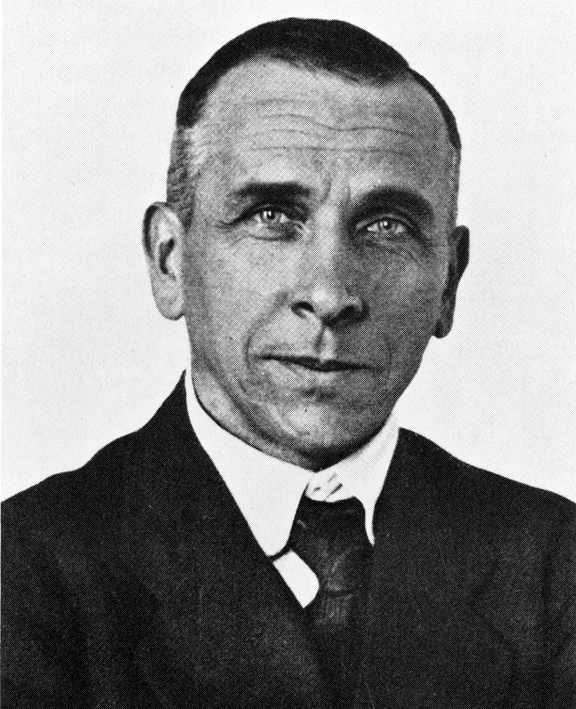
Who is the person credited with developing the theory of continental drift?
a)
Harry Hess
b)
Galileo
c)
Alfred Wegener
d)
Newton
20.
What is the thickest layer of the Earth?
a)
the crust
b)
the mantle
c)
the outer core
d)
the inner core
21.
The rigid outermost layer of Earth that includes the uppermost mantle and crust.
a)
asthenosphere
b)
lithosphere
c)
core
d)
mantle
22.

Convection currents occur in the _____________________

a)

Crust

b)

Lithosphere

c)

Inner core

d)

Asthenosphere

23.

Which two layers of earth are in the Lithosphere?

a)

Core and Mantle

b)

Mantle and Crust

c)

Outer core and Inner core

d)

Asthenosphere and core

24.
What is the correct order (starting from the surface) of Earth's layers?
a)
crust, mantle, inner core, outer core
b)
mantle, outer core, inner core, crust
c)
inner core, outer core, mantle, crust
d)
crust, mantle, outer core, inner core
25.

Where do convection cycles happen?

a)

core

b)

mantle

c)

crust

26.

What is magma made of?

a)

solid rock

b)

melted rock

c)

small pieces of sediment

27.
What is the heat source for convection in the mantle?
a)
the Crust
b)
the Mantle
c)
the Core
28.
What is the cooling source for convection in the mantle?
a)
the Crust
b)
the Mantle
c)
the Core
29.
 Where do convection currents happen in the model we are studying?
a)
the Crust
b)
the Mantle
c)
the Core
30.

Which of the following orders the rock layers accurately from oldest to youngest?

a)

1, 2, 3, 4, 5

b)

5, 4, 3, 2, 1

c)

2, 3, 4, 5, 1

d)

1, 2, 3, 5, 4

31.
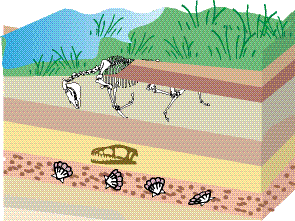
According to the law of superposition, the oldest fossils are found 
a)
At the top of the rock layers
b)
Near the bottom of the rock layers
c)
In the middle of the rock layers
d)
Somewhat near the surface
32.
T/F: Geologist use radioactive dating to find the absolute age of rocks
a)
True
b)
False
33.
Scientist think the Earth is ___ years old.
a)
4,500
b)
45,000
c)
4.5 million
d)
4.5 billion
34.
Geologists use radioactive dating to determine THE ABSOLUTE AGE OF ROCKS.
a)
True
b)
False
35.
_______________is the method of determining the absolute ages of rocks.
a)
radioactive dating
b)
carbon-14 dating
36.
Mountains form from ...
a)
plates sliding past one another
b)
collision of plates
c)
plates moving away from each other
37.
During sea floor spreading, molten material rises up from the mantle...
a)
along the continents
b)
at the mid ocean ridges
c)
deep ocean trenches
d)
at north and south poles
38.
The dense, solid center of Earth, made of iron and nickel.
a)
Inner Core
b)
Mantle
c)
Crust
d)
Outer Core
39.
When two plates collide and one plate slips below the other and down into the mantle. 
a)
Subduction
b)
Erosion
c)
Deposition
d)
Convection
40.
Mountains that are formed by the folding up of rock layers due to the collision of two plates
a)
Folded Mountains
b)
Dome Mountains
c)
Fault-Block Mountains
d)
Volcanic Mountains
41.

The name of the single landmass that began to break apart 200 million years ago.

a)

Antarctica

b)

Africa

c)

Pangaea

d)

Gondwana

e)

Laurasia

42.

Which event MOST likely caused the formation of folded mountain ranges on Earth?

a)

tectonic plates pulling apart

b)

tectonic plates pushing together

c)

tectonic plates sliding past each other

d)

tectonic plates breaking into small pieces

43.

a systematic way to find proof using reason

a)

Theory

b)

Scientific Method

c)

Geocentric

d)

Heresy

44.
Scientific theories are based on
a)
general assumptions of how systems work.
b)
mathematical principles that can be proven true.
c)
large amounts of data collected over time.
d)
observations from within only one scientific discipline.
45.
Scientific theories do not change once they have been written down.
a)
True
b)
False
46.

Which of these can change when new evidence is presented?

a)

theory

b)

law

47.

Which of these describes a natural phenomenon or relationship that always occurs under specific conditions

a)

theory

b)

law

48.
A _____________________ is something that scientists use to represent an object or process
a)
mass
b)
matter
c)
model
d)
weight
49.

Pick the reasons why we use models

a)

Models are expensive

b)

Models help you understand complex systems

c)

Models are used when systems are too expensive or impossible to use

50.

Models can be helpful in scientific investigations because

a)

it may not be possible to work with the real thing.

b)

they can be smaller and more manageable than the real thing.

c)

they can be safer to work with than the real thing.

d)

all of the above

51.

The OLDEST seafloor is located?

a)

Closest to the mid-ocean ridge

b)

Farthest from the mid-ocean ridge

52.

True or False : Sea-floor Spreading adds new material to the ocean floor?

a)

True

b)

False

53.

What is seafloor spreading?

a)

continental crust-continental crust

b)

rift valleys

c)

seafloor spreads

d)

ocean spreads and magma rises to fill in gaps creating a Mid Ocean Ridge

54.
Which of these is one cause of deforestation?
a)
Urbanization
b)
Buying a chirstmas tree during the holidays
c)
Overbreeding birds in the wild
d)
Cutting down the tree in your backyard
55.
What is deforestation?
a)
Clearing Earth's forests on a massive scale
b)
Eating too much vegetables
c)
Going to a forest and pulling weeds
d)
Clearing the five trees in my backyard
56.
Deforestation has an affect on the water cycle
a)
true
b)
false
57.

Deforestation causes an increase in atmospheric carbon dioxide

a)

true

b)

false

58.
What are the effects of deforestation ?
a)
loss of habitat
b)
increased green house gasses 
c)
soil erosion and flooding
d)
all of the above
59.

1. What are renewable resources?

a)

. Resources that are used faster than they form

b)

resources that can replenish themselves over time

c)

resources that formed over millions of years

d)

resources that exist only in rural areas

60.

1. Why is firewood considered to be a renewable resource?

a)

It can be replenished over time.

b)

It is used up faster than it can form.

c)

It is made from coal.

d)

It can be made synthetically.

61.
The presence of wastes, such as plastic bags and motor oil, in lakes and streams miles away from developed areas suggests that
a)
. ecosystems are interconnected and human action can alter ecosystem equilibrium.
b)
recycling programs have failed to conserve biotic resources.
c)
natural processes can alter ecosystem stability.
d)
 direct harvesting practices have led to irreversible destruction of ecosystems.
62.

When human-made chemicals and garbage find their way into nature and harm the air, soil, and water it is called

a)

pollution

b)

habitat destruction

c)

overexploitation

d)

climate change

63.

When there is overpopulation?

a)

When there are people in excess and damage the environment.

b)

When there are many people in the same environment.

c)

When there are few people in the same environment

64.

What are the effects of overpopulation?

a)

A. There's a lot of pollution in big cities.

b)

B. One cause is that people's life expectancy has increased.

c)

C. Yes, it does.

d)

D. Because there are too many cars.

65.

Which is the MOST LIKELY result if human population increases in an area?

a)

an improvement in water quality

b)

an increase in wildlife populations

c)

a destruction of ecological habitats

d)

a decrease in localized temperatures

66.

What will MOST LIKELY be the result of destroying the rainforest for timber and farmland?

a)

an increase in the populations of underpopulated areas of Earth, which should ease overcrowding in more populated areas of the planet

b)

a permanent improvement of local economies created by the sale of the vast forest resources and the expansion of productive farmland

c)

a marked decrease in the number of species on Earth caused by loss of habitat and increased global warming

d)

an improvement of local water supplies as the soil is stabilized and decaying vegetation from the trees disappears

67.

Which BEST explains the effect of deforestation of tropical rainforests?

a)

decreased biodiversity

b)

increased levels of oxygen

c)

decreased global warming

d)

increased levels of nutrients

68.

As rivers move, sediment is moved by the water. The movement of the sediment is known a __.

a)

weathering

b)

erosion

c)

deposition

69.

Which layer of Earth is believed to be made up of solid nickel and iron?

a)

crust

b)

mantle

c)

outer core

d)

inner core

70.
Created by a divergent boundary.
a)
Rocky Mountains
b)
Mariana Trench
c)
Mid Atlantic ridge
71.
Mountains form from ...
a)
plates sliding past one another
b)
collision of plates
c)
plates moving away from each other
72.

Climatologists get clues about the climate of the past by studying what? There is more than one answer.

a)

Rocks

b)

Fossils

c)

TikTok

d)

Glaciers

73.

In which type of rock can you find fossils?

a)

Sedimentary

b)

Metamorphic

c)

Igneous

d)

Minerals

74.
According to the law of superposition, the oldest fossils are found 
a)
At the top of the rock layers
b)
Near the bottom of the rock layers
c)
In the middle of the rock layers
d)
Somewhat near the surface
75.

Which of the following is an example of climate change?

a)

Marine fossils found in specific parts of the ocean.

b)

The mass extinction of dinosaurs.

c)

Fern fossils (which grow in warm, tropical climates) are found in polar regions.

d)

Plants that can survive in the desert.