
Font size
 Worksheets
Astronomy Final Exam
Total questions: 100
Worksheet time: 25hrs 0mins
One rotation of Earth is equal to: (a)

A (a) is the movement of Earth when it travels around the sun.
The earth is a tilted planet. What is the degree of tilt? (a)
In winter in the northern hemisphere, the axis of the earth is pointed: (a)

Which line of latitude receives the most direct sunlight during summer? (a)

How did Eratosthenes determine the Earth was round?
He travelled by camel across the Earth.
The shadows from obelisks were different in different places.
He got up on the pyramids and saw a curve in the horizon.
Nobody knows his methods

Identify the Moon Phase as seen from the northern hemisphere. (a)
What moon phase rises at Midnight? (a)

What type of eclipse is this and what phase must the moon be in? (a)

Which describes why we don't have an eclipse every new and full moon?
The plane of the Sun's orbit around the Earth must match the plane of the Earth's orbit around the Sun.
The plane of the Moon's orbit around the Earth must match the plane of the Earth's orbit around the Sun.
The plane of the Earth's orbit around the Moon must match the plane of the Earth's orbit around the Sun.
Out of the remains of a forming star
When dark matter exits a singularity
By the collision of two asteroids
Through the gravitational pull of a black hole
Order the planets from greatest mass to least mass
Jupiter
Uranus
Earth
Venus
Mars

Which planets have no natural satellites(moons)? (a)
Which planet has a ring system?
Jupiter
Saturn
Neptune
All of the above
What do all of the inner planets have in common?
They all have rings
They all have abundant liquid water
They all have many moons
They all are small and have rocky surfaces

Which planet is tilted sideways so that its poles lie where most other planets have their equators? (a)

The (a) the planetary surface is, the more craters should be present.

Different wavelengths of light are absorbed and reflected by different elements which can give astronomers information about the chemical makeup of a planet's (a) .

Identify part 1. It is the center of the sun where nuclear fusion takes place.
corona
photosphere
core
radiation zone
Identify part 2. It is the middle layer of the sun where heat radiates outward away from the core.
corona
convection zone
core
radiation zone
Identify part 3. It is the outermost layer of the sun's surface where heat rises, spreads, cools, and falls over and over again in a circular motion.
corona
convection zone
core
radiation zone

What layer can be seen here only during a total solar eclipse that also means "crown"?
chromosphere
corona
photosphere
core
Which of the following lists some of the layers of the Sun in order from the center of the Sun outward?
radiation zone, convection zone, chromosphere, core, photosphere, corona
radiation zone, convection zone, core, photosphere, chromosphere, corona
core, radiation zone, convection zone, photosphere, corona, chromosphere
core, radiation zone, convection zone, photosphere, chromosphere, corona
Identify part 7. It is cooler, darker areas on the surface of the sun.
sunspot
solar flare
corona
radiation zone

How many years are in a sunspot cycle
Since the sunspots appear to be moving from left to right, that suggests that...
the sun is rotating.
the sun dying.
the sun is expanding.
there is no pattern.

These can disrupt electronics on Earth.
Sunspots
Solar flares
Prominences
Meteorites
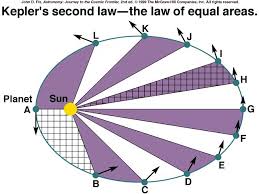


Which Kepler's law is related to this formula P2 = (a) 3?
First
Second
Third
What is Charon?
a dwarf planet
a moon of Pluto
an asteroid
a comet

Identify which trend is observed in the HR diagram for Main Sequence stars
luminosity is indirectly proportional to the temperature of the stars
there is no correlation between luminosity and temperature
Temperature increases, luminosity increases
Luminosity decreases, temperature increases
Which of these stars is hottest and brightest?
Which star would you call a red giant?

The stellar remnant of a star with 15 solar masses will end up as a
Supernova
White Dwarf
Black Dwarf
Neutron Star


The Schwarzschild radius of a black hole determines the distance between its ____________ and ____________. (PICK TWO ANSWERS)
photon sphere
singularity
event horizon
ergosphere
After a supergiant, a high mass star explodes and forms a
supernova
red giant
black hole
planetary nebula

Stars can take different paths towards its death due to having different (a)
An astronomer uses parallax to determine a star’s distance from Earth. Which statement correctly describes parallax?
Stars closer to Earth will have a dimmer appearance.
Stars farther away from Earth will have a dimmer appearance.
Stars closer to Earth will appear to have a greater shift in position.
Stars farther away from Earth will appear to have a greater shift in position.
The brightness of a star as seen from earth
Apparent magnitude
Awesome magnitude
Absolute magnitude
Amazing magnitude
Why can the apparent magnitude be inaccurate?
It doesn't exist
It may not be brighter compared to another star but instead just closer
It only shows the brightness of stars too far away for humans to detect
the scale is messed up

Which star appears the least bright from Earth?
B
A
C
D

What is the brightness of Rigel as seen from Earth?
Which star is the brightest? (a)
Angular separation is used to measure
the apparent distance between stars in the sky
the absolute distance between the sun and far away stars
the brightness of stars
astronomical units

If you were to use your hand to measure angular separation, Dubhe and Polaris would be...
a finger apart
three fingers apart
a fist apart
from pinky to thumb of an open hand
Define Asterism
Any grouping of stars that appear to make a shape
Prominent pattern or group of stars used to help determine the location of a constellation
an entire are of the celestial sphere and all objects in it
a tool used to observe the patterns in the night sky
Polaris always points (a)
Near the poles, circumpolar stars can be seen _______________ and _________________.
at all times of the year
near the horizon
only with a telescope
at all times of night
If you are located at the North Pole, where will you see the Polaris?
Overhead
Just above the horizon.
Around 45° from the horizon.
Polaris will not be seen in the North Pole.

In which part of the world do you think this picture is taken?
From the north pole
From the south pole
at mid-latitude
at the equator

This is an image of a cloud of gas and dust, also known as a (a)

What type of nebula is made from the outer layers of a red giant star becoming less gravitationally bound to the core?
Stellar Nebula
Planetary Nebula
Emission Nebula
Dark Nebula
Nebulae where new stars are forming are called...
(a)

Messier object M1 is also known as (a)
The Milky Way galaxies is a(n) _______________ galaxy.
Spiral
Barred Spiral
Irregular
Eliptical
The center of the Milky Way is found in the direction of the ______ constellation
Virgo
Pisces
Sagittarius
Libra

In the Milky Way where would you find our solar system?
in the center
near the center
one of the spiral arms
on the outside edge

What type of galaxy is shown in this image? (a)

Select the description that best describes galaxies
a collection of stars
a collection of stars held together by gravity
a collection of gas and stars held together by gravity
a collection of dust, gas and stars held together by gravity
The centers of most galaxies are thought to host:
supermassive black holes
stellar black holes
hypergiant stars
dust lanes
Because the spectrum of the galaxies has a redshift they are moving (a)
Dark matter is inferred to exist because:
we see lots of dark patches in the sky
it explains how the expansion of the universe can be accelerating
we can observe its gravitational influence on visible matter
it doesn't emit light
What of the following phenomenon is caused by the inferred distribution of dark matter?
Galaxies are not shaped like they should be.
Galaxies are spinning too fast.
Galaxies are spinning too slow.
Galaxies are randomly spaced across the universe
The Big Bang Theory explains the formation of the...
(a)

The Webb telescope is designed to view infrared to capture older light that has expanded due to (a) .
What is meant by "dark energy"?
energy associated with dark matter through E=mc2
doesn't emit any light
the repulsive agent causing the universal expansion to accelerate
highly energetic particles that are believed to constitute dark matter
What two factors will determine the fate of the universe?
Cosmic microwave background radiation and redshift
amount of dark matter and amount of dark energy
amount of elliptical galaxies and spiral galaixies
amount of black holes and their masses
According to Einstein, a massive object, like a star or black hole, can (a) light that is moving toward it.
During what rare event in 1919 showed gravitational lensing to confirm concepts of general relativity?
Solar eclipse
Observation of a supernova
Detection of a quasar
Hailey's Comet
What is Einstein's equivalence principle?
gravity and acceleration are the same thing
constant speed and at rest are the same thing
gravity is curvature of space
gravity and constant velocity are the same thing
One of the most startling consequences of time dilation is that a moving clock (a) relative to a stationary observer.

