
 Worksheets
Units 1, 2, and 3 Review
Total questions: 83
Worksheet time: 3hrs 38mins
What is the atomic number?
the number of protons in the nucleus
the number of protons and neutrons in the nucleus
the number of neutrons in the nucleus
the number of protons in the energy levels
What is the mass number?
the number of protons in the nucleus
the number of protons and neutrons in the nucleus
the number of neutrons in the nucleus
the number of protons and electrons in the atom
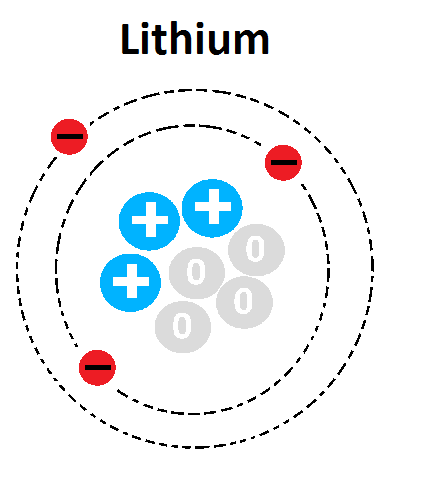
What is the atomic number of this atom?
1
3
4
7
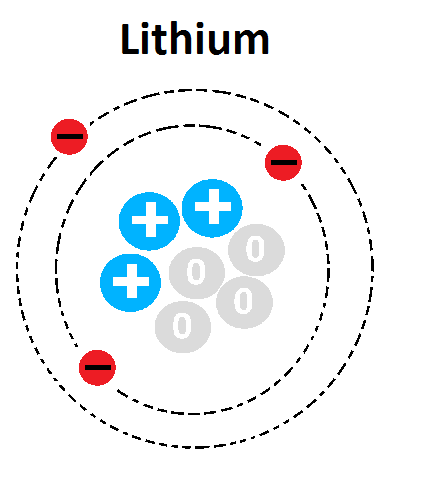
What is the mass number of this atom?
1
3
4
7
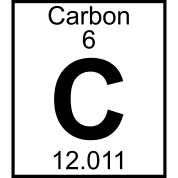

What does the 6 represent?
Atomic mass
atomic number
chemical symbol
element name
An atom has 10 protons, 15 neutrons and 10 electrons what is its mass number.
20
10
35
25
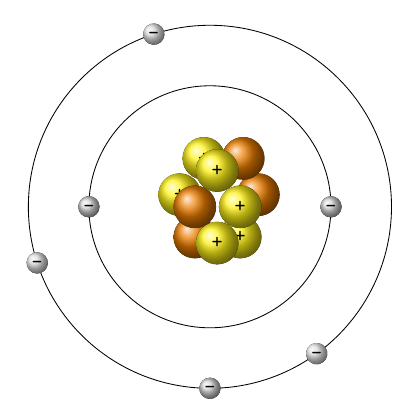
How many electrons does this atom have?
2
4
6
10


Which of the following determines the identity of an element?
number of protons
atomic mass
number of neutrons
number of shells


Balance the following:
____ Fe + ____ Cl2 → ____ FeCl3
Balancing the following:
____ Al + ____ HCl → ____ AlCl3 + ____ H2
Which type of reaction is:
2 NaBr + Ca(OH)2 → CaBr2 + 2 NaOH
Which type of reaction is:
2 H3AsO4 → As2O5 + 3 H2O
Which type of reaction is:
2 NH3 + H2SO4 → (NH4)2SO4
Which type of reaction is:
3 Pb + 2 H3PO4 → 3 H2 + Pb3(PO4)2
Which type of reaction is:
C7H16 + 10 O2 → 7 CO2 + 8 H2O

In a chemical reaction, if the reactants are heated, the reaction usually happens
slower
faster
at the same rate
in a smaller volume
Which of the following is a common sign that a chemical change has occurred?
A chemical has turned a different color, bubbled, and/or changed temperature.
A chemical has changed to a different state of matter, such as a liquid to a solid.
A chemical has changed size.
A chemical has become a different shape.
H2 + O --> H2O
ELECTRONEGATIVITY __________ from left to right across a period and __________ from top to bottom down a group.
decreases, increases
increases, increases
increases, decreases
decreases, decreases
The element with the largest electronegativity is -
At
F
Cl
Br

As you move down a GROUP on the periodic table the atomic radius get bigger. This is because ____________.
The atoms have more neutrons in the nucleus.
The atoms have more protons in the nucleus.
The atoms have more energy levels for the electrons
The atoms have greater repulsion forces between the protons and electrons
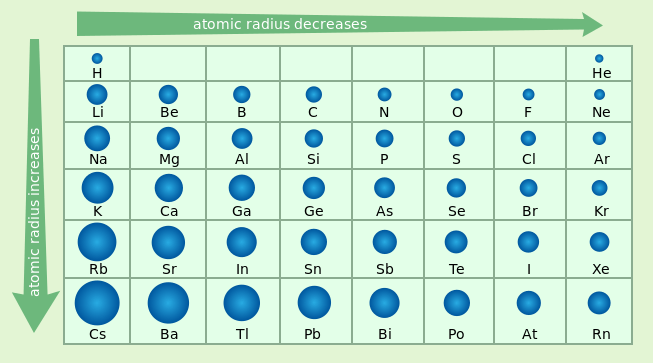
As you move across a period on the periodic table the atomic radius tend to get smaller because, ______________.
the atoms have more mass making them heavier.
more neutrons, making the nucleus bigger.
the atoms have more protons, pulling the electrons closer.
the atoms have less energy levels for the electrons to occupy.

Which element has a greater atomic radius, lithium (Li) or nitrogen (N)?
Lithium
Nitrogen
Which element has a greater ionization energy, lithium (Li) or nitrogen (N)?
Lithium
Nitrogen

Which element has a greater atomic radius, sulfur (S) or tellurium (Te)?
sulfur
tellurium
Which element has a greater ELECTRONEGATIVITY, sulfur (S) or tellurium (Te)?
sulfur
tellurium

Which element has a greater IONIC RADIUS, magnesium (Mg) or barium (Ba)?
magnesium
barium
Which element has a greater IONIZATION ENERGY, magnesium (Mg) or barium (Ba)?
magnesium
barium

Which element has a greater ELECTRONEGATIVITY, aluminum (Al) or sulfur (S)?
aluminum
sulfur

Which element has a greater IONIC RADIUS, calcium (Ca) or iron (Fe)?
calcium
iron

Which element has a greater IONIC RADIUS, nitrogen (N) or fluorine (F)?
nitrogen
fluorine

Which element has a greater ELECTRONEGATIVITY, oxygen (O) or neon (Ne)?
oxygen
neon
IONIZATION ENERGY __________ from left to right across a period and __________ from top to bottom down a group.
decreases, increases
increases, increases
increases, decreases
decreases, decreases
ATOMIC RADIUS __________ from left to right across a period and __________ from top to bottom down a group.
decreases, increases
increases, increases
increases, decreases
decreases, decreases
IONIC RADIUS __________ from left to right across a period and __________ from top to bottom down a group.
decreases, increases
increases, increases
increases, decreases
decreases, decreases
Smaller particle size allows for a _________ surface area to be exposed for the reaction.
larger
smaller
rectangular
spherical
Increasing the ____ causes the particles (atoms
or molecules) of the reactants to move more quickly so that
they collide with each other more frequently and with more
energy.
Catalyst
Surface Area
Temperature
Concentration
________ is the measure of how much area of an
object is exposed.
Surface Area
Catalyst
Temperature
Concentration
Which of the following will lower the rate
of reaction?
adding an enzyme to the reaction
decreasing the temperature from 40°C to
10°C
breaking a chunk of calcium up into
smaller pieces
increasing the amount of solute
dissolved in a solution

