Wayground logo

Free Printable Worksheets

Font size

S
M
L
XL
Worksheets

ICP Semester 1Finals Review

Total questions: 50

Worksheet time: 2hrs 52mins

Name
Class
Date
1.

If there are 2.2 lbs per Kilogram, how many kilograms are in 185 lbs?

a)

72 kg

b)

84 kg

c)

407 kg

d)

18.5 kg

2.
A scientist performs an experiment to see if acids have an effect on the health of a particular type of plant. Three sets of plants were treated with acidic solutions of known pH while the control set was treated with a solution of neutral pH 7.Which is the best conclusion for this experiment?
a)
Acid has no effect on the health of this type of plant.
b)
B. High acidity is helpful to this type of plant.
c)
C. Low acidity is harmful to this type of plant.
d)
High acidity is harmful to this type of plant.
3.
The graph below shows atmospheric carbon dioxide levels since the year 1880.Which of the following conclusions can be drawn from this graph
a)
 Atmospheric carbon dioxide levels are responsible for global temperature change.
b)
 Atmospheric carbon dioxide levels have been rising at about the same rate for the past century.
c)
Atmospheric carbon dioxide levels have remained the same over the past century.
d)
 Atmospheric carbon dioxide levels have been rising at an increasingly higher rate as the past century has progressed.
4.
Carmen conducted an experiment to determine if listening to different types of music would affect a person’s pulse. Her hypothesis was that pulse rate would change with different types of music. Each person listened to seven different selections of music for 30 seconds each. Each person’s pulse was taken before the music and then after each 30-second interval of music. The pulses were taken again after the music selections were completed. Based on her experiment, Carmen concluded that a person’s pulse rate changed when the person listened to different types of music.  Which component is missing from Carmen’s experiment?
a)
a question
b)
a hypothesis
c)
a control group
d)
a description of the experiment
5.
In an appropriately designed experiment, a scientist is able to test the effect of
a)
 a single variable
b)
 multiple variables
c)
 the hypothesis
d)
 scientific observations
6.

If testing how temperature of water affects the speed of rusting, what is the Manipulated Variable?

a)

Temperature of water

b)

Type of liquid

c)

Speed of rusting

d)

Type of nail

7.

If testing how temp. of water affects the speed of rusting, what is the Responding Variable?

a)

Temperature of water

b)

Type of liquid

c)

Speed of rusting

d)

Type of nail

8.
Can a mixture be separated? 
a)
No
b)
Yes
c)
Only sometimes
9.

A pure substance made of only one kind of atom and cannot be broken down into simpler substances

a)

Atom

b)

Compound

c)

Element

d)

Molecule

10.
A pure substance...
a)
is an element or a compound
b)
is an element or a mixture
c)
is a compound or a mixture
d)
is a mixture
11.

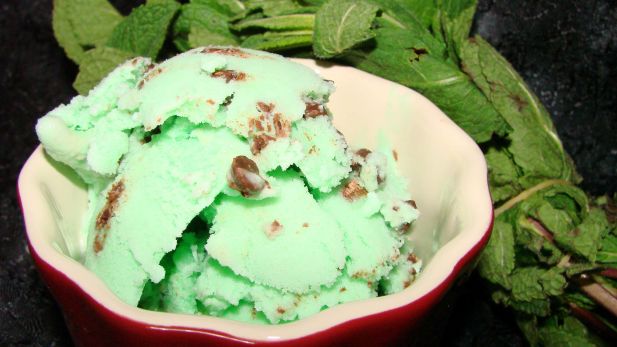
Determine the type of composition of matter for mint chocolate chip ice-cream.

a)

Element

b)

Compound

c)

Homogeneous Mixture

d)

Heterogeneous Mixture

12.

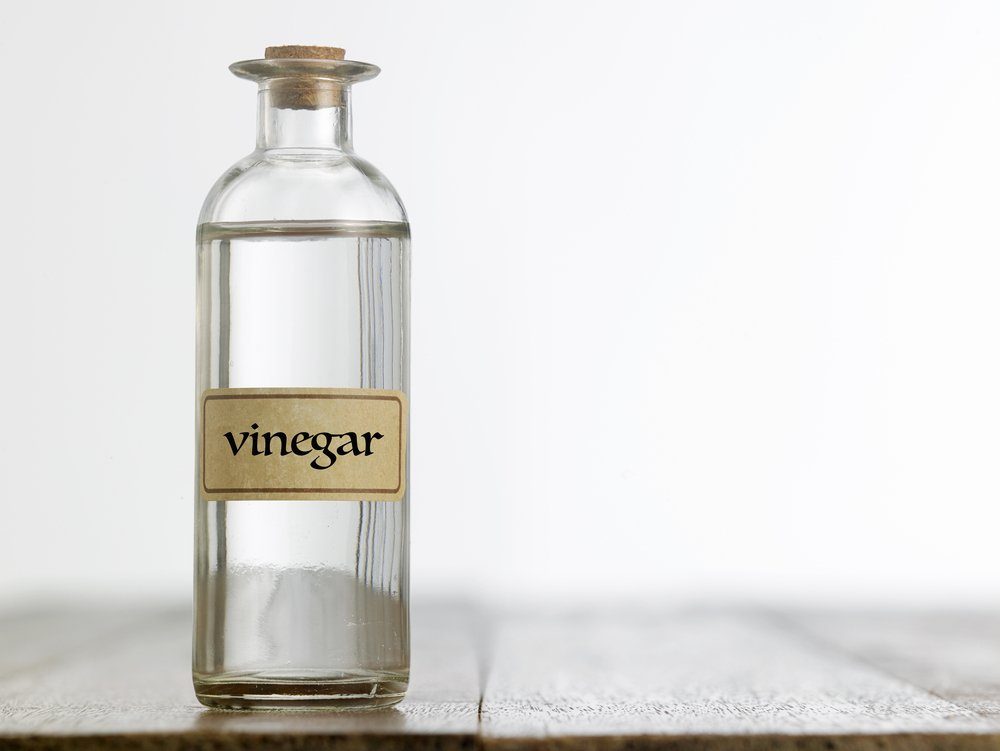
Determine the type of composition of matter for vinegar (i.e., acetic acid).

a)

Element

b)

Compound

c)

Homogeneous Mixture

d)

Heterogeneous Mixture

13.

Which characteristic of a substance is considered a chemical property?

a)

its boiling point

b)

its reactivity

c)

its density

d)

its conductivity

14.

Electrical conductivity is an example of what kind of property?

a)

Chemical

b)

Large

c)

Physical

d)

Boiling

15.
The state of matter having no definite shape or volume.
a)
solid
b)
liquid
c)
gas
16.
As a material is heated, it's particles....
a)
get smaller
b)
slow down
c)
get cooler
d)
move more quickly
17.
A measure of the average kinetic energy of the particles in a sample of matter.
a)
temperature
b)
meter
c)
second
18.
A gas that has a pressure of 2 atm and a volume of 10 L.  What would be the new volume if the pressure was changed to 1 atm?
a)
P1/T1 = P2/T2
b)
P1V1 = P2V2
c)
V1/n1 = V2/n2
d)
PV = nRT
19.
Boyle's law :  The pressure and volume of a gas show a _____ relationship. 
a)
No relationship 
b)
Direct 
c)
Inverse 
d)
Equal
20.
In order to convert to Kelvin, you add ______ to the Celsius measurement.
a)
372
b)
273
c)
237
d)
732
21.
If 200 mL of a gas at 27°C is cooled to -33°C at a constant pressure, the volume will be
a)
250 mL
b)
204 mL
c)
196 mL
d)
160 mL
22.
If a balloon is cooled what will happen to the volume?
a)
Volume will increase
b)
Volume will decrease
c)
Volume will not change
d)
Balloon freezes to death
23.

The central region of an atom where its neutrons and protons are is its

a)

nucleus

b)

core

c)

electron cloud

d)

centre

24.
In a correctly written symbol what would be located in the "A" position?
a)
number of neutrons
b)
atomic number
c)
number of electrons 
d)
mass number
25.

In a correctly written symbol what would be located in the "Z" position?

a)

number of neutrons

b)

atomic number

c)

number of electrons

d)

mass number

26.
Which of the following is the proper equation for determining the number of neutrons for a given isotope?
a)
mass # - atomic #
b)
atomic mass - protons
c)
protons + electrons
d)
mass # + protons
27.

 23592X\frac{235}{92}X  What is element X

a)

Nobium

b)

Uranium

28.
How many neutrons does the isotope of lithium have?
a)
8
b)
3
c)
4
d)
5
29.

The order of elements in the periodic table is based on

a)

the number of protons in the nucleus.

b)

the electric charge of the nucleus.

c)

the number of neutrons in the nucleus.

d)

atomic mass.

30.

Atoms of elements that are in the same group have the same number of

a)

protons.

b)

neutrons.

c)

valence electrons.

d)

protons and neutrons.

31.

Each column of the periodic table is

a)

an element.

b)

a group.

c)

an isotope.

d)

a period.

32.

Metals tend to be

a)

gases.

b)

good conductors of heat.

c)

dull.

d)

brittle.

33.
How many moles are in 4.5x1024 particles?
a)
0.747 particles
b)
0.747 mol
c)
2.71x1047 mol
d)
2.71x1047 particles
34.
What is the molar mass of Mg3N2?
a)
191.6 g/mol
b)
76.64 g/mol
c)
38.32 g/mol
d)
100.95 g/mol
35.
How many moles are there in 12.7g of CaF2?
a)
0.20 mol
b)
1,000.76 mol
c)
6.14 mol
d)
0.16 mol
36.
What is the oxidation number of Fe in FeO?
a)
+1
b)
-1
c)
+2
d)
-2
37.

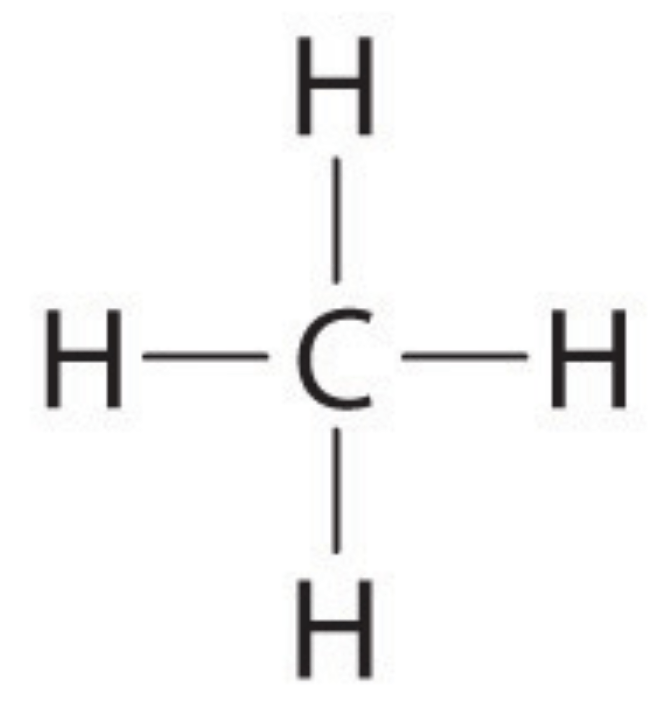
Classify the following molecule.

a)

polar

b)

nonpolar

38.

Classify the following molecule.

a)

polar

b)

nonpolar

39.
What is a cation? 
a)
a metal with a negative (-) charge
b)
a non-metal with a negative (-) charge 
c)
a metal with a positive (+) charge 
d)
a non-metal with a positive (+) charge
40.
What is a anion? 
a)
a metal with a negative (-) charge
b)
a non-metal with a negative (-) charge 
c)
a metal with a positive (+) charge 
d)
a non-metal with a positive (+) charge
41.
CO2
a)
Ionic
b)
Covalent
c)
Polyatomic Ion 
d)
Metallic 
42.
NaCl
a)
Ionic
b)
Covalent
c)
Metallic
d)
Polyatomic Ion 
43.

The formula of copper(II) oxide is

a)

CuO

b)

Cu2O

c)

CuO2

44.

The formula of iron(III) oxide is

a)

FeO

b)

FeO2

c)

Fe2O

d)

Fe2O3

45.

An atom of nitrogen (N) has _______ open bonding sites.

a)

5

b)

4

c)

3

d)

8

46.
How many Hydrogen are in 4H2O?
a)
6
b)
8
c)
2
d)
4
47.
Which of the following shows the correct way to balance the chemical equation?
Fe + O2 -> Fe2O3
a)
4Fe + 3O2 -> 2Fe2O3
b)
2 Fe + 3O2 -> Fe2O6
c)
4 Fe + O6 -> 2Fe2O3
d)
None of the options are correctly balanced.
48.
What does the Law of Conservation of Mass state?
a)
Matter cannot be gained or lost in a chemical reaction.
b)
Matter can only be lost in a chemical reaction.
c)
Matter can only be gained in a chemical reaction.
d)
Matter can be gained and lost in a chemical reaction. 
49.
Balance this equation-
__P4 + __O2 --> __P2O3
a)
it is already balanced
b)
2, 1, 3
c)
1, 2, 3
d)
1, 3, 2
50.
What is the correct name for C4H6?
a)
Carbon Hexahydride
b)
Pentacarbon Pentahydride
c)
Hexacarbon Tetrahydride
d)
Tetracarbon Hexahydride