wayground logo

Free Printable Worksheets

Font size

S
M
L
XL
Worksheets

Fall Semester Study Questions

Total questions: 142

Worksheet time: 3hrs 30mins

Name
Class
Date
1.
A substance with the same kind of atom throughout is a(an)...
a)
element
b)
molecule
c)
compound
d)
mixture
2.
What is the smallest unit of matter?
a)
atom
b)
element
c)
molecule
d)
compound
3.
A substance combined physically, but never chemically is a(an)...
a)
element
b)
molecule
c)
compound 
d)
mixture
4.

Identify this particle of matter.

a)

Molecule of an element

b)

Mixture

c)

Molecule of a compound

d)

Atom

5.

Describe this sample

a)

Pure element

b)

Pure compound

c)

Mixture of elements

d)

Mixture of compounds

6.
Describe this sample
a)
Pure compound
b)
Mixture of elements
c)
Mixture of compounds
d)
Mixture of elements and compounds
7.
Pure Compounds are made of identical...
a)
atoms
b)
elements 
c)
molecules
d)
mixtures
8.

Pure substances are formed and separated by...

a)

Chemical changes only

b)

Physical changes only

c)

Physical and Chemical changes

9.

Mixtures are be formed and separated by...

a)

Physical changes only

b)

Chemical changes only

c)

Physical and Chemical changes

10.

Describe this sample

a)

Pure compound

b)

Mixture of elements

c)

Mixture of compounds

d)

Mixture of elements and compounds

11.

Describe this sample

a)

Pure compound

b)

Mixture of elements

c)

Mixture of compounds

d)

Mixture of elements and compounds

12.

What is this?

a)

Element

b)

Compound

c)

Homogeneous Mixture

d)

Heterogeneous Mixture

13.

What is this?

a)

Element

b)

Compound

c)

Homogeneous Mixture

d)

Heterogeneous Mixture

14.
a)

Element

b)

Compound

c)

Homogeneous Mixture

d)

Heterogeneous MIxture

15.

What is it?

a)

Pure Substance

b)

Mixture

16.

What is it?

a)

Pure Substance

b)

Mixture

17.

What is it?

a)

Pure Substance

b)

Mixture

18.
a)

Pure Substance

b)

MIxture

19.

When there is one substance....

a)

Pure Substance

b)

Mixture

20.

When there is one type of atom

a)

Element

b)

Compound

c)

Homogeneous Mixture

d)

Heterogeneous Mixture

21.

A group of 2 or more items, that are not chemically combined

a)

Pure Substance

b)

Mixture

22.

A ______________ is made up of different kinds of atoms chemically combined.

a)

element

b)

compound

c)

mixture

d)

molecule

23.

Which of these is an element?

a)

Salt (NaCl)

b)

Water (H20)

c)

Oxygen (O)

d)

Carbon Dioxide (CO2)

24.

Which of these is a mixture?

a)

Laundry Detergent

b)

Salt (NaCl)

c)

Oxygen (O)

d)

Fluorine (Fl)

25.
What is the smallest unit of matter?
a)
atom
b)
element
c)
molecule
d)
compound
26.

Which of these is a compound?

a)

Aluminium (Al)

b)

Carbon Dioxide (CO2)

c)

Nitrogen (N)

d)

Sand

27.

What type of reaction involves the breaking down of a substance into simpler substances?

a)

Single Replacement Reaction

b)

Double Replacement Reaction

c)

Synthesis Reaction

d)

Decomposition Reaction

28.

What type of reaction involves 2 substances combining to form 1 new compound?

a)

Decomposition Reaction

b)

Single Replacement Reaction

c)

Double Replacement Reaction

d)

Synthesis Reaction

29.

What type of reaction involves one element replacing another element in a compound?

a)

Single Replacement Reaction

b)

Double Replacement Reaction

c)

Synthesis Reaction

d)

Decomposition Reaction

30.

What type of reaction involves ions from 2 compounds exchanging places to form 2 completely new compounds?

a)

Single Replacement Reaction

b)

Double Replacement Reaction

c)

Synthesis Reaction

d)

Decomposition Reaction

31.

Fog

a)

Solution

b)

Colloid

c)

Suspension

32.
The parts of a homogeneous mixture are   __________ throughout. 
a)
Same 
b)
Different 
c)
Neutral 
d)
Suspended 
33.
___________ is a combination of substances that can be physically separated. 
a)
Colloid 
b)
Mixture 
c)
Suspension 
d)
Compound 
34.
A mixture in which 2 liquids are mixed so evenly that it is not possible to see the separate particles 
a)
Solute 
b)
Solution
c)
Solvent 
d)
Suspension 
35.
This type of mixture has particles that settle. 
a)
Suspension
b)
Colloid 
c)
Emulsion
d)
Solution 
36.
This type of mixture looks gel like and has moderate sized particles suspended 
a)
Suspension 
b)
Solute 
c)
Colloid 
d)
Solvent 
37.
A pure substance can be either an element or a ______________. 
a)
single substance
b)
hot mess 
c)
Complex 
d)
compound 
38.
Are mixtures able to be separated?
a)
Yes
b)
No way, Jose 
39.

An example of an insoluble substance would be..

a)

cordial in water

b)

chocolate power in milk

c)

sugar in water

d)

oil in water

40.

A suspension is a mixture that has

a)

a solute and a solvent

b)

a sediment

c)

a cloudy appearance

d)

oil in it

41.

A feature of a colloid is that..

a)

they are cloudy

b)

they are transparent

c)

they are colourless

d)

they have a sediment

42.

Solutions has ______________ sized particles, colloids have _________________ sized particles, and suspensions have _________________________ sized particles.

a)

small, medium, large

b)

large, medium, small

c)

medium, small, large

d)

medium, large, small

43.

Soda

a)

Colloid

b)

Solution

c)

suspension

44.

Fog

a)

Solution

b)

Colloid

c)

Suspension

45.

Milk

a)

Colloid

b)

Solution

c)

Suspension

46.

Snow globe

a)

Colloid

b)

Solution

c)

Suspension

47.

Brass

a)

Homogenous

b)

Heterogeneous

48.

Mayonnaise

a)

Homogeneous

b)

Heterogeneous

49.

Italian dressing

a)

Homogeneous

b)

Heterogeneous

50.

The part of a solution that does the dissolving

a)

solute

b)

solvent

c)

solution

d)

solubility

51.

The part of the solution that is being dissolved

a)

solute

b)

solvent

c)

solution

d)

solubility

52.

What is it called when light passes through a colloid and scatters/spreads out?

a)

Tyndall Effect

b)

Fog Effect

c)

Timer Effect

d)

Substance Effect

53.

What makes a solution a STRONG electrolyte?

a)

A solution that contains a solute that fully ionizes in water.

b)

A solution that contains a solute that partially ionizes in water.

c)

A solution that contains a solute that doesn't ionize in water.

d)

A solution that is a solid at room temperature.

54.

Which of the following is NOT an example of a strong electrolyte?

a)

Strong Acids

b)

Strong Bases

c)

Soluble Ionic Compounds

d)

Covalent Compounds

55.

What is an electrolyte?

a)

A substance that dissolves in water and produces ions.

b)

A substance that dissolves in water but doesn't produce ions.

c)

A substance that doesn't dissolve in water.

d)

A substance that melts at room temperature.

56.

What is a nonelectrolyte?

a)

A substance that dissolves in water and produces ions.

b)

A substance that dissolves in water but doesn't produce ions.

c)

A substance that doesn't dissolve in water.

d)

A substance that vaporizes at room temperature.

57.

What makes a solution a WEAK electrolyte?

a)

When the solute completely ionizes in water.

b)

When the solute doesn't dissolve in water.

c)

When the solute partially ionizes in water.

d)

When the solute is not added to the water.

58.
What is a mixture?
a)
elements chemically combined
b)
a combination of different things
c)
it is found on the Periodic Table 
d)
it is made of chemical
59.
What does it mean if a mixture is heterogeneous?
a)
you can see the different parts
b)
cannot tell one part from another
c)
very well blended
d)
made of elements
60.
What does it mean if a mixture is homogeneous?
a)
you can see the different parts
b)
cannot tell one part from another
c)
chunks of particles
d)
made of elements
61.
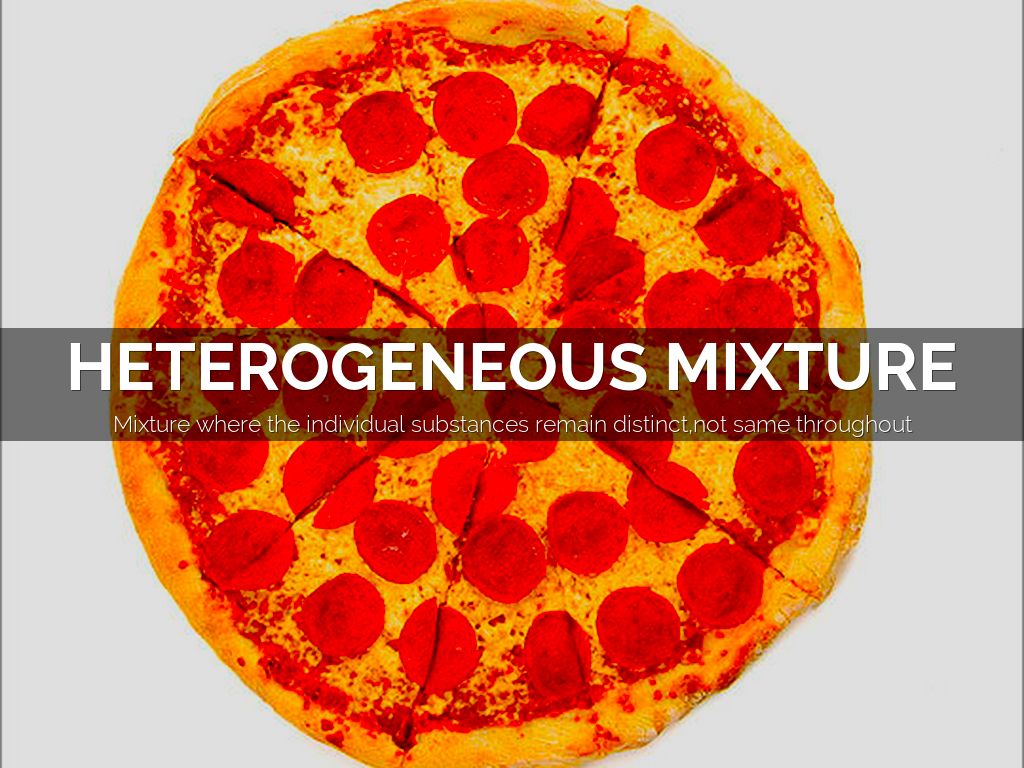
What type of mixture is this?
a)
heterogeneous 
b)
homogeneous
62.
What type of mixture is this?
a)
heterogeneous 
b)
homogeneous
63.
What type of mixture is this?
a)
heterogeneous 
b)
homogeneous
64.
Type of mixture that has the SAME COMPOSITION in every part.
a)
Homogenous
b)
Heterogeneous
65.
Type of mixture that DOESN'T HAVE the same composition in every part.
a)
Homogeneous
b)
Heterogeneous
66.
Salad is an example of a
a)
homogeneous mixture
b)
heterogeneous mixture
67.
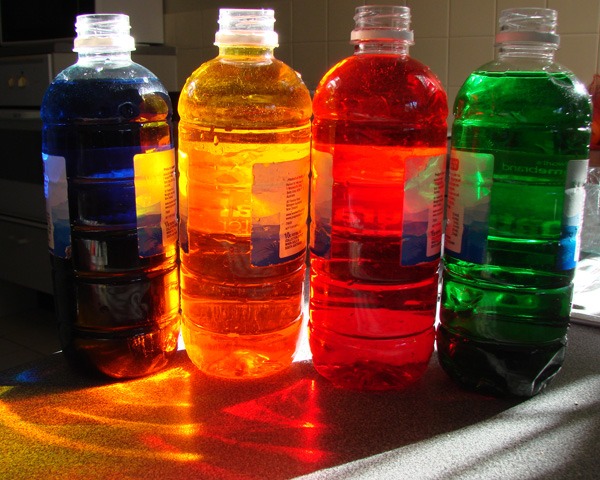
Coloured water is an example of a
a)
homogeneous mixture
b)
heterogeneous mixture
68.
Sand floating in water, but most of the sand is settled at the bottom this an example of which type of mixture?
a)
A solution
b)
A colloid
c)
A suspension
d)
A compound
69.
Which of the following are pure substances?
a)
solutions
b)
compounds
c)
homogeneous mixtures
d)
colloids
70.
Ionization energy is the...
a)
energy needed to remove the outermost electron.
b)
ability of an atom to attract electrons from another atom.
71.
Ionization energy is the...
a)
energy needed to remove the outermost electron.
b)
ability of an atom to attract electrons from another atom.
72.
Electronegativity is the...
a)
energy needed to remove the outermost electron.
b)
ability of an atom to attract electrons from another atom.
73.
Which element has the smaller atomic radius: potassium (K) or bromine (Br)?
a)
potassium (K)
b)
bromine (Br)
74.
Which element has the greatest ionization energy: Aluminum (Al)    or    Chlorine (Cl)?
a)
Aluminum (Al)
b)
Chlorine (Cl)
75.
Which element has the greatest electronegativity: Nitrogen (N) or Arsenic (As)?
a)
Nitrogen (N)
b)
Arsenic (As)
76.

Which has the smaller Electronegativity?

a)

Cl

b)

Al

77.

Which has the larger Electronegativity?

a)

Carbon

b)

Nitrogen

78.

Which of the following will have a larger radius than Gallium (Ga)?

a)

Ge

b)

Al

c)

Mg

d)

Sr

79.

Which of these has the smallest atomic radius?

a)

K

b)

Rb

c)

Fr

d)

Cs

80.
As you move down the periodic table atoms get bigger.  This is because ____________.
a)
The atoms have more mass.
b)
The atoms have more protons.
c)
The atoms have more energy levels
d)
The atoms have more nuetrons
81.

Which has the smaller ionization energy?

a)

P

b)

Mg

82.

Which has the highest ionization energy?

a)

Ca

b)

As

c)

Br

83.

Which would be the easiest to take an electron from?

a)

He

b)

F

c)

Ba

d)

Fr

84.

Which element would want to keep its electrons the most?

a)

O

b)

S

c)

Al

d)

Rb

85.

As you move to the right across the periodic table atoms tend to get smaller because, ______________.

a)

the atoms have more mass.

b)

the atoms have more neutrons

c)

the atoms have more protons.

d)

the atoms have more electrons.

86.
As you move down a group, atomic radius increases because - 
a)
you add more and more neutrons
b)
you add more and more protons
c)
you add more and more shells (energy levels)
d)
you add more atomic mass
87.
The atom with the largest atomic radius in Group 18 is - 
a)
Ar
b)
He
c)
Kr
d)
Rn
88.
As you move across the periodic table from left to right, the atomic radius decreases.  This is because - 
a)
the number of protons increases, so attraction to electrons increases
b)
the number of energy levels increases
c)
the number of electrons increases
d)
the atomic mass increases
89.
The atom with the largest atomic radius in Period 4 (row 4) is - 
a)
K
b)
Kr
c)
Fe
d)
Fe
90.
Francium (Fr) has the lowest ionization energy in Group 1 because - 
a)
it has the smallest number of valence electrons
b)
it has the greatest atomic mass
c)
it has the greatest number of protons, so it attracts its electrons the strongest
d)
its 1 valence electron is very far from the nucleus, so little energy is needed to remove it
91.
The element with the smallest ionization energy in Period 6 is - 
a)
Rn
b)
Cs
c)
Os
d)
Tm
92.
As you move across the periodic table atoms tend to get smaller because, ______________.
a)
the atoms have more mass.
b)
the atoms have less mass
c)
the atoms have more protons.
d)
the atoms have less electrons.
93.
The energy required to remove electrons is the definition of: 
a)
Electronegativity
b)
Atomic Number
c)
Atomic Radius
d)
Ionization
94.
What is the name of family I
a)
Alkaline Earth Metals
b)
Boron Family
c)
Alkali Metals
d)
Halogen Family
95.
Group B is known as the:
a)
Inner Metals
b)
Transition Metals
c)
Weirdos
d)
Changelings 
96.
Families all have similar 
a)
Names
b)
atomic numbers
c)
atomic masses
d)
properties
97.
Electronegativity is...
a)
the ability of an atom to attract/ accept electrons
b)
the ability of an atom to lose electrons
c)
the energy required to remove an electron from a specific atom
d)
how easy it is to make friends. 
98.
Which has the greater Electronegativity: 
N or C?
a)
C
b)
N
99.
Electronegativity __________ from left to right within a period and __________ from top to bottom within a group.
a)
decreases, increases 
b)
increases, increases
c)
increases, decreases 
d)
stays the same, increases
100.

What is a valence electron?

a)

an electron that is found in the outermost shell of an atom.

b)

an electron found in the innermost shell of an atom.

c)

an electron found in the middle shell.

101.

What is the number of valence electrons for Carbon (Group 14)?

a)

1

b)

2

c)

3

d)

4

102.

What is the number of valence electrons for Neon and the other Noble Gases?

a)

5

b)

6

c)

7

d)

8

103.

A covalent bond forms when atoms ___________ electrons.

a)

gain

b)

share

c)

increase

d)

transfer

104.
Which type of bond has a transfer of an electron from on atom to another?
a)
Polar Covalent 
b)
Non Polar Covalent
c)
Ionic
d)
Metallic
105.
Covalent compounds
a)
Share electrons
b)
transfer electrons
c)
contain a sea of electrons
d)
conduct electricity
106.
How many valence electrons in this structure?
a)
6
b)
5
c)
4
d)
7
107.

Which category of elements usually form negative ions?

a)

metals

b)

nonmetals

c)

metalloids

d)

noble gases

108.

Predict the bond between Mg and Cl

a)

covalent

b)

ionic

c)

metallic

d)

none of the above

109.
Which is the correct name for CaBr2?
a)
Calcium Bromine
b)
Bromine Calcium
c)
Calcium Bromide
d)
Carbon and Bromine
110.
Which of the following is ionic?
a)
NO2
b)
MgO
c)
CO
d)
CH4
111.

What will be the formula of the following chemical compound name?

Carbon Trichloride

a)

C3Cl

b)

CCl

c)

3CCl

d)

CCl3

112.

What charge would a potassium (K) ion have?

a)

+1

b)

-1

c)

+2

d)

-2

113.

A solid substance is soft, has a low melting point and is a poor conductor of electricity. The substance is most likely

a)

Ionic Compound

b)

network solid

c)

metallic solid

d)

covalent solid

114.
Chemical bonds form when atoms
a)
combined nuclei
b)
give up neutrons
c)
gain protons
d)
share or transfer electrons
115.
 A lone pair is defined as
a)
A pair of bonding electrons
b)
One non-bonding electron
c)
A pair of non-bonding electrons
d)
A pair of electrons on the central atom
116.

What do two atoms form when they are joined together?

a)

a nonmetal

b)

a metal

c)

a chemical bond

d)

an atom

117.
The bond between N & H.   Ionic or covalent?
a)
Ionic
b)
Covalent
118.

What is the correct Lewis Dot Structure for ammonia NH3

a)
b)
c)
d)
119.

In metallic bonds electrons are:

a)

shared

b)

move around the nuclei randomly

c)

transferred

120.

Which of the following would be held together by the metallic bond?

a)

Atoms of iron (Fe)

b)

Molecules of CH4

c)

Atoms of sulfur (S)

d)

Units of NaCl

121.
What elements generally make an ionic bond?
a)
metal and nonmetal
b)
2 nonmetals
c)
metal
d)
none of the above
122.
What elements generally make a covalent bond?
a)
metal and nonmetal
b)
2 nonmetals
c)
metal
d)
none of the above
123.
In chemical compounds, covalent bonds form when
a)
the electronegativity difference between two atoms is very large.
b)
electrons are completely transferred between two metals.
c)
pairs of electrons are shared between two nonmetal atoms.
d)
two nonmetal atoms are attracted to each other by opposite charges.
124.
Predict the bond that will form between Be and F.
a)
Ionic
b)
Covalent
125.
Using electronegativities, what type of bond is formed by S and Br.
a)
ionic
b)
polar covalent
c)
non-polar covalent
126.
Using electronegativities, what type of bond is formed by Co and F.
a)
ionic
b)
polar covalent
c)
non-polar covalent
127.
What atom matches this electron configuration?
1s22s22p63s2
a)
Neon
b)
Magnesium
c)
Aluminum
d)
Potassium
128.
How many electrons can the first energy level hold?
a)
1
b)
2
c)
8
d)
0
129.
There are 4 different types of subshells s,p,d,f
a)
true
b)
false
130.
What happens when an atom loses an electron?
a)
It becomes Negatively Charged
b)
It remains neutral because the proton also leaves.
c)
It becomes Positively Charged
d)
It stays the same.
131.
The number of _____ is most important in determining how an atoms will bond. 
a)
Neutrons
b)
Protons
c)
Valence Electrons
d)
Electron sin the innermost shell
132.
If an oxygen atom has 8 protons (+) and 10 electrons (-), what is it's charge?
a)
O10-
b)
O8+
c)
O2-
d)
O10+
133.
Soluble in Water
a)
Ionic
b)
Covalent
134.
High Melting & Boiling Points
a)
Ionic
b)
Covalent
135.
Relatively soft
a)
Ionic
b)
Covalent
136.
What is the name of CuCl2
a)
copper (II) chloride
b)
copper chloride
c)
copper monochloride
d)
copper (I) chloride
137.
Name the compound S2F8
a)
sulfur (II) fluoride
b)
disulfur octafluoride
c)
sulfur fluorine
d)
sulfur octafluoride
138.
What is the name of H2SO4?
a)
dihydrogen sulfur tetraoxide
b)
dihydrogen sulfate
c)
hydrosulfuric acid
d)
sulfuric acid
139.
If the polyatomic anion of an acid ends in "-ate", the suffix of the acid name should be...
a)
-ic
b)
-ous
c)
-ate
d)
-ide
140.
How would you say Ni3P2?
a)
nickel (II) phosphide
b)
nickel phosphide
c)
trinickel diphosphide
d)
nickel phosphorous
141.
What is the name for VF3?
a)
vanadium trifluoride
b)
vanadium fluorine
c)
vanadium (III) fluorine
d)
vanadium (III) fluoride
142.
What is the name for SrO?
a)
strontium monoxide
b)
strontium oxide
c)
strontium (II) oxide
d)
strontium oxygen (II)