
Font size
 Worksheets
6th Review Topic 12
Total questions: 57
Worksheet time: 31mins
Which object in space is a large, gaseous body at the center of the Solar System?


What are the characteristics of a planet? Check all that apply.
Orbits a star.
Large enough to have become rounded by its own gravity.
Is always the same size.
Has cleared the area of its orbit.
Asteroids __________________.
are small chunk of rocks or dust in space, generally small.
has enough gravity to be round, but has not cleared out the region of the solar system along its orbit.
orbit the sun, and have cleared out the region of the Solar System along its orbit.
are small, usually rocky bodies. Many can be found in an area between the orbits of Mars and Jupiter.

Check all that apply for the Sun
is a star
larger than a planet
is solid at the surface
made mostly of hydrogen

Check all that apply for the Earth.
is smaller than the sun
has a gaseous core
is a planet, made mostly of rock
can be solid or liquid at the surface
Between Mars and Jupiter is a region of the Solar System called the __________.
asteroid belt
Milky Way
Kuiper belt
Oort Cloud
When a meteoroid enters Earth's atmosphere, friction causes it to burn up and produce a streak of light called a ____________.
meteor
meteorite
comet
asteroid
Pluto, Eris, and Ceres are all classified as _______________.
meteors
meteorites
asteroids
dwarf planets
Planets that have no solid surface and are made of gases such as hydrogen and helium are called ____________.
gas giants
terrestrial planets
The sun is made up mostly of
helium.
core.
carbon.
hydrogen.
How many stars are in our Solar System?
Billions
1
5,000
8
Which of these planets is the farthest from the sun?
Mercury
Earth
Neptune
Jupiter
Which is the largest planet in our Solar System?
Saturn
Neptune
Earth
Jupiter
Which planet is sometimes called the "red planet"?
Jupiter
Mercury
Mars
Uranus
Which of these sets of planets are terrestrial planets?
Mercury, Saturn, Mars, Venus
Mars, Earth, Venus, Mercury
Earth, Mars, Neptune, Jupiter
Venus, Mercury, Earth, Uranus
Which planet is the hottest in the Solar System?
Earth
Mercury
Venus
Mars
Which planet is the sixth from the sun?
Venus
Jupiter
Uranus
Saturn
Which planet is Earth's sister planet?
Neptune
Mars
Venus
Saturn
Which planet is third from the sun?
Venus
Mars
Jupiter
Earth
Which planet tilts 90 degrees on its axis?
Jupiter
Earth
Saturn
Uranus
Select all that apply to the rocky or terrestrial planets.
They are small.
They are made of gas.
They have a rocky surface.
They are closer to the sun.
Which of the gas giants has the largest rings?
Jupiter
Saturn
Mercury
Neptune
This is the smallest planet in the solar system.
Mercury
Venus
Earth
Mars
Only planet known to have life.
Earth
Mars
Venus
Mercury
The largest known volcano in the Solar System, Olympus Mons, is located on this planet.
Venus
Mars
Mercury
Earth
This is the only planet in the Solar System with oceans of liquid water.
Mercury
Mars
Venus
Earth
This gas giant has a large storm in its atmosphere known as the Great Red Spot.
Jupiter
Saturn
Mars
Neptune
Two planets with no moons are
Mercury & Mars.
Mercury & Earth.
Venus & Mars.
Venus & Mercury.
Dwarf planets __________________.
are small chunk of rocks or dust in space, generally small.
has enough gravity to be round, but has not cleared out the region of the solar system along its orbit.
orbit the sun, and have cleared out the region of the Solar System along its orbit.
are small, usually rocky bodies. Many can be found in an area between the orbits of Mars and Jupiter.
Which planet has a very thick carbon dioxide atmosphere causing greenhouse effect and making the planet the hottest in the Solar System?
Venus
Mars
Mercury
Neptune
Which planet rotates from east to west?
Mars
Jupiter
Venus
Earth

At a school trip to the observatory, Alex looked through a telescope and observed an object that looked like a white ball with a long tail. What object did he see?
asteroid
comet
planet
moon
Which of the following processes creates the Sun's heat and light?
gravity
inertia
nuclear fusion
fast rotation

What is the theory that states the universe began with a huge explosion?
Apparent Magnitude Theory
Light Year Theory
Big Bang Theory
Galaxy Theory


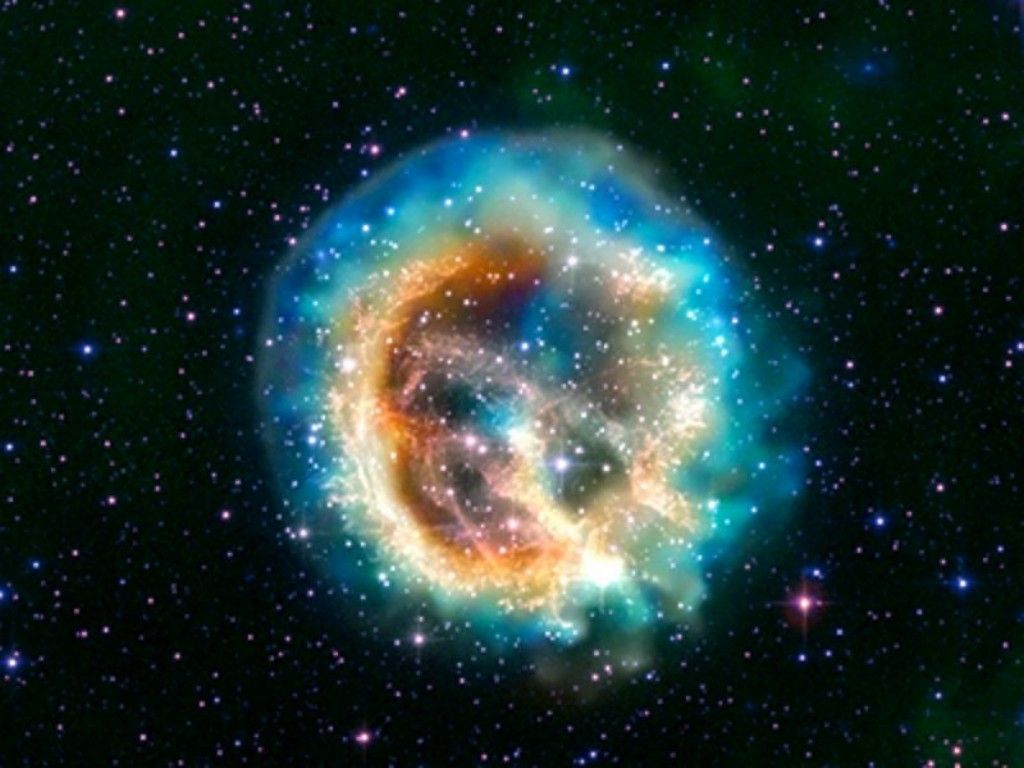
What is an object that is so massive and dense that even light can not escape its gravity?
low-mass star
black hole
pulsar
white dwarf


The Milky Way Galaxy is most likely
an irregular galaxy.
a spiral galaxy.
an elliptical galaxy.
a nebula.
The sun appears brighter than other stars because
it is the largest star in the universe.
it is the hottest star in the universe.
able to radiate more energy than other stars.
is closer to Earth than other stars.
What stage comes after a supergiant?
Protostar
Pulsar
Supernova
Black hole
What is a star's life cycle determined by?
the mass
the name
the shape
the color
What does a light year measure?
Temperature of stars
Distance
Brightness of stars
Color of stars
A supernova is the explosion of a dying
medium-mass star
high-mass star
protostar
low-mass star
A star is born when
a protostar begins to cool.
a nebula expands.
helium and oxygen combine.
nuclear fusion starts.
When did the Big Bang occur?
4.6 billion years ago
13.7 billion years ago
18 billion years ago
10 million years ago
Abdul works at the planetarium where he is responsible for creating a show on stars. His show is entitled "A Star is Born," and it will explain the forces that create a star.
Abdul is creating a timeline of a star’s life including its beginning, middle, and end. Abdul found a picture to include of the region around a star before its formation begins. What does it look like?
sun
protostar
nebula
nuclear fusion

