wayground logo

Free Printable Worksheets

NEW

Font size

S
M
L
XL
Worksheets

Midterm Review

Total questions: 80

Worksheet time: 1hrs 11mins

Name
Class
Date
1.
What is the median of the data set?
9, 7, 2, 4, 3, 5, 9, 6, 8, 0, 3, 8
a)
6
b)
7
c)
5.5
d)
9
2.
What is the mean of the data set:
8.9, 9.4, 8.6, 9.1
a)
8.5
b)
8.9
c)
9
d)
9.1
3.
Find the mode:
5, 0, 9, 9, 3, 0, 5, 5, 4
a)
9
b)
5
c)
3
d)
7
4.
What is the first thing you should do before finding the median or the mode?
a)
Start crossing numbers off
b)
Put numbers in order from least to greatest
c)
List the numbers how they are
d)
Look for repeats
5.

The students measured length during a science experiment, they got 12 cm. But the actual measurement was 14.25 cm. What was the percent error?

a)

15.79%

b)

18.75%

c)

2.25%

d)

18%

6.
How many significant figures: 216 m
a)
1
b)
2
c)
3
d)
0
7.
How many significant figures: 153.0 mL
a)
1
b)
2
c)
3
d)
4
8.
The rule of scientific notation is to write all exponents with a base of ____.
a)
50
b)
5
c)
100
d)
10
9.
Write in standard form: 
8 x 10⁴
a)
8,000
b)
80,000
c)
.00008
10.
Which number is correctly written in scientific notation?
a)
5.67 x 10⁵
b)
56.7 x 10³
c)
0.567 x 10⁶
11.
Metric unit to measure the length of an object or distance.
a)
Meter
b)
Liter
c)
Degree Celsius
d)
Second
12.
What are the three base units?
a)
mass,length,grams
b)
meters,length,grams
c)
measuring,liters,games
d)
meters,liters,grams
13.
What is the standard form?
1.245 x 10³
a)
0.001245
b)
12.45
c)
1245
14.
Which axis runs vertically?
a)
x
b)
Y
15.
Which axis runs horizontally?
a)
x
b)
y
16.

Define Length

a)

How long an object is

b)

How much space an object takes up

c)

How much matter an object has

d)

How compact an object is

17.

Define Mass

a)

How long an object is

b)

How much matter an object has

c)

How Compact an object is

d)

How much space an object takes up

18.

What is the curve at a liquid's surface called?

a)

Meniscus

b)

Graduated cylinder

c)

Displacement

d)

Depth

19.

Drake finds the volume of a graduated cylinder with a ring in it. The volume was 31 ml. If the volume before the penny was added was 23 ml. Then what is the volume displacement?

a)

11 ml

b)

8 ml

c)

14 ml

d)

9 ml

20.
Find the volume of the figure.
a)
63 cm³
b)
91 cm³
c)
819 cm³
d)
409.5 cm³
21.
Something that takes up space and has mass.
a)
volume
b)
matter
c)
mass
d)
density
22.
Liquid matter takes the shape of _______.
a)
a gas
b)
water
c)
a pet
d)
Its container
23.
A liquid is
a)
a substance that does not have a definite shape or volume
b)
a substance with a definite volume, but no definite shape
c)
a substance with a definite shape and volume
d)
a substance whose particles vibrate
24.
A gas is
a)
a substance that does not have a definite shape or volume
b)
a substance with a definite volume, but no definite shape
c)
a substance with a definite shape and volume
d)
a substance whose particles glide past one another
25.
The speed of the car was 45 mph.
a)
Qualitative
b)
Quantitative
c)
Both
d)
Neither
26.
The flower is red.
a)
Qualitative data
b)
Quantitative data
27.
Which of the following terms identifies the change from a liquid to gas?
a)
Vaporization
b)
Condensation
c)
Deposition
d)
Sublimation
28.
Phase change from a solid to a liquid.
a)
melting
b)
sublimation
c)
boiling
d)
condensation
29.
Phase change from a liquid to a gas that only happens at the surface.
a)
evaporation
b)
boiling
c)
sublimation
d)
melting
30.
Phase change from a gas to a liquid.
a)
condensation
b)
evaporation
c)
melting
d)
deposition
31.
What type of mixture is this?
a)
heterogeneous 
b)
homogeneous
32.
What type of mixture is this?
a)
heterogeneous 
b)
homogeneous
33.
At 32 degrees Fahrenheit, water _________.
a)
evaporates
b)
boils
c)
freezes
d)
remains the same
34.
Helium is a ____________.
a)
liquid
b)
solid
c)
gas
35.
Which of the following is not a compound?
a)
HCl
b)
Cl
c)
NaCl
d)
CO2
36.
What is a solvent?
a)
The substance that does the dissolving in a solution.
b)
The substance that is being dissolved in a solution.
c)
The mixing of different substances.
d)
The process in which neutral molecules lose or gain electrons
37.
salt water is a 
a)
compound
b)
element
c)
heterogeneous mixture
d)
solution
38.

Lucky Charms

a)

Heterogeneous

b)

Homogeneous

39.
Sugar water
a)
Heterogeneous
b)
Homogeneous
40.
Aluminum
a)
Element
b)
Compound
c)
Homogeneous Mixture
d)
Heterogeneous Mixture
41.
What is the atomic number of this element?
a)
4
b)
80
c)
79
d)
8
42.
What is the atomic number of this nucleus?
a)
1
b)
3
c)
4
d)
7
43.

Calculate the average atomic mass of silver.

a)

106.38649amu

b)

111.91896amu

c)

107.8677amu

d)

121

44.
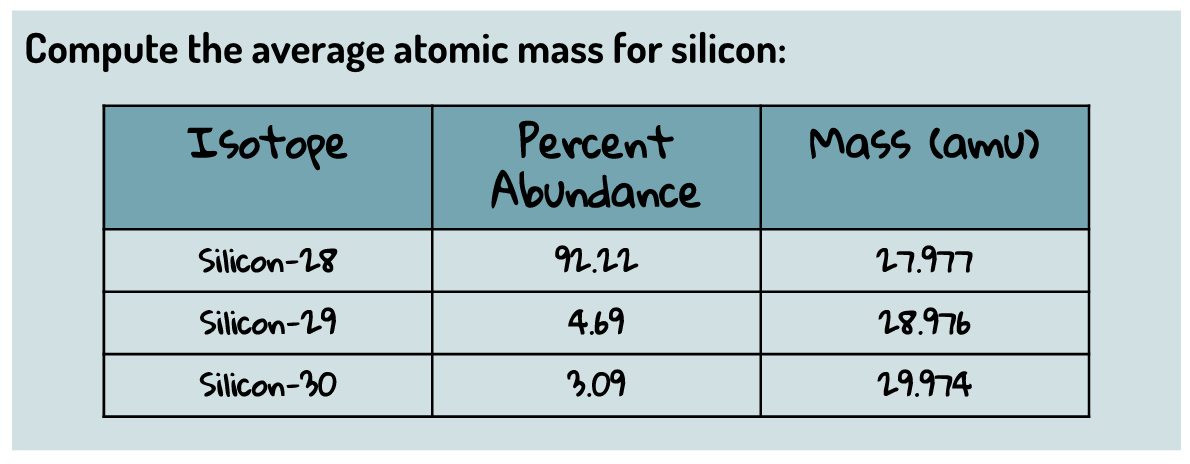
Compute the average atomic mass for silicon:
a)
27.977
b)
28.09
c)
28.976
d)
The average mass cannot be determined from provided information.
45.
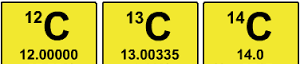
What do these isotopes of carbon all have in common?
a)
neutrons & mass number
b)
atomic number and neutrons
c)
atomic number and electrons
d)
protons, atomic number, and mass number
46.
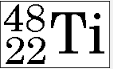
How many protons does this isotope of titanium have?
a)
48
b)
22
c)
26
d)
70
47.
In a correctly written symbol what would be located in the "A" position?
a)
number of neutrons
b)
atomic number
c)
number of electrons 
d)
mass number
48.
How many neutrons does the isotope below have?     89 36Kr
a)
53
b)
36
c)
89
d)
125
49.
If X is the symbol for an element, which of the following two symbols represent    isotopes of the same element?     I. 7735X  II. 7733X  III. 8137X  IV. 8135 X
a)
I and II
b)
III and IV
c)
I and IV
d)
I and III
50.

What is the smallest unit of matter? It is composed of protons and neutrons, held together in the nucleus, and electrons around the nucleus in different electron orbitals, which form an electron cloud.

a)

cell

b)

nucleus

c)

atom

d)

electron

51.

What is a subatomic particle without an electric charge, located in the nucleus of an atom?

a)

neutron

b)

proton

c)

electron

d)

valence electron

52.

What is a subatomic particle with a negative charge? It is found in the electron cloud surrounding the nucleus.

a)

neutron

b)

proton

c)

electron

d)

electron cloud

53.
What electrical charge does a proton have?
a)
+1
b)
0
c)
-1
d)
+2
54.

The Atomic mass of Fe

a)

55.845

b)

56

c)

55

d)

56.845

55.

The atomic mass of K

a)

38

b)

39

c)

38.098

d)

39.098

56.

The mass number of B

a)

9

b)

10

c)

11

d)

12

57.

The Atomic mass of Cu

a)

36.546

b)

53.546

c)

63.546

d)

56.546

58.
An element's identity is determined by the number of
a)
electrons.
b)
protons.
c)
neutrons.
d)
valence.
59.
How many valence electrons in this structure?
a)
6
b)
5
c)
4
d)
7
60.
What element is represented in this Bohr Model? 
a)
Carbon
b)
Hydrogen
c)
Aluminum
d)
Lithium
61.
How many valence electrons?
a)
2
b)
3
c)
5
d)
10
62.

Is this the correct Lewis Dot Structure for Boron?

a)

Yes

b)

No, missing electrons

c)

No, too many electrons

d)

No, dots are in wrong place.

63.

Is this correct way to draw the Lewis Dot Structure for Carbon?

a)

Yes

b)

No, too many electrons

c)

No, not enough electrons

d)

No, dots are in wrong places

64.
An electron occupies the lowest energy orbital that can receive it.
a)
Hund’s rule
b)
Pauli exclusion principle
c)
Bohr model of the atom
d)
Aufbau principle
65.
All orbitals of equal energy are occupied by one electron before any single orbital is occupied by a second electron.
a)
Aufbau principle
b)
Pauli exclusion principle
c)
Hund’s rule
d)
Core Notation
66.
Which guideline, Hund’s rule or the Pauli exclusion principle, is violated in the following orbital diagrams?
a)
Hund's
b)
Aufbau's
c)
Pauli's Exclusive
67.
Which element is pictured?
a)
neon
b)
fluorine
c)
magnesium
d)
argon
68.
What is incorrect about this orbital diagram?
a)
Both arrows in the 2p box should be pointing up
b)
There is nothing incorrect with this diagram
c)
In the 2p box there should only be 1 electron in the first 2p box and one in the 2nd 2p box
d)
All the arrows should be pointing up.
69.

What element has this electron configuration?

a)

hydrogen

b)

helium

c)

lithium

d)

beryllium

70.

What element has this orbital notation?

a)

lithium

b)

beryllium

c)

boron

d)

carbon

71.

What element has this electron configuration?

a)

helium

b)

lithium

c)

beryllium

d)

boron

72.

What element has this electron configuration?

a)

boron

b)

carbon

c)

nitrogen

d)

oxygen

73.

Which element is represented by this orbital notation?

a)

neon

b)

sodium

c)

magnesium

d)

aluminum

74.

Which of the following is the electron configuration for silicon?

a)
b)
c)
d)
75.
Which of the following is the atomic number of an alkali metal?
a)
31
b)
20
c)
18
d)
19
76.
Which properties are characteristic of the Group 1 metals?
a)
high reactivity and the formation of unstable compounds
b)
low reactivity and the formation of unstable compounds
c)
high reactivity and the formation of stable compounds
d)
low reactivity and the formation of stable compounds
77.
What group on the Periodic Table contains the elements of the alkaline earth family?
a)
1
b)
2
c)
17
d)
18
78.
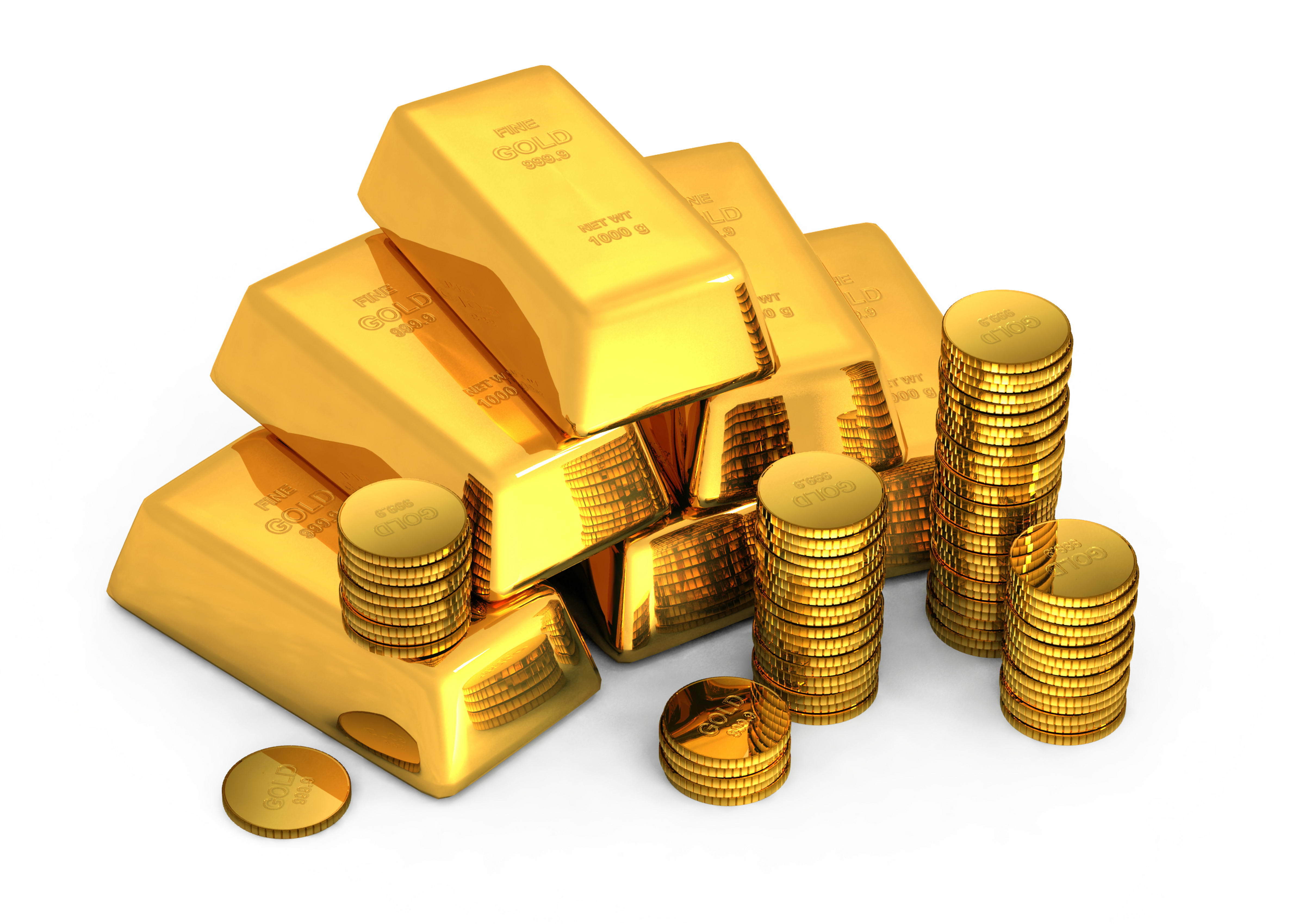
Gold (Au)
a)
Transition Metal
b)
Alkali Metal
c)
Alkaline Earth Metal
d)
Heavy Metal
79.
Argon (Ar)
a)
alkali metal
b)
alkaline earth metal
c)
halogen
d)
noble gas
80.
Which of the following is the most reactive group of non-metals? 
a)
Alkali
b)
Alkali Earth
c)
Halogen
d)
Noble Gas