wayground logo

Free Printable Worksheets

Font size

S
M
L
XL
Worksheets

water

Total questions: 55

Worksheet time: 22mins
Name
Class
Date
1.
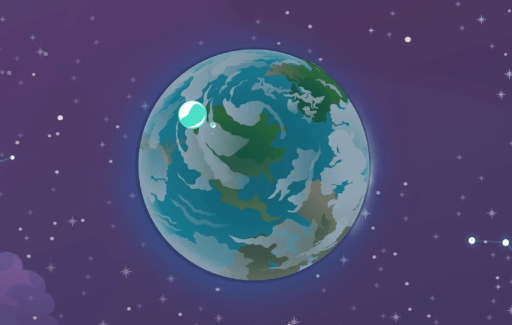
Of the three blue dots in the image, the biggest one represents _____
a)
all of the water on our planet
b)
all of the salt water on our planet
c)
all of the liquid fresh water on our planet
d)
all of the surface freshwater that is accessible
2.

Of the three blue dots in the image, the medium-sized dot represents _____

a)

all of the water on our planet

b)

all of the salt water on our planet

c)

all of the liquid fresh water on our planet

d)

all of the surface freshwater that is accessible

3.

Of the three blue dots in the image, the teeny-tiny dot represents _____

a)

all of the water on our planet

b)

all of the salt water on our planet

c)

all of the liquid fresh water on our planet

d)

all freshwater that is accessible

4.

Our body contains (a)   percent of water (dont include percentage symbol)

5.

Our blood contains __________ percent of water in our body

a)

98%

b)

99%

c)

91%

d)

50%

6.

What is the gaseous state of water

a)

Steam/water vapor

b)

liquid water

c)

ice

d)

none of the above

7.
Which of the following is a characteristic of freshwater?
a)
It can be safe for humans to drink
b)
It contains salt
c)
Oceans are made out of it
d)
Things float easier
8.

Oceans are made of:

a)

Saltwater

b)

Freshwater

c)

Both

d)

Glaciers

9.
What is the chemical formula for water?
a)
2HO
b)
H2O
c)
HO2
d)
H2O2
10.

Water pollution and waste plays a big factor in water shortage.

a)

True

b)

False

11.
What percent of Earth is covered by water and ice?
a)
85%
b)
90%
c)
75%
d)
97%
12.
The water cycle has...
a)
a beginning and an end. 
b)
no beginning and no end. 
c)
only a beginning. 
d)
only an end. 
13.
What is condensation?
a)
the change of water from a gas to a liquid. 
b)
the change of water from a liquid to a gas. 
c)
the change of water from a solid to a gas. 
d)
the change of water from gas to a solid. 
14.
What are the three states of water found on Earth?
a)
solid, liquid & gas
b)
oceans, lakes & streams
c)
evaporation, transpiration
d)
rain, sleet & hail
15.
Evaporation occurs when water changes into ________.
a)
transpiration
b)
snow
c)
solid
d)
vapor
16.
What percent of Earth's water is the oceans?
a)
70%
b)
85%
c)
90%
d)
97%
17.
Which of these is a method for conserving fresh water?
a)
Taking long showers and baths
b)
Taking short showers and baths
c)
Leaving the water running while brushing your teeth
d)
Washing your car with a running hose
18.

What per cent of the world's water is fresh water?

a)

1%

b)

0.98%

c)

5%

d)

10%

19.

What causes floods?

a)

Too much rain

b)

no rain

c)

no proper rain

d)

None of the above

20.
The change of water from a liquid to a gas.
a)
evaporation
b)
precipitation
c)
condensation
d)
transpiration
21.

what are the effects of transpiration

a)

effects of evaporation

b)

deforestration

c)

condensation

d)

None of the above

22.
Roughly 2% of the earth's freshwater is?
a)
frozen
b)
water vapor
c)
groundwater
d)
polluted water
23.
What is the main reason why water is not desalinated?
a)
don't know how
b)
too expensive
c)
difficult to transport
d)
inaccessible
24.
Why is water the most important substance on the planet?
a)
It Dilutes
b)
Drives Climate
c)
Sustains Life
d)
It's Pretty
25.
Water in lakes and rivers that does not contain salt-
a)
recycled water
b)
new water
c)
salt water
d)
fresh water
26.
When water vapor s cooled and forms droplets-
a)
Condensation
b)
Evaportation
c)
Transpiration
d)
Run-off
27.
After condensation, the droplets of water in the clouds fall to the earth in different forms
a)
precipitation 
b)
condensation
c)
evaporation 
d)
ground water
28.
Forms of precipitation are-
a)
only sleet and snow
b)
rain, sleet, hail, and snow
c)
only dew and rain 
d)
only snow and rain
29.
The changes to water when it cycles the earth is called
a)
the moon cycle
b)
the sun cycle
c)
the water cycle
d)
the wind cycle
30.
When water is heated in the ocean by the sun and turns into water vapor
a)
condensation
b)
evaporation
c)
transpiration
d)
runoff
31.

The formation of a cloud is a part of the

a)

Carbon Cycle

b)

Nitrogen Cycle

c)

Water Cycle

d)

Photosynthesis

32.

What starts the process of the formation of clouds?

a)

sun

b)

moon

c)

rain

d)

dust

33.

Millions of tiny ___________________ join together to form a cloud.

a)

waves

b)

water droplets

c)

gases

d)

bubbles

34.

What are clouds made up of?

a)

water droplets and dust

b)

gas

c)

air

d)

soil

35.

Choose The options

What are the steps involved in water cycle (could be one or many)

a)

Evaporation

b)

Condensation

c)

respiration

d)

none of the above

36.
The most common form of precipitation in the summer is...
a)
Rain
b)
Snow
c)
Sleet
d)
Hail
37.
Letter B is?
a)
evaporation
b)
transpiration
c)
condensation
d)
accumulation
38.
Letter C is?
a)
precipitation
b)
transpiration
c)
condensation
d)
accumulation
39.
Letter F is?
a)
precipitation
b)
accumulation
c)
condensation
d)
run off
40.

What is water needed for???

a)

To wash cloths

b)

To brush teeth

c)

To clean our surroundings

d)

All of the above

41.

When a dry piece of land is submerged in water, this is called ______.

a)

hurricane

b)

tsunami

c)

flood

d)

water cycle

42.

Floods are caused by ______ rains

a)

hard

b)

heavy

c)

harm

d)

cloudy

43.

Floods are caused by heavy rains and river ______.

a)

lakes

b)

bridges

c)

flows

d)

overflows

44.

Floods are caused by heavy rains, river overflow, tsunami, hurricanes and ice ______.

a)

melts

b)

breaks

c)

falls

d)

slides

45.

Floods are caused by heavy rains, river overflow, tsunami, hurricanes, ice melts, breaking of ________.

a)

rivers

b)

lakes

c)

dams

d)

seas

46.

What is a drought?

a)

excess flow of water flow over land

b)

An abnormally low precipitation in a place over time.

c)

Continuous rainfall

d)

Falling of water droplets from the sky

47.

Which of the following are man-made causes of drought?

a)

Less precipitation (rainfall, snowfall) than expected

b)

Dam building

c)

Agriculture (Irrigation)

d)

Deforestation

48.

The main natural cause of Drought is

a)

Deforestation

b)

Building dams

c)

Less precipitation than expected

d)

Excessive use of water by people

49.

The causes of drought can either be natural or man-made?

a)

True

b)

False

50.

Which answers are correct... drought can cause ....

a)

Poor soil quality

b)

More wildfires

c)

Higher water levels

d)

Lower water levels

51.

How do droughts impact farmers? Choose the correct answers.

a)

Crops may die

b)

Farmers don't lose money

c)

Farmers spend money on irrigation or wells

d)

Farmers may lose cattle

52.

Planting of more trees will help in-

a)

Reducing the ground water level

b)

Setting up more factories

c)

Deforestation

d)

Increasing the rainfall

53.

Setting up of factories cause a _______ in the level of underground water.

a)

Decrease

b)

Increase

c)

Both

d)

None

54.

Factors causing shortage of water are-

a)

Population

b)

Deforestation

c)

Setting up of factories

d)

All

55.

How can we save water?

a)

By washing one cloth at a time.

b)

Leaving the taps open.

c)

Rainwater Harvesting

d)

Washing car using pipes.