Wayground logo

Free Printable Worksheets

Font size

S
M
L
XL
Worksheets

Comprehensive Final Exam 2021 Semester 1

Total questions: 83

Worksheet time: 1hrs 23mins

Name
Class
Date
1.
succession that occurs in an area with no soil
a)
ecological succession 
b)
primary succession 
c)
secondary succession
d)
pioneer speciles
2.
succession that occurs in an area where soil is already present
a)
ecological succession 
b)
primary succession 
c)
secondary succession
d)
pioneer speciles
3.
reaches a climax community quicker because soil is already present
a)
primary succession 
b)
secondary succession
c)
both types of succession
4.
The picture shows what type of succession?
a)
primary
b)
secondary
c)
tertiary
d)
quadanary
5.
succession that occurs in an area with no soil
a)
ecological succession 
b)
primary succession 
c)
secondary succession
d)
pioneer speciles
6.
What animal is on the top of the food chain? 
*Remember Humans are on the top of all food chains because we do not get hunted. 
a)
Grass
b)
Grasshopper
c)
Mouse
d)
Owl
7.
Who is the producer in this food chain? 
a)
Grass
b)
Grasshopper
c)
Mouse
d)
Ow
8.
Who does the grasshopper get energy from? 
a)
Grass
b)
Grasshopper
c)
Mouse
d)
Ow
9.
Use the diagram answer the question.
What is a fitting description for this diagram?
a)
A Food Chain
b)
An Ecosystem
c)
A Food Web
d)
Biotic and Abiotic Factors
10.
Use the diagram to answer the question.
The Mayfly is a food source for which 3 organisms?
a)
Frog, Dragon Fly and snake
b)
Frog, trout and dragon fly
c)
Frog, salamander and trout
d)
Frog and phytoplankton
11.

Click on the image to make it larger-- Choose all that apply: The hawk gets energy from...

a)

mouse

b)

rabbit

c)

wildflowers

d)

snake

12.
Limiting factors are sometimes helpful because they can keep the population from getting too large.
a)
True
b)
False
13.
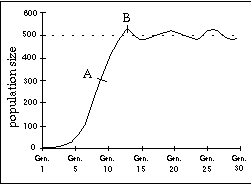
What is the carrying capacity of the following graph?
a)
1000
b)
8000
c)
800
d)
600
14.
What is the carrying capacity of the graph?
a)
around 500
b)
more than 500
c)
less than 500
d)
around 600
15.
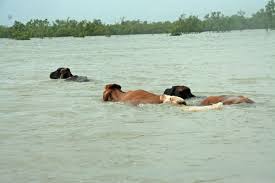
Excessive amounts of rain caused a flood in the southwest United States that resulted in substantial amounts of deaths in the rabbit population? This situation is an example of a density _____________ limiting factor.
a)
density-independent
b)
density-dependent
c)
density- too high
d)
density- too low
16.

Natural disasters can be considered limiting factors.

a)

true: density independent limiting factors

b)

false; natural disasters are not limiting factors

c)

true: density dependent limiting factors

d)

false: because Mrs. Schaffer said

17.
Limiting factors which impact the size of a population no matter how large that population is.
a)
Density Independent Limiting Factors
b)
Density Dependent Limiting Factors
c)
Carrying Capacity
d)
Exponential Growth
18.
An environmental factor such as storms and extreme heat or cold that decrease a population are considered to be. 
a)
density- dependent factor
b)
population density
c)
dispersion
d)
density- independent factor
19.

A lion and a cheetah attempt to occupy the same niche. The more aggressive lion survives; the cheetah does not.

a)

Density-Dependent: Competition

b)

Density-Independent: Competition

c)

Density-Dependent: Predator-Prey

d)

Density-Independent: Predator-Prey

20.

Due to severe overcrowding in an Asian village, many children do not survive to reach adulthood.

a)

Density-Dependent: Disease

b)

Density-Independent: Disease

21.

A severe flood in the Red River Valley causes a decline in the deer population.

a)

Density-Dependent

b)

Density-Independent

22.
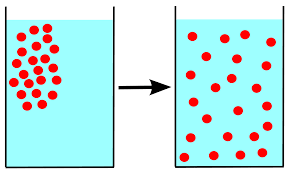
The picture below is an example of _________________.
a)
osmosis
b)
isotonic
c)
diffusion
d)
active transport
23.
Osmosis is the movement of _____ across a membrane.
a)
food
b)
energy
c)
oxygen
d)
water
24.
During osmosis
a)
water moves from high to low concentration
b)
large or oddly shaped molecules move across a cell membrane
c)
water moves when energy is used
d)
proteins are built
25.
Permeable means
a)
things can pass through
b)
the concentration levels are different
c)
it is permanent
d)
things are stuck
26.
What type of solution is this cell in?
a)
Isotonic
b)
Hypertonic
c)
Hypotonic
d)
diffused
27.
What type of solution allows water to enter the plant cell?
a)
hypotonic solution
b)
hypertonic solution
c)
isotonic solution
d)
active transport
28.

Which Type of solution is the middle cell placed in?

a)

Hypertonic

b)

Hypotonic

c)

Isotonic

d)

Robotonic

29.
In this picture, which way will the water move?
a)
Water will move into the cell
b)
Water will move out of the cell
c)
Water will move in and out of the cell
d)
Water will not move
30.
Which cell is in a hypotonic environment?
a)
A
b)
B
c)
C
31.
The cells seem to be swelling and about to burst what type of solution are they most likely in?
a)
Hypertonic
b)
Isotonic
c)
Hypotonic
32.
The cells seem to be shriveled and dehydrated what type of solution are they most likely in?
a)
Hypertonic
b)
Isotonic
c)
Hypotonic
33.
The cells seem to be of normal size in what type of solution are the cells most likely in?
a)
Hypertonic
b)
Isotonic
c)
Hypotonic
34.

What is the bottom layer of the an energy pyramid?

a)

producer

b)

tertiary consumer

c)

Secondary consumer

d)

primary consumer

35.

What amount of percentage does the energy decrease as it goes up the pyramid?

a)

100%

b)

1000%

c)

10%

d)

1%

36.
The diagram represents a model of a food pyramid.  Which statement best describes what happens in this food pyramid?
a)
More organisms die at higher levels than at lower levels, resulting in less mass at higher levels.
b)
Energy is lost to the environment at each level, so less mass can be supported at each higher level.
c)
When organisms die at higher levels, their remains sink to lower levels, increasing the mass of lower levels.
d)
Organisms decay at each level, and thus less mass can be supported at higher levels
37.
An experiment is being done to determine how light affects the growth of small zinnia plants. One plant is placed in full sunlight, the second in a shaded area, the third in an unlit closet. What is the independent variable in the experiment?
a)
the amount of light
b)
the type of plants
c)
the type of soil
d)
the length of the experiment
38.
This variable in an experiment is the one being deliberately changed by the scientist. 
a)
dependent variable
b)
independent variable
c)
data
d)
control group
39.

If I drink a little water then I will have to go to the bathroom.


What is the red part? (¿Qué es la parte roja?)

a)

Independent variable

b)

dependent variable

40.

If I drink a lot of water then I will have to go to the bathroom.

a)

independent variable

b)

dependent variable

41.
Steve wanted to see if the type of fertilizer made sunflowers grow larger. What is the independent variable 
a)
Type of fertilizer
b)
Size of sunflower
c)
type of sun flower
42.
The part of the experiment that remains the same for the control and experimental group.
a)
constants
b)
control
c)
independent
d)
dependent
43.

Which type of graph should be used to show CHANGE OVER TIME? For example - Daily Temperature

a)

Line graph

b)

Bar graph

44.

Which type of graph should be used to COMPARE? For example - Favorite Pizza

a)

Line graph

b)

Bar graph

45.
Find total magnification for:
Eyepiece = 20X 
Objective lens = 20X
 
a)
20x
b)
40x
c)
200x
d)
400x
46.
What is the total magnification of a microscope with two lenses when one lens has a magnification of 10x, and the other lens has a magnification of 30x?
a)
15x
b)
30x
c)
40x
d)
300x
47.
The picture below is an example of _________________.
a)
osmosis
b)
isotonic
c)
diffusion
d)
active transport
48.
The picture  is an example of _________________.
a)
isotonic
b)
diffusion
c)
osmosis
d)
active transport
49.

Osmosis is the movement of

a)

water from high concentration to low concentration

b)

water from low concentration to high concentration

c)

sugar from high concentration to low concentration

d)

sugar from low concentration to high concentration

50.

What is DIFFUSION?

a)
b)
c)
d)
51.
A person would never have pure water put into their veins in a hospital because their cells would...
a)
Shrink/Dehydrate
b)
Expand
52.
A ribosome can be best described as...
a)
a protein factory
b)
a trash collector
c)
the powerhouse of the cell
d)
the brain of the cell
53.
How does RNA differ from DNA?
a)
RNA contains uracil and deoxyribose
b)
RNA contains ribose and thymine
c)
RNA contains uracil and ribose
d)
RNA contains adenine and ribose
54.
How would the DNA sequence GCTATA be transcribed to mRNA?
a)
GCUAUA
b)
CGATAT
c)
CGAUAU
d)
GCUTUT
55.

TRANSCRIBE this DNA sequence: TACGTTACT

a)

AUGCAAUGA

b)

ATGCAATGA

c)

AUGGATUGA

d)

TACGTTACT

56.
Which of the following is the template for the production of RNA within a cell?
a)
DNA
b)
protein
c)
ATO
d)
carbohydrate
57.
Where does transcription take place?
a)
nucleus
b)
cytoplasm
c)
ribosome
58.
Choose the nucleotide sequence of the RNA strand that would be complementary to the following strand: 
GTAGTCA
a)
UATUAGA
b)
ACGACTG
c)
CAUCAGU
d)
CATCAGT
59.
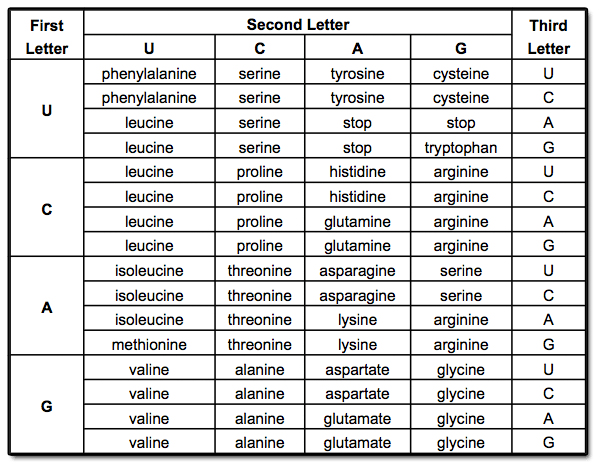
What amino acid is represented by the codon UUA?
a)
Phenylalanine
b)
Tyrosine
c)
Leucine
d)
Stop codon
60.
Which is the mRNA molecule that would be transcribed from this DNA template:
TGGCAAGTACGT
a)
ACCGTTCATGCA
b)
UGGCAAGUACGU
c)
UCCGUUCUUGCU
d)
ACCGUUCAUGCA
61.
The process of making proteins on the ribosome based on instructions from messenger RNA is called
a)
transcription
b)
transformation
c)
translation
d)
molecular biology
62.
In a strand of DNA, if it contains 20% of Thymine, then how much Guanine would be present?
a)
30%
b)
20%
c)
80%
d)
10%
63.
Which sequence of DNA bases would pair with this partial strand
ATG TGA CAG
a)
ATG TGA CAG
b)
TAC ACT GTC
c)
GTA AGT GAC
d)
CAT TCA CTG
64.
I am single stranded.
a)
DNA
b)
RNA
c)
Both DNA and RNA
65.
I am single stranded.
a)
DNA
b)
RNA
c)
Both DNA and RNA
66.
How does RNA differ from DNA?
a)
RNA contains uracil and deoxyribose
b)
RNA contains ribose and thymine
c)
RNA contains uracil and ribose
d)
RNA contains adenine and ribose
67.
Which sequence of DNA bases would pair with this partial strand
ATG TGA CAG
a)
ATG TGA CAG
b)
TAC ACT GTC
c)
GTA AGT GAC
d)
CAT TCA CTG
68.
What is occurring in this picture?
a)
Translation
b)
Replication
c)
Translocation
d)
Transcription
69.
One difference between DNA and RNA is that....
a)
Only RNA has the base Uracil
b)
only RNA contains the base Thymine
c)
only RNA contains the base Cytocine
d)
only RNA contained the base Guanine
70.
True or false:  RNA is double-stranded.
a)
true
b)
false
c)
it depends on the type
71.
Which of the following best describes a DNA molecule?
a)
double helix
b)
contains ribose
c)
made of amino acids
d)
contains Uracil
72.
The central dogma of biology states that information flows in one direction from 
a)
nuclei to RNA to cytoplasm
b)
ribosomes to proteins to DNA
c)
genes to nuclei to ribosomes
d)
DNA to RNA to proteins
73.
What are the backbones (sides) of the DNA structure made up of?
a)
repeating phosphates and sugars
b)
nitrogen bases
c)
nucleotides
d)
adenine and thymine
74.

mRNA is read into amino acids during what process?

a)

transcription

b)

transfer

c)

translation

d)

transition

75.
Which RNA bases would pair with TACGAA in transcription? 
a)
AUGCUU
b)
ATGCTT
c)
GCATCC
d)
GCAUCC
76.
What is occurring in this picture?
a)
Translation
b)
Replication
c)
Translocation
d)
Transcription
77.
Which process is used to make mRNA from the DNA in the nucleus?
a)
transcription
b)
translation
c)
replication 
78.
A triplet of mRNA is called a
a)
codon
b)
anticodon
c)
amino acid
d)
peptide bond
79.
What does this picture represent?
a)
amino acid
b)
base pairing
c)
nucleotide
d)
the DNA molecule
80.

What is the correct order to make a protein?

a)

Protein, DNA, RNA

b)

RNA, DNA, Protein

c)

DNA, RNA, Protein

d)

Protein, RNA, DNA

81.
This image shows that DNA Replication is _______.
a)
Conservative
b)
Semiconservative
c)
Dispersive
d)
Spontaneous
82.
Name this structure
a)
double helix
b)
nucelotide
c)
twisted ladder
d)
hydrogen bond
83.
What type of RNA carries the DNA message out of the nucleus to the ribosomes?
a)
mRNA
b)
tRNA
c)
RNA
d)
DNA