wayground logo

Free Printable Worksheets

Font size

S
M
L
XL
Worksheets

Chemistry Final Review

Total questions: 175

Worksheet time: 5hrs 32mins

Name
Class
Date
1.

LiBr is called

a)

lithium bromine

b)

lithium (I) bromine

c)

lithium bromide

d)

lithuim (I) bromide

2.

Which of these combinations is an ionic compound?

a)

Metal and Metal

b)

Nonmetal and Nonmetal

c)

Metal and Nonmetal

d)

Cation and Cation

3.
What is the name of N2O3
a)
Nitrogen trioxide
b)
Dinitrogen oxide
c)
Dinitrogen trioxide
d)
Nitrogen oxide
4.
What is the chemical formula for Tetrasulfur pentoxide?
a)
SO
b)
S4O
c)
S4O5
d)
S5O4
5.

A(an) __________ bond exists between two nonmetals.

a)

ionic

b)

covalent

6.

What is a valence electron?

a)

an electron that is found in the outermost shell of an atom.

b)

an electron found in the innermost shell of an atom.

c)

an electron found in the middle shell.

7.

What type of reaction involves 2 substances combining to form 1 new compound?

a)

Decomposition Reaction

b)

Single Displacement Reaction

c)

Double Displacement Reaction

d)

Synthesis Reaction

8.

What are the reactants in the chemical equation pictured?

a)

CH4 and CO2

b)

CH4 and O2

c)

CO2 and H2O

d)

O2 and H2O

9.

What are the products of the chemical reaction pictured?

a)

CH4 and CO2

b)

CH4 and O2

c)

CO2 and H2O

d)

O2 and H2O

10.

2Na +S → Na2S

a)

Double Replacement

b)

Decomposition

c)

Combustion

d)

Synthesis

11.
What is a coefficient?
a)
The small number on the right of the chemical symbol.
b)
The large number to the left of a formula.
12.
Balance this equation.
_Mg + _Cl--> _MgCl2
a)
1, 2,1
b)
already balanced
c)
2,1,1
d)
1,1,2
13.
Balance this equation
_Zn+_HCl-->_ZnCl+_H2
a)
1,1,2,1
b)
1,1,1,2
c)
1,2,1,1
d)
2,1,1,1
14.
What does the Law of Conservation of Mass state?
a)
Matter cannot be gained or lost in a chemical reaction.
b)
Matter can only be lost in a chemical reaction.
c)
Matter can only be gained in a chemical reaction.
d)
Matter can be gained and lost in a chemical reaction. 
15.
Number of H in 3(NH₄)₂CrO₄
a)
4
b)
6
c)
8
d)
24
16.
What is the molar mass of table salt (NaCl)?
a)
116.886 g/mol
b)
35.453 g/mol
c)
22.990 g/mol
d)
58.443 g/mol
17.

A baker needs 6 g of baking soda for a recipe. The chemical formula for baking soda is NaHCO3. How many moles of baking soda is needed?

a)

0.071 mol

b)

0.167 mol

c)

0.273 mol

d)

0.214 mol

18.
2Na + 2H2O → 2NaOH+ H2
How many grams of hydrogen are produced if 120 g of Na are available?
a)
5.2 g
b)
2.6 g
c)
690 g
d)
45 g
19.
B2H6 + 3O2 -->2 HBO2 + 2 H2O
 What mass of O2 will be needed to burn 36.1 g of B2H6?
a)
13.8 g O2
b)
3.86 mol of O2
c)
124 g O2
20.

How many valence electron does Beryllium have?

a)

1

b)

2

c)

0

d)

4

21.

Which subatomic particle has NO CHARGE?

a)

Protons

b)

Neutrons

c)

Electrons

d)

Nucleus

22.

Which subatomic particle has a POSITIVE charge?

a)

Protons

b)

Neutrons

c)

Electrons

d)

Nucleus

23.

Which subatomic particle tells you the identity of the Element?

a)

Protons

b)

Neutrons

c)

Electrons

d)

Nucleus

24.

Which Element has 21 protons?

a)

Carbon

b)

Zinc

c)

Titanium

d)

Scandium

25.

If an element has 11 protons and 12 Neutrons, what is it's atomic mass?

a)

12

b)

11

c)

23

d)

1

26.

A FULL OUTER SHELL has how many electrons? (Not including the first level)

a)

8

b)

7

c)

4

d)

10

27.

What is the name for this group of elements?

a)

Alkali

b)

Halogens

c)

Noble Gases

d)

Alkali-Earth

28.

In the formula 2C6H12O6, what is the Coefficient?

a)

5

b)

6

c)

2

d)

12

29.

LiBr is called

a)

lithium bromine

b)

lithium (I) bromine

c)

lithium bromide

d)

lithuim (I) bromide

30.

Which of these combinations is an ionic compound?

a)

Metal and Metal

b)

Nonmetal and Nonmetal

c)

Metal and Nonmetal

d)

Cation and Cation

31.
What is the name of N2O3
a)
Nitrogen trioxide
b)
Dinitrogen oxide
c)
Dinitrogen trioxide
d)
Nitrogen oxide
32.
What is the chemical formula for Tetrasulfur pentoxide?
a)
SO
b)
S4O
c)
S4O5
d)
S5O4
33.

A(an) __________ bond exists between two nonmetals.

a)

ionic

b)

covalent

34.
What is a positivly charge atom called?
a)
cation
b)
anion
35.

What is a negatively charged atom called?

a)

Anion

b)

Cation

c)

Ion

36.

What is a valence electron?

a)

an electron that is found in the outermost shell of an atom.

b)

an electron found in the innermost shell of an atom.

c)

an electron found in the middle shell.

37.

What type of reaction involves 2 substances combining to form 1 new compound?

a)

Decomposition Reaction

b)

Single Displacement Reaction

c)

Double Displacement Reaction

d)

Synthesis Reaction

38.

What are the reactants in the chemical equation pictured?

a)

CH4 and CO2

b)

CH4 and O2

c)

CO2 and H2O

d)

O2 and H2O

39.

What are the products of the chemical reaction pictured?

a)

CH4 and CO2

b)

CH4 and O2

c)

CO2 and H2O

d)

O2 and H2O

40.

2Na +S → Na2S

a)

Double Replacement

b)

Decomposition

c)

Combustion

d)

Synthesis

41.
What is a coefficient?
a)
The small number on the right of the chemical symbol.
b)
The large number to the left of a formula.
42.
Which problem is balanced?
a)
PbO2 + 2H2
b)
SO2 + H20 --> H2SO4
c)
2Na + 2H2O --> 2NaOH + H2
43.
Balance this equation.
_Mg + _Cl--> _MgCl2
a)
1, 2,1
b)
already balanced
c)
2,1,1
d)
1,1,2
44.
Balance this equation
_Zn+_HCl-->_ZnCl+_H2
a)
1,1,2,1
b)
1,1,1,2
c)
1,2,1,1
d)
2,1,1,1
45.
What does the Law of Conservation of Mass state?
a)
Matter cannot be gained or lost in a chemical reaction.
b)
Matter can only be lost in a chemical reaction.
c)
Matter can only be gained in a chemical reaction.
d)
Matter can be gained and lost in a chemical reaction. 
46.
Number of H in 3(NH₄)₂CrO₄
a)
4
b)
6
c)
8
d)
24
47.
What are the smaller numbers that you CANNOT change in a chemical equation? 
a)
Coefficient
b)
Products
c)
Reactants
d)
Subscript
48.
What is the molar mass of table salt (NaCl)?
a)
116.886 g/mol
b)
35.453 g/mol
c)
22.990 g/mol
d)
58.443 g/mol
49.

Determine the number of moles of AlNO3 that are in 264 g of the compound.

a)

2.97 mol

b)

3.45 mol

c)

2.73 mol

d)

1.86 mol

50.

A baker needs 6 g of baking soda for a recipe. The chemical formula for baking soda is NaHCO3. How many moles of baking soda is needed?

a)

0.071 mol

b)

0.167 mol

c)

0.273 mol

d)

0.214 mol

51.
2Na + 2H2O → 2NaOH+ H2
How many grams of hydrogen are produced if 120 g of Na are available?
a)
5.2 g
b)
2.6 g
c)
690 g
d)
45 g
52.
B2H6 + 3O2 -->2 HBO2 + 2 H2O
 What mass of O2 will be needed to burn 36.1 g of B2H6?
a)
13.8 g O2
b)
3.86 mol of O2
c)
124 g O2
53.

How many valence electron does Beryllium have?

a)

1

b)

2

c)

0

d)

4

54.

Which subatomic particle has NO CHARGE?

a)

Protons

b)

Neutrons

c)

Electrons

d)

Nucleus

55.

Which subatomic particle has a POSITIVE charge?

a)

Protons

b)

Neutrons

c)

Electrons

d)

Nucleus

56.

Which subatomic particle has a NEGATIVE charge?

a)

Protons

b)

Neutrons

c)

Electrons

d)

Nucleus

57.

Which subatomic particle tells you the identity of the Element?

a)

Protons

b)

Neutrons

c)

Electrons

d)

Nucleus

58.

Which Element has 21 protons?

a)

Carbon

b)

Zinc

c)

Titanium

d)

Scandium

59.

If an element has 11 protons and 12 Neutrons, what is it's atomic mass?

a)

12

b)

11

c)

23

d)

1

60.

A FULL OUTER SHELL has how many electrons? (Not including the first level)

a)

8

b)

7

c)

4

d)

10

61.

What is the name for this group of elements?

a)

Alkali

b)

Halogens

c)

Noble Gases

d)

Alkali-Earth

62.

In the formula 2C6H12O6, what is the Coefficient?

a)

5

b)

6

c)

2

d)

12

63.

What are isotopes?

a)

different element with the same number of electrons

b)

same element with a different number of electrons

c)

same element with a different number of neutrons

d)

different element with the same number of neutrons

64.

What are the yellow elements in the following picture?

a)

metals

b)

nonmetals

c)

metalloids

65.

Anything that has mass and takes up space.

a)

atom

b)

colloid

c)

compound

d)

matter

66.

Which element will have a higher electronegativity than Arsenic (As) ?

a)

Carbon

b)

Antimony

c)

Germanium

d)

Neon

67.

You need 2 pieces of bread, 1 tablespoon of peanut butter and 2 tablespoons of jelly to make a sandwich. If you have 10 pieces of bread, 4 tablespoons of peanut butter and 20 tablespoons of jelly, what is the limiting reactant?

a)

bread

b)

jelly

c)

peanut butter

d)

sandwhich

68.
When is the law of conservation of matter true?
a)
all the time
b)
under some conditions, but not others
c)
when energy is given off
d)
only in February
69.
This could be the dot diagram of
a)
Mg, group 2.
b)
Cl, group 17.
c)
C, group 14.
d)
O, group 16.
70.
Signs that a chemical change has occurred include
a)
a change in color
b)
the release of bubbles
c)
the production of an odor
d)
all of the above
71.
The density of water is 
a)
.1 g/cubic cm
b)
10g/cubic cm
c)
1.0 g/cubic cm
d)
0 g/cubic cm
72.
In a liquid, the molecules have a definite shape and a definite volume
a)
True 
b)
False
73.
Mixing salt and water 
a)
Chemical Change 
b)
Physical Change 
74.
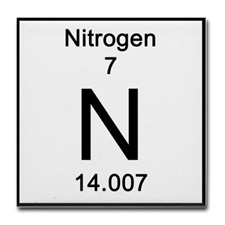
What is the number of protons that the element in this image contain?
a)
14
b)
7
c)
15
d)
18
75.
What is the atomic mass of "F"
a)
9
b)
18
c)
17
d)
19
76.
the central region of an atom where its neutrons and protons are is its 
a)
nucleus 
b)
electron cloud
c)
core 
d)
center 
77.
Something that is made up of only one kind of atom is known as _________________.
a)
a molecule
b)
a compound
c)
an element
d)
a proton
78.
Which is a chemical change?
a)
freezing fruit juice
b)
slicing a potato
c)
boiling water
d)
copper metal turning green
79.
a)
This is an ionic bond with electrons shared
b)
This is an ionic bond with electrons transferred
c)
This is a covalent bond with electrons shared
d)
This is a covalent bond with electrons transferred
80.
What is the density of an object having a mass of 8.0 g and a volume of 25 cm3?
a)
0.32 g/cm3
b)
3.1 g/cm3
c)
200 g/cm3
d)
2.0 g/cm3
81.

The picture shows a piece of paper being cut in half with scissors. Which of the following statements is true of this process?

a)

It is a chemical change because the paper particles were broken and rearranged.

b)

It is a chemical change because the substance was changed to something new.

c)

It is a physical change because the substance remained the same.

d)

It is a physical change because the paper only changed its state of matter.

82.

What is the molecular geometry of this boron trifluoride (BF3)?

a)

linear

b)

bent

c)

trigonal planar

d)

tetrahedral

83.

One mole is equal to the number of atoms in exactly 12 grams of carbon-12. The number (6.02 × 1023 particles per mole) is known as

a)

Planck's constant.

b)

Avogadro's number.

c)

Coulomb's constant.

d)

Faraday's number.

84.
What two types of measurements make up DENSITY
a)
Mass and Volume
b)
Temperature and Mass
c)
Grams and Centimeters
d)
Volume and Weight
85.
Electronegativity is...
a)
how good an atom is at attracting electrons
b)
the ability of an atom to lose electrons
c)
the energy required to remove an electron from a specific atom
d)
how easy it is to make friends. 
86.

What are the yellow elements in the following picture?

a)

metals

b)

nonmetals

c)

metalloids

87.

Which element will have a higher electronegativity than Arsenic (As) ?

a)

Carbon

b)

Antimony

c)

Germanium

d)

Neon

88.
When is the law of conservation of matter true?
a)
all the time
b)
under some conditions, but not others
c)
when energy is given off
d)
only in February
89.
This could be the dot diagram of
a)
Mg, group 2.
b)
Cl, group 17.
c)
C, group 14.
d)
O, group 16.
90.
Signs that a chemical change has occurred include
a)
a change in color
b)
the release of bubbles
c)
the production of an odor
d)
all of the above
91.
What is the number of protons that the element in this image contain?
a)
14
b)
7
c)
15
d)
18
92.
What is the atomic mass of "F"
a)
9
b)
18
c)
17
d)
19
93.
Something that is made up of only one kind of atom is known as _________________.
a)
a molecule
b)
a compound
c)
an element
d)
a proton
94.
the central region of an atom where its neutrons and protons are is its 
a)
nucleus 
b)
electron cloud
c)
core 
d)
center 
95.
a)
This is an ionic bond with electrons shared
b)
This is an ionic bond with electrons transferred
c)
This is a covalent bond with electrons shared
d)
This is a covalent bond with electrons transferred
96.

One mole is equal to the number of atoms in exactly 12 grams of carbon-12. The number (6.02 × 1023 particles per mole) is known as

a)

Planck's constant.

b)

Avogadro's number.

c)

Coulomb's constant.

d)

Faraday's number.

97.
What two types of measurements make up DENSITY
a)
Mass and Volume
b)
Temperature and Mass
c)
Grams and Centimeters
d)
Volume and Weight
98.
Electronegativity is...
a)
how good an atom is at attracting electrons
b)
the ability of an atom to lose electrons
c)
the energy required to remove an electron from a specific atom
d)
how easy it is to make friends. 
99.

An atom's valence electrons are located where?

a)

Innermost electron shell

b)

Nucleus

c)

Second electron shell

d)

Outermost electron shell

100.

The molar volume of a gas at STP occupies _____________.

a)

22.4 L

b)

0˚C

c)

1 kiloPascal

d)

12 grams

101.

In a double replacement, ____________________

a)

The reactants are usually a metal and a nonmetal

b)

One of the reactants is often water

c)

The reactants are generally 2 ionic compounds in aqueous solutions

d)

Energy in the form of light or heat is often produced

102.

Which of the following shows both the correct formula and correct name of an acid?

a)

HClO2, chloric acid

b)

HNO2, hydronitrous acid

c)

H3PO4, phosphoric acid

d)

HI, iodic acid

103.

When an equation is used to calculate the amount of product that could form during a reaction, then the value obtained is called the ____.

a)

Actual yield

b)

Percent yield

c)

Minimum yield

d)

Theoretical yield

104.

The equation 2C3H7OH + 9O2 → 6CO2 + 8H2O is an example of which type of reaction?

a)

Combustion reaction

b)

Single replacement reaction

c)

Double replacement reaction

d)

Decomposition reaction

105.
The group number tells us how many _________ there are in an element.
a)
groups
b)
valence electrons
c)
energy levels
d)
chemicals
106.
The ________________ tells you how many energy levels are used in an element.
a)
group number
b)
atom
c)
protons
d)
period number
107.
Which particle does not contribute mass to the atom?
a)
Proton
b)
Neutron
c)
Electron
d)
Nucleus
108.

Identify the following compound as ionic or covalent: SO2

a)

ionic

b)

covalent

109.

Why do atoms bond?

a)

They typically don't bond

b)

To add or take away energy levels

c)

To have a full valence shell.

d)

To have a full inner shell

110.

What charge would a potassium (K) ion have?

a)

+1

b)

-1

c)

+2

d)

-2

111.
If an atom loses two electrons what charge will it have?
a)
+ 2
b)
 - 2
c)
+1
d)
-1
112.
What atom matches this electron configuration?
1s22s22p63s23p64s23d10
a)
Zinc
b)
Copper
c)
Nickel
d)
Germanium
113.

What is the electron configuration of Iodine?

a)

[Kr]5s24d105p6

b)

[Kr]5s24d106p6

c)

[Kr]5s25d106p6

d)

None of the above

114.
The electron configuration of an atom is 1s22s22p6.  The number of electrons in the atom is 
a)
3
b)
6
c)
8
d)
10
115.
A compound consists of 72.2% magnesium(Mg) and 27.8% nitrogen(N) by mass. What is the empirical formula?
a)
Mg4N3
b)
MgN2
c)
Mg3N
d)
MgN
116.

How many molecules are in 2.5 mol of NaCl?

a)

1.5 x 1024 molecules

b)

1.5 molecules

c)

4.15 molecules

d)

1.5 x 10²³ molecules

117.
Which pair has the same empirical formula?
a)
NaCrO4 and Na2Cr2O7
b)
C2H4O2 and C6H12O6
c)
C3H6Oand C2H6O2
d)
CH4 and C2H6
118.
In order for an atom to be neutral what has to be true?
a)
The atom has more protons than neutrons
b)
The atom has more neutrons than protons
c)
The atom has the same number of protons and neutrons
d)
The atom has the same number of protons and electrons
119.
This model this model was the first to show a nucleus, consisting of protons and neutron.  Electrons surround the nucleus but are not shown in distinct energy levels. 
a)
The "Rutherford Model" of the atom
b)
The "Plum Pudding Model" of the atom
c)
The "Quantum Mechanical Modell" of the atom
d)
Democritus's model of the atom
120.
This was the first model of the atom ever proposed. It was simple and described atoms as tiny spheres that could not be broken down into smaller pieces.
a)
Democritus's model of the atom
b)
The "Plum Pudding Model" of the atom
c)
The "Rutherford Model" of the atom
d)
The "Quantum Mechanical Model" of the atom
121.
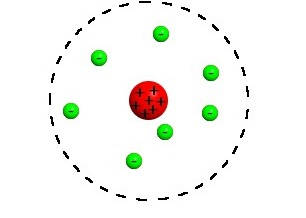
This model added on to previous models by showing electrons existed at certain "energy levels". However it does not accurately show what those levels look like.
a)
The "Bohr Model" of the atom
b)
The "Rutherford Model" of the atom
c)
The "Plumb Pudding Model" of the atom
d)
The "Quantum Mechanical Model" of the atom
122.
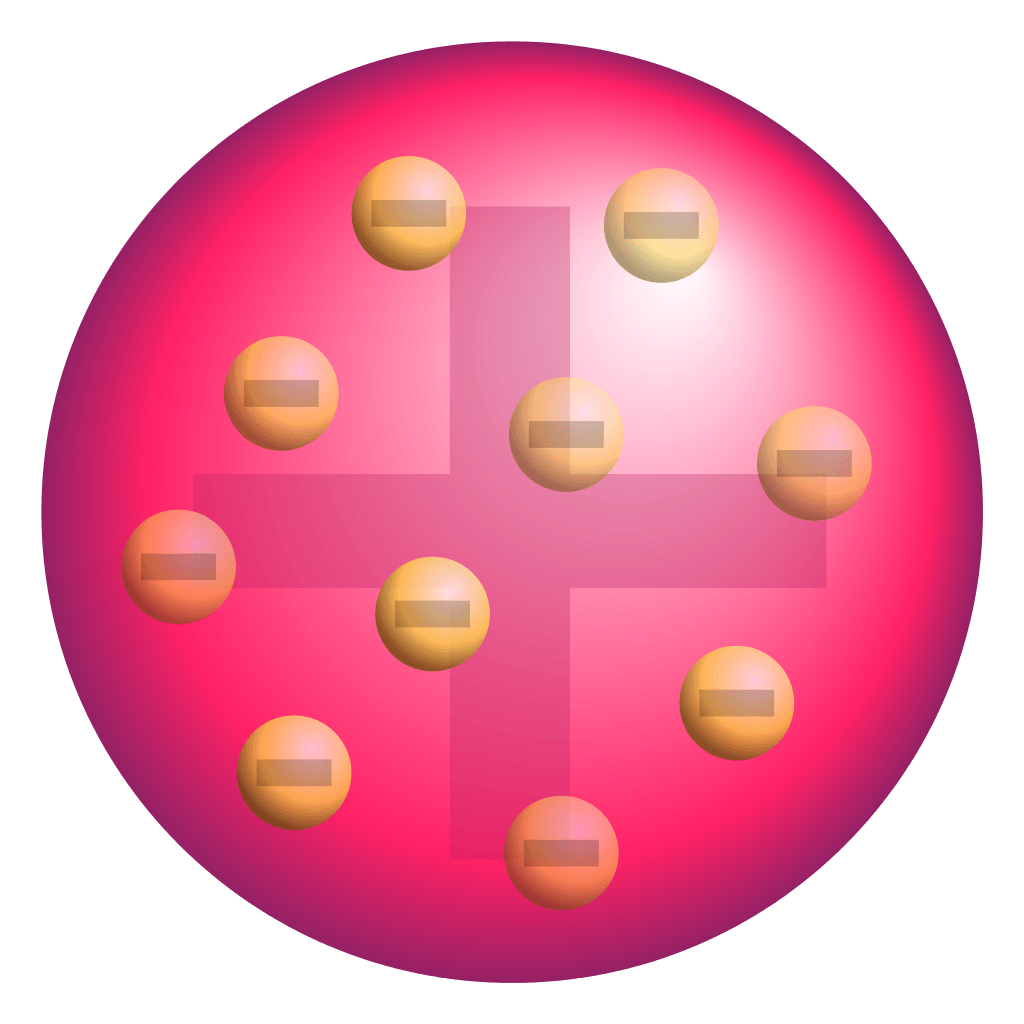
This model was developed after J.J. Thompson discovered electrons, a particle smaller than an atom. Is shows electrons floating freely in a positive space.
a)
The "Plum Pudding Model" of the atom
b)
The "Rutherford Model" of the atom
c)
Democritus's model of the atom
d)
The "Quantum Mechanical Model" of the atom
123.
Ernest Rutherford discovered that atoms were mostly _________________. 
a)
negatively charged
b)
positively charged
c)
electrons
d)
empty space. 
124.
A compound consists of 72.2% magnesium(Mg) and 27.8% nitrogen(N) by mass. What is the empirical formula?
a)
Mg4N3
b)
MgN2
c)
Mg3N
d)
MgN
125.
You are given the following percentages: 40.05% S and 59.95% O. Find the empirical formula for these elements.
a)
SO
b)
SO2
c)
SO3
d)
SO4
126.

How many molecules are in 2.5 mol of NaCl?

a)

1.5 x 1024 molecules

b)

1.5 molecules

c)

4.15 molecules

d)

1.5 x 10²³ molecules

127.
Which pair has the same empirical formula?
a)
NaCrO4 and Na2Cr2O7
b)
C2H4O2 and C6H12O6
c)
C3H6Oand C2H6O2
d)
CH4 and C2H6
128.
A formula with the lowest whole # ratio of elements in a compound is called
a)
Molecular Formula
b)
Chemical Formula
c)
Empirical Formula 
d)
Distance Formula
129.
Glycerol has a molar mass of 92.09g/mol. Its percent composition is: 39.12% C, 8.75% H, and 51.12% O. What is the molecular formula for glycerol?
a)
C2H3O2
b)
CH2O
c)
C2H4O2
d)
C3H8O3
130.

What is the correct representative particle for CO2?

a)

Atoms

b)

Molecules

c)

Formula Units

131.

What is the correct representative particle for potassium?

a)

Atoms

b)

Molecules

c)

Formula Units

132.

What is the correct representative particle for NaCl?

a)

Formula Unit

b)

Atom

c)

Molecule

133.

What is the correct molar mass for Mg(OH)2? (Round to the hundredths place)

(a)  

134.
What is the percent by mass of oxygen in MgO?
a)
20%
b)
40%
c)
50%
d)
60%
135.
What is the percent composition by mass of sulfur in the compound MgSO4 (gram formula mass = 120 g/mol)?
a)
20%
b)
27%
c)
46%
d)
53%
136.
In which compound is the percent composition by mass of Cl equal to 42%?
a)
HClO (gram formula mass = 52 g/mol)
b)
HClO2 (gram formula mass = 68 g/mol)
c)
HClO3 (gram formula mass = 84 g/mol)
d)
HClO4 (gram formula mass = 100 g/mol)
137.

What is the molarity of a 0.5L sample of a solution that contains 60.0 g of sodium hydroxide (NaOH)

a)

0.8 M

b)

1.5M

c)

3.0M

d)

6.0M

138.

A student is preparing solutions for a laboratory experiment by dissolving solid solutes in liquid solvents. Which action will increase the rate of solubility

a)

lowering the temperature of the solvent

b)

stirring the solute in the solution

c)

increasing the pressure on the solution

d)

increasing the particle size of the solute

139.

Which of the following is the correct formula for calculating molarity?

a)

moles/liters of solution

b)

moles/kg of solvent

c)

# particles/Avogadro's #

d)

theoretical yield/actual yield

140.

Which of the following types of solutions has more room to dissolve solute?

a)

supersaturated

b)

saturated

c)

unsaturated

141.
What is a solvent?
a)
The substance that does the dissolving in a solution.
b)
The substance that is being dissolved in a solution.
c)
The mixing of different substances.
d)
The process in which neutral molecules lose or gain electrons
142.
air is a 
a)
compound
b)
element
c)
heterogeneous mixture
d)
solution
143.
What is the molarity of 4 grams of sodium chloride in 3,800 mL of solution?
a)
0.018 M
b)
0.018 mol
c)
1.052 M
d)
1.052 mol
144.
Molarity is measured in
a)
moles per kg
b)
mols per L
c)
moles per kJ
d)
moles per mL
145.
How many L are required to make 3.5 M hydrochloric acid using 1.1 moles? 
a)
3.18 L
b)
0.31 L
c)
3.85 L
d)
4.6 L
146.
If you have 0.045 L of 0.465 M potassium bromide. How many moles of potassium bromide are present?
a)
20.9 mol
b)
0.021 mol
c)
0.02 mol
d)
0.0209 mol
147.

A dilution is when

a)

solute is added to the volume of solution

b)

water is added to the volume of solution

c)

solute is removed from the volume of solution

d)

water is removed from the volume of solution

148.

What volume, in milliliters, of 10.0 M NaOH is needed to prepare 300.0 mL of 2.00 M NaOH by dilution?

a)

0.067 mL

b)

60.0 mL

c)

100 mL

d)

125 mL

149.

What is the molarity of a solution made by diluting 26.5 mL of 6.00M HNO3 to a volume of 250.0 mL?

a)

15.9 M

b)

0.636 M

c)

0.642 M

d)

1.59 M

150.
What volume of 1.50 M KBr can be made from 15.6 mL of concentrated KBr with a molarity of 9.65 M?
a)
150. mL
b)
151 mL
c)
1.00 L
d)
100. mL
151.
He developed the planetary model of the atom.
a)
Rutherford
b)
Bohr
c)
Chadwick
d)
Dalton
152.
James Chadwick discovered the ________.
a)
proton
b)
neutron
c)
electron
d)
nucleus
153.
What did Thomson discover?
a)
electron
b)
proton
c)
neutron
d)
electron cloud
154.

Subatomic particles with a negative charge

a)

Electrons

b)

Neutrons

c)

Protons

d)

Quarks

155.
The scientist responsible for "discovering" the nucleus is:
a)
Bohr
b)
Rutherford
c)
Schroedinger
d)
Einstein
156.

Which part of the atomic theory did Niels Bohr prove?

a)

there are electrons

b)

there is a nucleus

c)

electrons are in energy levels

d)

gold foil experiment

157.

What experiment did JJ Thomson use?

a)

gold foil experiment

b)

cathode ray tube experiment

158.

John Dalton wrote postulates to make the idea of the atom useful. Which postulate below was proven wrong?

a)

All elements are made up of tiny indivisible particles called atoms.

b)

The atoms of one element are different from the atoms of another element.

c)

Atoms of different elements chemically combine to form chemical compounds.

d)

During chemical reactions, atoms are rearranged.

159.

Which statement is incorrect?

a)

The nucleus is very dense.

b)

The nucleus contains protons and neutrons.

c)

The nucleus is positively charged.

d)

The nucleus is involved in chemical reactions.

160.

The number of protons is equal to the number of electrons for an atom. This means an atom is-

a)

electrically neutral

b)

electrically positive

c)

electrically negative

161.

What determines chemical reactivity?

a)

protons

b)

neutrons

c)

electrons

d)

isotopes

162.

What determines the identity of the atom?

a)

protons

b)

neutrons

c)

electrons

d)

isotopes

163.

What are atoms with the same number of protons but different numbers of neutrons?

a)

electrons

b)

protons

c)

neutrons

d)

isotopes

164.

What two particles would you find in the nucleus of an atom?

a)

Protons and electrons

b)

Neutrons and electrons

c)

Protons and neutrons

d)

Electrons and negatrons

165.

How many Mn atoms are found in the following compound?

2MnO4

a)

1

b)

2

c)

4

d)

8

166.

Which state of matter has both definite shape and definite volume?

a)

Gas

b)

Liquid

c)

Solid

167.

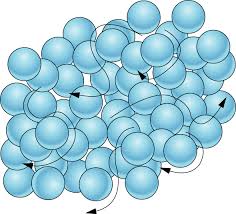
What state of matter?

a)

Solid

b)

Liquid

c)

Gas

d)

Plasma!!!

168.

What state of matter?

a)

Solid

b)

Liquid

c)

Gas

169.

What is the phase change of a solid to a liquid?

a)

freezing

b)

melting

c)

boiling

d)

condensation

170.
5. What is it called when a solid turns directly into a gas?
a)
Sublimation
b)
Condensation
c)
Liquid
171.

What happens to particles when energy is added (heated)?

a)

They speed up and spread out

b)

They slow down and compress

c)

They stop moving

d)

They move closer together and speed up

172.

Phase change going from a Liquid to a Gas...

a)

Vaporization

b)

Deposition

c)

Condensation

d)

Melting

173.

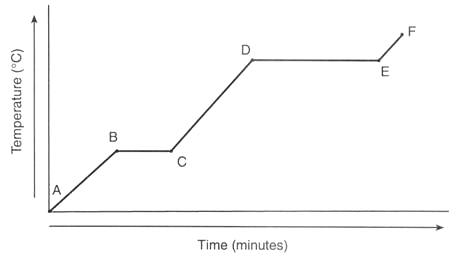
What state/phase is the object likely from points A to B?

a)

Solid

b)

Liquid

c)

Gas

d)

Plasma

174.

What is happening to the particles in the substance between points D and E?

a)

Melting

b)

Freezing

c)

Vaporizing

d)

Sublimating

175.
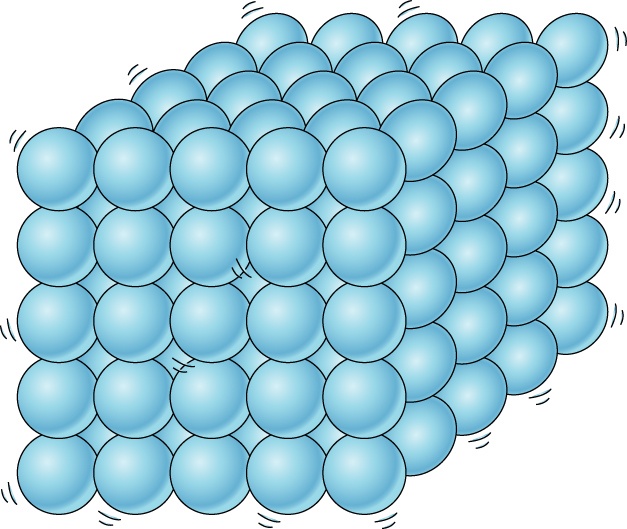
If you could see the molecules within a solid, what would you observe?
a)
molecules flowing past one another, but unable to move far away from one another
b)
molecules vibrating in place, closely packed
c)
molecules moving with great energy, far apart from one another
d)
molecules vibrating and moving far away from one another

Similar Resources on Wayground