
 Worksheets
PS final exam review
Total questions: 171
Worksheet time: 4hrs 45mins
substance that is dissolved in the solvent.
solute
solution
acid
base
the liquid in which a solute is dissolved to form a solution.
solvent
solute
acid
base
a chemical solution containing the maximum concentration of a solute dissolved in the solvent.
saturated solution
unsaturated solution
dilute solution
supersaturated solution
a chemical solution in which the solute concentration is lower than its equilibrium solubility
unsaturated solution
saturated solution
dilute solution
supersaturated solution
a solution that contains more of the dissolved material than could be dissolved by the solvent under normal circumstances
supersaturated solution
unsaturated solution
dilute solution
saturated solution
a molecule or ion capable of donating a proton; that has a sour taste
acid
base
solute
solvent
a substance that feels slippery, tastes bitter; OH
base
acid
solvent
solute
the force exerted per unit area.
pressure
force
power
work
any substance whose molecules will slide past each other
fluid
liquid
solution
solvent
the ability or tendency to float in water or air or some other fluid.
buoyancy
force
pressure
power

Salt has which type of bonds
covalent bond
Hydrogen bond
Ionic bond
Metallic bonds
Identify the type of reaction: A + B-----> AB
combustion
synthesis
decomposition
single-displacement
Identify the type of this reaction: AX + B ---->BX + A
combustion
decomposition
double displacement
single displacement
Most reactions go faster at a higher temperature
True
False
a change in size, shape, or state of matter
physical change
physical property
chemical change
chemical property


Alkali metals need to lose 1 electron to gain a full outer shell.
The halogens need to gain 1 electron to gain a full outer shell.
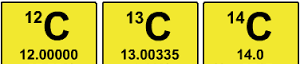

Which of these substances have the LOWEST specific heat?
aluminum
iron
copper
tin
Energy changes from chemical to thermal when....
steam makes a piston move
coal burns and heats up water
glow sticks light up
liquid water converts into steam

What are the gray particles in the image of an atom?
dust
protons
neutrons
electrons
What is the term used to label the number of protons in the nucleus?
pi
atomic number
number 1 teacher
mass number

How many protons in strontium?
38
88
50


substances that go into a reaction
reactants
products
solutes
solvents
substance that is formed as the result of a chemicalreaction
product
reactant
solute
solvent
a type of reaction in which multiple reactants combine to form a single product.
synthesis
decomposition
double replacement
single replacement
a type of chemical reaction in which a single compound breaks down into two or more elements or new compounds.
decomposition
synthesis
single replacement
double replacement
a type of chemical reaction where two compounds react, and the positive ions (cation) and the negative ions (anion) of the two reactants switch places, forming two new compounds or products.
double replacement
single replacement
decomposition
synthesis
a type of chemical reaction where an element reacts with a compound and takes the place of another element in that compound
single replacement
double replacement
synthesis
decomposition
a major class of chemical reactions, commonly referred to as "burning; occurs when a hydrocarbon reacts with oxygen to produce carbon dioxide and water
combustion
synthesis
single replacement
decomposition
chemical reaction that releases energy through light or heat
exothermic
endothermic
combustion
decomposition
any chemical reaction that absorbs heat from its environment
endothermic
exothermic
decomposition
combustion
The law of conserved energy states that energy is the same before and after a reaction
Forward
Downward
Conserved
Fluid Friction
Define Isotopes:
Different number of protons and neutrons
The resistance of any object to change in its velocity
Same number of protons and neutrons
Force that causes an object to continue in a circle
Chemical energy is:
The resistance of any physical object to a change in its velocity
Same number of protons and neutrons
A force that causes an object to continue in a circle
energy stored in bonds
2 or more elements combined.
element
alloy
mixture
compound
2 or more things physically combined and can be separated physically.
element
alloy
compound
mixture
mixture of 2 metals
mixture
alloy
compound
element
only one type of atom
element
alloy
compound
mixture
Which characteristic of water describes its overall charge?
property of cohension
property of adhesion
being polar
high specific heat
What causes thermal expansion?
When the temperature drops
When particles of matter move farther apart as temperature increases
When particles are compressed
How are the processes of melting and freezing similar?
They are both processes that physically change a substance.
They are both processes that chemically change a substance.
They are both processes where heat is released by a substance.
They are both processes where heat is absorbed by a substance.

Four different liquids will be separately poured into a single beaker. The liquids are ethanol, milk, oil, and water. The density for each liquid at room temperature is listed in the table below. How will the liquids be arranged from bottom to top in the beaker?
milk, water, oil, ethanol
milk, water, ethanol, oil
water, milk, oil, ethanol
water, oil, ethanol, milk
How many valence electrons are in a neutral atom of nitrogen (N)?
2
3
5
15
Electrons are being shared between atoms in a certain compound. Which elements could most likely form this compound?
lithium (Li) and fluorine (F)
aluminum (Al) and iodine (I)
sulfur (S) and oxygen (O)
iron (Fe) and chlorine (Cl)
What is the chemical formula for magnesium acetate?
Mg2(C2H3O2)2
Mg(C2H3O2)2
Mg2C4H6O4
MgC4H6O4
Which represents a balanced chemical equation?
CO2 + 2H2O → 2CH4 + 2O2
CH4 + O2 → CO2 + H2O
CH4 + 2O2 → CO2 + 2H2O
CO2 + H2O → CH4 + O2
What type of chemical reaction occurs when beryllium (Be) combines with oxygen (O2) to form beryllium oxide (BeO)?
double replacement
single replacement
decomposition
synthesis
Which equation represents a neutralization reaction?
acid + water → salt + base
acid + base → water + salt
acid + salt → base + water
water + base → salt + acid
Which compound contains ionic bonds?
C2H6
PCl5
Ca3N2
SF2
This unbalanced equation represents a chemical reaction: Pb(NO3)2 + NaI → NaNO3 + PbI2. What is the coefficient for NaI once the equation is balanced?
1
2
3
4
HgO → Hg + O2
Which is the correctly balanced chemical equation for this reaction?
A substance formed from two or more elements in which the exact combination of elements is always the same is a(n)
mixture.
element.
solution.
compound.
Which particle of an atom surrounds the nucleus and has a charge of 1-?
proton
neutron
quark
electron
A mixture in which different materials are unevenly distributed and are easily identified is
homogeneous.
heterogeneous.
hemophilia.
homosapien.
A solid, liquid, or gas that contains two or more substances blended evenly throughout is
homogeneous.
heterogeneous.
hemophilia.
homosapien.
An element that is typically a hard, shiny solid, is malleable, ductile, and a good conductor of heat and electricity is a
metal.
nonmetal.
metalloid.
synthetic.
An element that is typically a gas or brittle solid at room temperature, is not malleable or ductile, is a poor conductor of heat and electricity, and is not shiny is a
metal.
nonmetal.
metalloid.
synthetic.
An element that shares some of the properties with metals and some with nonmetals is a
metal.
nonmetal.
metalloid.
synthetic.
A neutral particle found inside the nucleus of an atom is a(n)
proton.
electron.
neutron.
quark.
Any change in size, shape or state of matter is a
chemical change.
miracle.
physical change.
sublimation.
Any characteristic of matter that you can observe without changing the identity of the material is a
physical property.
chemical property.
characteristic.
identifier.
The amount of force exerted per unit area is
volume.
buoyancy.
pressure.
velocity.
A fluid's resistance to flow is
viscosity.
velocity.
surface tension.
density.
Which of the following is NOT an element?
water
oxygen
carbon
nitrogen
Which of the following is an example of a chemical change?
boiling
evaporation
melting
burning
How would you classify the color of a rose?
chemical change
chemical property
physical change
physical property
How could you separate salt from seawater?
filtering
distillation
Tyndall effect
melting
What is the most common state of matter in the universe?
solid
liquid
gas
plasma
Which of the following uses Pascal's principle?
aerodynamics
buoyancy
hydraulics
changes of state
Which of the following uses Bernoulli's principle?
airplane
skateboard
piston
snowboard
Which of the principle tells us that the buoyant force is equal to the weight of the fluid displaced?
Archimedes'
Charles's
Bernoulli's
Pascal's
Which law tells us that as the temperature of a gas increases, the volume increases?
Newton's
Archimedes'
Boyle's
Charles's
In which state of matter are most of the elements to the left of the stair-step line in the periodic table?
gas
plasma
liquid
solid
Which of the following is NOT found in the nucleus of an atom?
proton
electron
neutron
quark
The atomic number of Re is 75. The mass of one of its isotopes is 186. How many neutrons are in an atom of this isotope?
75
186
111
261
Because electrons move freely in metals, which property describes metals?
brittle
dull
soft
conductors
Which set of elements makes up the most reactive group of all metals?
iron triad
alkali metals
coinage metals
alkaline earth metals
Which elements are least reactive?
metals
noble gases
halogens
alkali metals
Which of these elements is the main component of steel and the most widely used of all metals?
iron
aluminum
cadmium
magnesium
Which element is present in ALL organic (living) compounds?
silicon
carbon
oxygen
nitrogen
In the chemical reaction HCl + NaOH --> H2O + NaCl, the reactants are
HCl & H2O
NaOH & NaCl
HCl & NaOH
H2O & NaCl
In the chemical reaction HCl + NaOH --> H2O + NaCl, the products are
HCl & H2O
NaOH & NaCl
HCl & NaOH
H2O & NaCl
The chemical formula for water is
HCl
NaOH
H2O
NaCl
In the following chemical equation, what coefficient should be placed in the blank to balance the chemical equation?
3C + ___H2 --> C3H8
4
3
8
1
In the following chemical reaction, what coefficient should be placed in the blank to balance the chemical equation?
Y(NO3)2 + GaPO4 --> YPO4 + ___Ga(NO3)2
6
2
3
1
Which of the following is the property of colloids to scatter light?
Flitering
Distillation
Freezing
Tyndall effect
Most reactions go faster at a higher temperature
True
False

What can you do to find the number of neutrons in an atom?
It's the same as the atomic #.
Ask Sierra!
Subtract the atomic # (protons) from the mass # (protons and neutrons)
Multiply the mass # (protons and neutrons) and the atomic # (protons)


Fe is the ___________________ for iron
atomic number
chemical symbol
atomic mass
protons

What element contains 53 protons?
Manganese
Iodine
Palladium
What do atoms look like in a solid?


What do atoms look like in a gas?
What do atoms look like in a liquid?
a grouping of elements based on similar properties, arranged by columns in the periodic table; also known as a group
family
period
row
isotope
Who invented the Periodic Table?
Mendeleev
Bohr
Lewis
Democritus
As you move left to right on a row or period what happens?
Atomic number increases by 1
Electrons decrease
Number of shells decrease
Nothing
Valence means......
inside
outside
full

Elements in the same group or column have the same ...
# of valence electrons
# of shells
# of protons
Mass Number

Where are metals located on the periodic table?
On the left of the stair case
On the stair case
On the right of the stair case
Where are metaloids located on the periodic table?
On the left of the stair case
On the stair case
On the right of the stair case


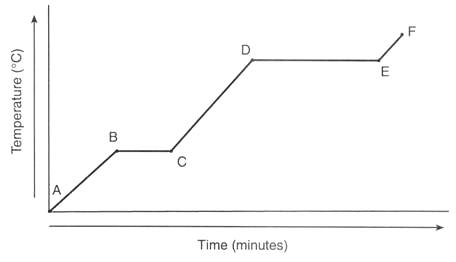


Which of the following is an example of a chemical change?
water freezes to form ice
sugar dissolves in water
gasoline burns in a car engine
a piece of metal expands when it is heated
When making sweet tea, the water acts as the...
Solvent
Solute
Solution
Substance
If a solution has the exact amount of solute that can be dissolved at that temperature then it is considered a ______ solution
Unsaturated
Saturated
Supersaturated
Bases are substances that release hydroxide ions.
True
False

