
 Worksheets
US Unit 3 - Civil War to the Gilded Age
Total questions: 88
Worksheet time: 22hrs 0mins

How does the policy instituted in this law contrast with previous Native American policies?
It defers to the Supreme Court to resolve matters of citizenship and rights.
It encourages Native Americans to assimilate and adopt U.S. citizenship.
It recognizes the Native Americans' claims as sovereign entities.
It provides material support as long as they remain in designated locations.
Which statement best describes how the economic systems of the North and South rely on each other?
The North grew the food that the Southern slaves ate
The South produced the iron used to build the Northern railroads
The South grew the cotton and the North turned it into fabric in their factories
The North sent the skilled laborers and immigrants to the South to help build its railroads and plantations
What was the immediate cause of the secession of Southern states from the Union prior to the start of the Civil War?
election of Abraham Lincoln to the presidency
passage of the Kansas-Nebraska Act
raid on Harper's Ferry by John Brown
decision of the Supreme Court in the Dred Scott case
"A house divided against itself cannot stand...I do not expect the house to fall -- but I do expect it will cease to be divided." -Abraham Lincoln
Even though Lincoln claimed that his party would not abolish slavery in the South, what does this quote imply?
Republicans would end slavery if they could.
Democrats did not have to worry about the Republican stance toward slavery.
Democrats would end slavery if the could.
Republicans secretly wanted to expand slavery.


What was Lincoln's main goal throughout the Civil War?
to abolish slavery
to end British control of the Western territories
to make a profit selling war supplies
to preserve the Union
Which battle was the turning point of the Civil War?
Battle of Antietam
The Battle of Vicksburg
Fort Sumter
The Battle of Gettysburg

13th Amendment
Abolished slavery in the South
Abolished slavery
Granted citizenship
Granted voting rights to black men

True or False: The Emancipation Proclamation immediately set all the slaves in the United States free?
TRUE
FALSE
What year did Lincoln issue the Emancipation Proclamation?
1859
1861
1863
1868
What was one effect of the Emancipation Proclamation?
More African Americans (slave and free) joined the Confederates
More African Americans (slave and free) joined the Union
Many southern soldiers joined the North
Some of the northern states lost faith in Lincoln
Why did Emancipation give the North a boost in morale?
It meant they were winning the war
They had a better reason for fighting the war
The Border States sided with the North
It meant the Confederates were going to lose the war
The primary reason the Civil War as fought was over the issue of
tariffs
slavery
states rights
trade with Europe
Southerners were upset when Lincoln was elected president because:
they believed he might one day end slavery, which would threaten their way of life
they wanted a president who would support the abolition of slavery
he wanted northern states to secede from the Union
he had a plan to raise taxes
What was the purpose of General William T. Sherman's "March to the Sea"?
to free all remaining slaves held by Southern plantation owners
to punish the South for daring to secede from the Union
to weaken Southern morale and bring an end to the war. Successfully divided the South
to allow his hungry and tired troops to acquire necessary supplies

Use the following chart to answer the question that follows.
According to the bar graph, what region had the larger share of resources in the United States?
The South
The North
The West
All regions had equal amount of resources
Disadvantages of the South during the Civil War included having a small navy, fewer railroads, and ______________.
Lack of agricultural land
larger population
Inexperienced military leaders
Lack of industries
Which of the following was NOT an advantage for the Union going into the Civil War?
Excellent military leaders
larger population
more railroads
more resources
Why was the Battle of Gettysburg a turning point in the war?
General Lee surrendered to the Union army after the battle.
There were nearly 48,000 casualties of the battle.
Lincoln emancipated the slaves after the Union victory at the battle.
The battle ended the Confederacy's hopes of getting assistance from Britain and France.

From this image, who is in control of the US lawmakers.
Large monopolies
small private business
political machines
labor unions

What legislation is this cartoon referring to?
30 day waiting period for immigration
Deportation after completion of Transcontinental Railroad
Immigration Reduction Act
Chinese Exclusion Act

Why does this image depict Rockefeller so large?
He was a political boss who tried to win governmental favors
He was a government inspector looking for corruption
He was a robber baron who used his money and power to influence government
He was looking to correct all of pollution cause by industrialization

What does this image say about the control of Standard Oil?
Standard Oil is a monster trying to control the entire USA
Standard Oil is trying to save government from political bosses
Standard Oil is trying to keep government on the right track to benefit laborers
Standard Oil had control over many aspects of government
Which idea summarizes the Gilded Age?
Many Americans moved west to farm
Native Americans were placed on Reservations
The discovery of Gold increased western migration
Industrialists used their wealth to influence politics

The government encouraged Native Americans and immigrants to adopt white culture in a process called ___________________.
Assimilation/Americanization
Nativistism
Communism
Vietnamization
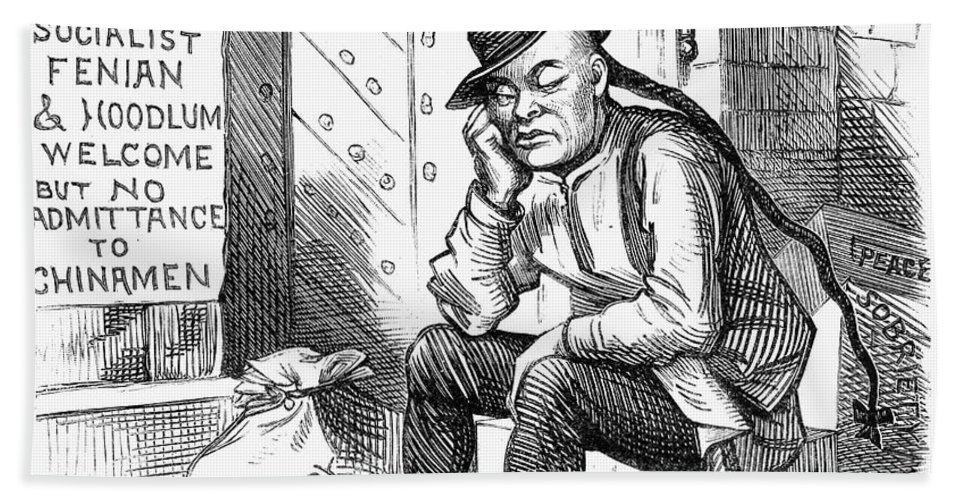
This law was made to reduce competition for jobs on the West Coast because it prohibited immigration from China-
Pendleton Act
Homestead Act
Mexican Repatriation Act
Chinese Exclusion Act
John D. Rockefeller had a monopoly over which in industry?
Steel
Railroads
Oil
Banking
In 1882, the Government passed this legislation that restricted immigration for 10 years from a certain group into the United States.
Nativist Act
Mexican Reparition Act
Dawes Act
Chinese Exclusion Act
Under this policy in 1887, the U.S. Government sold Native Americans land in order to farm.
Dawes Act
Ghost Dance
Trail of Tears
Laws Act

In which industry did Andrew Carnegie make his fortune?
Oil
Steel
Railroads
Finance

Schools in the south to educate freedmen were set up by the ______________
Union Army
Special Field Order 15
Freedmen's Bureau


Which of the following is NOT associated with the Election of 1876?
The beginning of Reconstruction
The end of Reconstruction
Tilden & Hayes
The Removal of troops from the south
The following group provided aid (help) to former slaves during Reconstruction.
Black Codes
Carpetbaggers
13th Amendment
Freedmen's Bureau
This group used fear & violence to prevent African Americans from voting in the South following Reconstruction
Black Codes
Ku Klux Klan
Radical Republicans
Carpetbaggers
Agricultural & economic practice where a land owner allows a tenant farmer to work his land for a share of his crop
sustenance farming
sharecropping
carpetbagger
slavery


The south was divided into how many military districts during reconstruction?
2
4
5
7
Which of the following is true about sharecropping
Sharecropping favored the freeedmen.
Many freedmen were able to buy new homes through sharecropping
Most sharecroppers remained in debt or in a cycle of poverty
Many state governments offered loan for sharecropping farmers.
What year was Abraham Lincoln elected president?
1850
1860
1861
1865
What year marked the end of Reconstruction?
1860
1871
1877
1865
What year did the turning point in the war-- the Battle of Gettysburg-- take place?
1861
1863
1865
1877
What year did Abraham Lincoln issue the Emancipation Proclamation?
1861
1865
1863
1871
What year did the Civil War begin with the Battle of Fort Sumter?
1860
1861
1863
1865
What year did the Confederacy surrender, the war end, and Abraham Lincoln was assassinated?
1863
1865
1868
1877
What is the purpose of the blockade?
to stop people and goods form moving in or out of a place
to quickly destroy a place through sudden attack
to encourage peaceful trade relationships
to force smugglers out of hiding
which side used a naval blockade as part of its strategy to win the Civil War?
the Confederacy
the Union
How did the naval blockade impact the South? (choose 3)
it weakened the economies of the southern states
it encouraged southern states to plant more tobacco
it helped the South establish trade relationships with the North
it caused a lack of manufactured goods in southern states
it limited the export of the South's valuable cotton crop
The Union blockade is best compared to a snake ____________.
striking its foe in one swift and deadly blow
shedding its skin
lying in wait for the right moment to strike
slowly strangling its enemy into submission
According to the Lost Cause myth of the Civil War, why did the Confederate States secede from the Union?
State's Rights
Slavery
Dislike of Lincoln
the Anaconda Plan
What was the dominant reason for the Southern states' secession from the Union?
Slavery
State's Rights
Dawes Act
Chinese Exclusion Act
To which of these historic events does the opening sentence of the Gettysburg Address refer?
the Pilgrims’ landing
the American Revolution
the founding of Jamestown
the outbreak of the Civil War
What is Lincoln’s main purpose in the Gettysburg Address?
to identify the soldiers who have died in battle so far
to argue why the Union will win the war
to seek money for the families of those who died in battle
to explain the importance of the war and inspire support for the Union
What region of the United States did the majority of the fighting during the Civil War take place in?
The North
The South
New England
The newly acquired Western territories / states
The following statement is an accurate description of Sherman's March to the Sea;
The March to the Sea was led by General William Sherman. It was the journey of the Union Army from Atlanta to Savannah, Georgia. During that trip the Union Army destroyed all factories, railroads, and farms along their path. This was known as total warfare.
True
False
T / F: Following the Civil War, the North was divided into 5 Union occupation zones to ensure the states did not secede / rebel again.
True
False, it was divided into 4
False, the South was divided and occupied
False, the neither side was occupied in order to return to normalcy
The South had fewer factories than the North. This hurt them by having less...
clothing
guns
ammunition
all of the above

