
 Worksheets
EOC Standard 4
Total questions: 85
Worksheet time: 51mins
During the end of the 19th century and the beginning of the 20th century, the United States military intervened in Mexico, Central America, and the Caribbean mainly to
protect American business interests.
retaliate against countries that had attacked the U.S.
acquire new colonies.
expand democracy in those areas.
The Platt Amendment was a treaty that allowed the United States to build military bases in which country?
Cuba
Haiti
the Dominican Republican
Puerto Rico
The concept of the "white man's burden" was used to justify American imperialism. The concept argued that native people in foreign lands like the Philippines
had valuable resources that were being wasted.
were threatening to other nations of the world.
had helped developed countries in the past.
were not able to take care of themselves.
The Open Door Policy expanded international trade in which country?
China
Mexico
the Philippines
Hawaii
President Taft instituted an imperialist policy in the early 20th century called _______ in which the United States provided economic assistance to Cuba, the Dominican Republic, Haiti, and Nicaragua.
Monroe Doctrine
Open Door Policy
Manifest Destiny
Dollar Diplomacy
At the end of the 19th century, the concept of Manifest Destiny was used to justify U.S. expansion into which of these places?
Africa and South America
Europe and the Middle East
Latin America and the Pacific
Australia and Antarctica
Which of these territories did the United States acquire as a result of the Spanish-American War?
Panama
Hawaii
the Philippines
the Dominican Republic
One of the reasons that many Americans were supportive of the Spanish-American War is that they had been exposed to pro-war sentiments in newspapers that often exaggerated the severity of the situation that existed in Cuba. William Randolph Hearst and Joseph Pulitzer were two newspaper owners who tried to increase the circulation of their newspapers by publishing sensational stories. Which term best describes this type of journalism?
watchdog journalism
investigative reporting
muckraking
yellow journalism
One of President Theodore Roosevelt's favorite phrases was an African proverb which was "Speak softly, and carry a big stick, you will go far." Roosevelt's foreign policy became known as big stick diplomacy. Which statement best describes big stick diplomacy?
the pledge to remain neutral in the foreign affairs
the promotion of democracy in all countries
the creation of economic policies to benefit the U.S.
the threat of using military force in foreign policy
Which event contributed to the outbreak of the Spanish-American War?
the sinking of the Lusitania
the sinking of the USS Maine
the construction of the Panama Canal
the sinking of the USS Maddox
The actions used by one nation to exercise political or economic control over a weaker or smaller nation.
Imperialism
Slavery
Moral Diplomacy
Big Stick Diplomacy

This foreign policy was supported by Woodrow Wilson. The US would only support nations with the same moral beliefs in democracy as the US.
Missionary Diplomacy
Big Stick Policy
Roosevelt Corollary
Dollar Diplomacy
Open Door Policy
This foreign policy was an extension to the Monroe Doctrine calling for US assistance in Latin America if they could not repay debts to European nations.
Moral Diplomacy
Big Stick Policy
Roosevelt Corollary
Dollar Diplomacy
Open Door Policy
Which of the following are responsible for World War 1?
Imperialism
Nationalism
Alliances
Militarism
All of these
What was the purpose of the League of Nations?
To prevent future wars.
To establish stronger Alliances
To punish nations that did not follow rules.
To help the United States become a World Power.
What were the Fourteen Points?
Parts of the “war guilt” clause
Woodrow Wilson's plan for the postwar world
The constitution of the League of Nations
The Terms of surrender offered to Germany
Which group of countries allied themselves to form the Triple Alliance (Central Powers) in the years before World War I?
Britain, France, and Austria-Hungary
Germany, Austria-Hungary, and the Ottoman Empire
Russia, Germany, and Italy
Britain, France, and Russia
What was the purpose of the War Industries Board in the United States during World War I?
find jobs for mexicans to take factory work
maintain and regulate the United States economy and war production schedules
provide education and skills to women so men could fight the war
allocate and ration food, gasoline, bread, and cotton
Why were the Balkans referred to as the "Powder Keg of Europe" in the period prior to World War I?
Because of the large deposits of saltpeter and sulfur in the region
Because of the manufacturing ability of the nations in the region
Because of the nationalistic rivalries that existed in the region
Because of the vast stockpiles of weapons in the region

Name given to movement of African Americans from the South to the North in order to get better jobs and find a better way of life
Great Migration
Harlem Renaissance
New Deal
Bonus Army
Which amendment ended prohibition?
19th Amendment
18th Amendment
21st Amendment
13th Amendment
Why were the 1920s called the “Roaring ‘20s”?
because times were hard, and life was awful for most people
because it was the sound that Model T cars made
because it was another name for jazz music
because times were good, and life improved for most people
_________ allowed people to share their culture with each other in the 1920s, resulting in a new, common American culture.
Television and Newspapers
Radio and Movies
Telephone and Music
Telegraph and Art
Which is NOT a cause of the Great Depression?
Too many people bought things on credit
Stock Market Crash of 1929
Overproduction of goods and crops (making more than people want to buy)
World War 1
What is the purpose of the FDIC?
To insure bank deposits
To provide work to the unemployed
To provide cheap electricity to rural areas
To prevent another stock market crash
What was one major difference between the Hoover and Roosevelt administrations?
Franklin wanted to use government intervention to fix the depression
Hoover wanted to use government intervention to fix the depression
Franklin ignored using government intervention to helped Americans
Hoover created the New Deal Plan to fix the depressopm
providing support for the elderly, disabled and laid off is part of which program?
FDIC (Federal Deposit Insurance Corporation)
PWA (Public Works Administration)
SSA (Social Security Act)
CCC (Civilian Conservation Corps)


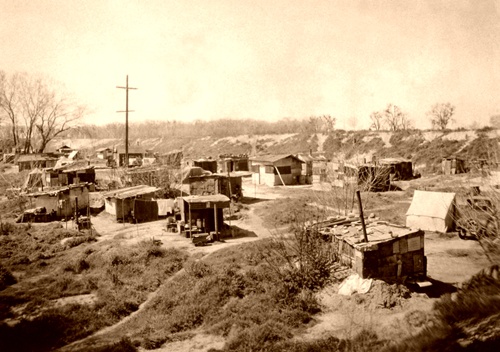
Which of the following groups faced the most difficult economic conditions during the 1920s?
Non-unionized workers in older industries.
Assembly line workers in factories.
Farmers and many rural areas.
Businesses that did not accept credit cards.
Which of the following best describes the Wagner Act, or the National Labor Relations Act?
Programs to construct roads, bridges, airports, and public buildings.
Laws to guarantee worker rights to join a union, minimum wage, and fair treatment.
Federal programs to collect funds for retirement, unemployment, and injuries on the job.
Government program to employ young men in conservation projects on federal lands.
At the Munich Conference in 1938
the Axis Powers formed their alliance.
European leaders tried to appease Hitler.
Hitler developed his plan of concentration camps.
German officials signed the formal surrender in W.W. II.
How did the German and Japanese governments MOST LIKELY view America's passing of the Lend-Lease Act?
as a guarantee that the United States would stay neutral
as a symbol of the United State aggressive foreign policy
as the United States making an unofficial declaration of war
as the United States moving away from isolationist policies
What impact did the Japanese attack on Pearl Harbor have on World War II?
It pulled the United States into World War II.
Japan surrendered to the Allies the following day.
The Pacific Charter was organized against Japan.
Italy surrendered and united with the Allies.
What was the purpose of the Nuremberg trials which took place in Nuremberg, Germany, from 1945 to 1949?
Germany was brought to trial for starting World War II.
Holocaust survivors sued German officials who had worked in concentration camps.
Nazi leaders were brought to trial for war crimes committed during World War II.
The United States and the Soviet Union decided how to split control of Germany.
President Franklin Roosevelt said that December 7, 1941, would "live in infamy" because on that day
Germany invaded Poland.
Japan bombed Pearl Harbor.
France was invaded by Germany.
Japan invaded the Philippines.
Which statement is TRUE regarding American actions toward Japan in the months before Pearl Harbor?
American naval forces bombarded Japanese positions throughout the Philippines.
All Japanese assets in the U.S. were frozen and an embargo was placed on oil and steel exports to Japan.
American diplomats were actively working with the Japanese government to bring about a peaceful resolution to the conflict in Hawaii.
Congress authorized a cash-and-carry policy for Great Britain and the Soviet Union, which Japan perceived as a direct threat to her interests.
At the beginning of both World War I and World War II, the initial policy of the United States was to
Remain neutral
Create naval blockades
Provide military assistance.
End ties with the warring countries.
During World War II Japanese-Americans were
treated as badly as Jews were in Germany.
often denied their liberty and their property.
used as advisors and played a key role in developing American military strategy.
treated differently depending on whether they were first- or second-generation immigrants.
What role did "Rosie the Riveter" play during World War II?
to persuade women to fight for equal pay
to persuade women to be as strong as men
to encourage women to enter the workforce
to encourage women to look after their families while husbands were away
Which famous World War II unit, made up entirely of Japanese-Americans, bears the distinction of being the most highly decorated military unit in American history?
the Flying Tigers
the Burma Panthers
the Red-Tailed Angels
the 442nd Regimental Combat Team
While World War II raged outside of the United States, attempts were made in the U.S. to support the war effort by
rationing consumer goods such as food and gas.
decreasing taxes to encourage civilian consumption.
people giving up their homes to house soldiers stationed in that area.
relocating persons of Italian-American descent living on the east coast.
Which of these was a result of America's participation in World War II?
Both women and African-Americans won new job opportunities after the war.
The U.S. moved to a more isolationist position and focused primarily on domestic issues.
The U.S. owed large debts to England and the Soviet Union for war materials and supplies.
American involvement resulted in the unconditional surrender of Germany, Japan, and the Soviet Union.
The "Manhattan Project" was the code name for the
A) US Plan to invade Japan.
US plans to make an atomic bomb.
German use of jet aircraft.
Allied plan to invade Europe.
Which answer choice lists the events of World War II in correct chronological order?
Lend-Lease → Pearl Harbor → D-Day → the atomic bomb
Pearl Harbor → Germany’s invasion of France → V-E Day → D-Day
Germany invade the USSR → D-Day → Pearl Harbor → the atomic bomb
The USSR conquers Berlin → the atomic bomb → D-Day → President Roosevelt dies
On June 6, 1944, a combined force of U.S., British, Canadian, and Free French soldiers landed in
France
Italy
Germany
Great Britain
Why did President Harry Truman decide to hit the Japanese cities of Hiroshima and Nagasaki with two atomic bombs in 1945?
He knew doing so would win him another term as U.S. President.
He wanted revenge of the Japan's use of atomic bombs on Pearl Harbor.
He agreed to do it because Germany was ready to use an atomic bomb on England.
He hoped to prevent a ground invasion of Japan and save the lives of American soldiers.
"The Holocaust" of World War II generally refers to the
treatment of Chinese people by Japan in the late 1930s.
bombing of the interior regions of Germany by Allied bombers.
internment of Japanese-Americans in the United States during World War II.
planned murder of Jews, gypsies, communists, and others by the German government.
During his rise to power, Hitler gained popularity and helped stir extreme anti-Semitic sentiment by
convincing Germans that the United States was responsible for their many hardships
making the people of Germany believe that the Soviet Union was going to attack them.
blaming the collapse of world trade and other economic failures on Jewish financiers.
destroying the rule of law in Germany so that Germans would seek retribution on each other.
Why were the Nuremberg Trials held from 1945 to 1946?
A) to divide Germany into East and West sections
B) to judge Soviet leaders who tried to blockade Berlin
C) to punish Axis generals for their actions during the war
D) to prosecute former Nazi officials for their roles in the Holocaust
The formation of the state of Israel
took place after the end of World War II.
occurred prior to the end of World War II.
was opposed by the president of the United States.
to prosecute former Nazi officials for their roles in the Holocaust
What term refers to Adolf Hitler's plan to exterminate all the Jews of Europe?
VE Day
Third Reich
Final Solution
Nuremberg Laws

