Worksheets
STEAM@HANC_Physics Regents Q2
Total questions: 50
Worksheet time: 46mins

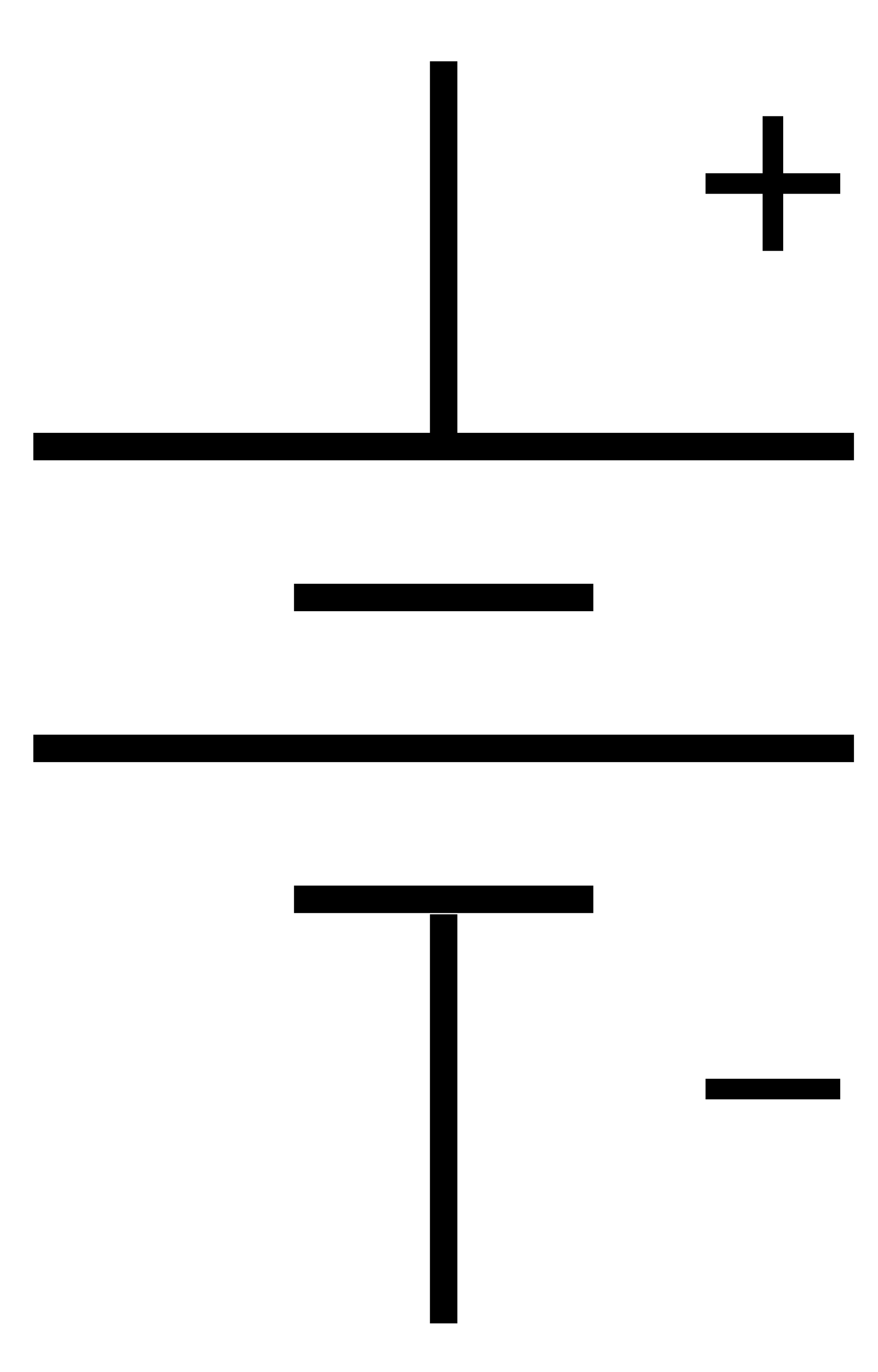
Each battery is a 10-V battery. What is the voltage difference between points B and D?
10 V
20 V
30 V
40 V



Suppose you have a 100 Ω resistor parallel to two 100 Ω resistors in series. what is their total resistance?
66.7 Ω
300 Ω
69.69 Ω
600 Ω

In the circuit diagram below, what are the correct readings of voltmeters V1 and V2?
V1 reads 2.0 V and V2 reads 4.0 V
V1 reads 4.0 V and V2 reads 2.0 V
V1 reads 3.0 V and V2 reads 3.0 V
V1 reads 6.0 V and V2 reads 6.0 V

What is the current in ammeter A in the diagram below?
1 A
1/3 A
3 A
9 A

In the circuit diagram below, ammeter A measures the current supplied by the 10.-volt battery. What is the current measured by ammeter A?
0.13 A
2.0 A
0.5 A
4 A
(I X R)
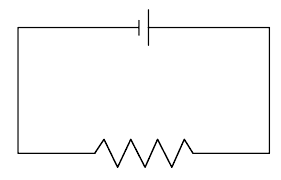

A circuit contains a 1.5 volt battery and a bulb with a resistance of 3 ohms. Calculate the current.
0.5A
1A
1.5A
2A
If the current in an electrical circuit is constant, what will happen to the voltage if the resistance is increased?
The voltage will decrease
The voltage will increase
The voltage will stay the same
According to Ohm's Law, current equals the voltage divided by the _________.
Resistance
Inductance
Capacitance
Power
Conductance
Define Ohm’s Law
a law stating that electric current is proportional to voltage and inversely proportional to resistance.
a law stating that electric current is proportional to resistance and inversely proportional to voltage.
If the current in an electrical circuit is constant, what will happen to the voltage if the resistance is increased?
The voltage will decrease
The voltage will increase
The voltage will stay the same

What is the Voltage, V in the circuit shown?
6.5 V
26 V
0.15 V

The circuit with higher resistance will allow less charge to flow, meaning the circuit with higher resistance has less current flowing through it.
True
False

Two resistors having values 5 ohms and 10 ohms are connected in series to a 10 V source. Find the current flowing through the circuit:
0.66 A
1.5 A
2 A
2.5 A

Two parallel resistors both having their values 28 ohms are connected in parallel. The overall current provided by the 28 V source is.
1 A
2 A
4 A
8 A
The potential difference across a 5 kΩ is 12 V. Find the current flowing through the resistor
60 mA
2.4 mA
1.7 mA
0.998 mA
Which pair of quantities represent scalar quantities?
Displacement and Velocity
Displacement and Time
Distance and Velocity
Distance and Time
FOR EVERY REACTION THERE IS AN OPPOSITE OR EQUAL REACTION:::
1ST LAW
3RD LAW
A battery of 10 volt carries 20,000 C of charge through a resistance of 20 Ω. The work done in 10 seconds is
2 × 10 5 Joule
2 × 10 3 Joule
2 x 10 4 Joule
2 x 10² Joule
Two devices are connected between two points say A and B in parallel. The physical quantity that will remain the same between the two points is
Current
Voltage
Resistance
Resistivity
The shock you sometimes feel when you touch a metal doorknob on a dry day is electric ________.
Circuit
Current
Discharge
Resistance
What is the definition of current?
rate of electron flow
rate of charge flow
rate of charge
flow of charge
Charges flow due to difference in
potential
speed
volume
current
What is the meaning of 7 Volt?
7 Coulomb charge required to move 1 Joule energy from a point to another point.
7 Joule of energy required to move 7 Coulomb charge from a point to another point.
7 Joule of energy required to move 1 Coulomb charge from a point to another point.
7 Coulomb required to move 7 Joule energy from a point to another point.
A electrical component was labelled 240 V, 10 A. Caculate the resistance of the component.
24 Ohm
10 Ohm
12 Ohm
240 Ohm
All of the relation is correct for parallel circuit EXCEPT
VT=V1+V2
VT=V1=V2
AT=A1+A2
RT1=R11+R21
Which two particles are attracted to each other?
Two neutrons
A proton and an electron
Two protons
An electron and a neutron
A repulsive force exists between which two particles?
Two neutrons
An electron and a neutron
An electron and a proton
Two protons
As two oppositely charged particles approach each other, what happens to the electrical force between them?
The attractive force increases
The magnitude of the electric force decreases
The repulsive force increases
The magnitude of their charges increases