wayground logo

Free Printable Worksheets

Font size

S
M
L
XL
Worksheets

Recap Quiz CIS- Biology

Total questions: 29

Worksheet time: 16mins

Name
Class
Date
1.

Which organelle contains DNA and controls the cell

a)

cell membrane

b)

ribosomes

c)

nucleus

d)

lysosome

2.

Which organelle controls what goes in and out of the cell?

a)

nuclear membrane

b)

cell membrane

c)

nucleus

d)

cytoplasm

3.

The pigment that is found in chloroplasts.

a)

Cytoplasm

b)

Ribosome

c)

Cytoskeleton

d)

Chlorophyll

4.

What is the organelle that is the powerhouse of the cell. It releases energy from stored food molecules so it can use energy.

a)

vacuole

b)

ribosome

c)

mitochondria

d)

ER (endoplasmic reticulum)

5.

Where can you find the chloroplast?

a)

Only plant cells

b)

Only animal cells

c)

Plant & Animal cells

d)

Animal cells & Bacteria

6.

What does the chloroplast do in cells?

a)

Allows things in and out of the cell

b)

Controls the cell

c)

Makes energy for the cell

d)

Uses sunlight for photosynthesis

7.

Rough endoplasmic reticulum has ________________ attached to it.

a)

ribosomes

b)

chromosomes

c)

golgi apparatus

d)

nucleolus

8.

___________________ is moving molecules across the cell membrane without using energy (ATP)

a)

Diffusion

b)

Active Transport

c)

Interphase

d)

Mitosis

9.

With the process of diffusion, molecules prefer to move from

a)

A low concentration to high concentration

b)

A high concentration to low concentration

10.

When the movement of molecules go against the concentration gradient, this is called:

a)

passive transport

b)

diffusion

c)

active transport

d)

Osmosis

11.

Stores food and water like a refrigerator for the cell

a)

lysosome

b)

vacuole

c)

cytoplasm

d)

rough ER

12.

What type of movement of molecules is being shown?

(a)  

13.

The following features are found only in the plant cell

a)

Lysosome

b)

Cell wall

c)

Chloroplast

d)

Central vacuole

14.
Osmosis is a form of ______________. 
a)
Passive Transport
b)
Active Transport
15.

Enzymes are _____________?

a)

Hydrocarbons

b)

Hormones

c)

Lipids

d)

Proteins

16.

What is an enzyme?

a)

A protein that speeds up chemical reactions

b)

A protein that breaks apart molecules

c)

A protein needed for cell structure

d)

A neurological protein involved in cell signaling
17.
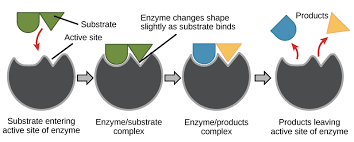
In a chemical reaction, a reactant binds to an enzyme at a region known as the
a)
catalyst.
b)
product.
c)
substrate.
d)
active site. 
18.
Which of the factors does NOT affect enzymatic activity?
a)
Temperature
b)
pH
c)
Concentration
d)
Color
19.
An enzyme is a catalyst.
a)
True
b)
False
20.
What is a substance called if it speeds up a chemical reaction?
a)
reusable
b)
catalyst
c)
specific
d)
fragile
21.
Flowering plants are divided into 3 groups such as monocots, dicots, and tricots
a)
True 
b)
False
22.
Which plant tissue does Xylem and Phloem belong in?
a)
Vascular tissue 
b)
Epidermal tissue
c)
Ground tissue 
23.
What's the function of the stomata? 
a)
Transports water 
b)
Absorbs CO2 and lets out O2
c)
Transports food and nutrients
24.

Choose the correct combo-

a)

xylem-water, phloem -sugar

b)

xylem- sugar, phloem -water

25.

Monocots can be identified by having

a)

flowers in groups of 4's and 5's

b)

an X pattern in the root cross section

c)

a scattered pattern of vascular bundles in the root cross section

d)

flowers in groups of 3's

26.

Photosynthesis occurs in which cells?

a)

Epidermis

b)

Spongy Mesophyll

c)

Stomata

d)

Palisade Mesophyll

27.
What causes blood pressure? 
a)
cholesterol in the blood
b)
stress that exercise puts on heart muscle
c)
contraction of the ventricles in the heart
d)
removal of oxygen from the blood
28.
A doctor examines a patient who has high blood pressure and atherosclerosis in the coronary artery. What medical condition connected to blood flow is most likely to affect this patient in the future?
a)
The patient may develop headaches and confusion due to cancer in the brain caused by years of low levels of oxygen supplied to the brain.
b)
 The patient may develop stiff joints and chest pains from the high blood pressure applied to the muscle and joint tissues of the body.
c)
The patient may show signs of confusion, weakness, and partial paralysis due to high blood pressure when the plaque dislodges and blocks blood flow to the brain.
d)
 The patient may suffer a heart attack because of the reduction in blood flow to the heart muscles due to severe plaque build-up in the coronary artery
29.
Many factors can affect how blood flows through your body.  Which of the following can interfere with blood flow?
a)
normal blood cholesterol levels
b)
decrease in heart rate
c)
narrowing of the blood vessels
d)
moderate exercise