wayground logo

Free Printable Worksheets

Font size

S
M
L
XL
Worksheets

Basics of Matter

Total questions: 45

Worksheet time: 2hrs 39mins

Name
Class
Date
1.

Matter is anything that has:

a)

mass

b)

volume

c)

mass and volume

d)

substance

2.

Volume is a measurement of:

a)

the amount of particles a substance has.

b)

the space an object occupies

3.

Mass is a measurement of:

a)

the amount of particles a substance has.

b)

the space an object occupies

4.

How would you find the mass of an object?

a)

Measure its dimensions with a ruler, and then multiply length x width x height

b)

Water displacement

c)

use a balance/scale

d)

use a timer

5.

How would you find the volume of an irregular shaped object?

a)

use a ruler to measure its dimensions

b)

water displacement

c)

use a balance/scale

d)

use a timer

6.

How could you determine if a golden penny is made of gold?

a)

You wouldn't be able to figure it out.

b)

If it looks like gold, it's gold.

c)

You would test the properties of the gold penny and compare those to the properties of gold.

d)

You would guess.

7.
What is the formula for density?
a)
density = mass x volume
b)
density = mass / volume
c)
density = mass + volume
d)
density = mass - volume
8.
Something that takes up space and has mass.
a)
volume
b)
matter
c)
mass
d)
density
9.
The amount of space something takes up
a)
density
b)
volume
c)
mass
d)
matter
10.
A watermelon has more matter than a grape, so it has more
a)
mass
b)
eat
c)
solid
d)
greater
11.
Volume is ______________.
a)
length X width
b)
height X length
c)
length X width X height
d)
width X height
12.
________________ is anything that has mass and takes up space.
a)
volume
b)
matter
c)
mass
d)
weight
13.
__________ are the building blocks of life.
a)
solids
b)
gases
c)
atoms
d)
nutrients
14.
It occurs when a substance combine with another to form a new substance
a)
Physical Change
b)
Chemical Change 
c)
Physical Property
d)
Chemical Property
15.
It can be observed or measured without changing the composition of matter.
a)
Physical Change
b)
Chemical Change
c)
Physical Property
d)
Chemical Property
16.
Texture, color, states of matter, flexibility, freezing & melting points
a)
Chemical Properties
b)
Physical Properties
c)
States of Mass
d)
Scientific matterology
17.
a)

Element

b)

Compound

c)

Homogeneous Mixture

d)

Heterogeneous MIxture

18.

When there is one type of atom

a)

Element

b)

Compound

c)

Homogeneous Mixture

d)

Heterogeneous Mixture

19.

A group of 2 or more items, that are not chemically combined

a)

Pure Substance

b)

Mixture

20.

Which is a non-matter?

a)

shadow

b)

powder

c)

wood

d)

dust

21.

Observable characteristics such as texture, color, size, and mass are known as...

a)

combinations

b)

states of matter

c)

physical properties

d)

scientific tools

22.
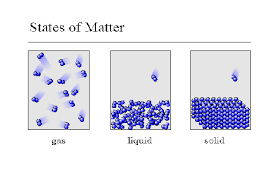
What are the states of matter?
a)
solid, liquid, and juice
b)
solid and liquid
c)
solid and gas
d)
solid, liquid, and gas
23.
Air is an example of a
a)
solid
b)
liquid
c)
gas
24.
Which of the following statements describes a solid?
a)
It has a fixed shape
b)
It takes the shape of it's container
25.

Which of the following statements describes a liquid?

a)

It has a fixed shape

b)

It takes the shape of its container

26.
Which of the following statements describes a gas?
a)
It has a fixed shape
b)
It takes the shape of it's container
27.

Which THREE (3) are SI (Standard International) units for mass?

a)

pounds (lb)

b)

grams (g)

c)

liters (L)

d)

kilograms (kg)

e)

milligrams (mg)

28.

Which THREE (3) are SI units for volume?

a)

liters (L)

b)

grams (g)

c)

cubic centimers (cm3)

d)

grams per cubic centimeter (g/cm3)

e)

milliliters (mL)

29.

What is the volume of a rectangular solid with a length of 5m, and width of 3m, and a height of 2m?

a)

0m3

b)

8m3

c)

10m3

d)

30m3

30.

Choose all options that are TRUE statements.

a)

Matter can be created.

b)

Matter is never created.

c)

Matter can be destroyed.

d)

Matter is never destroyed.

31.

In the image, the same atoms are REARRANGED during a chemical reaction, illustrating the Law of Conservation of Matter. Which below correctly states this law?

a)

Matter is created but not destroyed.

b)

Matter is destroyed but not created.

c)

Matter is never created or destroyed, just changed.

d)

Matter cannot change form.

32.
The total amount of mass in a system does not change during a chemical reaction
a)
Chemical Reaction
b)
Counting Atoms
c)
Law of Conservation of Mass
d)
Law of Conservation of Volume
33.
Which state of matter has the highest amount of energy?
a)
solid
b)
liquid
c)
gas
34.
When a solid turns into a liquid
a)
freezing
b)
melting
c)
evaporating
d)
condensing
35.
When a liquid turns into a gas
a)
freezing
b)
melting
c)
evaporating
d)
condensing
36.
When a gas turns into a liquid
a)
freezing
b)
melting
c)
evaporating
d)
condensing
37.
At higher temperatures
a)
particles in an object have less energy
b)
particles in an object move faster
c)
a gas contracts
38.
Define a liquid.
a)
Indefinite shape, indefinite volume
b)
Definite shape, definite volume
c)
Found in stars
d)
Definite volume, indefinite shape
39.
Which units of measurement are used for volume?
a)
grams
b)
centimeters
c)
grams/milliliter
d)
milliliter
40.
What is the formula for density?
a)
density = mass x volume
b)
density = mass / volume
c)
density = mass + volume
d)
density = mass - volume
41.
Frank has an eraser. It has a mass of 4g, and a volume of 2cm3. What is its density?
a)
8 g/cm3
b)
2 g/cm3
c)
1/2 g/cm3
d)
24 g/cm3
42.

What is the best piece of lab equipment to measure volume?

a)

Test tube

b)

Beaker

c)

Erlenmeyer flask

d)

Graduated cylinder

43.

Texture is a

a)

Chemical property

b)

Physical property

44.

How a substance reacts with acid is a

a)

Chemical property

b)

Physical property

45.

If you pour 3 unknown liquids into a graduated cylinder, which one will rise to the top?

a)

The one with the highest density

b)

The one with the lowest density

c)

Whichever one was poured in last