
 Worksheets
Political Systems - Midterm Review
Total questions: 119
Worksheet time: 1hrs 21mins
Legislative (creates the laws)/Executive (carries out the laws/Judicial(interprets the laws)
Separation of Powers
Checks and balances
Ratify
Bill of Rights
designed to prevent one branch from seizing too much power. Example: President nominates judges, Senate approves nominations
Separation of Powers
Checks and balances
Ratify
Bill of Rights
first 10 amendments (freedoms) written by James Madison
Separation of Powers
Checks and balances
Ratify
Bill of Rights
one who favored ratification of Constitution (strong central gov’t)
Federalist
Anti-Federalist
Patriot
Loyalist
one who opposed ratification of the Constitution (weaker central gov’t)
Federalist
Anti-Federalist
Loyalist
Patriot
Which Constitutional principle states that no one is above the law and the government only has powers listed in the Constitution?
Limited Government
Individual Liberties
Federalism
Republicanism
Which of the following explains the Constitutional principle called republicanism?
Power is divided between state and federal government
Power is divided into 3 government branches
Elected representatives make and enforce laws
Individuals have guaranteed liberties

Which president was also called the Father of the Constitution?
George Washington
Thomas Jefferson
Alexander Hamilton
James Madison
What is the name for a change or addition to the Constitution?
Amendment
Preamble
Ratification
Compromise
Which branch of government interprets laws?
Judicial (courts)
Executive (president)
Legislative (Congress)
Which group wanted to keep the Articles of Confederation and give more power to the states?
Federalists
Anti-Federalists
Judiciary
Legislature
Central and national are two words that mean the same thing as -
state
federal
local
regional
Which compromise concerned how many representatives different sized states would have in Congress?
The Great Compromise
The 3/5 Compromise
The Commerce Compromise
The Intolerable Compromise
Who is the head of the executive branch?
The Supreme Court
The Senate
The President
The Cabinet
Which amendment in the Bill of Rights prohibits cruel and unusual punishment and excessive fines?
3
4
6
8
What year was the Constitution written in?
1776
1787
1803
1861

The President acts as _______________ of the armed forces.
commander-in-chief
cabinet
ambassador
enforcer
Which requirement is a written qualification for President of the United States?
The candidate must be a naturalized citizen.
The candidate must be a registered member of one of the two dominant parties.
The candidate must be at least 35 years old.
The candidate must be a resident of the United States for at least seven years.
Which branch makes the laws?
Executive
Judicial
Appellate
Legislative
What government existed before the Constitution?
British Monarchy
state constitutions
Articles of Confederation
Confederate States of America
What branch of the government can override a presidential veto?
Executive
Legislative
Judicial
all of the above
What branch of the government can void a law if it is unconstitutional?
Legislative
Executive
Judicial
all of the above
Does the President have to be born in the US, or just be a citizen? (Constitutional req.)
born in the US
citizen
who cares?
This isn't the right answer.
How long does the President have to be a resident of the US? (Constitutional requirement)
7 years
9 years
14 years
his or her whole life

One requirement to be president is ______________________.
reside in the US for 14 years prior to running for president
age 18
live in Washington DC
speak English and Spanish
Check all the answers that apply:
Candidates for the office of president must ...
be at least 35 years of age
live in the US for 14 years
have served in the army
be US born
The requirements to run for the Senate, according to the US Constitution include all of the following EXCEPT :
Being at least 25 years of age
Being a US Citizen
Being a resident for at least 9 years
Being from the state you wish to represent
The following are the requirements to run for THE HOUSE OF REPRESENTATIVES except which one?
Must be a US citizen
Must have lived in the country for at least 7 years
Must be at least 30 years of age
Must be from the state in which you want to represent
Gave women the right to vote
19th Amendment
15th Amendment
23rd Amendment
26th Amendment
Gave citizens the right to vote regardless of race, color, or previous conditions of servitude.
23rd Amendment
24th Amendment
15th Amendment
19th Amendment
Changed the voting age from 21 to 18 years of age.
15th Amendment
26th Amendment
23rd Amendment
24th Amendment
freedom from unreasonable search and seizures
amendment 4
amendment 1
amendment 2
How many Amendments are there to the Constitution?
26
30
27
28
What groups are a part of congress and the legislative branch? (pick 2)
The Senate (100 representatives)
The Supreme Court (9 justices)
The House of Representitives (435 representatives)
The White House

What are checks and balances?
The ability for different branches to stop each others actions.
The ability for different branches to help each other make laws.

Why does the government have checks and balances?
To stop one branch from getting too powerful.
To prevent the president from acting like a king/queen.
To prevent laws that are unfair/unconstitutional.
All of the above.
What are two things the President can do?
Make new laws
Meet with world leaders
Veto bills that don't have 66% of the vote
Break the law
Which branch has the Vice President?
Legislative
Executive
Judicial
Which branch can veto or approve laws?
Legislative
Executive
Judicial
Which branch declares laws unconstitutional?
Legislative
Executive
Judicial
Which branch can declare the acts of the other branches unconstitutional?
Legislative
Executive
Judicial
How long is the president’s term?
2 years
4 years
6 years
8 years
How many terms can a president be elected for?
1
2
3
4
The president's role as leader of the nation's armed forces...
Chief of the Armed Forces
Supreme Leader of the Armed Forces
Chief Commander
Commander in Chief
How many years does a senator stay in term?
4 years
3 years
6 years
1 year
_______ is another name for the Legislative Branch
The President
The Supreme Court
Congress
Congress is made up of ________
The President + Vice President
Senate + House of Representatives
Supreme Court
How do we determine the number of representatives that each state gets?
The size of the state
Every state gets 2
The number of people living in the state determines the number of representatives
How many years is the term for a state representative?
2 years
4 years
6 years
The Vice President presides over the __________, but only votes if there is a(n) ___________.
House, tie
Senate, tie
House, impeachment
Senate, impeachment
According to the Constitution, the vice president __________.
is the Speaker of the House
is president of the Senate
votes in all Senate matters
appoints a president if the president dies
A plan that provides the rules for government
Legislative Branch
Constitution
Supreme Court
President
A system in which power is divided between the national and state governments.
Federalism
Division of Powers
Checks and Balances
Localism
dividing the powers of government among the 3 branches
Popular Sovereignty
Individual Rights
Separation of Powers
Checks and Balances
people elect representatives to create and enforce laws
Popular Sovereignty
Federalism
Checks and Balances
republicanism
To reject a bill and prevent it from becoming a law
Ratify
Override
Veto
Amend


In a democratic government, the questions of "how should we govern" and "what should government do" are controlled by
the leaders.
the military.
the elected representatives.
the people.
What part of the Constitution has the purposes of government for the United States?
Preamble
Articles
Amendments
none of these
To be recognized as a state, what are the essential characteristics?
Territory
Sovereignty
Population
Government
All of these
Which political theory of government is where a small group forces all people to submit to them?
Force Theory
Evolutionary Theory
Divine Right Theory
Social Contract Theory
Which political theory developed naturally out of the evolution of the family?
Force Theory
Evolutionary Theory
Divine Right Theory
Social Contract Theory
Which political theory held that God created the state, and God had given those of "royal birth" the right to rule?
Force Theory
Evolutionary Theory
Divine Right Theory
Social Contract Theory
Which political theory argues that the state arose out of a voluntary act of free people and that the state exists only to serve the will of the people?
Force Theory
Evolutionary Theory
Divine Right Theory
Social Contract Theory
- Basic rights of citizens
- Rule of law
- Representative assemblies
What did Common Sense convince the colonists to demand from the "Mother Country" (Britain)?
Money
Seperation
Love
Peace
Who was Thomas Paine writing to in Common Sense?
The colonists
The King
His wife
The Senate
What documents did Common Sense inspire?
The Legend of the Navajo Indians and the Creation Myth
The Bible and the Koran
Declaration of Independence and the Constitution
The Manual of Life and the Manual of Death
What type of people did Common Sense appeal to?
Rude people
Political people
Wealthy people
Common people
Common sense was a hit (popular) among the people. True or False.
True
False
Supreme or the highest authority of the state or country to govern the citizen.
Exclusive
Sovereignty
Permanent

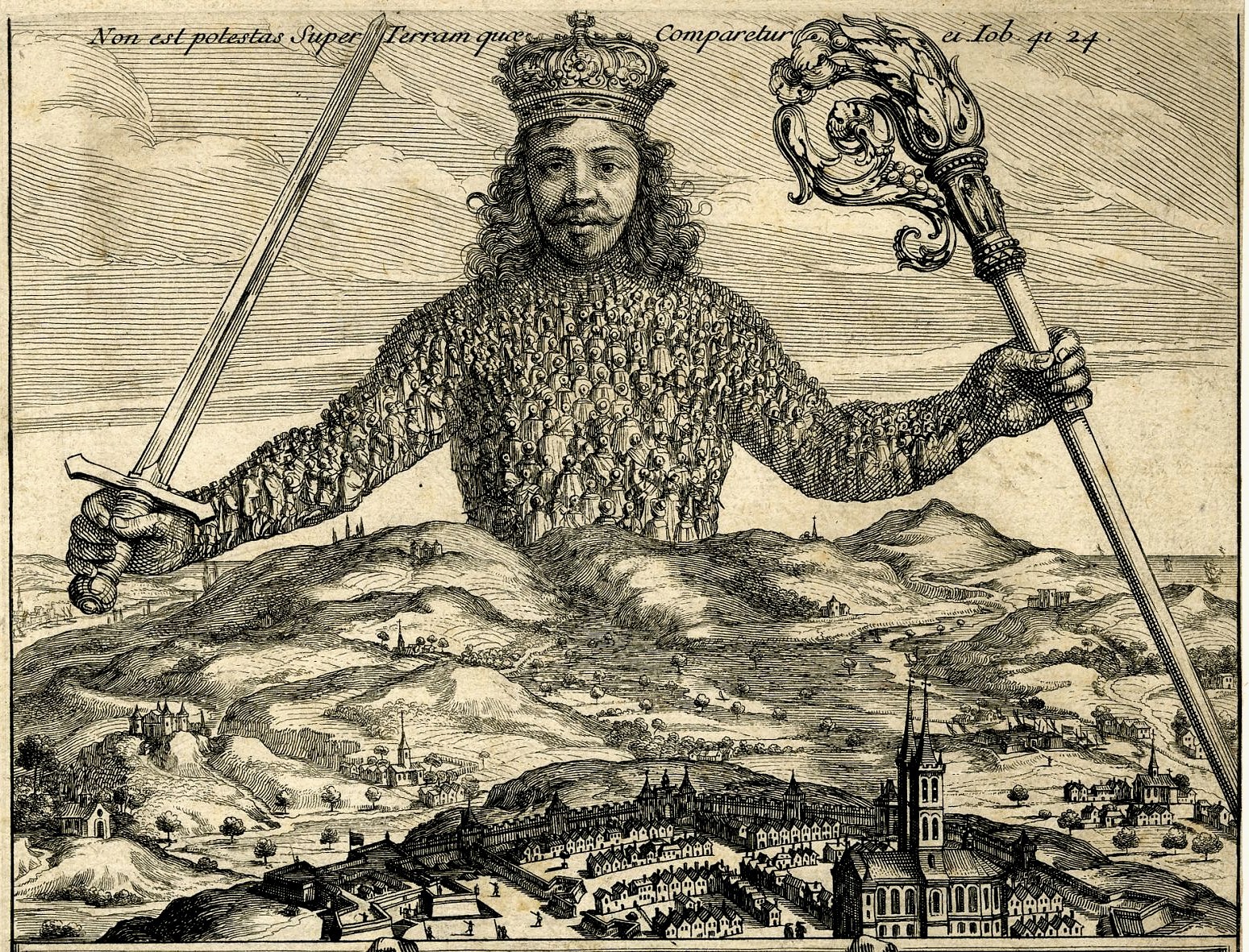
Which Philosopher is this? (He thought life was most Brutal in a State of Nature)
Locke
Rousseau
Montesquieu
Hobbes
During The Enlightenment, people developed new ideas about ...
the level of control they should have over their government
the level of control the Sun exerts on Earth's orbit
how their food crops should be grown
how their houses should be arranged
The doctrine that assumes that human beings had rights in a “state of nature” and create government in order to protect those rights is known as what?
civil rights
political rights
natural rights
right of revolution
Why is "Rule of Law" important in a democracy?
it maintains order
in protects the citizens by ensuring no one is above the law
it limits the government
it protects the citizens from tyranny
all of the above
The Rule of Law demands Order and Security which means citizens should feel ________________ during daily activities.
happy
safe
frustrated
The Rule of Law must have Legitimacy which means....(choose three)
criminals face consequences for their crimes
citizens see the law as worthy of following
citizens have input in the lawmaking process
citizens do not have a voice when laws are being made
citizens respect the law
The distance from Great Britain led to
the development of self-government
establishing a king for each colony
increased shipbuilding for travel
Parliament establishing new religious traditions in Great Britain
The Mayflower Compact was important in the development of representative government because the document --
increased the freedoms of the first colonists
extended freedom to members of all religions
granted voting rights to women
established self-government in the British colonies
How many amendments are there to the US Constitution
10
27
32
26
DUE PROCESS MEANS THAT ALL CITIZENS ARE GUARANTEED __________________ EVEN THOUGH THEY HAVE COMMITTED CRIMES.
FOOD
A CAR
RIGHTS
LOVE
This clause prohibits state governments from passing laws that conflict with federal laws, and also prohibits any entity from enforcing laws that conflict with the Constitution:
The Necessary and Proper Clause
The Contracts Clause
The Supremacy Clause
The Commerce Clause
The Due Process Clause
What does "Bicameral" mean?
1 house
2 houses
3 houses
4 houses
The Virginia Plan wanted representation based on _______.
population of each state.
number of state delegates.
one state, one vote
delegates appointed by the president.
The New Jersey Plan wanted representation based on _______.
population of each state.
number of state delegates.
one state, one vote
delegates appointed by the president.
The government has the power to acquire your property
True
False
The power the government has to acquire your property is called:
Economic Freedom
Political Freedom
Eminent Domain
Tyranny
When can the government use eminent domain?
When it benefits the public
Whenever they want
For private use
For personal gain
What do the Miranda warnings guarantee besides the right to remain silent?
the right to a fair trial
the right to a trial by a jury of your peers
the right to a lawyer even if you can't afford one
the right to fair treatment in jail
What might happen if a criminal suspect doesn't understand their Miranda rights?
The police might have to set them free.
They might be convicted of a crime they didn't commit.
Their case might be heard by the Supreme Court.
Any confession they make might be thrown out in court.
What is a Bill?
A law
An idea for a new law
The introduction to the Constitution
The Legislative Branch

