
 Worksheets
Unit 3 Lesson 2: The Periodic Table - Review
Total questions: 30
Worksheet time: 3600secs

How was Mendeleev's periodic table arranged?
by increasing atomic mass
by decreasing atomic mass
by increasing atomic number
by decreasing atomic number
Which element is a metalloid?
H
Re
Ne
B
Most elements are
metals.
nonmetals.
metalloids.
semiconductors.

From this element key of Nitrogen, determine the atomic mass of nitrogen
7
7.01
14.01
21.01
Look at the periodic table. Which list of elements forms a group on the periodic table?
Li, Be, B, C, N, O, F, and Ne
He, Ne, Ar, Kr, Xe, and Rn
B, Si, As, Te, and At
Sc, Ti, V, Cr, Mn, Fe, Co, Cu, Ni, and Zd
Using the periodic table, which element is a metalloid?
carbon
silicon
oxygen
aluminum
Where are most nonmetals located on the periodic table?
in the bottom row
on the left side and in the middle
on the right side
in the top row

Which of the following elements is a non-metal in group 14?
Carbon (C)
Silicon (Si)
Tin (Sn)
Lead (Pb)

Which two elements are in the same period?
boron (B) and lithium (Li)
beryllium (Be) and calcium (Ca)
phosphorus (P) and oxygen(O)
boron (B) and phosphorus (P)

What is the atomic mass of
iron (Fe)?
26
13
55.845
23.423

Find the element on Period 3 and Group 17. What is
this element’s chemical symbol?
F
Br
Cl
I

What is the atomic number of Sulfur?
16
2
32.065
86

How many neutrons does Chlorine have?
17
36
35
18

How many periods are there in the periodic table?
7
9
10
18

Who arranged the periodic table of elements by the atomic mass (or mass number)?
Democritus
John Dalton
Henry Moseley
Dmitri Mendeleev

Identify the unknown atom.
Flourine
Beryllium
Boron
Helium

How many total electrons does an Xenon atom have?
8
54
131
132

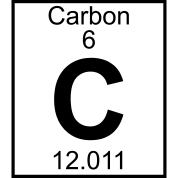
Chemical symbols must have at least ______________.
1 cap. letter
2 cap. letters
2 lower case letters
any letter you want
An atom or group of atoms that has gained or lost one or more electrons and is now an either positively or negatively charged _______.
isotope
ion
orbital
nucleus

