Wayground logo

Free Printable Worksheets

Font size

S
M
L
XL
Worksheets

Chemistry Review

Total questions: 71

Worksheet time: 18hrs 45mins
Name
Class
Date
1.
Which of these is not a chemical reaction?
a)
Burning of wood
b)
Milk going bad
c)
Mixing vinegar and baking soda
d)
Melting of ice
2.
A precipitate is a 
a)
liquid that forms when two solids are reacted
b)
a solid that forms when two liquids are mixed
c)
a gas that forms when vinegar and baking soda react
d)
a change of color in a solution
3.
If reaction starts with 20g of reactants it should produce 
a)
a total of 40g of products
b)
a total of 10g of products
c)
a total of 80 g of products
d)
a total of 20g of products
4.
What is the Law of Conservation of mass?
a)
Mass is created in a chemical reaction
b)
Mass is created in a physical change
c)
New chemicals formed from a chemical reaction have a larger overall mass than the original reactants
d)
Mass is never created or destroyed
5.

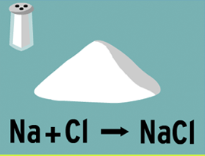
When sodium and chlorine combine to form sodium chloride, sodium chloride is the:

a)

Originator

b)

Reactant

c)

Product

d)

Produce

6.
Maria fills a bowl with 200 g of water. She puts the bowl of water in the freezer, and the water freezes. Which will most likely be the mass of the frozen water?
a)
50 g
b)
100 g
c)
200 g
d)
400 g
7.

How many Ca (Calcium) atoms are found in Ca(OH)2?

a)

5 atoms

b)

3 atoms

c)

2 atoms

d)

1 atom

8.

Law of conservation of mass states the amounts of atoms in the reactants and the products...

a)

Increase

b)

Decrease

c)

Stay the same

d)

No correct answer

9.

Does the equation H2+O2 →H2O follow the Law of Conservation of Mass?

a)

Yes, because the atoms are equal.

b)

No, because more info is needed.

c)

No, because there are more atoms in the product.

d)

No, because there are more atoms in the reactant.

10.

A student mixes 125 grams of sugar, 250 grams of water and 5 grams of flavoring. The solution weighs...

a)

250 grams

b)

380 grams

c)

375 grams

d)

400 grams

11.
Which of these is not a chemical reaction?
a)
Burning of wood
b)
Milk going bad
c)
Mixing vinegar and baking soda
d)
Melting of ice
12.

Does this picture accurately show the Law of Conservation of Mass?

a)

Yes

b)

No

13.

How many grams of OXYGEN would be needed to show conservation of mass in the example below?

a)

100 g

b)

93 g

c)

7 g

d)

0 g

14.

How many grams of coal were present at the start of the chemical change?

a)

Unknown

b)

100 g

c)

200 g

d)

50 g

15.

How many grams of CHOCOLATE POWDER are shown in the example of conservation of mass below?

a)

450 g

b)

465 g

c)

0 g

d)

15 g

16.

How many grams of LIQUID WATER are shown in the example of conservation of mass?

a)

0 g

b)

50 g

c)

100 g

d)

200 g

17.

How many grams of SLICED APPLE are shown in the example of conservation of mass?

a)

230 g

b)

235 g

c)

115 g

d)

0 g

18.

How many kilograms of SMOKE are shown in the example of conservation of mass?

a)

1 kg

b)

30 kg

c)

28 kg

d)

3 kg

19.
In a reaction A + B ----> C,  reactant A has 5g and product  C has 9g. How many grams does reactant B should have? 
a)
4g
b)
5g
c)
9g
d)
14g
20.
How many nitrogen atoms does NH3 have?
a)
1
b)
2
c)
3
d)
4
21.
Which of the following IS a physical change?
a)
Getting a haircut
b)
Rusty metal
c)
sour milk
d)
A compound
22.

What are the substances before the arrow called?

2H2 + O2 --> 2H2O

a)

Reactants

b)

Products

c)

Yields

d)

Chemical Equation

23.
a substance that is formed as the result of a chemical reaction
a)
Product 
b)
Reactant
c)
Starters
d)
Enders
24.
The process going from a gas to a liquid is called ...
a)
evaporation 
b)
melting 
c)
condensation 
d)
sublimation 
25.

List four factors that affects the rate of a reaction

a)

temperature

b)

concentration

c)

surface area

d)

volume

e)

catalysts

26.

A temperature increase causes the particles ......

a)

to slow down

b)

move faster

c)

collide higher

d)

in the right order

27.

Why does a higher concentration increase the rate of reaction?

a)

it increases the amount of reactants

b)

it lowers the activation energy

c)

it increases the energy of particle collisions

d)

it increases the frequency of particle collisions
28.
What is the rate of reaction?
a)
How fast a reaction is 
b)
How big a reaction is
c)
How loud a reaction is
d)
How much gas a reaction produces
29.
Grinding a seltzer tablet into powder increases the rate of reaction due to increased
a)
concentration
b)
surface area
c)
temperature
d)
reactants
30.
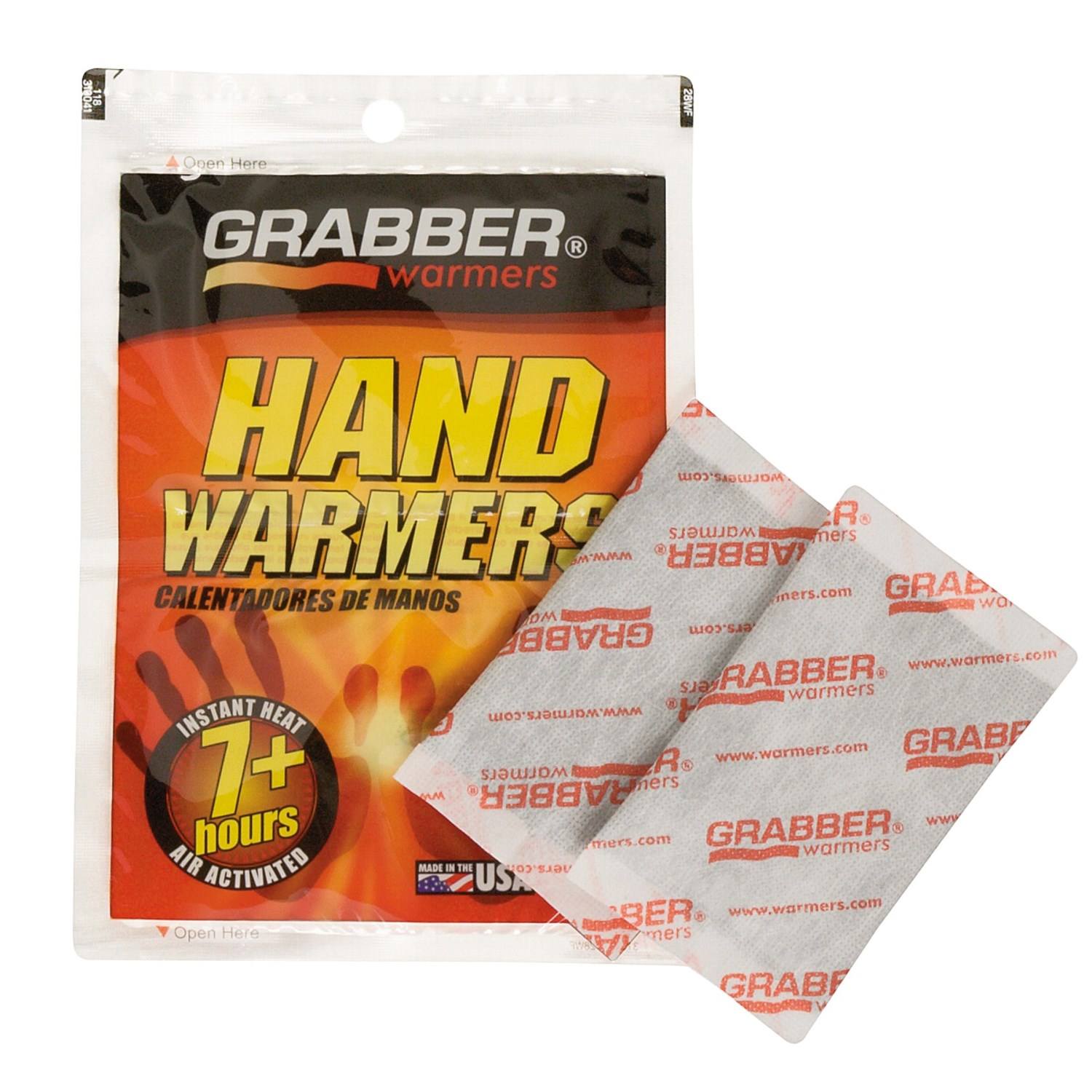
What type of reaction occurs in a hand warmer
a)
exothermic
b)
endothermic
31.
Exothermic reactions...
a)
Absorb energy
b)
Release energy
c)
Release Color
d)
Absorb Color
32.
In an endothermic reaction, heat is ...
a)
taken in or absorbed
b)
given out or released 
33.
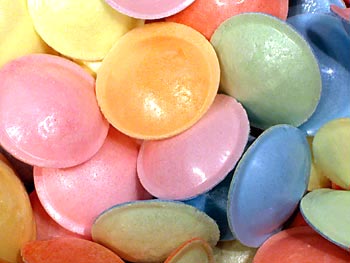
Have you ever eaten sherbet sweets candy? They fizz in your mouth and your tongue feels cold. Why do you think that is?
a)
It is an exothermic reaction
b)
It is an endothermic reaction
c)
It is made of ice
d)
It is dissolving your mouth
34.

O2(g) + 2 H2 (g) → 2 H2O (g) + EnergyO_2\left(g\right)\ +\ 2\ H_2\ \left(g\right)\ \rightarrow\ 2\ H_2O\ \left(g\right)\ +\ Energy  

a)

endothermic

b)

exothermic

35.

6 CO2+ 6 H2O + Energy → C6H12O6 + 6 O26\ CO_2+\ 6\ H_2O\ +\ Energy\ \rightarrow\ C_6H_{12}O_6\ +\ 6\ O_2

a)

endothermic reaction

b)

exothermic reaction

36.

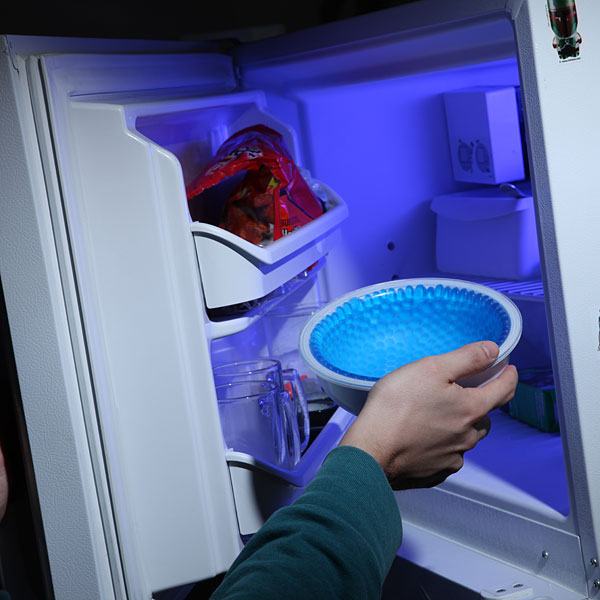
_____ reactions usually feel hot!

a)

endothermic

b)

exothermic

37.

____ reactions usually feel cold.

a)

endothermic

b)

exothermic

38.

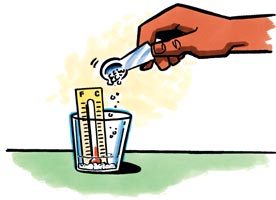
When barium hydroxide and ammonium chloride react, the temperature of the mixture decreases. What kind of reaction is this?

a)

Endothermic

b)

Decomposition

c)

Exothermic

d)

Indothermic

39.

When calcium reacts with water, the temperature changes from 18°C to 39°C. Which statement is correct?

a)

The solution at the end is acidic

b)

The reaction is reversible

c)

The reaction is exothermic

d)

The reaction is endothermic

40.
a copper penny turning greenish after a few years.
a)
Chemical Change
b)
Physical Change
41.
In a ___________change, a substance changes into a different substance.
a)
Physical
b)
Chemical
42.
How many atoms of carbon (C) are in C6H12O6?
a)
3
b)
6
c)
12
d)
24
43.
How many elements are in C6H12O6?
a)
1
b)
2
c)
3
d)
4
44.
How many Aluminum are in Al2O3?
a)
3
b)
2
c)
5
45.
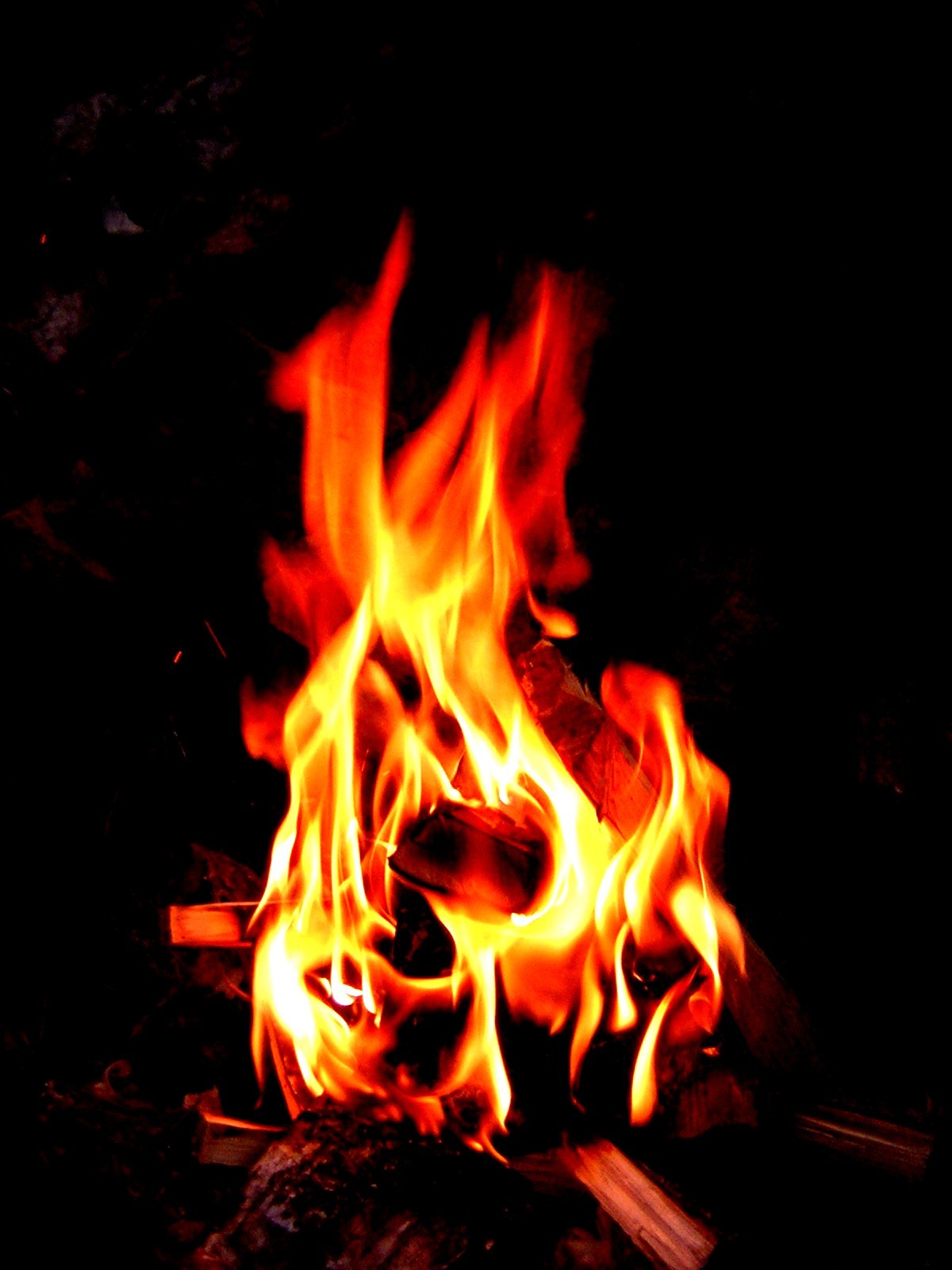
What is essential for a combustion reaction to begin?
a)
Carbon dioxide
b)
Fuel 
c)
Fuel, oxygen and heat
d)
Water and oxygen
46.
What happens in ALL chemical changes?
a)
Change in state of matter
b)
A new substance is formed
c)
Bubbles are produced
d)
An explosion
47.

According to the law of conservation of mass, how does the amount of each element on the product side compare to each element on the reactant side?

a)

The amount of atoms on each side is equal

b)

The amount of atoms on the product side is greater

c)

The amount of atoms on the reactant side is greater

d)

Depends on the reaction

48.
Chemical properties of a substance include all of the following except..
a)
its boiling point 
b)
its toxicity 
c)
its flammability 
d)
its reactivity 
49.
Which of the following is a chemical change rather than a physical change 
a)
boiling water at 100 C
b)
chopping up a piece of wood. 
c)
cooking a cake 
d)
ice carbon dioxide sublimating to gas 
50.
Which of the following IS a chemical change
a)
using chalk
b)
water freezing
c)
slicing cheese
d)
digestion
51.

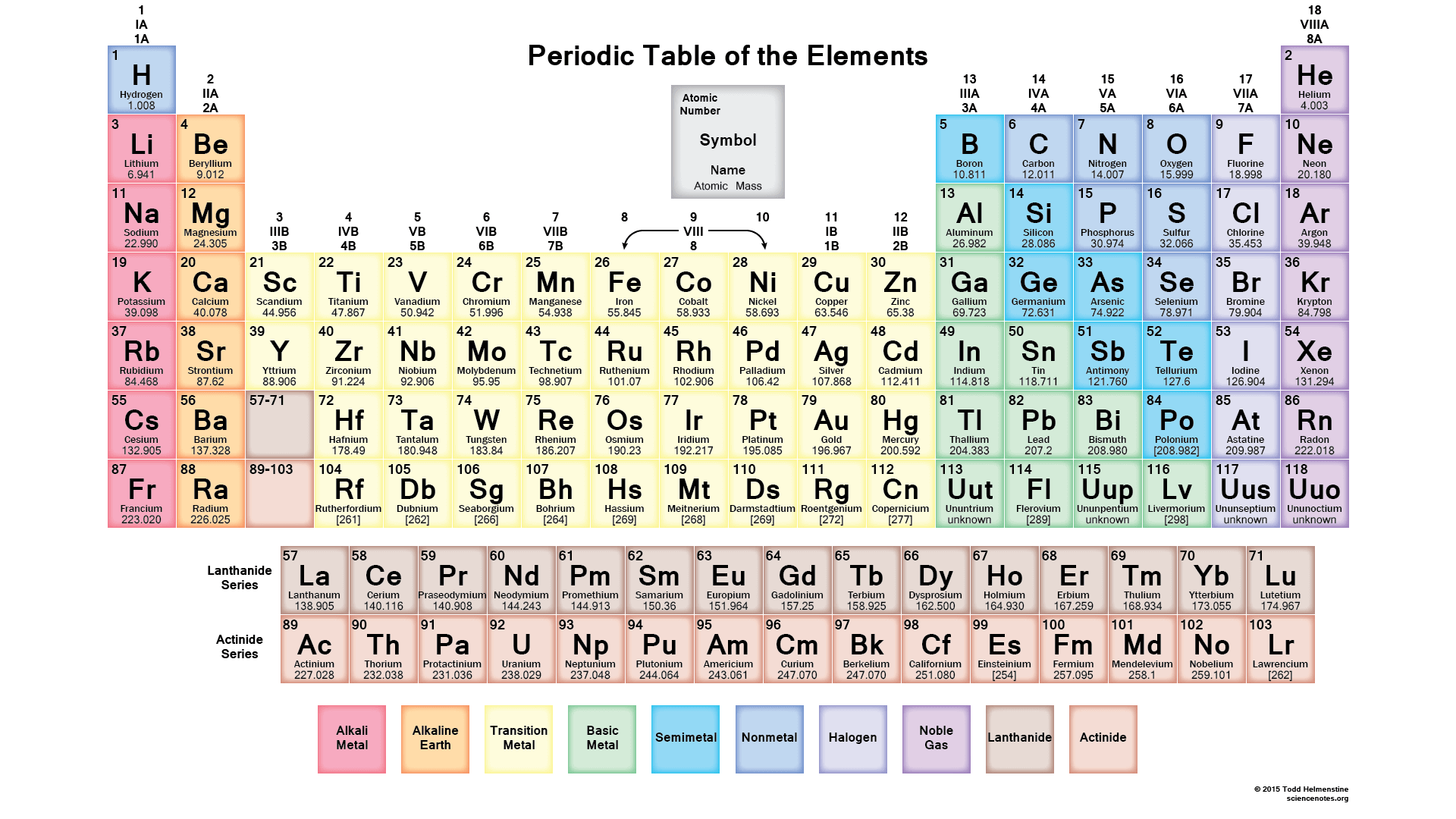
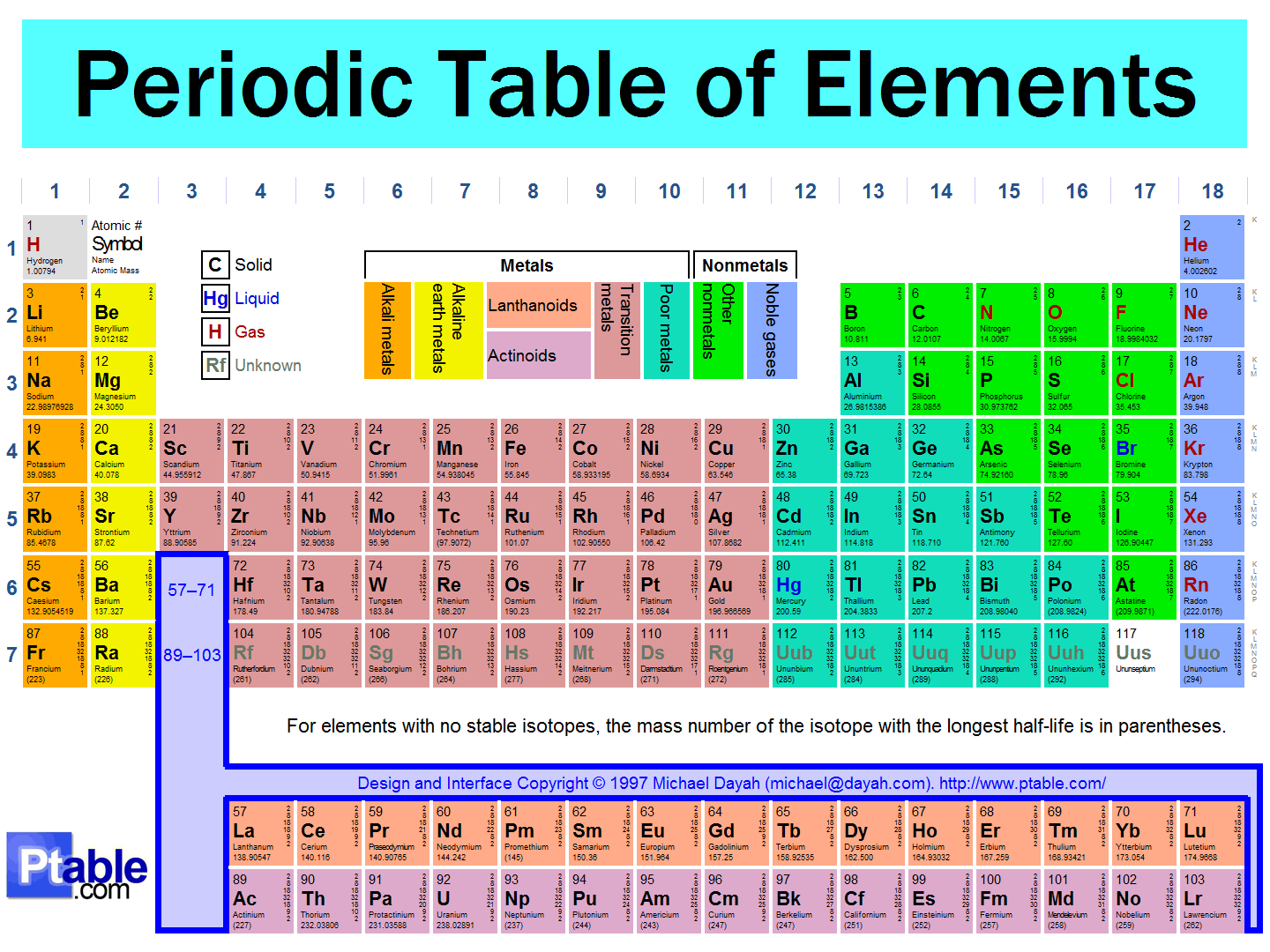
The vertical (up and down) columns in the Periodic Table are called

a)

groups

b)

towers

c)

periods

d)

atomic numbers

52.
The Modern Periodic Table of Elements is arranged by
a)
atomic mass
b)
atomic number
c)
valence electrons
d)
number of isotopes
53.
Sodium (Na) is found in period 
a)
3
b)
2
c)
4
d)
1
54.
Sodium (Na) is found in group 
a)
1
b)
2
c)
3
d)
4
55.
What does the atomic mass tell you? 
a)
Basically,the number of electrons and protons
b)
The number of neutrons
c)
Basically, the number of protons and neutrons
d)
The number of protons.
56.
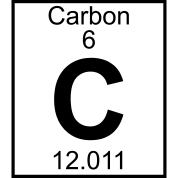
What does the 6 represent?
a)
atomic mass
b)
atomic number
c)
element name
d)
chemical symbol 
57.

The horizontal (side to side) rows in the Periodic Table are called

a)

groups

b)

families

c)

periods

d)

atomic numbers

58.
a)
Group 1
b)
Group 17
c)
Group 2
d)
Group 18
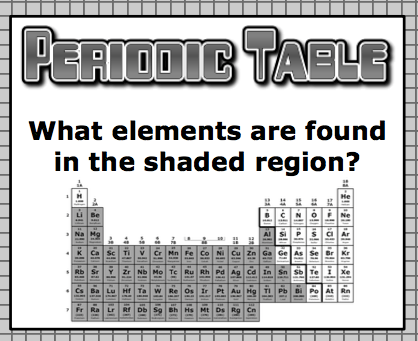
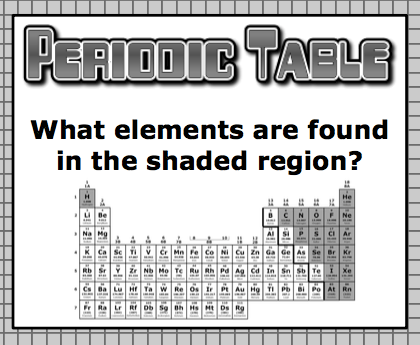
59.
a)
Metals
b)
Nonmetals
c)
Metalloids
60.
a)
Metals
b)
Nonmetals
c)
Metalloids
61.
a)
Metals
b)
Nonmetals
c)
Metalloids
62.

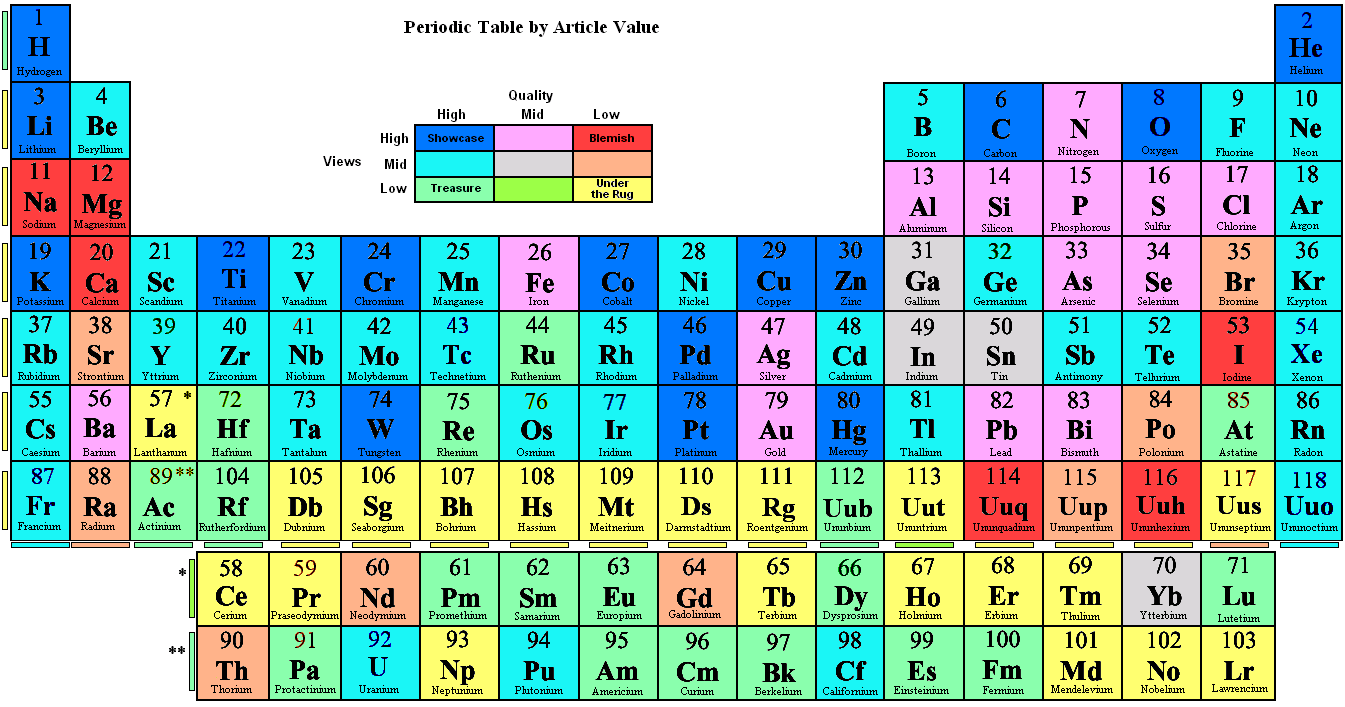
which element is this ?

a)

Neon

b)

Potassium

c)

Calcium

d)

Argon

63.

How many neutrons are in Gold

a)

118

b)

79

c)

197

d)

276

64.

How many Neutrons are in Neon

a)

10

b)

21

c)

20

d)

30

65.

How many protons are in Neon

a)

10

b)

20

c)

21

d)

30

66.

How many electrons are in Potassium

a)

19

b)

39

c)

20

d)

58

67.

What is the smallest unit of matter? It is composed of protons and neutrons, held together in the nucleus, and electrons around the nucleus in different electron orbitals, which form an electron cloud.

a)

cell

b)

nucleus

c)

atom

d)

electron

68.

What is the center of an atom containing protons and neutrons?

a)

nucleus

b)

neutron

c)

proton

d)

electron cloud

69.
Complete the missing label on the diagram.
a)
Neutron
b)
Centre
c)
Nucleus
d)
Sub atomic particle
70.
What subatomic particles would you find in the nucleus of an atom?
a)
Protons only
b)
Protons and Neutrons
c)
Neutrons and Electrons
d)
Protons and Electrons 
71.

How many electrons does this atom have?

a)

2

b)

4

c)

6

d)

10