wayground logo

Free Printable Worksheets

NEW

Font size

S
M
L
XL
Worksheets

Review Atomic Structure & Periodic Table

Total questions: 74

Worksheet time: 37mins

Name
Class
Date
1.

What is the atomic number?

a)

the number of protons in the nucleus

b)

the number of protons and neutrons in the nucleus

c)

the number of neutrons in the nucleus

d)

the number of protons in the energy levels

2.

What is the mass number?

a)

the number of protons in the nucleus

b)

the number of protons and neutrons in the nucleus

c)

the number of neutrons in the nucleus

d)

the number of protons and electrons in the atom
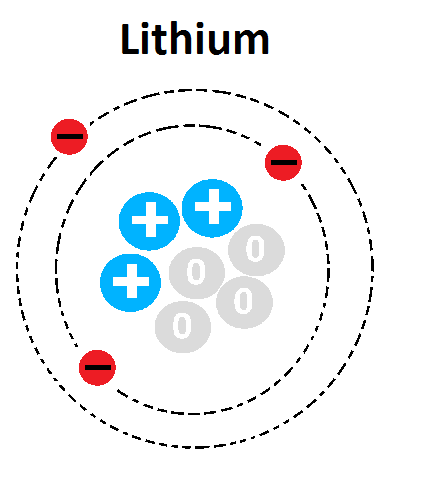
3.

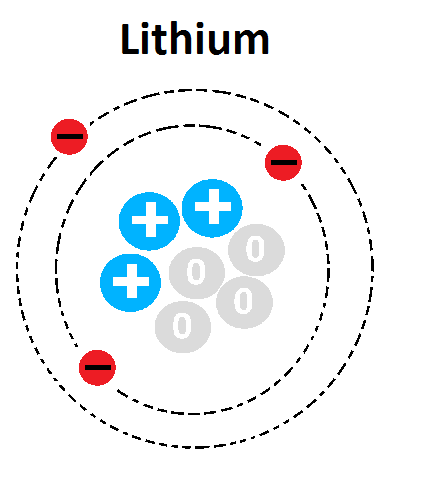
What is the atomic number of this atom?

a)

1

b)

3

c)

4

d)

7

4.

What is the mass number of this atom?

a)

1

b)

3

c)

4

d)

7

5.
Most of the mass in an atom is made up of _____________________?
a)
protons and electrons
b)
protons and neutrons
c)
neutrons and electrons
d)
electrons and quarks
6.
In order for an atom to be neutral what has to be true?
a)
The atom has more protons than neutrons
b)
The atom has more neutrons than protons
c)
The atom has the same number of protons and neutrons
d)
The atom has the same number of protons and electrons
7.
How is the number of neutrons in the nucleus of an atom calculated?
a)
Add the number of e- and p+ together
b)
Subtract the number of e- from p+
c)
Subtract the number of p+ from the mass number
d)
Add the mass number to the number of e-
8.

An atom has 10 protons, 15 neutrons and 10 electrons what is its mass number.

a)

20

b)

10

c)

35

d)

25

9.
The atomic number of an element that has 9 protons, 9 electrons, and 10 neutrons is _____.
a)
9
b)
10
c)
19
d)
28
10.
An element with a mass number of 11 and an atomic number of 5 has how many neutrons?
a)
11
b)
5
c)
6
d)
16
11.
Where is most of the mass in an atom located?
a)
in the nucleus
b)
in the protons
c)
in the neutrons
d)
in the electrons
12.
An atom has an atomic number of 15 and a mass number of 31. How many protons are there in the atom?
a)
15
b)
31
c)
16
d)
47
13.
What is the atomic number of the atom pictured? 
a)
9
b)
10
c)
18
d)
19
14.

Which of the following determines the identity of an element?

a)

number of protons

b)

atomic mass

c)

number of neutrons

d)

number of shells

15.
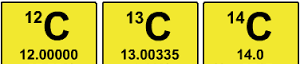
What do these isotopes of carbon all have in common?
a)
neutrons & mass number
b)
atomic number and neutrons
c)
atomic number and electrons
d)
protons, atomic number, and mass number
16.
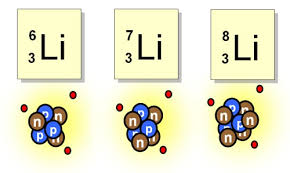
How many neutrons does the isotope of lithium have?
a)
8
b)
3
c)
4
d)
5
17.
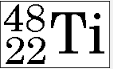
How many protons does this isotope of titanium have?
a)
48
b)
22
c)
26
d)
70
18.
In a correctly written symbol what would be located in the "A" position?
a)
number of neutrons
b)
atomic number
c)
number of electrons 
d)
mass number
19.
What quantities vary between isotopes of an element?
a)
protons, electrons, and atomic mass
b)
protons, electrons, and atomic number
c)
neutrons and electrons
d)
neutrons and atomic mass
20.
which atom has  4 neutrons?
a)
Li-6
b)
Li-7
c)
Li-8
d)
they have the same # of neutrons
21.
How many neutrons does the isotope below have?     89 36Kr
a)
53
b)
36
c)
89
d)
125
22.
If X is the symbol for an element, which of the following two symbols represent    isotopes of the same element?     I. 7735X  II. 7733X  III. 8137X  IV. 8135 X
a)
I and II
b)
III and IV
c)
I and IV
d)
I and III
23.
Four isotopes of lead include lead-204, lead-206, lead-207, and lead-208.  The average atomic mass of lead is 207.2.  Which isotope of lead is likely to be the most abundant.
a)
204
b)
206
c)
207
d)
208
24.

Nickel-59 has how many neutrons?

a)

30

b)

31

c)

32

d)

33

25.

Bromine-80 has how many neutrons?

a)

41

b)

42

c)

44

d)

45

26.
How many total electrons does O-2 (an oxide ion) have?
a)
8
b)
10
c)
6
d)
18
27.
How many total electrons does Mg+2 (a magnesium ion) have?
a)
10
b)
12
c)
14
d)
22
28.
How many total electrons does Na+1 (a sodium ion) have?
a)
10
b)
11
c)
12
d)
22
29.
Where are metals located on the periodic table?
a)
Blue
b)
Green
c)
Red
30.
Where are the nonmetals located on the periodic table? 
a)
Blue
b)
Red
c)
Green
31.

Why did Mendeleev leave spaces in the table he developed?

a)

he knew more elements would be discovered

b)

he did not know what belonged in those spaces

c)

he wanted the table to look well-designed

d)

he didn't know the names of all the elements

32.

Based on chemical properties, iodine (I) belongs in the same group as ___.

a)

Helium and Neon

b)

Iron and Zinc

c)

Hydrogen and Lithium

d)

Bromine and Chlorine

33.

What are 3 broad classes of elements?

a)

metals, nonmetals, and metalloids

b)

solids, liquids, and gases

c)

small, medium, and large

d)

helium, neon, and argon

34.

Across a period, the properties of elements become less like ____ and more like _____.

a)

hydrogen; copper

b)

gold; silver

c)

metals; nonmetals

d)

solids; liquids

35.
Which of these is a property of metals?
a)
It's malleable
b)
It can't conduct electricity
c)
They are used in food
d)
It's very brittle
36.
Which of these grouping of elements could have the characteristic of brittle?
a)
Metal
b)
Nonmetal
37.
If a material can easily be drawn into the shape of a wire, it is
a)
Ductile
b)
Magnetic
c)
Malleable
d)
Reactive
38.
Silicon is a semiconductor and has properties of both metals and nonmetals. What type of element is Silicon? 
a)
Metal
b)
Nonmetal
c)
Metalloid
d)
Pretty
39.
Which element is a metalloid?
a)
Titanium
b)
Selenium
c)
Potassium
d)
Polonium
40.
What is the name of this element?
a)
Helium
b)
Hydrogen
c)
Argon
d)
Silver
41.
What is the name of this element?
a)
Lithium
b)
Boron
c)
Carbon
d)
Neon
42.
How many valence electrons?
a)
2
b)
3
c)
5
d)
10
43.
What's a valence electron?
a)
electrons in the second energy level
b)
electrons in the outermost energy level
c)
the atomic number
d)
electrons in the first level
44.

On the periodic table, Groups are

a)

Horizontal rows

b)

Vertical columns

45.

On the periodic table, Periods are

a)

Horizontal rows

b)

Vertical columns

46.

The innermost energy level has a maximum of how many electrons?

a)

1

b)

2

c)

6

d)

8

47.
What does the nucleus of an atom contain?
a)
Electrons and neutrons
b)
Protons and neutrons
c)
Neutrinos and positrons
d)
Electrons and megatrons
48.

What is the mass of this atom?

a)

9

b)

10

c)

19

d)

28

49.
What atom matches this electron configuration?
1s2s2p3s2
a)
Neon
b)
Magnesium
c)
Aluminum
d)
Potassium
50.
Which is the electron configuration for an oxygen atom?
a)
1s22s22p63s23p64s2
b)
1s22s22p4
c)
1s22s22p6
d)
1s22s22p63s23p6
51.

How many electron are there in the p sublevel?

a)
2
b)
1
c)
4
d)

6

52.
What is this element? 
1s22s22p63s23p6
4s23d104p6
a)
Argon
b)
Krypton
c)
Selenium
d)
Bromide
53.
What atom matches this electron configuration?
[Xe] 6s2 4f14 5d9
a)
Mercury
b)
Gold
c)
Platinum
d)
Thallium
54.
What is the shorthand electron configuration for Sulfur atom?
a)
[Ar] 3p4
b)
[He] 3s23p4
c)
[Ne] 3s23p4
d)
[Na] 3s23p3
55.
How many valence electrons does Chlorine have?
a)
5
b)
2
c)
7
d)
5
56.
How many valence electrons does phosphorus have?
a)
5
b)
2
c)
8
d)
15
57.
What noble gas should be used to write the shorthand configuration for Te?
a)
Ar
b)
Kr
c)
Xe
d)
Sb
58.
Identify the element in Period 5 that has 1 valence electron?
a)
Rb
b)
Nb
c)
Ag
d)
Sb
59.
What element in Period 4 has 5 valence electrons?
a)
Zr
b)
As
c)
V
d)
Sb
60.

Which of the following is a s block element?

a)
Ca
b)
Ar
c)
Re
d)
Au
61.
What atom matches this electron configuration?
1s22s22p63s2
a)
Neon
b)
Magnesium
c)
Aluminum
d)
Potassium
62.
The electron configuration of an atom is 1s22s22p6.  The number of electrons in the atom is 
a)
3
b)
6
c)
8
d)
10
63.
Which electron configuration belongs to Chlorine (Cl)?
a)
1s2s2p3s3p5
b)
1s2s2p3s3p6
c)
1s2s2p3s3p7
64.
Identify the Electron Configuration for Aluminum (Al)
a)
1s2s2p3s3p1
b)
1s2s2p3s3p3
c)
1s2s2p3s4p1
65.
Which of the following will have a larger radius than Zinc?
a)
Gallium
b)
Aluminum
c)
Magnesium
d)
Strontium
66.
As you move down a group, atomic radius increases because - 
a)
you add more and more neutrons
b)
you add more and more protons
c)
you add more and more shells (energy levels)
d)
you add more atomic mass
67.
Which of the following will have a lower ionization energy than Scandium (Sc)?
a)
Helium (He)
b)
Titanium (Ti)
c)
Calcium (Ca)
d)
Magnesium (Mg)
68.
Electronegativity is...
a)
the ability of an atom to attract/ accept electrons
b)
the ability of an atom to lose electrons
c)
the energy required to remove an electron from a specific atom
d)
how easy it is to make friends. 
69.
Which has the greater Electronegativity: 
N or C?
a)
C
b)
N
70.
Elements in the same column of the periodic table always have the same # of _______ as one another.
a)
Protons
b)
Neutrons
c)
Electrons
d)
Valence Electrons
71.
How many valence electrons are in an atom of K?
a)
3
b)
8
c)
4
d)
1
72.
How many valence electrons are in an atom of Ar?
a)
2
b)
8
c)
4
d)
1
73.
Which of the following will have a higher electronegativity than arsenic (As)?
a)
Carbon (C)
b)
Neon (Ne)
c)
Antimony (Sb)
d)
Germanium (Ge)
74.
The atom with the largest atomic radius in Group 18 is - 
a)
Ar
b)
He
c)
Kr
d)
Rn